
Find Your Ideal MERV Rating
Your Home Profile
Select your profile above to get a personalized recommendation.
You stand in the aisle at the hardware store, staring at a wall of white pleated rectangles. They all look identical. The prices range from cheap to expensive, but the only difference seems to be a number printed on the box: MERV 8, MERV 11, or maybe even MERV 13. You just want cleaner air, right? So why is this so confusing?
Here is the hard truth: buying the highest-rated filter you can find might not clean your air better. In fact, it could break your heating and cooling system. Choosing the right MERV rating isn't about picking the biggest number; it’s about finding the sweet spot between trapping pollutants and letting enough air flow through your HVAC system.
What does MERV actually mean?
MERV stands for Minimum Efficiency Reporting Value. It is a standard created by ASHRAE (American Society of Heating, Refrigerating and Air-Conditioning Engineers) to rate how well air filters capture particles of different sizes. The scale runs from 1 to 20. A higher number means the filter traps smaller particles more effectively.
Understanding the MERV Scale
To pick the right filter, you first need to understand what those numbers represent. Think of MERV ratings like a sieve. A MERV 1 filter has huge holes-it catches big stuff like lint and dust bunnies, but lets pollen and smoke drift right through. A MERV 16 filter has microscopic holes that catch almost everything, including bacteria and virus carriers, but air struggles to push through them.
MERV 1-4 are basic fiberglass filters often included with new HVAC systems. They trap large particles like dust and lint but do little for allergens. If you have one of these, your system is basically breathing dirty air. MERV 5-8 are standard pleated filters found in most homes. They catch mold spores, hair, and larger dust mites. They are good for protecting your furnace coils but won't help much if you have severe allergies. MERV 9-12 are high-efficiency residential filters. This is where things get interesting. They trap fine dust, lead particles, and some bacteria. For most households, this is the goldilocks zone. MERV 13-16 are medical-grade or high-performance filters. They capture smoke, viruses, and tiny combustion particles. These are excellent for air quality but require specific HVAC equipment to handle the airflow restriction.The "Goldilocks" Zone for Most Homes
If you ask me what I put in my own house here in Manchester, I’ll tell you: MERV 11. Here is why.
A MERV 11 filter strikes the perfect balance. It captures the nastiest everyday pollutants-pollen, pet dander, and fine dust-that trigger allergies and asthma. It also catches mold spores, which is crucial if you live in a damp climate. But unlike a MERV 13 or 16, it doesn’t choke your furnace.
Your HVAC system is designed to move a specific volume of air. When you install a filter that is too dense, your blower motor has to work harder to pull air through it. This leads to three problems:
- Higher energy bills: Your motor draws more electricity to fight the resistance.
- Poor temperature control: Less air moves through the ducts, so rooms take longer to heat or cool.
- System failure: In extreme cases, the motor overheats and burns out, or ice forms on your AC evaporator coil because warm air isn't flowing over it.
Most standard residential furnaces and central air units are built to handle up to MERV 11 comfortably. Going beyond that without checking your system specs is gambling with your equipment.
When Should You Go Higher?
There are scenarios where MERV 11 isn't enough. If you or a family member suffers from severe respiratory issues, or if you live near an area with heavy wildfire smoke, you might consider MERV 13.
MERV 13 filters are becoming more common in modern, high-efficiency homes. They capture particles as small as 0.3 to 1.0 microns. This includes tobacco smoke, cooking fumes, and some bacteria. However, before you buy one, you must check two things:
- Filter Slot Size: Does your furnace have room for a thicker filter? MERV 13 filters are often 4 inches thick (deep pleat) rather than the standard 1 inch. A 1-inch MERV 13 exists, but it clogs incredibly fast because the surface area is small.
- Static Pressure Rating: Look at your furnace’s data plate or manual. It will list the maximum external static pressure the blower can handle. High-MERV filters increase static pressure. If you exceed the limit, you void warranties and risk damage.
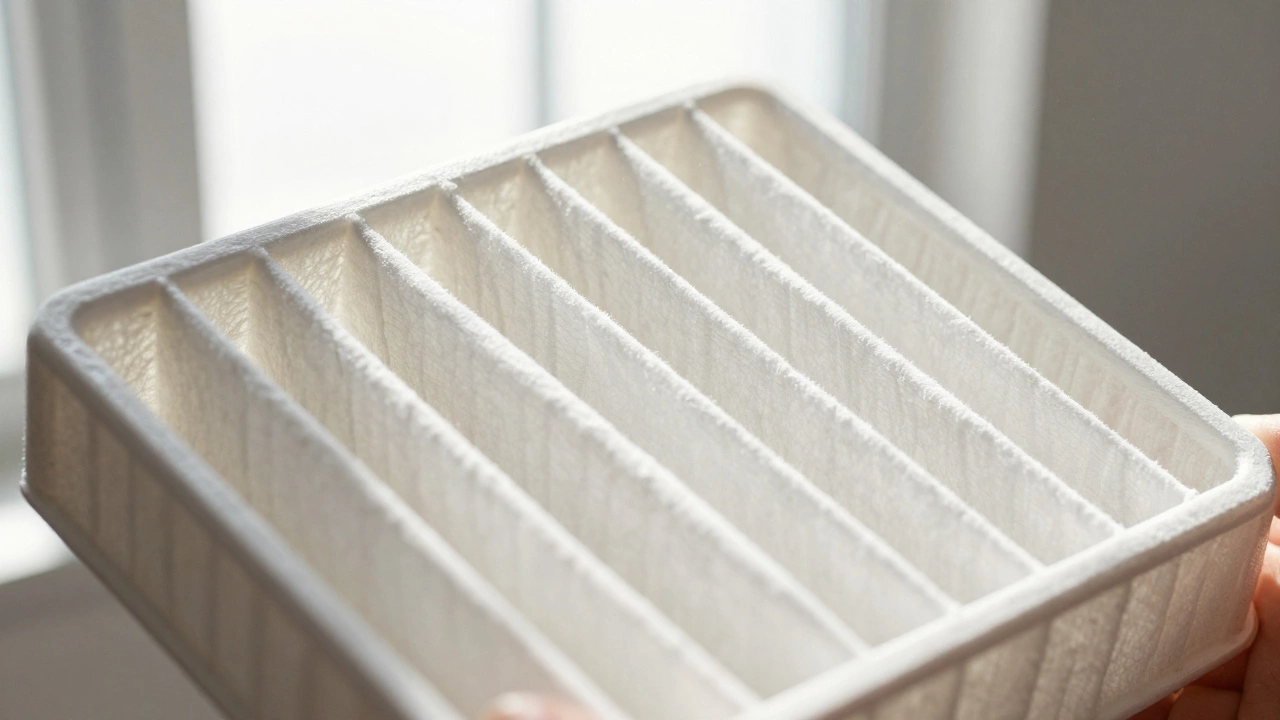
Comparison: MERV Ratings for Home Use
| MERV Rating | Particles Trapped | Airflow Impact | Best For |
|---|---|---|---|
| MERV 8 | Dust, lint, mold spores | Low | Basic protection, older HVAC systems |
| MERV 11 | Pollen, pet dander, fine dust | Medium | Allergy sufferers, general home use |
| MERV 13 | Smoke, viruses, bacteria | High | Severe allergies, medical needs, new high-efficiency systems |
| MERV 16+ | Ultra-fine particles, germs | Very High | Hospitals, labs, specialized commercial setups |
The Hidden Cost of Cheap Filters
I see people buy MERV 1 filters every day. They cost almost nothing. But they are a false economy. Because they don't trap anything small, dirt bypasses the filter and coats your furnace’s heat exchanger and your AC’s evaporator coil.
When those coils get dirty, your system loses efficiency rapidly. A coated coil can reduce your system's efficiency by up to 15%. That means you’re paying more for gas or electricity to get the same comfort level. Plus, cleaning or replacing coils costs hundreds of dollars. Spending £10 extra on a MERV 11 filter every three months saves you money in the long run by keeping your internal components clean.
Do You Need HEPA Filters?
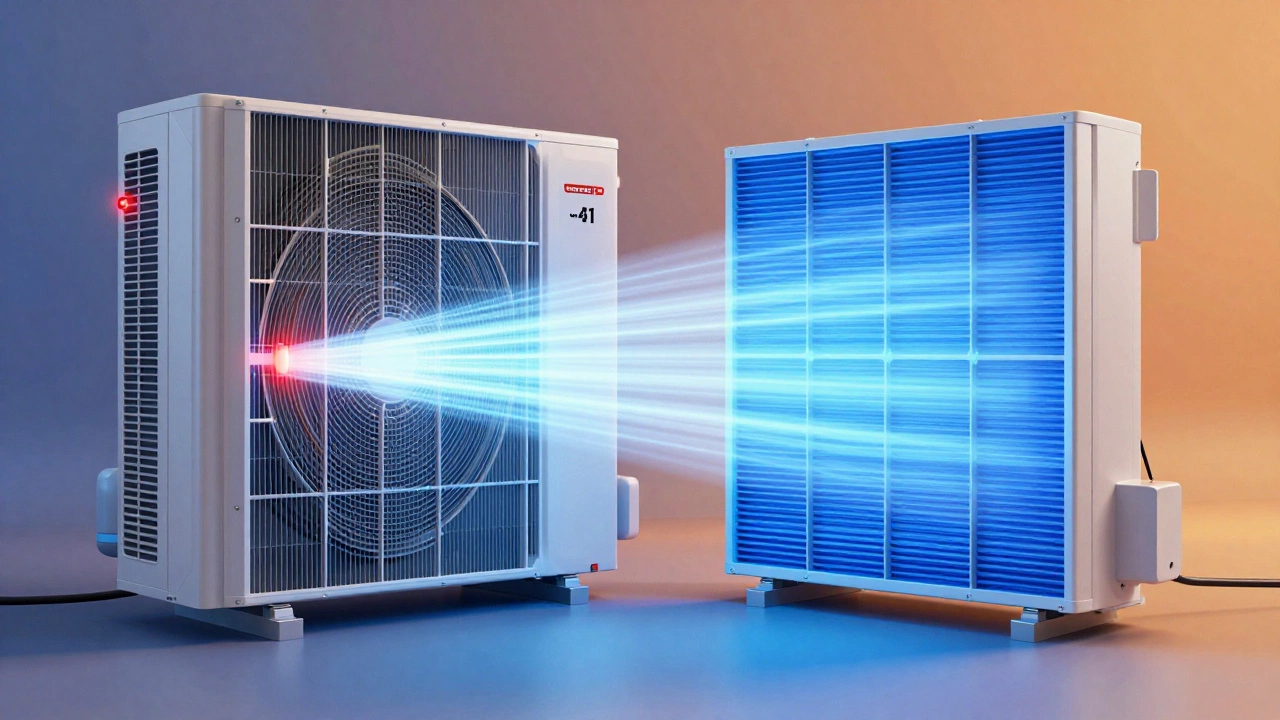
You might hear salespeople pushing HEPA (High-Efficiency Particulate Air) filters for your central air. Be careful. True HEPA filtration requires a specific fan speed and seal that most residential HVAC systems cannot provide.
Many "HEPA-like" filters sold for homes are actually just high-MERV filters (around MERV 13-17). While effective, installing a true HEPA filter in a standard ducted system will likely stop airflow entirely. If you want HEPA-level cleaning, skip the furnace. Buy a standalone portable HEPA air purifier for the rooms you spend the most time in. It’s cheaper, safer for your HVAC, and more effective at circulating clean air locally.
How Often Should You Change Your Filter?
This depends on your lifestyle and your filter type. A thick MERV 11 filter lasts longer than a thin MERV 8 because it has more surface area to collect dirt. Here is a rough guide:
- Every 3 months: Standard usage, no pets, MERV 8-11.
- Every 2 months: One pet or mild allergies, MERV 11-13.
- Every month: Multiple pets, smokers in the house, or high pollution areas.
Check your filter monthly. Hold it up to a light. If you can’t see light passing through the pleats, it’s time to swap it. A clogged filter is worse than no filter at all because it restricts airflow immediately.
Common Mistakes to Avoid
Ignoring the Seal: Even a MERV 16 filter is useless if air leaks around the edges. Make sure the filter fits snugly in the slot. Use magnetic strips or foam tape if there are gaps. Bypassed air carries all the dust straight into your machine.
Putting the Arrow Backwards: Every filter has an arrow indicating airflow direction. It should point toward your furnace/blower unit. Putting it backwards reduces efficiency and can damage the media.
Upgrading Without Checking Compatibility: Never assume your old furnace can handle a higher MERV rating. If you have an older system (pre-2000), stick to MERV 8-10 unless a professional tells you otherwise.
Final Thoughts on Choosing Your Filter
Don’t let marketing confuse you. You don’t need a hospital-grade filter to breathe easier at home. For 90% of households, a MERV 11 filter is the smartest choice. It protects your lungs from common allergens and keeps your HVAC system running efficiently without breaking the bank or burning out your motor.
If you have specific health concerns, talk to an HVAC technician about upgrading to MERV 13, but do your homework first. Check your system’s capacity. And remember, the best filter is the one you actually change regularly. A clean MERV 8 beats a dirty MERV 13 every time.
Can I use a MERV 13 filter in any home HVAC system?
Not necessarily. Older or standard residential HVAC systems may not have the blower power to push air through a dense MERV 13 filter. Using one can restrict airflow, cause the system to overheat, or freeze AC coils. Always check your manufacturer's guidelines or consult an HVAC pro before switching to MERV 13 or higher.
Is a higher MERV rating always better for air quality?
No. While higher MERV ratings trap smaller particles, they also restrict airflow. If your system can't handle the resistance, air circulation drops, which can actually worsen indoor air quality by allowing stale air to stagnate. Plus, restricted airflow can damage your HVAC equipment.
How do I know what size filter my home needs?
Look at your current filter. The dimensions (e.g., 16x25x1 inches) are printed on the frame. You can also measure the slot where the filter sits. Width and height should match exactly; depth can sometimes vary slightly, but sticking to the recommended thickness is best for proper sealing.
What is the difference between MERV and HEPA filters?
HEPA (High-Efficiency Particulate Air) is a stricter standard than MERV. A true HEPA filter removes 99.97% of particles 0.3 microns in size. In MERV terms, this is roughly equivalent to MERV 17-19. Most home HVAC systems cannot support true HEPA filters due to airflow restrictions, whereas MERV 13 is the typical high-end limit for central air.
Should I change my filter more often if I have pets?
Yes. Pet dander and hair clog filters quickly. If you have shedding pets, inspect your filter monthly and replace it every 1-2 months instead of the standard 3 months. This prevents airflow blockage and maintains indoor air quality.