
Brake Health Diagnostic Tool
Select the symptoms you are experiencing to get a preliminary assessment.
Safety ToolDriving Symptoms
Visual Red Flags
Quick Signs You Need New Rotors
- The steering wheel or brake pedal vibrates when you slow down.
- You hear a loud, metallic grinding or scraping noise.
- Your car pulls to one side during braking.
- The brake pedal feels "spongy" or you have to press it further than usual.
- Visible deep grooves or blue tints on the metal disc.
The Role of the Brake Rotor in Your Car
Before we dig into the warning signs, let's get the basics straight. A Brake Rotor is a circular metal disc that rotates with the wheel and provides the friction surface for the brake pads to grip. Also known as a Brake Disc, this component is the foundation of the disc brake system. When you hit the brakes, the Brake Caliper squeezes the pads against the rotor, creating the friction needed to stop the vehicle.
Unlike pads, which are designed to wear down and be replaced frequently, rotors are meant to last longer. However, they aren't invincible. Heat, road debris, and neglect can ruin them. If you ignore a worn rotor, you aren't just risking a loud noise; you're compromising your stopping distance, which can be the difference between a close call and a collision.
Identifying Brake Pulsation and Warped Rotors
Have you ever felt a rhythmic thumping or vibration in the pedal when you slow down from highway speeds? That's a classic sign of a warped rotor. This happens when the rotor surface is no longer perfectly flat. As the Brake Pads grip the disc, they hit the "high spots" of the warp, causing that shuddering sensation.
Why do they warp? It usually comes down to heat. If you're riding the brakes down a long mountain road, the rotors get incredibly hot. If you then drive through a deep puddle or hit a cold rainstorm, the rapid temperature drop can cause the metal to contract unevenly. This is called thermal shock. Over time, this creates a distorted surface that makes your new rotors a necessity rather than a luxury.
Hearing the Warning: Grinding and Squealing
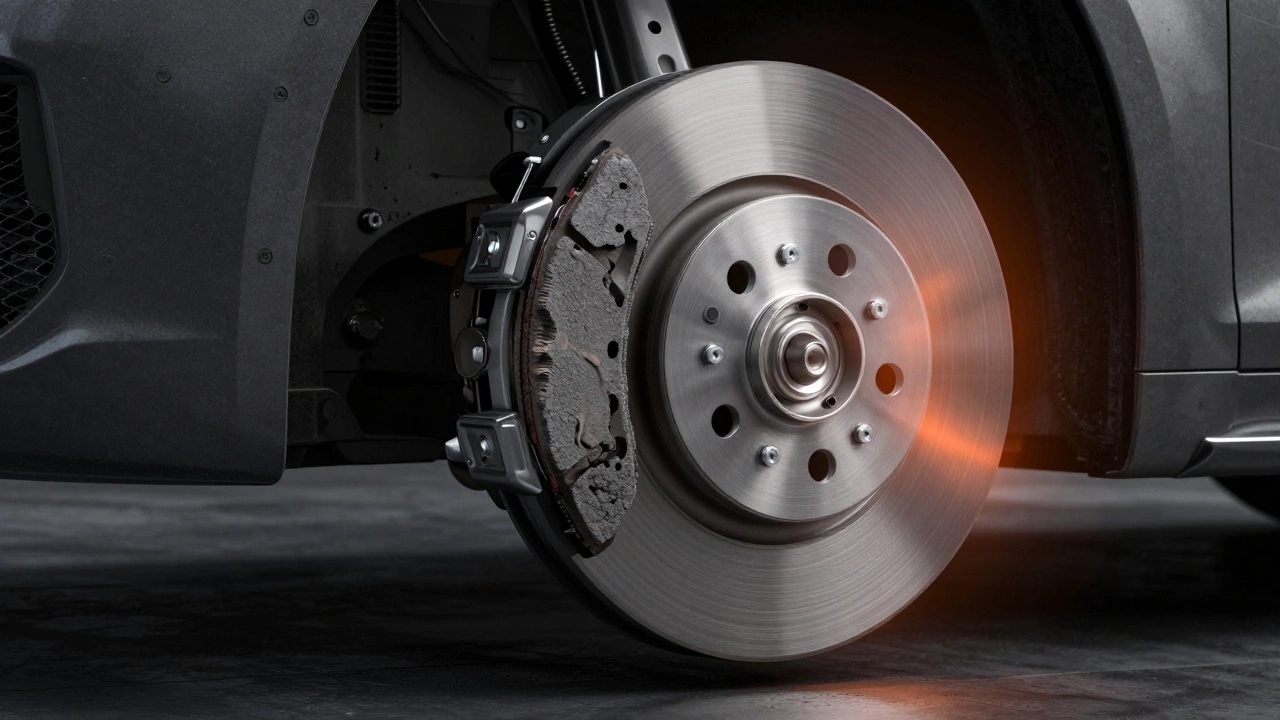
Most people mistake grinding noises for bad pads, but the rotor is often the culprit. Brake pads have a small metal tab called a wear indicator. When the pad gets thin, this tab scrapes the rotor to make a high-pitched squeal. That's your warning to change the pads immediately. But if you keep driving, you hit "metal-on-metal" territory.
Once the friction material on the pad is completely gone, the steel backing plate of the pad grinds directly into the Cast Iron of the rotor. This doesn't just make a horrible noise; it carves deep grooves into the rotor surface. If you can feel these grooves with your fingernail (once the car is cool!), your rotors are likely beyond saving and need to be replaced.
| Symptom | Likely Brake Pad Issue | Likely Brake Rotor Issue |
|---|---|---|
| High-pitched squeal | Pads are getting thin (Wear indicator) | Usually a secondary effect of pad wear |
| Steering wheel shake | Rarely the cause | Warped or uneven rotor surface |
| Metal grinding noise | Pads are completely gone | Rotor surface is scored or gouged |
| Increased stopping distance | Worn out friction material | Thin rotors overheating quickly |
Visual Inspection: What to Look For
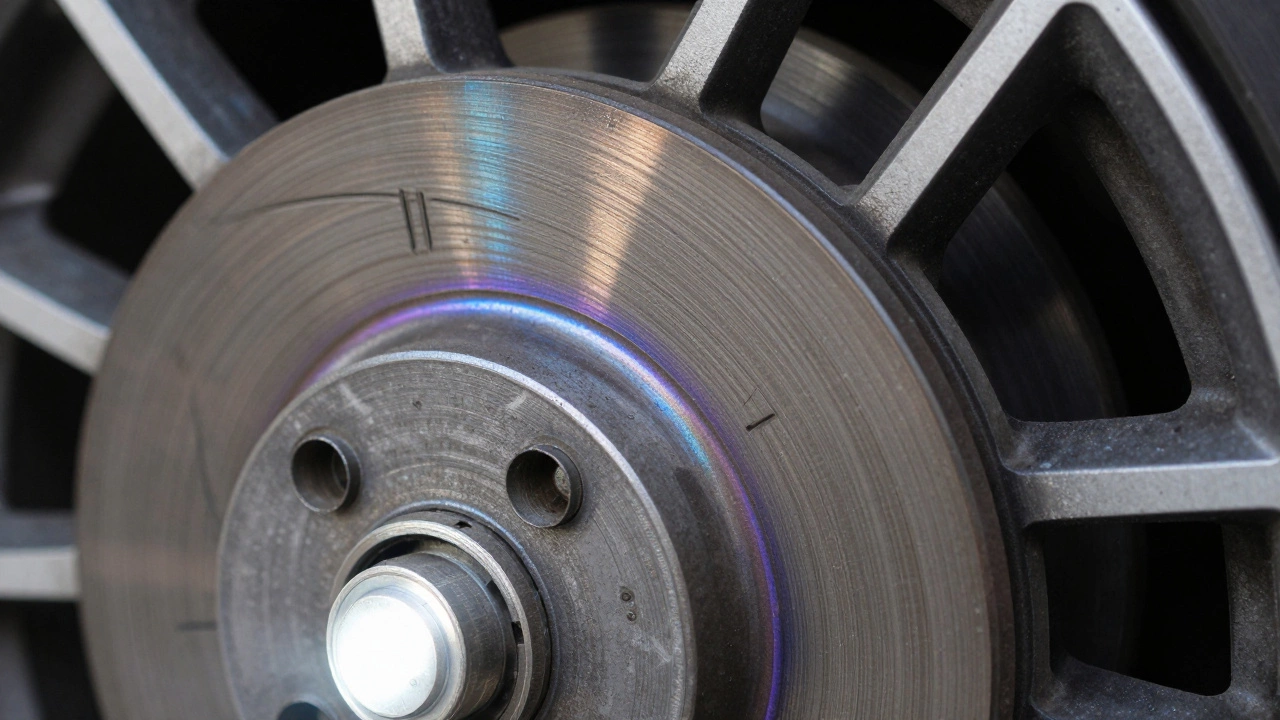
You don't always need to be driving to tell if your rotors are failing. If you have alloy wheels with open spokes, you can see the rotors quite clearly. Grab a flashlight and look for these three red flags:
- Blue or Black Tinting: If the rotor looks like it has a rainbow-colored or bluish hue, it has been severely overheated. This changes the molecular structure of the metal, making it more brittle and prone to cracking.
- Deep Scoring: Look for circular grooves or "rings" carved into the disc. Minor surface rust is normal (especially in winter), but deep trenches mean the rotor is compromised.
- Thin Edges: Look at the outer edge of the rotor. If it looks like a sharp knife edge or has a significant lip worn into it, the rotor has reached its minimum thickness and can no longer dissipate heat effectively.
The Danger of "Thin' Rotors and Brake Fade
Rotors aren't just about a flat surface; they are heat sinks. Their primary job is to absorb the massive amount of heat generated by friction and release it into the air. As a rotor wears down, it loses mass. A thinner rotor cannot hold as much heat.
This leads to a dangerous phenomenon called Brake Fade. Brake fade occurs when the rotor becomes so hot that the brake pads can no longer grip the surface effectively. You might press the pedal all the way to the floor and find that the car barely slows down. This is common in heavy vehicles or during aggressive driving. If your rotors are thin, you hit this critical temperature much faster, which is a massive safety risk.

To Resurface or To Replace?
When you take your car to a shop, a mechanic might suggest "turning" or "resurfacing" the rotors. This involves using a Brake Lathe to shave off a thin layer of metal to make the surface flat again. It sounds like a great way to save money, but there's a catch.
Every rotor has a minimum thickness specified by the manufacturer. If the rotor is already thin, shaving it down further might put it below that safety limit. Additionally, if a rotor is severely warped or has deep gouges, resurfacing only fixes the surface, not the structural integrity. In 2026, with the cost of rotors dropping and the precision of manufacturing increasing, replacing them is usually the safer and more reliable bet. It ensures you have the full heat-sink capacity and a perfectly balanced disc.
Can I replace just the brake pads and keep old rotors?
You can, but it's often a bad idea. If the rotors are warped or scored, putting brand new, flat pads on a bumpy surface will cause uneven wear. The new pads will wear out much faster, and you'll likely still feel the vibrations in your steering wheel. For the best performance, pads and rotors should be treated as a matched set.
Why is my car pulling to one side when I brake?
This usually happens when one rotor is more worn or warped than the other. If the left rotor has more grip or is flatter than the right one, the car will tug toward the side that is braking more effectively. It could also indicate a sticking caliper, but uneven rotor wear is a very common cause.
How often should I check my rotors?
You should check them every time you get your tires rotated or your oil changed. Most shops do a visual inspection of the pads and rotors as part of a standard multi-point inspection. If you do your own maintenance, check for grooves and discoloration every 5,000 to 10,000 miles.
Do all four rotors usually wear out at the same time?
Not necessarily, but they are usually replaced in pairs (fronts together, rears together). Front rotors do significantly more work because they handle the majority of the vehicle's weight during braking. Consequently, front rotors almost always wear out faster than rear rotors.
Will new rotors fix my shaking steering wheel?
If the shaking only happens when you apply the brakes, then yes, replacing warped rotors will almost certainly fix the problem. If the shaking happens regardless of whether you are braking, the issue is likely related to wheel balance or suspension components, not the rotors.
Next Steps for Car Owners
If you've noticed any of these signs, don't wait for the noise to get louder. Start by performing a visual check. If you see deep grooves or a blue tint, schedule a brake service immediately. When you visit the shop, ask the technician to measure the rotor thickness with a micrometer to see if they are below the minimum spec. If you're replacing them, remember to replace the pads at the same time-installing old pads on new rotors is a recipe for ruining your brand-new parts in a matter of weeks.