Brake Pad Condition Checker
Select all symptoms you're experiencing. This tool will assess your brake pad condition and provide next steps based on the 7 clear signs from our guide.
Brakes are the most important safety system on your car. Yet most drivers don’t check them until something goes wrong - like a grinding noise, a spongy pedal, or worse, a near-miss. If you’re wondering how do you know your brake pads are bad, you’re not alone. The truth is, brake pads wear out slowly. By the time you feel it, you’re already in danger.
You hear a high-pitched squeal when you brake
That thin, shrill sound when you press the pedal? That’s not your radio. It’s a metal tab built into the brake pad designed to scream at you. Most brake pads have a wear indicator - a small piece of metal that rubs against the rotor when the friction material gets too thin. It’s not meant to be annoying. It’s a warning. Ignore it, and you’ll soon hear something much worse: metal-on-metal grinding.
This isn’t just about replacing pads. If you keep driving after the squeal, you’ll damage the rotors. Replacing rotors costs two to three times more than replacing pads. In Manchester, where wet roads and stop-start traffic are the norm, brake wear happens faster than you think. A 2024 RAC report found that 42% of UK cars had worn brake pads during annual inspections - and most drivers had no idea.
Your brake pedal feels spongy or goes closer to the floor
Brake pads don’t just wear down - they change how the whole system feels. If you notice you have to push the pedal harder, or it sinks further than usual before the car slows, that’s a red flag. Worn pads mean less friction material to press against the rotor. The hydraulic system compensates by pushing fluid deeper into the calipers, making the pedal feel soft.
This isn’t the same as air in the brake lines (which causes a similar feeling but usually comes with a warning light). With worn pads, the pedal works - just not well. You’ll need more distance to stop. On a wet A-road near Stockport, that extra foot or two could mean the difference between stopping safely and hitting the car in front.
You see visible wear when you look through the wheel spokes
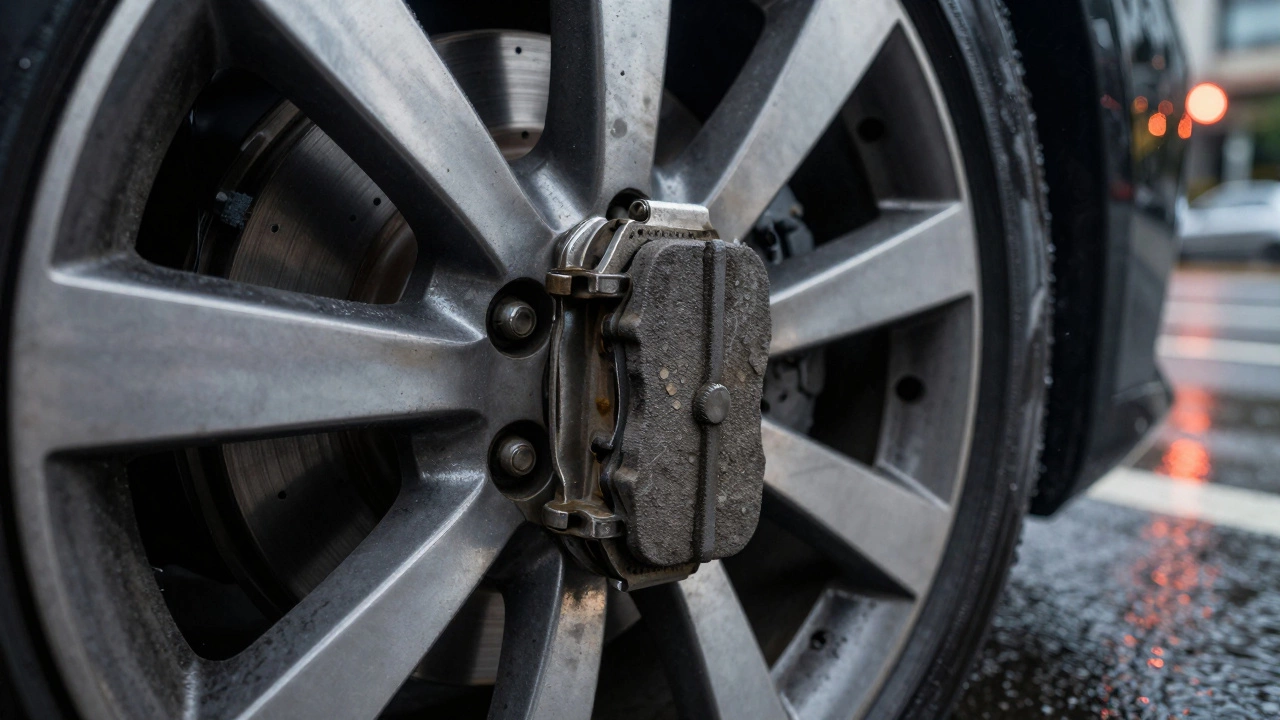
You don’t need a mechanic to check your pads. Most modern cars let you see them through the wheel. Pop your front wheels off (or just look through the gaps) and take a quick peek. Brake pads should be at least 3mm thick. If they’re thinner than a credit card, replace them. If you can see the metal backing plate - stop driving. You’re already damaging the rotor.
Some pads have wear lines marked on the surface. If those lines are gone, it’s time. Others have a color change - the friction material darkens as it wears. Compare what you see to a new pad. If it looks half gone or less, don’t wait. Even if the car seems to brake fine, thin pads heat up faster, fade under pressure, and fail without warning.
The car pulls to one side when you brake
If your car tugs sharply left or right every time you press the pedal, it’s not alignment. It’s uneven brake pad wear or a stuck caliper. One side is doing more work than the other. That could mean one pad is worn down to metal while the other still has 80% life left. Or worse - a caliper piston is seized, causing one pad to drag constantly.
This isn’t just unsafe. It’s expensive. Dragging pads overheat the rotor, warp it, and eat through tires faster. I’ve seen cars come in with one side of the brake pad completely gone and the other still thick as a book. The owner thought the brakes were fine because the car stopped - they didn’t notice the pull until it started vibrating.
There’s a grinding or growling noise
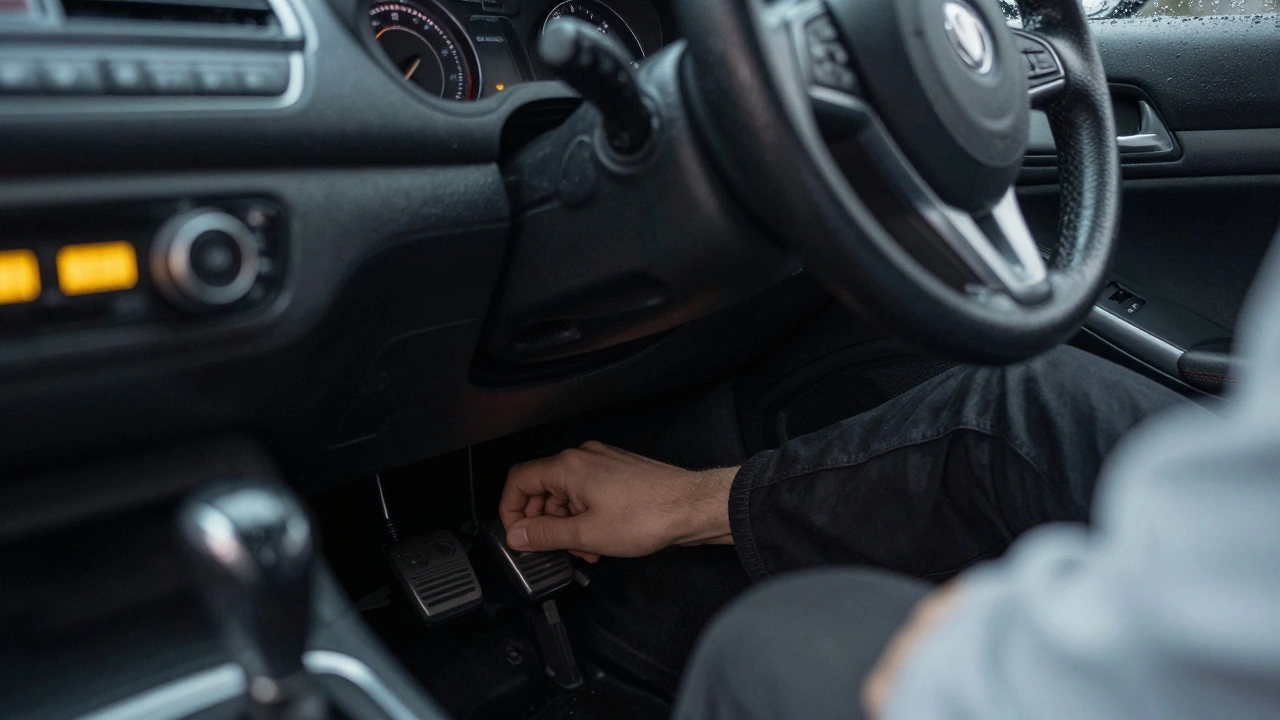
Now you’re past the squeal. The grinding noise? That’s the metal backing plate of the brake pad scraping against the rotor. You’ve ignored the warning. You’ve driven too long. The friction material is gone. Now you’re wearing down the rotor itself.
Rotors are expensive. A pair for a Ford Focus costs £120-£180. Add labour, and you’re looking at £400. Replace the pads at the first squeal? £150 total. That’s not a gamble - it’s common sense. Grinding also means your stopping distance is now dangerously long. In heavy traffic, that’s a recipe for an accident.
Your brake warning light is on
Modern cars have sensors built into the brake pads. When they wear past a safe point, the car’s computer turns on a yellow or red brake warning light - usually shaped like a circle with an exclamation mark inside, or just says "BRAKE". Don’t ignore it. Some drivers think it’s just a maintenance reminder. It’s not. It’s a direct signal from the pad sensor.
Not all cars have this feature, but if yours does, treat it like a seatbelt reminder. If the light comes on, get your brakes checked within 24 hours. Waiting until the next service is asking for trouble. A 2025 AA survey found that 31% of drivers ignored the brake warning light - and 1 in 5 of them had a brake failure within three weeks.
Your car takes longer to stop
Brake pads don’t just wear - they lose effectiveness. You might not notice it at first. But if you’re braking harder than usual to stop at traffic lights, or you feel like you’re coasting longer than before, your pads are fading. This happens because worn pads don’t grip the rotor as well. They heat up faster, lose friction, and take longer to slow you down.
Test it: find an empty road. Drive at 30mph and brake firmly. Then drive at 40mph and brake the same way. If the stopping distance feels longer than it used to - even by a car length - your pads are failing. Don’t wait for the noise. Don’t wait for the light. If the car doesn’t respond like it used to, it’s time to act.
What happens if you ignore bad brake pads?
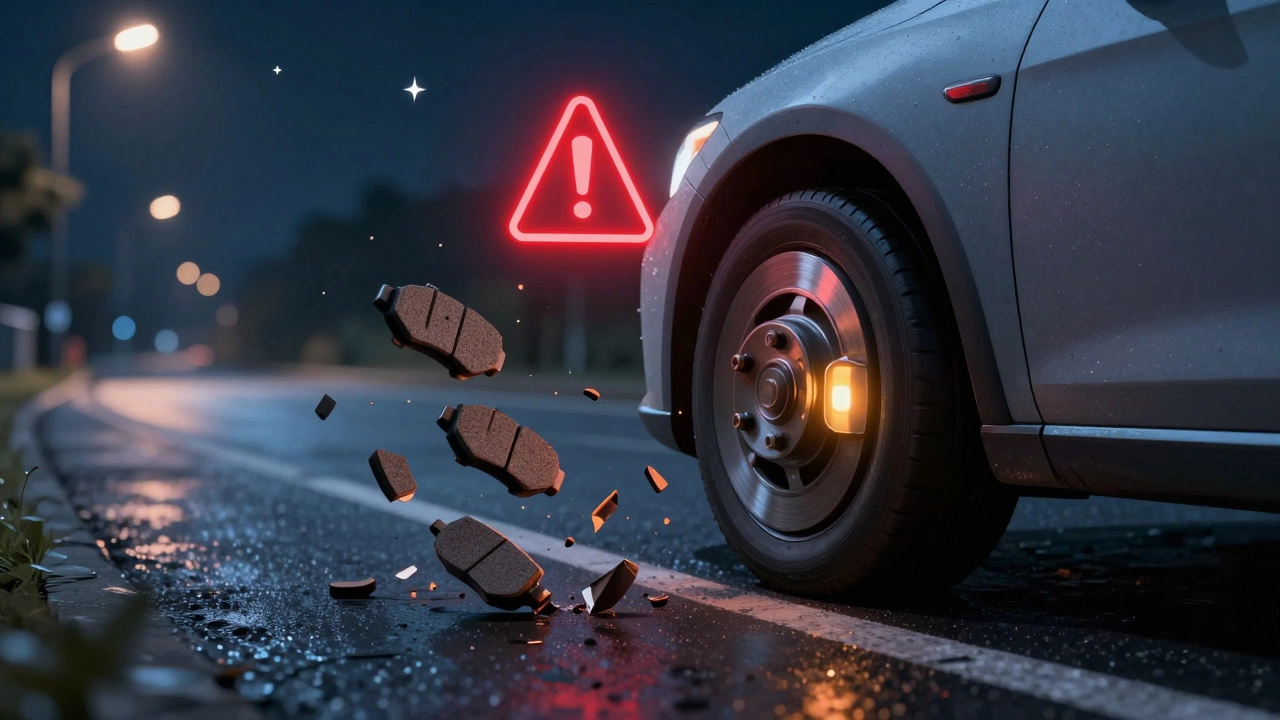
Ignoring worn brake pads doesn’t just cost money. It puts lives at risk. A study by the UK Department for Transport showed that 14% of all road accidents caused by vehicle defects involved brake failure - and 87% of those were due to worn pads or rotors. Most of these drivers had been told their brakes were fine at their last MOT - because the mechanic didn’t check the pad thickness properly.
Worn pads can cause:
- Warped rotors - leading to steering wheel vibration
- Caliper damage - from overheating and seizing
- Increased stopping distance - up to 40% longer in wet conditions
- Complete brake failure - especially under heavy braking
And once the rotor is damaged, you’re looking at a full brake job - not just pads. That’s £500-£800 instead of £150-£250.
How often should you check your brake pads?
Check them every 10,000 miles - or every six months if you drive in the city. If you drive mostly on motorways, you might get away with 15,000 miles. But if you drive in Manchester, Leeds, or Birmingham - with heavy traffic, frequent stops, and wet roads - check them every 5,000 miles.
Don’t wait for the MOT. Most garages only check for visible wear. They don’t measure thickness unless you ask. Ask for a brake pad thickness report. If they can’t give you a number in millimetres, find a better garage.
What to do next
If you’ve noticed any of these signs - squealing, grinding, soft pedal, pulling, or the warning light - don’t delay. Book a brake inspection. Get your pads measured. Replace them if they’re under 3mm. Use quality pads - not the cheapest ones. Cheap pads wear faster, make more dust, and don’t stop as well.
And if you’re not sure? Take your car to a trusted mechanic. Show them the symptoms. Ask them to show you the pads. A good technician will let you see the wear. They’ll give you a number. They won’t upsell you unless it’s needed.
Your brakes are your last line of defense. Don’t wait for disaster to remind you.
How long do brake pads usually last?
Most brake pads last between 25,000 and 70,000 miles, depending on driving style and conditions. City driving with frequent stops wears them faster - often under 30,000 miles. Motorway driving can extend life to 60,000+ miles. Always check thickness, not just mileage.
Can I drive with worn brake pads?
Technically, yes - but you shouldn’t. Driving with pads under 3mm is unsafe. You risk damaging rotors, losing stopping power, and causing an accident. If you hear grinding, stop driving immediately. Even if the car seems to brake, the system is compromised.
Do brake pads wear out faster in winter?
Yes. Wet, icy, and muddy roads mean more frequent braking. Salt on roads also accelerates corrosion on calipers and hardware, making pads stick or wear unevenly. In northern UK cities like Manchester, brake wear can be 20-30% faster in winter months.
What causes brake pads to wear unevenly?
Uneven wear usually comes from a stuck caliper piston, misaligned brake hardware, or worn guide pins. It can also happen if the wrong pads were installed - ones that don’t fit the rotor properly. Always get a full brake inspection if one pad is worn much more than the other.
Are expensive brake pads worth it?
Yes, if you drive regularly or in tough conditions. Premium pads last longer, stop better, and create less dust. Cheap pads may save £20 upfront but wear out in 15,000 miles. Quality pads last 40,000+ miles and give you more confidence in bad weather.
Next steps if your brake pads are bad
Step 1: Don’t panic. But don’t delay. Book a brake inspection with a trusted garage. Ask them to measure the pad thickness and show you the rotors.
Step 2: If pads are under 3mm, replace them. Don’t wait for the next service. Don’t wait for the noise to get worse.
Step 3: Check the rotors. If they’re scored, warped, or thinner than 2mm, replace them too. Don’t put new pads on old, damaged rotors.
Step 4: Choose quality pads. Look for brands like Brembo, Akebono, or Mintex. Avoid no-name brands sold online. They often fail faster and don’t meet UK safety standards.
Step 5: Get your brakes checked every 6 months or 10,000 miles - especially if you drive in the city. A quick visual check through the wheel can save you hundreds - and maybe your life.