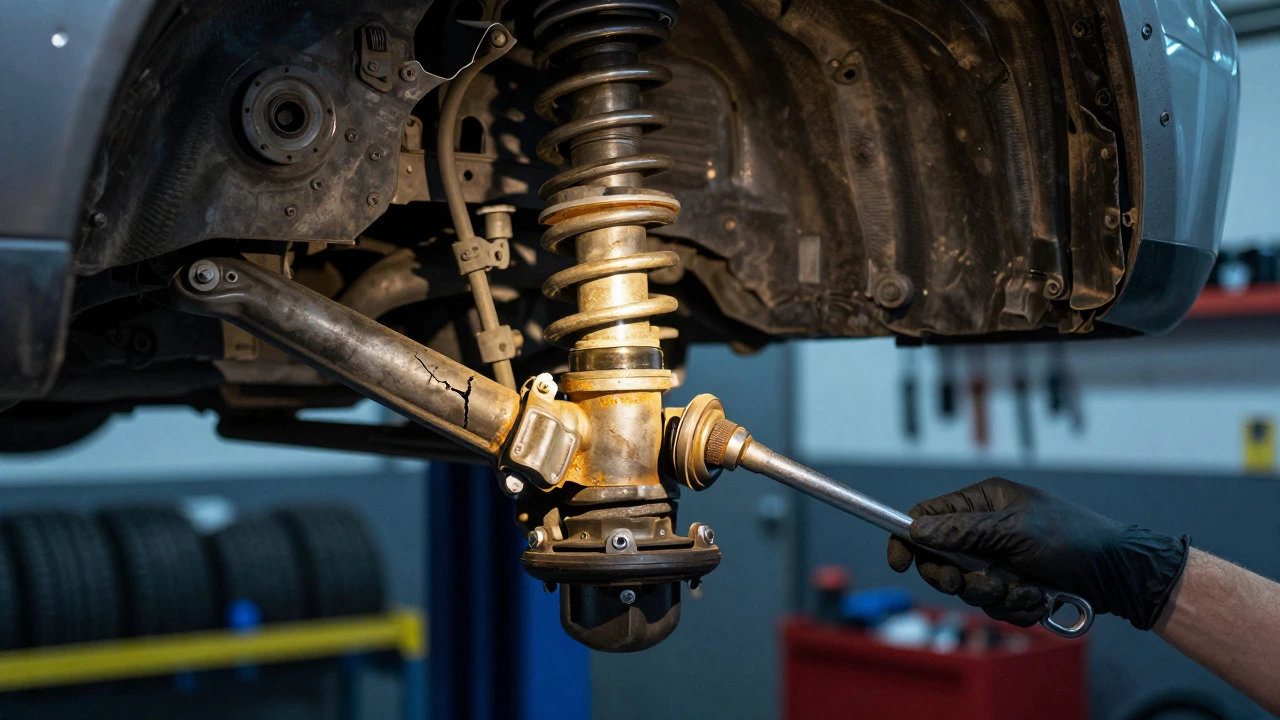
Suspension Noise Diagnostic Tool
Answer the questions below to identify which suspension component might be causing your car's noise.
Diagnostic Result
Have you ever heard a loud clunk from under your car when hitting a pothole and wondered if it’s serious? Or maybe there’s a persistent rattle that gets louder as you drive faster. Identifying what a damaged suspension sounds like is one of the best ways to catch mechanical issues before they turn into expensive repairs or safety hazards. The suspension system connects your tires to your chassis, managing ride comfort and steering stability. When parts wear out, they rarely fail silently; they make specific noises that act as warning signs.
This guide breaks down the exact sounds associated with different suspension failures. You will learn how to distinguish between a simple bushing issue and a failing shock absorber. We will cover the auditory symptoms of worn struts, loose ball joints, and broken coil springs. By the end, you will know exactly what to listen for during a test drive and when to pull over for an inspection.
Common Noises from Worn Suspension Components
The most frequent complaint regarding suspension health is the sound of metal hitting metal. This usually happens when rubber bushings harden and crack over time. As these bushings degrade, they lose their ability to dampen vibration, allowing metal components to rub against each other. Here are the primary sounds you need to identify:
- Loud Clunks: A single, heavy thud when going over speed bumps or rough patches often indicates worn control arm bushings or a loose sway bar link. This sound is distinct and usually comes from the front or rear corners depending on which side is affected.
- Rattling or Chattering: A high-frequency vibration or rattle that increases with speed can point to loose wheel bearings, though this is technically part of the hub assembly. However, loose tie rod ends or inner tie rods can also create a rhythmic knocking sound that resonates through the cabin.
- Squeaking or Squealing: If you hear a sharp squeak when turning the steering wheel, it is likely the power steering pump or a dry steering rack boot. While not strictly suspension, these components interact closely with the steering linkage, which is part of the suspension geometry.
- Banging or Knocking: A dull knock that persists even on smooth roads suggests a more severe issue, such as a collapsed spring or a severely worn shock absorber where the piston has bottomed out repeatedly.
It is crucial to note that temperature affects these sounds. Cold mornings often amplify the noise because rubber bushings stiffen up. If the noise disappears after ten minutes of driving, it strongly points to aging rubber components rather than critical metal-on-metal failure.
How Shock Absorbers and Struts Change Your Car's Acoustics
Shock absorbers and struts do just what the name implies: they absorb shock. When they fail, they stop damping the movement of the springs. This leads to a unique set of acoustic symptoms that differ significantly from simple bushing wear.
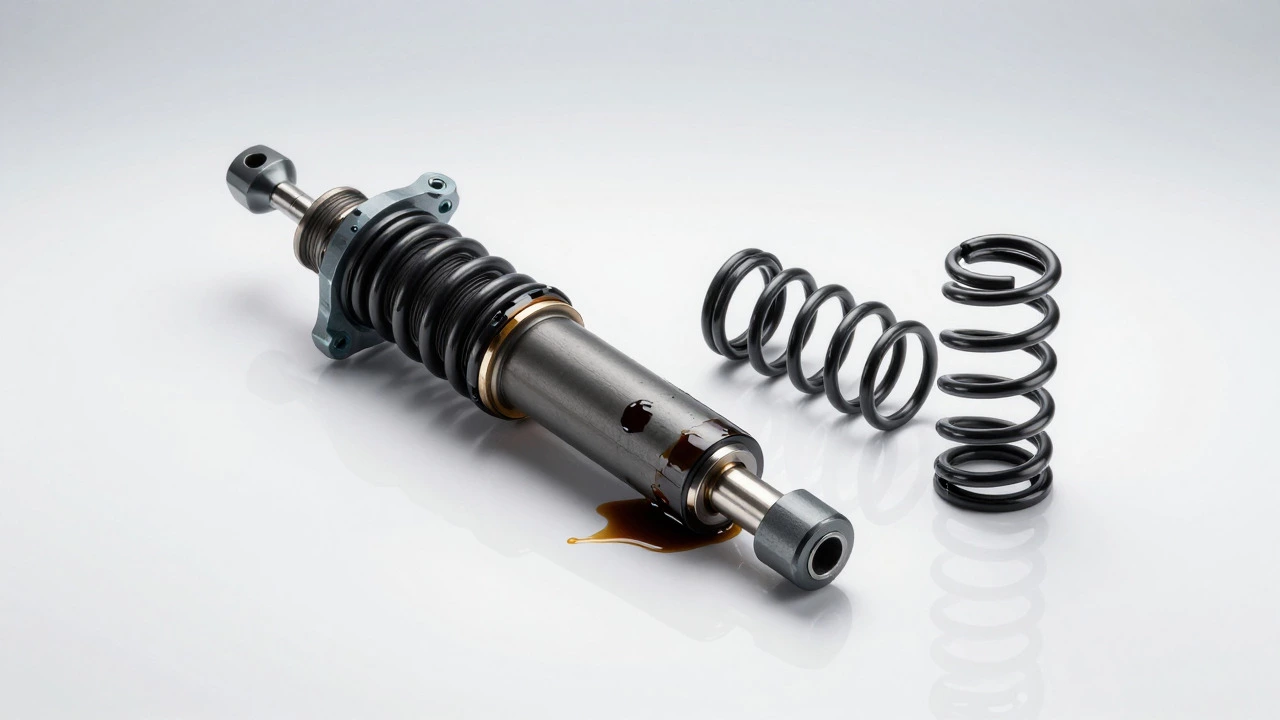
A failed Shock Absorber is a hydraulic cylinder that controls spring oscillation and prevents excessive bouncing. When the internal seals leak, the fluid escapes, and the component loses its resistance. You might notice a 'bouncy' feeling, but acoustically, a bad shock often results in a slapping sound. Imagine a wet towel being slapped against a concrete floor. That rapid, repetitive slapping occurs when the tire hits the road without proper cushioning. This sound is particularly noticeable on wet surfaces or gravel.
Struts, which combine the shock absorber and the upper spring mount, have a different failure mode. Because they bear structural load, a broken strut mount can cause a deep, hollow thump when compressing the suspension. If the top mount bearing wears out, you may hear a grinding or clicking noise specifically when you turn the wheels at low speeds. This is distinct from the clunk of a bushing because it is directional-it only happens when torque is applied to the steering column.
Distinguishing Between Front and Rear Suspension Sounds
One of the biggest challenges for drivers is locating the source of the noise. The physics of sound transmission in a vehicle means that a problem in the rear can sometimes be heard clearly in the front cabin, and vice versa. However, there are general rules of thumb to help you isolate the issue.
| Noise Type | Likely Component | Typical Location | Trigger Condition |
|---|---|---|---|
| Heavy Clunk | Control Arm Bushings | Front or Rear Corners | Hitting Potholes/Bumps |
| Rhythmic Rattle | Tie Rod Ends / Ball Joints | Front Wheels | Driving Over Rough Roads |
| Slapping Sound | Failed Shock Absorbers | All Four Corners | High Speed on Uneven Surfaces |
| Grinding/Clicking | Strut Top Mounts | Front Suspension | Turning Steering Wheel |
| Deep Thud | Broken Coil Spring | Specific Corner | Constant, Low Frequency |
Front-end noises are generally more urgent because they affect steering precision. If you hear a clunk from the front left corner when turning right, you are likely looking at a worn lower ball joint or outer tie rod end. These parts take immense lateral force during cornering. Rear-end noises, such as a rattling subframe or loose leaf spring shackle (in trucks/SUVs), tend to be less immediately dangerous but still compromise ride quality and can lead to uneven tire wear.

When to Worry: Critical vs. Cosmetic Sounds
Not every noise requires an immediate workshop visit. Understanding the severity helps you prioritize repairs. Some sounds are cosmetic annoyances, while others signal imminent failure.
- Cosmetic/Wear-and-Tear: Light creaking or squeaking from rubber boots or plastic covers. These are usually harmless and resolve themselves as the parts warm up. They indicate age but not danger.
- Moderate Concern: Intermittent clunks over small bumps. This suggests bushings are nearing the end of their life. You should monitor this monthly. If the frequency increases, schedule an inspection within two weeks.
- Urgent Repair: Constant knocking or a loss of damping (bouncing). If your car continues to bounce two or three times after hitting a bump, your shocks are gone. This reduces tire contact patch area, increasing braking distance by up to 15%.
- Emergency Stop: Loud metallic scraping or a complete loss of steering feel. This could mean a broken axle shaft or a detached control arm. Pull over safely and call for a tow.
A pro tip from mechanics in Manchester is to perform the 'bounce test.' Press down firmly on each corner of the car. It should settle back smoothly with no more than one or two minor bounces. If it keeps rocking, the hydraulic fluid inside the shocks has leaked out. This visual check complements the auditory diagnosis perfectly.
Factors That Amplify Suspension Noise
Several external factors can make existing suspension issues sound worse than they actually are. Knowing these variables prevents unnecessary panic.
- Temperature: As mentioned, cold weather stiffens rubber. A car that clicks in January might be silent in July. Always test drive in typical conditions.
- Load Weight: A fully loaded vehicle compresses the springs further. This puts additional stress on already-worn bushings, making clunks louder. If you regularly carry heavy cargo, inspect your rear suspension more frequently.
- Road Surface: Gravel and cobblestones transmit high-frequency vibrations directly into the chassis. Smooth asphalt masks many minor issues. Take a short drive on a rougher local road to reveal hidden problems.
- Tire Pressure: Under-inflated tires vibrate more, which can mimic a suspension rattle. Always check your tire pressures before diagnosing noise issues. Incorrect pressure changes the way the tire interacts with the wheel well, creating harmonic resonance.
Preventive Maintenance for Silent Suspensions
The best way to avoid dealing with noisy suspensions is proactive maintenance. Rubber components have a finite lifespan, typically lasting between 60,000 and 80,000 miles depending on driving conditions. In urban areas like Manchester, where potholes are common, this lifespan can be shorter.
Every 30,000 miles, ask your mechanic to inspect the following:
- Visual check of all rubber bushings for cracks or tears.
- Check for oil leaks around the shock absorber bodies.
- Inspect ball joints for play using a pry bar test.
- Verify that sway bar links are tight and not rusted through.
Replacing bushings in pairs (left and right) ensures balanced handling. Replacing only one side can lead to uneven wear on the opposite side, causing new noises to appear shortly after the repair. Additionally, keeping your alignment correct reduces the lateral load on suspension components, extending their life significantly.
Frequently Asked Questions
Does a bad suspension always make a noise?
No. Early-stage shock absorber failure is often silent. You might only notice increased body roll or longer braking distances. Noise usually appears when metal components start moving beyond their intended range, indicating advanced wear.
Is it safe to drive with a clunking suspension?
Generally, yes, for short distances at moderate speeds. However, a clunk indicates lost structural integrity. If the clunk becomes a constant rattle or you feel looseness in the steering, stop driving immediately to prevent a complete control arm detachment.
Can I fix suspension noise myself?
Simple tasks like tightening bolts or replacing sway bar links are possible for experienced DIYers. However, replacing ball joints, struts, or control arms requires special tools like a press and torque wrenches. Improper installation can be dangerous, so professional help is recommended for major components.
Why does my car sound different in winter?
Cold temperatures reduce the flexibility of rubber bushings and grease in joints. This makes them stiffer and noisier. Once the car warms up, the lubricants liquefy and the rubber softens, reducing the noise. This is normal behavior for aging components.
How much does it cost to fix a noisy suspension?
Costs vary widely. Replacing a set of bushings might cost £150-£300 including labor. Replacing all four shock absorbers can range from £400 to £800 depending on the vehicle type. A full front-end overhaul including ball joints and tie rods can exceed £1,000. Always get multiple quotes.