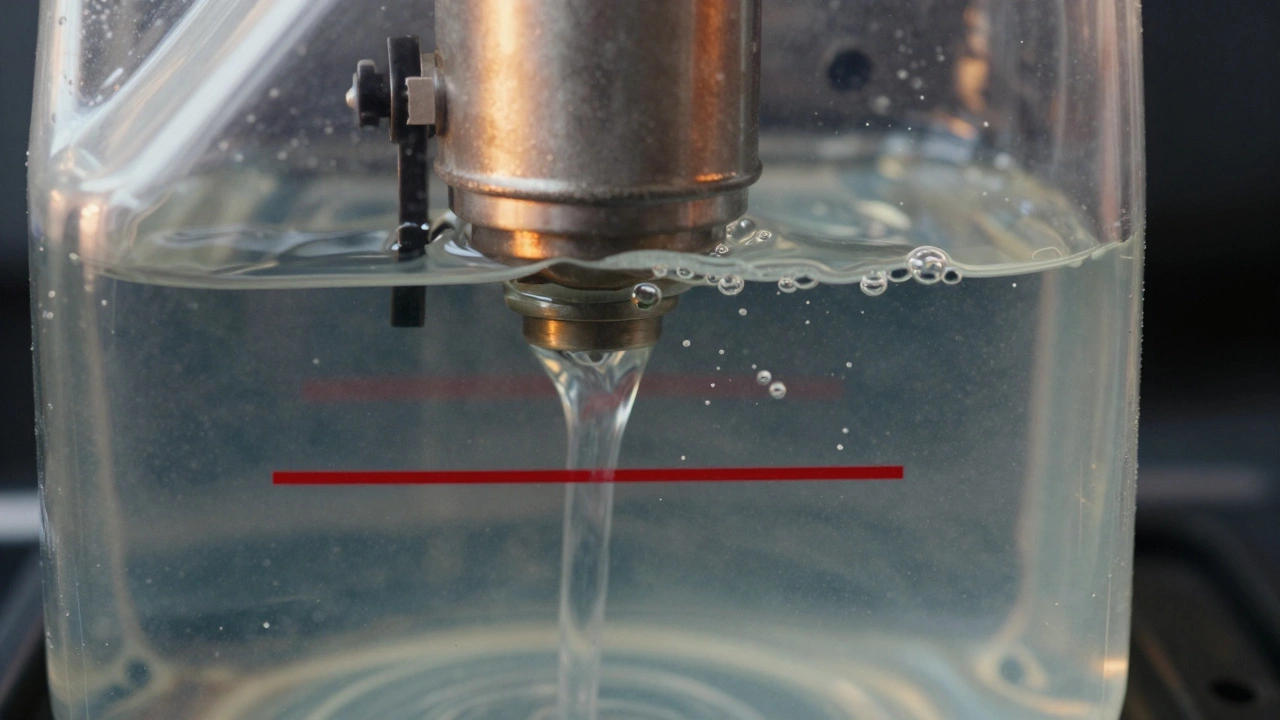
Ever wonder why your fuel pump dies before the car even hits 100,000 miles? It’s not magic. It’s not bad luck. It’s usually something simple - and preventable. Fuel pumps don’t just wear out on their own. They get burned up by things you can control. And if you’ve had one fail twice in five years, you’re not alone. Most of these failures happen because of dirt, low fuel, or old fuel lines - not because the pump was defective from the factory.
Low Fuel Levels Are the Silent Killer
Your fuel pump sits inside the gas tank, submerged in fuel. That fuel isn’t just fuel - it’s coolant and lubricant. When you run the tank below a quarter full, the pump starts sucking air instead of liquid. Air doesn’t cool. Air doesn’t lubricate. And without that, the pump overheats. Every time you drive with a low tank, you’re shortening the pump’s life. It’s like running a water pump dry in a garden hose. It might work for a while, but eventually, the motor burns out.
Studies from the Society of Automotive Engineers show that 70% of premature fuel pump failures occur in vehicles regularly driven with less than 1/4 tank. That’s not a coincidence. It’s physics. The pump’s electric motor spins at 5,000-7,000 RPM. Without fuel around it, the heat builds up fast. No cooling = no mercy.
Dirty Fuel Is the Main Culprit
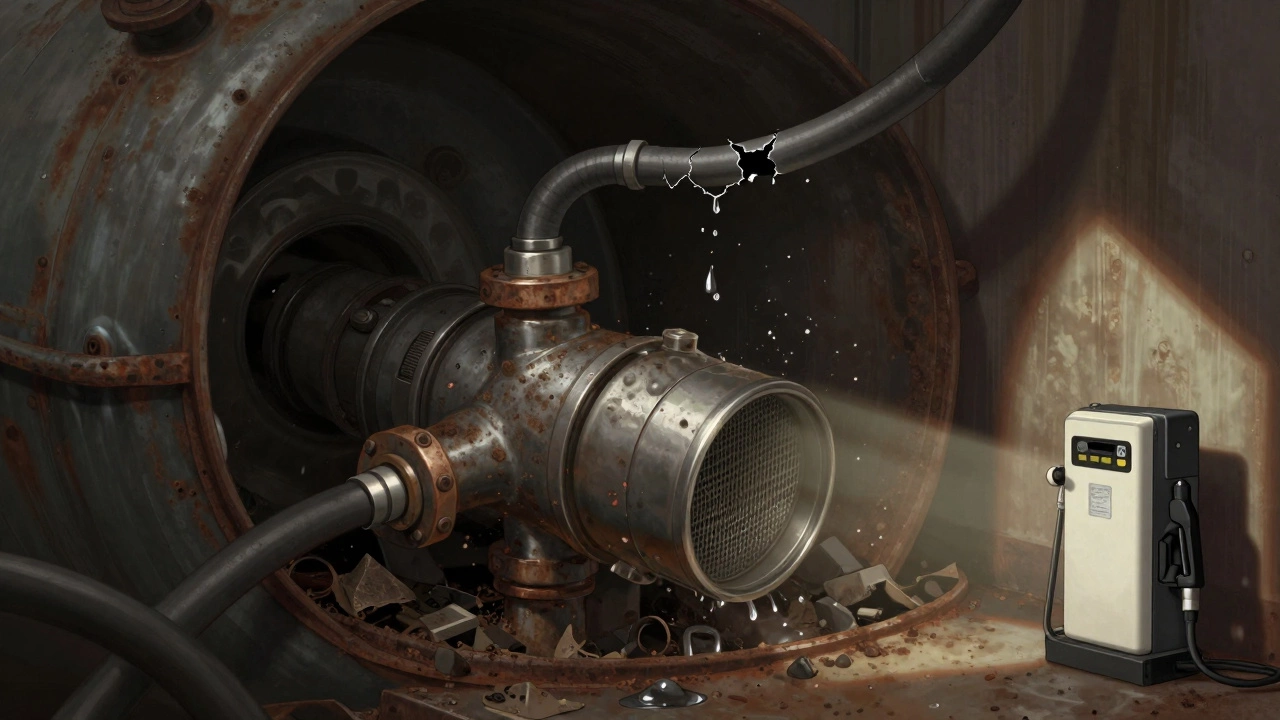
Fuel pumps are precision devices. They handle tiny amounts of fuel under high pressure. Even a speck of rust, dirt, or debris can clog the intake screen or jam the internal valves. Once that happens, the pump has to work harder to push fuel through. More work = more heat = more stress. Eventually, the motor overheats and dies.
Most of this dirt comes from old fuel tanks. Rust forms inside steel tanks over time, especially if the tank sits half-empty for months. Contaminants from poorly maintained gas stations also sneak in. In the UK, older stations - especially those with underground tanks - can have water buildup or sediment that gets sucked into your car. You won’t see it. You won’t smell it. But your fuel pump feels it.
Replacing a clogged fuel filter won’t fix the problem if the tank itself is full of sludge. That’s why mechanics in Manchester often recommend a tank flush before installing a new pump. Otherwise, the new pump dies in six months.
Old or Poor-Quality Fuel
Fuel doesn’t last forever. Gasoline starts breaking down after 30-60 days. Ethanol-blended fuel (which is what you get at every UK pump) absorbs water from the air. That water settles at the bottom of the tank. When the pump draws from that layer, it pulls in water and sludge. Water doesn’t burn. It causes misfires, corrosion, and overheating.
If you leave your car parked for weeks - like a classic car in winter or a weekend toy - the fuel degrades. That’s why people with older Audis, BMWs, or Land Rovers often report sudden pump failures after long storage. The fix? Use a fuel stabilizer before storage. Or better yet, drain the tank if you’re not driving for more than 60 days.
Worn Fuel Filters
Most cars have a fuel filter - sometimes inside the tank, sometimes under the hood. But many drivers ignore the replacement schedule. Manufacturers say replace it every 40,000-60,000 miles. Real-world experience? Most people wait until the car sputters or won’t start. By then, the filter is so clogged that the pump is straining to push fuel through.
A clogged filter forces the pump to work 30-50% harder. That extra load heats up the motor. Over time, the windings inside the motor degrade. That’s when you hear the whine - a high-pitched noise from the back seat. That’s the sound of a pump dying. Replace the filter before it chokes. Don’t wait for symptoms.
Electrical Problems
It sounds odd, but voltage issues can kill a fuel pump too. If the relay, fuse, or wiring is corroded or loose, the pump doesn’t get steady power. Instead of 12 volts, it gets 9 or 10. That’s not enough to spin the motor cleanly. The pump stutters, overheats, and eventually burns out.
Check the wiring harness near the fuel tank. Moisture from rain or car washes can corrode connectors. A bad ground connection is another silent killer. If the pump’s ground is loose, current flows through the wrong path - creating heat and stress. A simple multimeter test can catch this before the pump fails.
Aftermarket Parts and Cheap Replacements
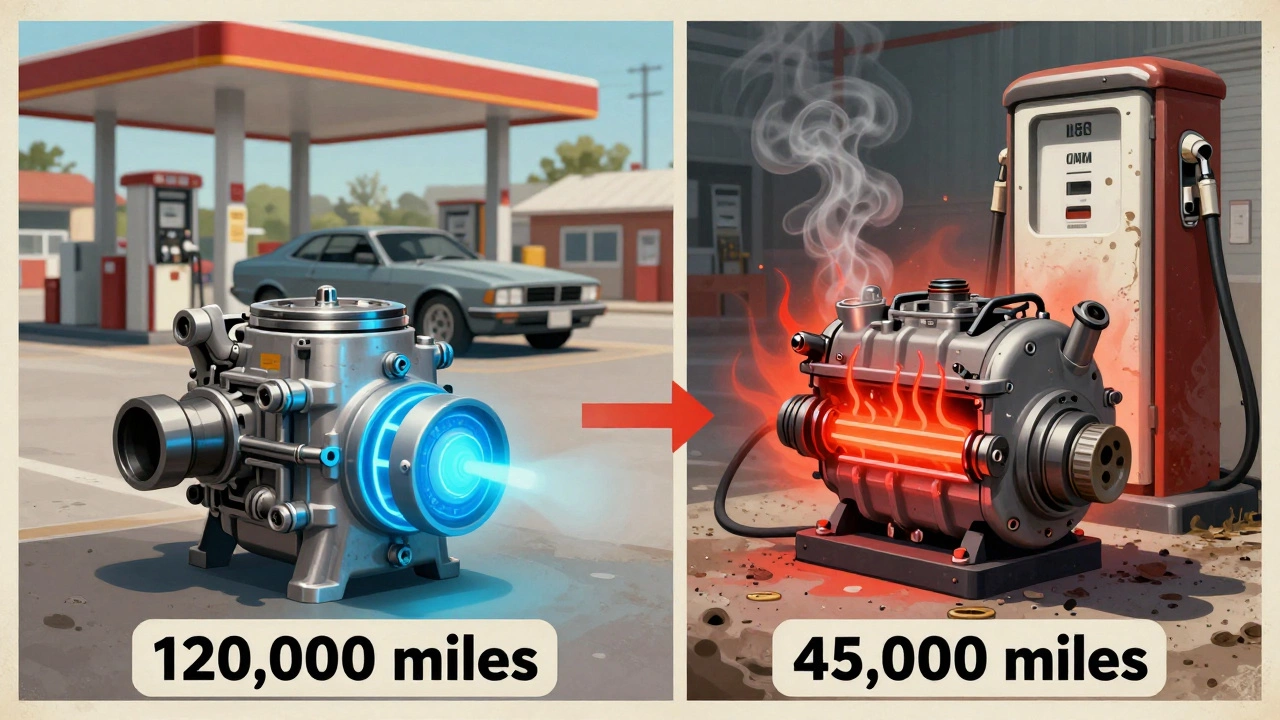
Not all fuel pumps are created equal. A cheap aftermarket pump might look identical, but it uses thinner wire windings, weaker bearings, or lower-grade magnets. These parts overheat faster. In tests by the UK Automotive Repair Association, OEM pumps lasted 120,000 miles on average. Budget replacements? 45,000.
Don’t save £50 on a pump if it means replacing it twice. Stick to OEM or trusted brands like Bosch, Denso, or Delphi. The difference in price is small compared to the cost of a tow truck and labor.
How to Prevent Fuel Pump Failure
- Never run the tank below a quarter full. Keep it at least 1/4 full at all times.
- Replace the fuel filter every 40,000 miles - even if the manual says 60,000.
- Use fuel from reputable stations. Avoid discount brands with no turnover.
- If storing a car for over 60 days, drain the tank or add fuel stabilizer.
- Check wiring and connectors for corrosion, especially near the tank.
- Always use OEM or high-quality replacement pumps - don’t go cheap.
- Consider a tank flush if your car is over 10 years old and you’ve had pump issues before.
Signs Your Fuel Pump Is Dying
- Engine sputters at high speeds - especially on highways.
- Car won’t start after sitting for a few hours.
- Loud whining or buzzing noise from the rear of the car.
- Loss of power when climbing hills or accelerating.
- Check engine light comes on with codes like P0191 or P0087.
If you notice even one of these, don’t wait. A failing pump can strand you. And once it dies, you’ll be paying £300-£700 in labor to replace it - especially if it’s buried in the tank.
What About Electric vs. Mechanical Pumps?
Most modern cars use electric fuel pumps inside the tank. Older cars (pre-1990s) had mechanical pumps driven by the engine. Those rarely fail unless the engine is worn. Electric pumps are more prone to heat and electrical issues. That’s why modern cars need more attention.
If you drive a 2010 or newer car, your fuel pump is electric. That means it’s more sensitive to fuel quality, temperature, and voltage. Treat it gently.
Final Thought: It’s Not the Pump - It’s What You Put in the Tank
Most fuel pumps don’t die because they’re defective. They die because they’re abused. You can’t see the dirt in the tank. You can’t smell the bad fuel. But your car feels it. The pump is the unsung hero. It moves fuel quietly, day after day. If you give it clean fuel, full tanks, and regular maintenance, it’ll last the life of the car. Skip those steps? It’ll burn out faster than your phone battery on 5G.
Can a dirty fuel filter cause fuel pump failure?
Yes. A clogged fuel filter forces the pump to work harder to push fuel through. This extra strain generates heat and wears out the motor faster. Replacing the filter on schedule is one of the easiest ways to protect your fuel pump.
Is it true that running on empty kills fuel pumps?
Absolutely. Fuel acts as a coolant and lubricant for the pump. When the tank is low, air gets pulled in, causing overheating. Studies show 70% of early pump failures happen in cars regularly driven with less than a quarter tank.
How long should a fuel pump last?
A well-maintained fuel pump should last between 100,000 and 150,000 miles. Many last even longer if you avoid low fuel levels, use clean fuel, and replace the filter on time. Cheap replacements may only last 40,000-60,000 miles.
Can bad gas damage a fuel pump?
Yes. Ethanol-blended fuel absorbs moisture over time, especially if the car sits unused. Water and sludge settle in the tank and get sucked into the pump, causing corrosion and clogs. Always use fuel stabilizer if storing a car for more than 60 days.
Should I replace the fuel pump if I’m replacing the fuel filter?
Not necessarily. But if your car is over 10 years old and you’ve had pump issues before, it’s smart to replace both. Fuel pumps are labor-intensive to replace, so doing them together saves money and avoids a repeat job. If the pump is still quiet and the car starts reliably, just replace the filter.