Clutch Replacement Cost Calculator
Estimated Total Cost:
$0.00
Replacing a clutch isn’t like changing your oil. It’s one of the bigger, pricier repairs you’ll face in your car’s life - and if you wait too long, it can turn into a much worse problem. You might be wondering: how much is clutch replacement? The answer isn’t simple. It depends on your car, where you live, and whether you’re buying a basic clutch kit or a full performance upgrade.
What’s Actually Involved in a Clutch Replacement?
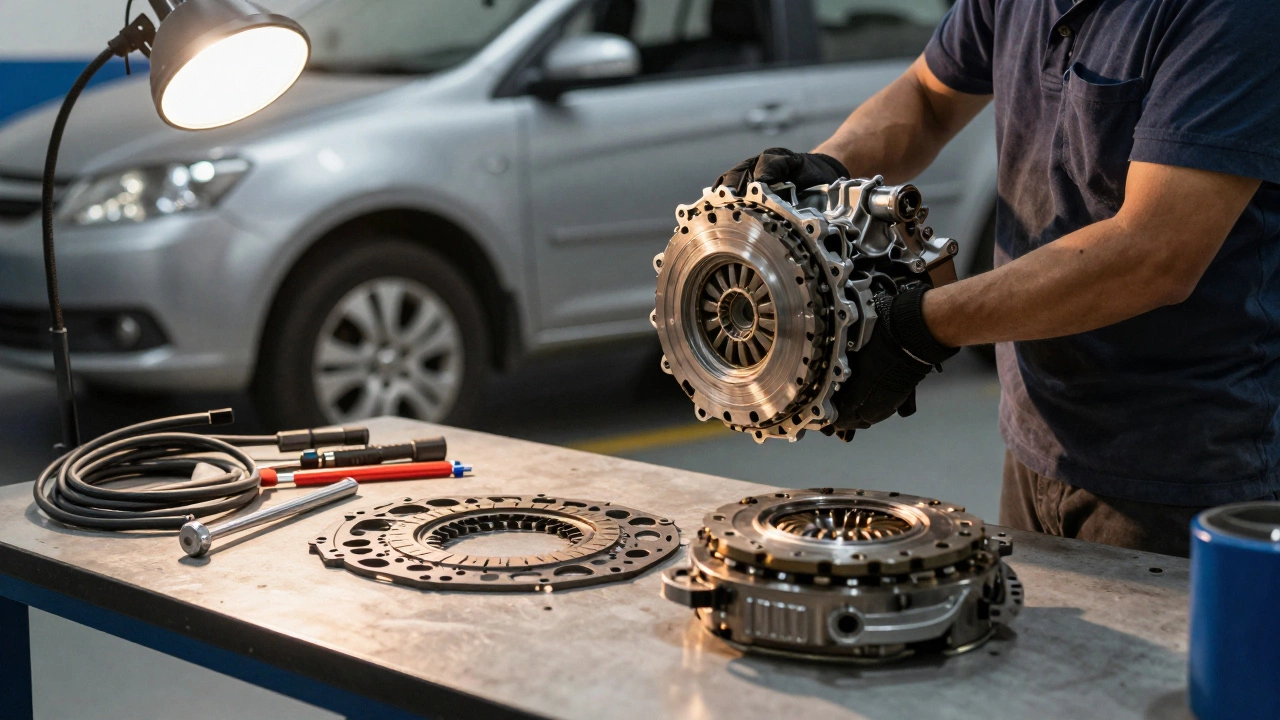
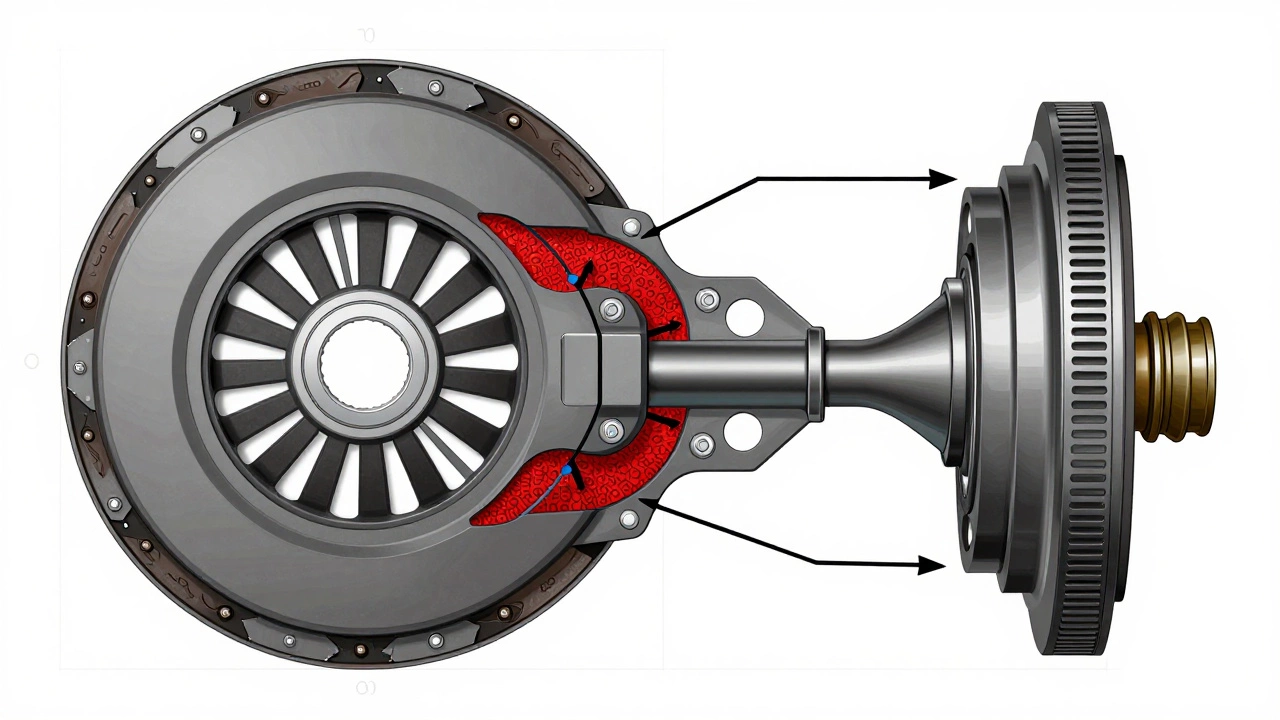
A clutch isn’t just one part. It’s a system: the clutch disc, pressure plate, release bearing, and sometimes the pilot bearing or input shaft seal. When mechanics say they’re replacing the clutch, they’re usually replacing all of these together. That’s why it’s called a clutch kit.
But here’s the catch: you can’t just swap out the clutch. To get to it, the transmission has to be pulled. That means disconnecting the engine mounts, the shifter linkage, the clutch cable or hydraulic line, and sometimes even the exhaust or starter motor. In rear-wheel-drive cars, it’s a bit easier. In front-wheel-drive cars - especially with transverse engines - it’s a tight, time-consuming job.
Most shops charge by the hour, and this job takes 5 to 8 hours of labor. That’s why labor often costs more than the parts.
Clutch Kit Prices: What You’re Actually Buying
Not all clutch kits are the same. You’ve got three main types:
- OE-Style Kits: These match what came in your car from the factory. They’re reliable, quiet, and last 80,000-120,000 miles. Brands like Sachs, LUK, and Valeo make these. Price range: $200-$400.
- Performance Kits: Made for drivers who tow, race, or mod their cars. These use heavier springs and stronger friction materials. They’re noisier and harder to drive in stop-and-go traffic. Price range: $400-$800.
- Economy Kits: These are cheap - sometimes under $150. But they often use lower-grade materials. They might work for a year or two, then fail. Not worth the risk.
For most daily drivers, an OE-style kit is the smart choice. If you’re hauling trailers or running a modified engine, go performance. Skip the bargain-bin kits - they’ll cost you more in the long run.
Labor Costs: The Big Variable
Labor is where prices jump around. In a small town in the Midwest, you might pay $75-$90 per hour. In New York City or Los Angeles, it’s $120-$180 per hour. Multiply that by 6-8 hours of work, and labor alone can range from $450 to $1,400.
Dealerships charge the most - often $1,600-$2,500 total. Independent shops are usually 20-30% cheaper. Some specialty transmission shops offer flat-rate pricing based on your car’s make and model. Always ask for a written estimate before they start.
Here’s a quick breakdown for common cars (2026 estimates):
| Vehicle Type | Clutch Kit (Parts) | Labor | Total Estimated Cost |
|---|---|---|---|
| Toyota Corolla (FWD) | $250 | $700 | $950 |
| Honda Civic (FWD) | $280 | $750 | $1,030 |
| Ford F-150 (RWD) | $320 | $650 | $970 |
| Subaru WRX (FWD/AWD) | $450 | $950 | $1,400 |
| BMW 3 Series (RWD) | $380 | $1,100 | $1,480 |
Why Clutch Replacement Costs Vary So Much
Some cars are just harder to work on. The Subaru WRX, for example, has a tight engine bay with the transmission mounted sideways. Mechanics need to remove the front subframe just to access the clutch. That adds hours - and cost.
Electric vehicles don’t have clutches. If you’re driving a hybrid like the Toyota Prius or Honda Insight, you’re probably safe - they use automatic transmissions. But if you’re driving a manual EV (yes, they exist in Europe), you might pay even more because of the high-voltage system isolation needed.
Older cars with worn mounts or rusted bolts can turn a 6-hour job into a 10-hour nightmare. That’s why a quote from a shop might jump from $1,000 to $1,800 after they start. Always ask if the estimate includes potential complications.
Signs You Need a Clutch Replacement
Don’t wait until you’re stuck on the side of the road. Here’s what to watch for:
- Slipping: The engine revs up but the car doesn’t accelerate - especially when going uphill or under load.
- Hard Pedal: You have to press the clutch all the way to the floor to shift.
- Grinding or Squealing: Noise when shifting, even when the clutch is fully pressed.
- Clutch Pedal Feels Spongy: Could mean air in the hydraulic line or a failing master cylinder - often happens with clutch wear.
- Clutch Smell: A burning odor like overheated brakes? That’s the friction material cooking.
If you notice any of these, get it checked. A failing clutch can damage the flywheel or transmission - adding $500-$1,200 to your bill.
Can You Save Money by Doing It Yourself?
Yes - if you’re experienced. A clutch replacement isn’t for beginners. You need a lift or jack stands, torque wrench, transmission jack, and time. You’ll also need to bleed the hydraulic system correctly. One mistake and you’re looking at a $2,000 transmission rebuild.
If you’re handy and have the tools, you can save $600-$1,200. A clutch kit costs $250-$500. Labor saved? $700-$1,400. But you’ll need a full day, and you’ll need to be 100% sure you’re doing it right. Most people don’t.
What to Avoid When Getting a Clutch Replaced
Here are the top mistakes drivers make:
- Only replacing the clutch disc: The pressure plate and bearing wear out at the same time. Replacing just one part is a waste.
- Skipping the flywheel inspection: If the flywheel is warped or scored, it’ll ruin your new clutch fast. Resurfacing costs $100-$200. Replacing it adds $300-$600.
- Going with the cheapest shop: Cheap labor often means rushed work, wrong parts, or bad alignment. You’ll pay twice.
- Not asking for a warranty: Reputable shops offer 12-24 months on parts and labor. If they don’t, walk away.
Should You Replace the Flywheel Too?
It depends. If your car has a dual-mass flywheel (common in European and newer cars), it’s often worth replacing. They’re expensive - $400-$900 - but they reduce vibration and noise. If it’s cracked, warped, or worn, leaving it in will destroy your new clutch in under 10,000 miles.
Single-mass flywheels (common in older American and Japanese cars) can usually be resurfaced for $150. That’s a smart move if the surface is still smooth.
Ask your mechanic to inspect the flywheel and show you the wear. If they say it’s fine but won’t show you, get a second opinion.
How Long Does a Clutch Last?
On average, a clutch lasts 50,000-100,000 miles. But that’s not a guarantee. Aggressive driving - riding the clutch, quick launches, hill starts with the brake - cuts life in half. City driving with heavy traffic wears clutches faster than highway driving.
Manual transmission cars in cities like New York, Chicago, or Seattle often need clutch replacements by 60,000 miles. In rural areas with open roads, 120,000 miles is common.
What Happens If You Don’t Replace a Bad Clutch?
You might think you can drive on it. You can - for a while. But a slipping clutch puts extra stress on the transmission. The gears grind. The synchronizers wear out. The input shaft can get damaged. That’s not a $1,000 fix anymore - that’s a $3,000-$5,000 transmission rebuild or replacement.
And if the clutch fails completely while you’re driving? You lose power. No gears. No way to accelerate. You’re stranded. And if you’re on a highway, it’s dangerous.
Is a clutch replacement worth it on an old car?
It depends on the car’s value and your plans. If your car is worth $3,000 and the clutch costs $1,500, it’s a tough call. But if the car runs well otherwise, has low mileage, and you plan to keep it for 2-3 more years, it’s worth it. If the car has other major issues - oil leaks, rust, transmission problems - it’s better to walk away.
Can I use a used clutch from a junkyard?
No. Clutches are wear items. Even if the car had low miles, the clutch disc is likely worn or contaminated. Used pressure plates can have cracked springs. A junkyard clutch might save you $100 now, but it’ll fail in 5,000 miles - and you’ll pay twice in labor to replace it again.
Does the type of transmission fluid matter?
Yes - but not for the clutch. Clutches don’t use transmission fluid. However, if your car has a hydraulic clutch (most modern manuals), the clutch master and slave cylinders use brake fluid (DOT 3 or DOT 4). Using the wrong fluid can damage seals and cause leaks. Always check your owner’s manual.
Why do some quotes include a flywheel replacement and others don’t?
It’s because not all flywheels need replacing. A mechanic should inspect the flywheel’s surface. If it’s smooth and not warped, resurfacing is enough. If it’s cracked, grooved, or has heat spots, it must be replaced. Some shops include it in the quote as a precaution. Others charge extra - ask for a breakdown.
How do I find a trustworthy shop?
Look for shops that specialize in transmissions or manual drivetrains. Check reviews that mention clutch work specifically - not just oil changes. Ask if they offer a warranty on labor and parts. Call three shops, ask for a written estimate, and compare. Avoid places that pressure you into upgrades on the spot.
Next Steps: What to Do Now
If you’re hearing grinding or feeling slipping, don’t wait. Get a quote from two or three local shops. Ask for the exact parts they’ll use - brand and model. Ask if the flywheel is included. Ask about the warranty. Don’t just pick the lowest price - pick the most transparent one.
If you’re not sure if you need a replacement yet, have a mechanic check your clutch pedal travel and test for slippage. A quick 15-minute inspection can save you hundreds - or thousands - down the road.