UK Clutch Replacement Cost Estimator
Enter your details below to get a realistic estimate for your clutch replacement job. Remember that prices vary by region and garage.
Vehicle & Service Details
Estimated Total Cost
This is an estimated range based on standard industry data.
You’re driving along, the engine revs up but the car doesn’t speed up like it should. Or maybe you hear a weird squeak when you press the pedal. That sinking feeling? It’s usually your clutch a friction device in a vehicle that engages and disengages the power from the engine to the gearbox saying goodbye. The big question on everyone’s mind is simple: how much is this going to hurt my wallet?
The short answer is that replacing a clutch isn’t cheap. In the UK, for an average family hatchback like a Ford Focus or Vauxhall Astra, you’re looking at anywhere from £400 to £800. For larger cars, SUVs, or performance vehicles, that number can easily jump to £1,200 or more. Why such a wide range? Because it’s not just about buying a part. It’s about the hours of labour required to get your hands deep into the guts of your car.
Why Is Clutch Replacement So Expensive?
If you look at a clutch kit a set of components including the clutch disc, pressure plate, and release bearing online, you might see prices starting as low as £50 or £60. So why are mechanics quoting you hundreds more? The culprit is labour.
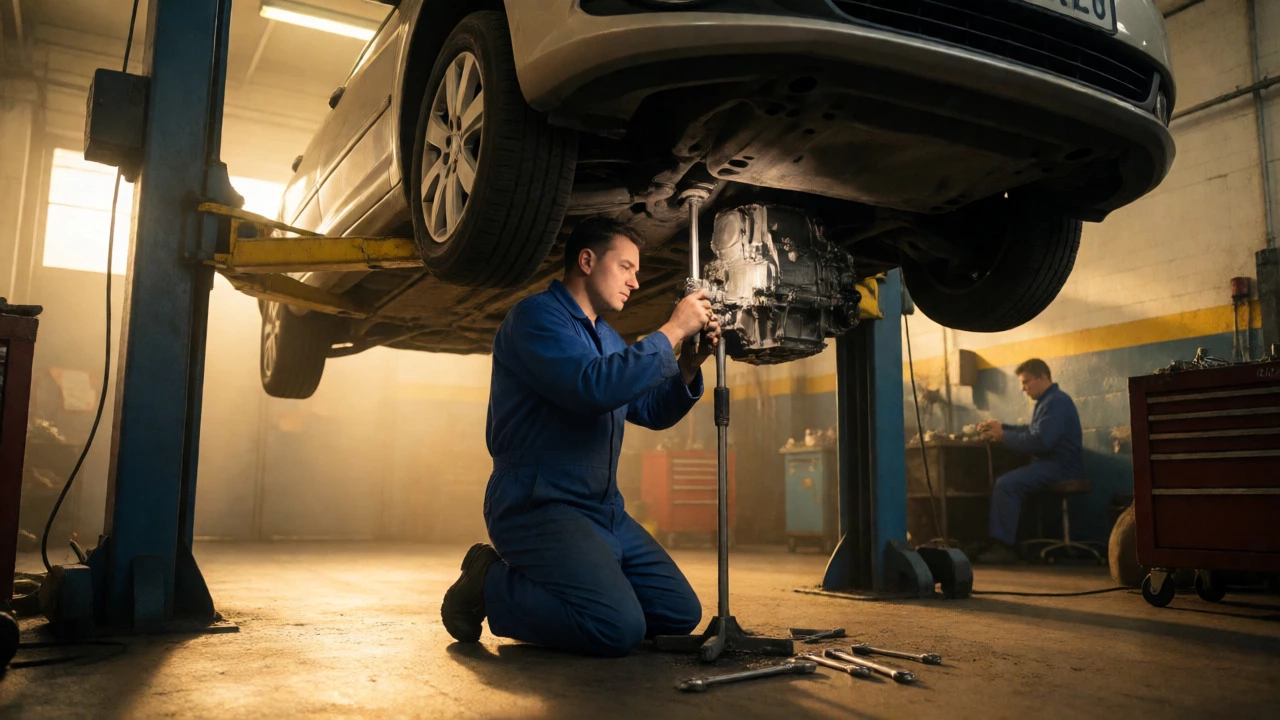
Replacing a clutch is one of the most invasive jobs on a manual car. To get to the clutch assembly, which sits between the engine and the gearbox, the mechanic has to remove the entire gearbox. On many modern front-wheel-drive cars, this means lifting the whole engine out of the engine bay. We are talking about 3 to 6 hours of hard physical work. If your local garage charges £60 per hour, that’s £180 to £360 just for the time before they even touch a new part.
It gets worse if you have all-wheel drive (AWD) or four-wheel drive (4WD). These systems often require removing additional driveshafts, transfer cases, and differentials. A Subaru Impreza or Audi Quattro will cost significantly more to fix than a rear-wheel-drive BMW because there is simply more metal to unbolt.
Breakdown of Costs: Parts vs Labour
To help you budget, let’s split the bill into two parts: the hardware and the human effort.
| Vehicle Category | Part Cost (Kit) | Labour Time | Total Estimated Cost |
|---|---|---|---|
| Small Hatchback (e.g., Fiesta, Polo) | £60 - £120 | 2.5 - 3.5 Hours | £350 - £550 |
| Family Saloon/Estate (e.g., Passat, Mondeo) | £100 - £200 | 3.5 - 5 Hours | £500 - £800 |
| SUV / Crossover (e.g., Qashqai, Tiguan) | £120 - £250 | 4 - 6 Hours | £600 - £950 |
| Luxury / Performance (e.g., BMW M-Sport, Golf R) | £200 - £400+ | 5 - 8+ Hours | £800 - £1,500+ |
Note: Labour rates vary wildly. Independent garages in the North of England might charge £45/hour, while London main dealers could charge £120+/hour.
What Exactly Are You Buying?
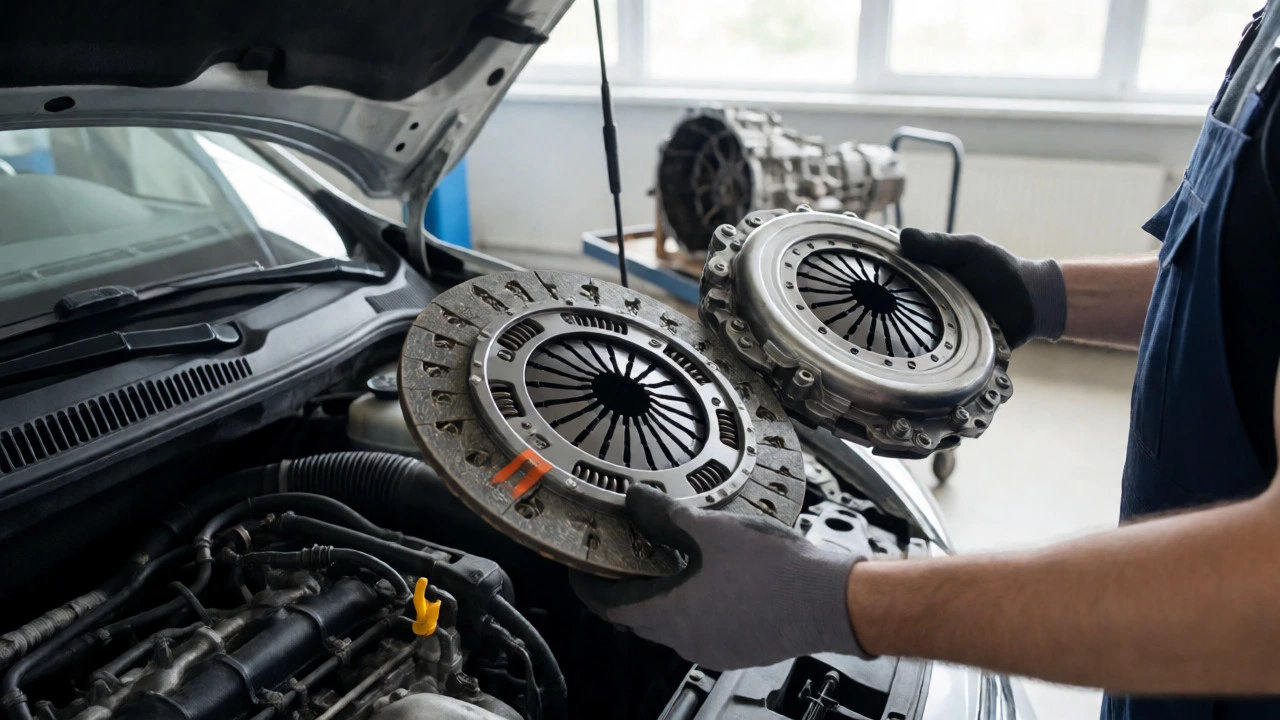
When a mechanic talks about replacing your clutch, they aren’t just swapping one piece of rubber and steel. They are installing a clutch kit an assembly containing the friction disc, pressure plate, and throw-out bearing. Replacing only the worn-out disc is a false economy. The pressure plate the component that clamps the clutch disc against the flywheel wears out too, and if you leave an old one in place, it will likely fail within months, forcing you to pay for another expensive labour job.
Most standard kits include:
- Clutch Disc: The part with the friction material that grips the flywheel.
- Pressure Plate: The spring-loaded mechanism that pushes the disc.
- Release Bearing (Throw-out Bearing): The bearing that presses on the pressure plate when you step on the pedal.
Some premium kits also include a pilot bearing or bushing. Always ask your mechanic what is included. If they quote you for "clutch replacement," ensure it covers the full kit, not just the disc.
The Hidden Extra: Dual Mass Flywheels
This is where costs can double unexpectedly. Many modern diesel cars (and some petrols) use a dual mass flywheel a flywheel with two separate masses connected by springs to dampen engine vibrations instead of a solid one. This design reduces noise and vibration, making your cabin quieter.
Here’s the catch: the springs inside the dual mass flywheel wear out over time. When you replace the clutch, mechanics strongly recommend checking the flywheel. If it’s worn, you must replace it too. A dual mass flywheel can cost between £200 and £500 alone. Add that to your clutch kit, and suddenly that £500 job becomes a £900 job.
How do you know if you have one? If your car rattles loudly when idling in neutral, or if you feel excessive vibration through the floor, it’s likely your flywheel is failing. Ask your mechanic to inspect it once the gearbox is off. It’s cheaper to check now than to reassemble everything and find out later.
Can You Drive With a Bad Clutch?
You can, but you shouldn’t. If your clutch is slipping slightly, you might manage for a few weeks. But if the pedal goes to the floor and won’t come back up, or if you can’t engage gears at all, you’re stranded.
Driving on a failing clutch risks damaging other components. If the clutch disc shatters, debris can get into the gearbox input shaft seal, causing oil leaks. Worse, if the release bearing seizes, it can chew through the pressure plate fingers, turning a simple swap into a complex repair. If you notice slipping-where the RPMs rise but speed doesn’t follow-book the appointment immediately. Don’t wait for total failure.
Independent Garage vs Main Dealer
Who should you trust with this job? There is no single right answer, but here is the reality:
Main Dealers: They use OEM (Original Equipment Manufacturer) parts and factory-trained technicians. They offer warranty protection that follows the car. However, their labour rates are high, and they often insist on replacing the dual mass flywheel as standard procedure, even if it’s borderline. Expect to pay top dollar.
Independent Specialists: Often 30-50% cheaper. Many independent mechanics use high-quality aftermarket brands like LuK a major German automotive supplier known for clutch and transmission components, Sachs another leading manufacturer of clutch systems, or Valeo a French automotive parts manufacturer. These brands supply the actual parts to manufacturers like VW and Ford. As long as the mechanic is experienced with manual transmissions, an independent specialist is often the smarter financial choice.
Pro Tip: Check reviews specifically mentioning "gearbox" or "clutch." Not every general mechanic is comfortable doing heavy drivetrain work. Find someone who does it regularly.
How to Save Money on Your Clutch Job
You can’t really cut corners on labour, but you can control the parts and timing.
- Get Multiple Quotes: Call three local garages. Give them your exact registration number. Ask for a fixed-price quote, not an estimate. Fixed prices prevent nasty surprises.
- Ask About Aftermarket Parts: Unless your car is under a manufacturer warranty that strictly requires OEM parts, ask if they can fit a LuK or Sachs kit. These are often identical to OEM parts but cost less.
- Check the Flywheel Early: If you have a dual mass flywheel, ask if a conversion to a solid flywheel is possible. Sometimes, switching to a lighter solid flywheel and a reinforced clutch kit saves money long-term, though it may increase vibration slightly.
- Combine Services: Since the gearbox is coming off, it’s the perfect time to replace the gearbox oil/seal or service the wheel bearings if they are noisy. Doing these together saves labour hours.
Frequently Asked Questions
How long does a clutch last?
Most clutches are designed to last between 60,000 and 100,000 miles. However, aggressive driving, frequent stop-start traffic, or riding the clutch (keeping your foot on the pedal when stopped) can reduce this lifespan to under 40,000 miles. Gentle driving habits extend life significantly.
What are the signs of a failing clutch?
The most common sign is slipping, where engine RPMs increase without a corresponding increase in speed. Other signs include a spongy or stiff clutch pedal, difficulty changing gears, strange noises when pressing the pedal, or a burning smell from overheated friction material.
Is it worth repairing an old car’s clutch?
It depends on the value of the car versus the repair cost. If your car is worth £1,500 and the clutch costs £700, it might be better to sell it as-is. However, if the rest of the car is in good condition and you plan to keep it for several more years, replacing the clutch is often cheaper than buying a newer vehicle.
Do I need to replace the flywheel every time?
Not always. Solid flywheels rarely need replacement unless they are scored or cracked. Dual mass flywheels, however, wear out internally and usually need replacing alongside the clutch kit to prevent future failures and vibrations. Always have the mechanic inspect it visually.
Can I replace a clutch myself?
Technically yes, but it is a difficult DIY job. It requires specialized tools like a clutch alignment tool, torque wrenches, and often engine support bars. Without proper alignment, the gearbox won’t bolt back up correctly. For most people, paying a professional is safer and ensures the job is done right the first time.