Air Filter Selector
Find Your Perfect Air Filter
Ever stared at the shelf at Halfords or Amazon, comparing a £5 air filter to a £30 one, wondering if the extra cash actually buys you better protection? You’re not alone. Many drivers assume that if it costs more, it must be better. But when it comes to air filters-both for your engine and your cabin-that’s not always true.
What even is an air filter?
Your car has two air filters. One’s for the engine. The other’s for the cabin. They do completely different jobs.
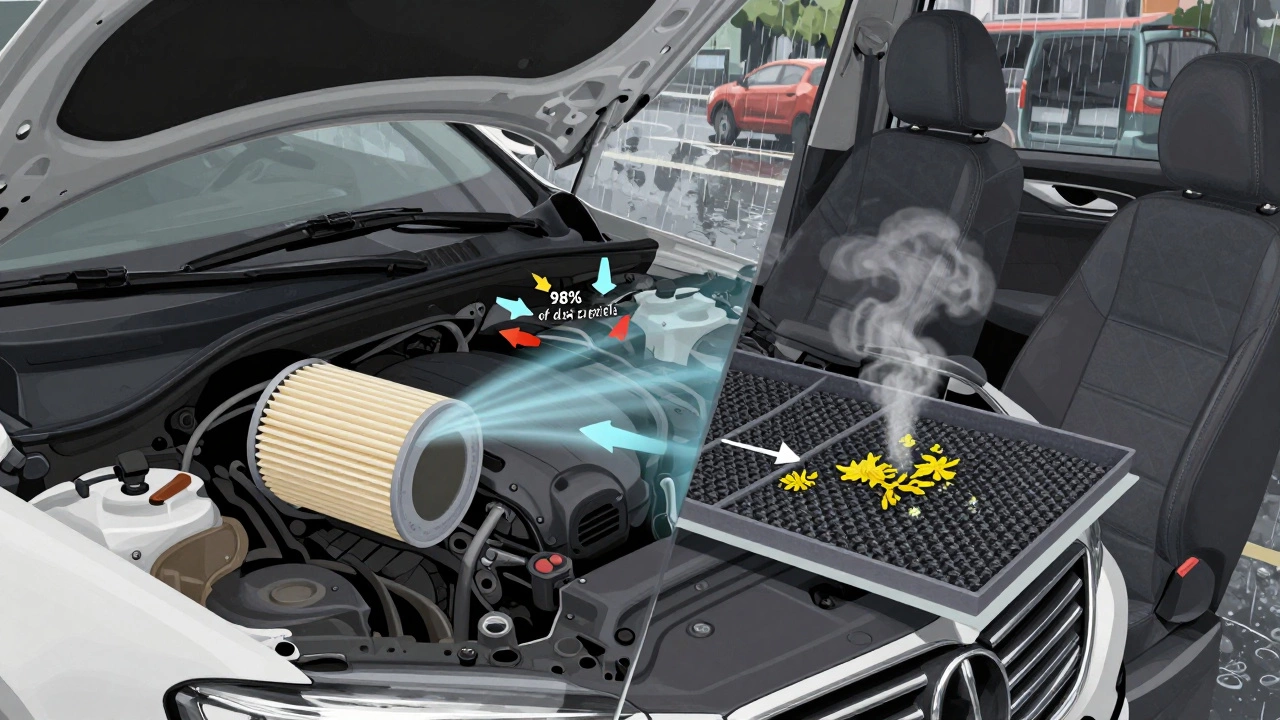
The engine air filter stops dust, dirt, and debris from getting into your engine. If dirt makes it past, it can scratch cylinder walls, wear out piston rings, and cost you thousands in repairs. The cabin air filter cleans the air coming into your car’s interior. It traps pollen, exhaust fumes, and even some mold spores so you don’t sneeze your way through every commute.
Both filters are made from paper, foam, or cotton gauze. The material affects how well they catch particles and how long they last. But price? That’s often more about branding than performance.
Do expensive engine air filters actually improve performance?
Some high-end brands claim their cotton gauze filters-like K&N or BMC-boost horsepower and fuel economy. They say you’ll get more airflow, which means your engine breathes better. Sounds great, right?
But here’s what independent tests show. The Automotive Engineering Journal ran a series of controlled tests on 12 popular air filters, including premium cotton models and standard OEM paper ones. They measured airflow, filtration efficiency, and engine wear over 20,000 miles. The results? High-end filters let in about 5-7% more air. But that tiny gain didn’t translate to noticeable power boosts in real-world driving. Not even on a dyno.
And here’s the catch: those reusable cotton filters need cleaning and re-oiling every 15,000-20,000 miles. If you forget, the oil can clog your MAF sensor. And replacing a MAF sensor costs £200-£400. That £30 filter just turned into a £400 problem.
Factory paper filters? They trap 98% of particles down to 5 microns. That’s more than enough. The engine doesn’t need a race-car filter. It needs clean air-and a filter that doesn’t break the bank or break your car.
What about cabin air filters?
Cabin filters are where price really matters-but not the way you think.
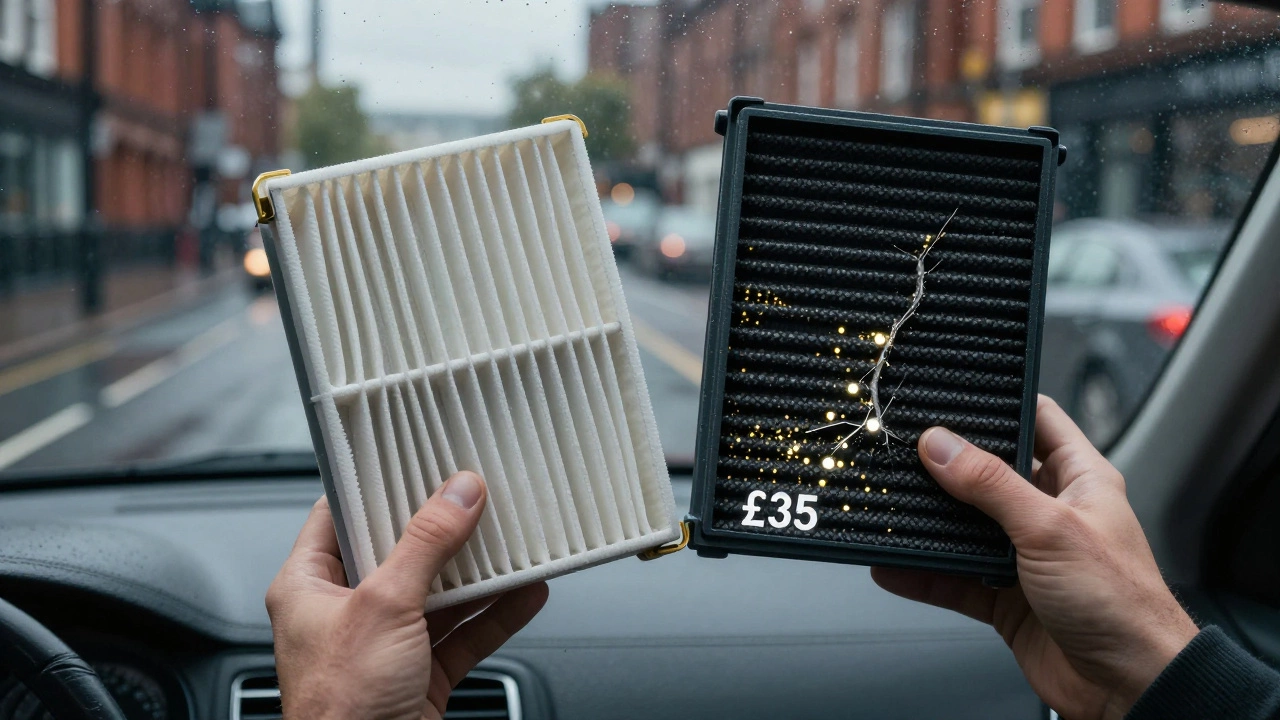
A basic cabin filter costs £8-£15. It’s made of paper and traps pollen and dust. A premium one might cost £25-£40. It adds activated carbon to absorb odours and exhaust gases. That’s useful if you drive in heavy traffic or near industrial areas.
But here’s the thing: the carbon layer wears out. After 12-18 months, it’s just a paper filter with a fancy label. If you live in Manchester, where rain and damp mean mould grows easily, you don’t need carbon. You need a filter that resists moisture. Some cheaper filters use antimicrobial coatings that work just as well.
And if you’re allergic? A HEPA-rated cabin filter (rare in cars) would help. But those are mostly aftermarket add-ons. Most premium cabin filters aren’t HEPA. They’re just carbon-filtered paper. Paying extra for “medical-grade” claims? Often marketing.
What actually makes a filter better?
It’s not the price tag. It’s the specs.
Look for these three things:
- Filtration efficiency: How many particles does it catch? Aim for 95%+ for engine filters, 90%+ for cabin.
- Service interval: How often do you need to replace it? OEM filters usually last 15,000-30,000 miles. Reusables need cleaning-don’t skip it.
- Fit: A filter that doesn’t seal right is useless. Even the best filter fails if air leaks around it.
Brands like Mann-Filter, Mahle, and Fram make filters that meet or exceed OEM standards. They’re often sold as “equivalent” replacements. They cost half the price of branded performance filters. And they’re made in the same factories.
When does spending more make sense?
There are three real cases where a pricier filter is worth it:
- You drive in extreme dust: Off-road, desert climates, or unpaved roads. A high-flow filter might help here.
- You have severe allergies: A cabin filter with true HEPA or enhanced carbon (like those from Bosch or Denso) can cut symptoms.
- You’re modifying your engine: If you’ve added a turbo, cold air intake, or tune, your engine needs more airflow. Then a performance filter makes sense.
If you just commute, do the school run, or take weekend drives? Stick with a decent OEM-replacement filter. You’re not racing. You’re not in the desert. You don’t need a filter that costs more than your oil change.
What to buy instead
Here’s a simple guide:
| Use Case | Recommended Filter Type | Average Price | Why It Works |
|---|---|---|---|
| Everyday driving (petrol/diesel) | OEM-replacement paper filter (Mann, Mahle, Fram) | £10-£18 | Traps 98% of particles, seals perfectly, lasts 20k miles |
| Heavy traffic or city driving | Cabin filter with activated carbon (Bosch, Denso) | £20-£30 | Reduces fumes and smells, still blocks pollen |
| Allergy sufferers | HEPA-rated cabin filter (if available) | £35-£50 | Catches fine allergens like mould and pet dander |
| Modified engine (turbo, tune) | Reusable cotton gauze (K&N, BMC) | £30-£50 | Higher airflow, but must be cleaned and oiled properly |
| Off-road or dusty conditions | Heavy-duty paper or foam filter | £25-£40 | More surface area, holds more dirt before clogging |
Don’t buy based on the brand name on the box. Check the part number. Use your car’s VIN on sites like RockAuto or Autodoc. They’ll show you exactly what fits-and what the OEM uses.
Common mistakes people make
- Thinking a bigger filter = better. Size matters only if it matches your engine’s intake. A filter that’s too big won’t seal.
- Using oil on paper filters. Never. It clogs them. Only cotton filters need oil.
- Waiting until the filter is black to replace it. By then, airflow is already down 20%. Replace every 15,000-30,000 miles, or yearly if you drive a lot.
- Buying “performance” filters for a stock engine. You’re not gaining power. You’re risking sensor damage.
I’ve seen cars brought in for poor fuel economy. Turned out, the owner had a £45 K&N filter on a 10-year-old Ford Focus. The filter was dirty, the oil had soaked into the MAF sensor, and the car was running rich. The fix? A £12 paper filter. Power returned. Economy improved. No magic, just common sense.
Final verdict
More expensive air filters don’t work better-for most people.
For your engine: stick with OEM-quality paper filters. They’re reliable, cheap, and designed to match your car’s airflow needs.
For your cabin: spend a bit more if you’re bothered by traffic fumes or have allergies. But don’t fall for “medical” or “nano-tech” claims. Look for carbon content and fit.
The real upgrade isn’t the filter. It’s changing it on time. A £10 filter replaced every year beats a £40 filter left in for three years.
Your car doesn’t care if your filter has a flashy logo. It just wants clean air. And that’s not expensive to deliver.
Do expensive air filters improve fuel economy?
Not noticeably. A clean, properly fitting OEM filter gives you the best fuel economy. Premium filters might let in slightly more air, but modern engines adjust automatically. Any tiny gain is lost if the filter is dirty or improperly installed.
Can I clean and reuse a paper air filter?
No. Paper filters are designed to be disposable. Washing them damages the fibres, creates gaps, and lets dirt through. Only cotton gauze filters are meant to be cleaned and reused-and even then, only with the right cleaner and oil.
How often should I replace my cabin air filter?
Every 12,000 to 15,000 miles, or once a year-whichever comes first. If you drive in the city or near construction, replace it sooner. A clogged cabin filter reduces airflow, makes the AC work harder, and can cause foggy windows.
Are aftermarket air filters safe?
Yes, if they’re from reputable brands like Mann, Mahle, or Fram. These are made to OEM specs. Avoid no-name filters on Amazon with fake reviews. They often have poor seals or inconsistent materials that let dust through.
Will a performance air filter void my warranty?
Only if it causes damage. Most manufacturers won’t void your warranty just because you used a K&N filter. But if your MAF sensor fails due to over-oiling, they can deny the claim. Stick to the manufacturer’s recommendations unless you’re modifying your engine.
If you’re unsure what filter to buy, check your owner’s manual. It lists the correct part number. Or take your old filter to a local garage. They’ll match it up in seconds. No need to guess. No need to overspend.