Suspension Symptom Analyzer
Select the symptoms you are experiencing with your vehicle. The more you select, the more accurate the analysis.
You drive past a speed bump and suddenly your car feels like a washing machine filled with bricks. That thud, the wobble, or the excessive nose-dive when braking are classic signs something isn't right down below. We often ignore these noises until a warning light flashes, but a weak suspension is one of those issues that quietly degrades your daily experience before becoming a genuine safety hazard. Living here in Manchester means we deal with potholes year-round, so understanding how worn-out suspension affects your vehicle is crucial for keeping your car roadworthy and safe.
The core job of any suspension system is to manage the movement between your wheels and the chassis. When that system gets weak, usually due to worn-out shock absorbers or fatigued springs, the energy from the road stops getting absorbed and starts affecting the rest of the car. It’s not just about comfort; it changes how physics plays out under your feet.
How Weak Suspension Manifests Physically
Most drivers rely on sight and sound, but suspension issues are felt physically first. You don’t need a diagnostic computer to spot this. If you push down hard on one corner of the car and release it, the vehicle should settle immediately. If it bounces up and down more than twice, your dampeners have lost their hydraulic bite.
- Excessive Bouncing: This happens because the shock absorber fluid has leaked out or the internal valves are worn.
- Noise Over Bumps: A clunking sound suggests bushings or mounts have developed play in the metal joints.
- Swaying: During cornering, the body leans excessively because the stabilizer bar linkages aren’t holding firm.
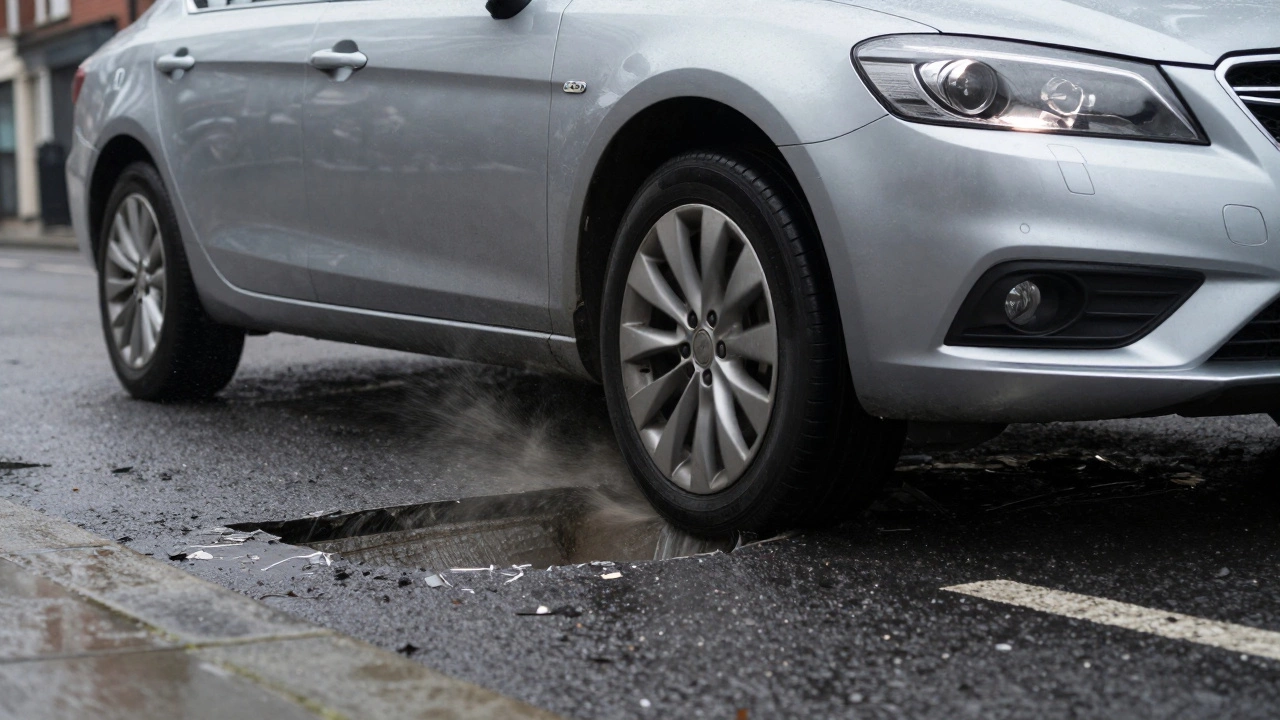
Consider a scenario where you hit a drain cover near the motorway slip road. On a healthy car, you hear a dull thump. On a car with weak suspension, you hear a metallic bang and feel a jolt travel through the steering wheel. That impact isn't going anywhere; it’s transferring directly to your car's frame.
| Symptom | Cause | Immediate Risk |
|---|---|---|
| Nose-diving during braking | Worn front shocks | Increased stopping distance |
| Squeaking noises | Dry bushings or struts | Potential component failure |
| Uneven tire tread | Misalignment due to sagging springs | Rippling or cupping of tires |
The Chain Reaction: Damage to Other Components
We tend to view suspension as an isolated system, but it interacts with everything else on the chassis. When the shocks stop working effectively, the constant vibration moves elsewhere. Your tires take the brunt of the abuse. Without proper damping, the tire loses contact with the road surface momentarily over bumps, creating a slapping motion known as cupping.
This leads to premature tire wear. You might be replacing your rear tyres every 20,000 miles instead of the standard 40,000 miles. In the UK climate, where roads are often uneven, this waste accumulates quickly. Beyond the rubber, wheel bearings suffer. Constant vertical movement places extra radial stress on the bearing races. Eventually, the bearings start humming while driving, leading to costly repairs that could have been avoided by a simple shock replacement.
Safety Implications on the Road
Safety is rarely black and white, but weak suspension definitely shifts the balance towards risk. Imagine trying to stop suddenly at a roundabout in heavy rain. If your suspension is compromised, the weight transfer is erratic. The car may lift off its wheels slightly upon hitting a dip, reducing traction exactly when you need grip most.
In winter conditions common around Manchester, this is critical. Snow and ice require maximum tire contact. Worn shocks reduce that contact patch stability. Statistics from various automotive safety bodies suggest that degraded suspension systems contribute to loss-of-control accidents in roughly 8% of severe wet-weather incidents. While specific numbers vary by study, the principle remains: less damping equals less control.
The MOT Test Connection
If you own a vehicle here in the UK, you cannot ignore suspension faults indefinitely. The Ministry of Transport (MOT) testers inspect for security and condition. They aren't looking for brand-new parts, but they do reject cars where suspension arms show significant corrosion or movement. Excessive tire wear caused by poor suspension can also trigger a test rejection.
Failing to address a soft spring or leaking shock absorber could lead to an MOT failure notice. This leaves you legally unable to drive the vehicle on public roads. Furthermore, insurance companies might scrutinize claims involving suspension damage. If an accident occurs due to neglect, such as hitting a curb because you didn't see it clearly due to body roll, coverage disputes could arise regarding maintenance history.
Diagnosing the Issue Yourself
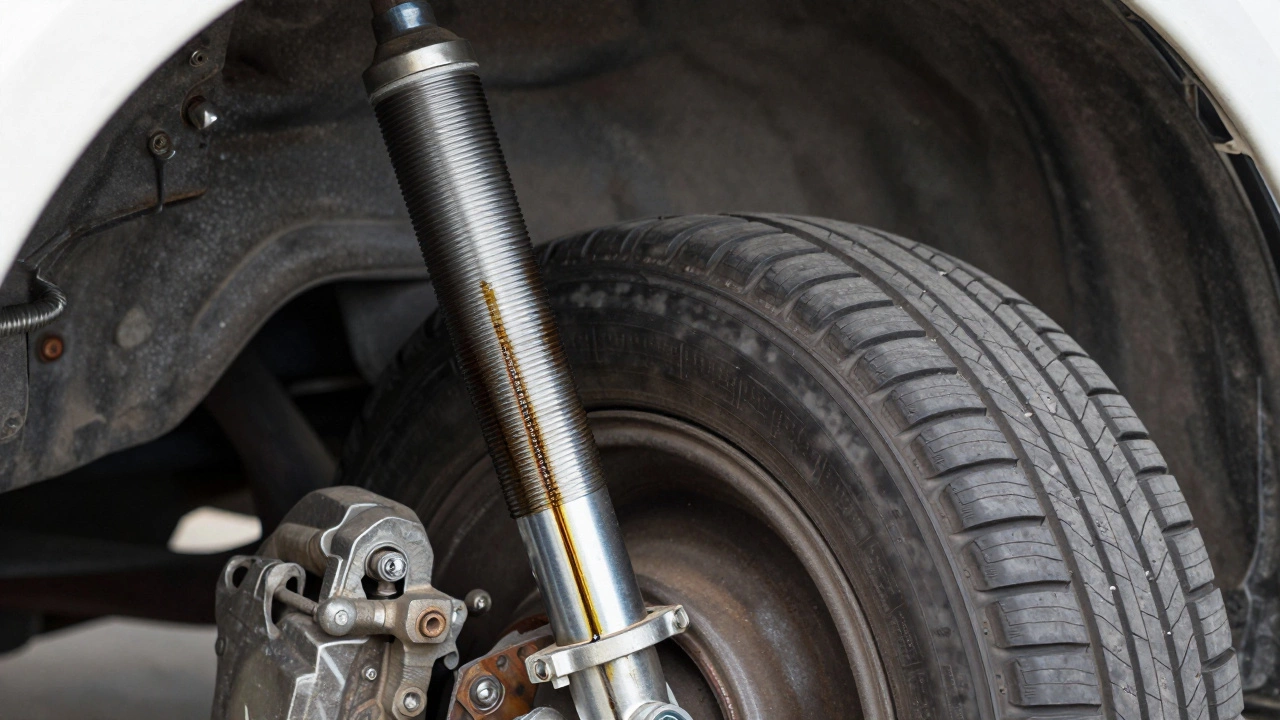
Before rushing to a garage, you can perform a few checks to confirm your suspicions. Start with the bounce test mentioned earlier. Press down firmly on the bumper and let go. Observe the motion. Now look at the fluid levels on the bottom of the shock absorber bodies. If you see grease or oil streaks running down the chrome shaft, the seal is broken.
Listen for clunks while slowly driving over uneven pavement. Ask a friend to walk behind you while you do this. Metal-on-metal sounds indicate loose bolts or worn ball joints. Visual inspection involves checking the mounting points for cracks or heavy rust. If you notice oil on the inside of the wheel rims after a wash, fluid is leaking past the dust boot.

Cost Considerations and Repair Options
Ignoring the problem saves money today but guarantees higher bills tomorrow. Replacing a pair of shock absorbers typically ranges from £150 to £400 depending on the make and model, including labour. However, ignoring it can lead to new tires costing £500 each or brake components wearing out prematurely. The math favors proactive maintenance.
Some mechanics suggest upgrading to gas-filled shocks rather than standard oil-filled ones for better longevity. For modern electric vehicles popular in 2026, active suspension systems are becoming more common. These use sensors to adjust stiffness in real-time, though repairing them requires specialized electronic diagnostic tools. Stick to OEM specifications unless you plan on modifying the vehicle significantly.
When to Replace Suspension Components
Time-based mileage matters less than usage intensity. Driving 10,000 miles on city streets differs vastly from 10,000 miles on country lanes. If you frequently transport heavy loads or drive on poor surfaces, you should inspect shocks annually regardless of mileage. Most manufacturers recommend a full inspection after four years of use.
Don't wait until the noise becomes unbearable. Once a strut mount fails, it damages the mounting plate which holds the assembly to the chassis. That repair alone doubles the labor cost. Addressing it early keeps the work within the realm of standard part replacement rather than structural correction.
Can I drive my car with weak suspension?
Technically yes, but you should limit driving to short distances only. Prolonged driving compromises handling and accelerates wear on tires and brakes.
How long do shock absorbers last?
They typically last between 40,000 and 60,000 miles. Rough roads, heavy loads, and extreme temperatures can shorten this significantly.
Does suspension affect fuel economy?
Yes, uneven tire wear causes increased rolling resistance. If the car drags due to misalignment, your engine works harder, consuming more fuel per mile.
Should I replace all shocks at once?
It is best practice to replace them in pairs (both front or both rear). Mismatched suspension creates uneven handling which feels unsettling to the driver.
Can wheel alignment fix weak suspension noises?
Alignment addresses tire angle, not suspension integrity. If parts are worn, alignment will not stop the clunking sounds or bouncing, and may be thrown off quickly.