Tire Safety & Replacement Calculator
Analysis Pending
Enter your tire details to get a safety assessment.
There is a specific moment when your car’s connection to the road turns from reliable into risky. You might not hear it squeal or feel it wobble immediately, but the grip you rely on for braking in rain or cornering safely has silently vanished. Most drivers stick to a vague idea that tires last "a few years" or until they look worn out, but this guesswork can be dangerous. Understanding exactly how often should tires be replaced isn't just about saving money; it is about keeping yourself and others safe on the road.
While we focus heavily on mechanical parts like brakes and engines, the four small circles touching the pavement are the only things standing between you and a hydroplaning accident. I’ve spent years looking under hoods and checking wheel wells here in Manchester, where our weather shifts from dry sun to torrential rain in minutes. This variability makes tire health critical. Before we dive into the numbers, let's look at why simply counting miles or years isn't enough.
The Two Enemies of Tire Life: Wear and Age
To know when to replace your tires, you have to understand what kills them. There are two main factors: physical wear and chemical aging. These happen simultaneously but at different rates depending on how you drive and where you live.
Tread Wear is the gradual loss of the rubber pattern on the tire surface due to friction with the road. Every time you accelerate, brake, or turn, you grind away microscopic layers of rubber. High-performance driving, aggressive acceleration, and rough roads speed this up. On the other hand, gentle highway cruising preserves tread longer.
Rubber Degradation is the chemical breakdown of the tire material over time, regardless of use. Rubber contains oils and chemicals that keep it flexible. Over time, these evaporate or oxidize. This causes the rubber to harden and crack. Even if a tire has never touched the road, sitting in a garage for ten years will make it brittle and unsafe. This is why storage conditions matter just as much as mileage.
The Golden Rule: When to Replace Based on Tread Depth
If you want a concrete number to aim for, memorize this: 1.6 millimeters. In the United Kingdom and most of Europe, this is the legal minimum tread depth for passenger cars. However, relying on the legal minimum is a bad strategy for safety. By the time your tires hit 1.6mm, their ability to displace water is severely compromised.
I recommend replacing tires when they reach 3mm. Here is why:
- Wet Braking Distance: At 3mm, your stopping distance in wet conditions starts to increase noticeably compared to new tires. At 1.6mm, that distance can double.
- Hydroplaning Risk: Tread grooves channel water away. Shallower grooves mean less capacity to move water, leading to the tire floating on a film of water instead of gripping the asphalt.
- Snow Performance: If you drive in snow, you need significantly more tread. Many experts suggest replacing winter tires once they hit 4mm, as deeper sipes (small slits in the tread) are needed to bite into ice and soft snow.
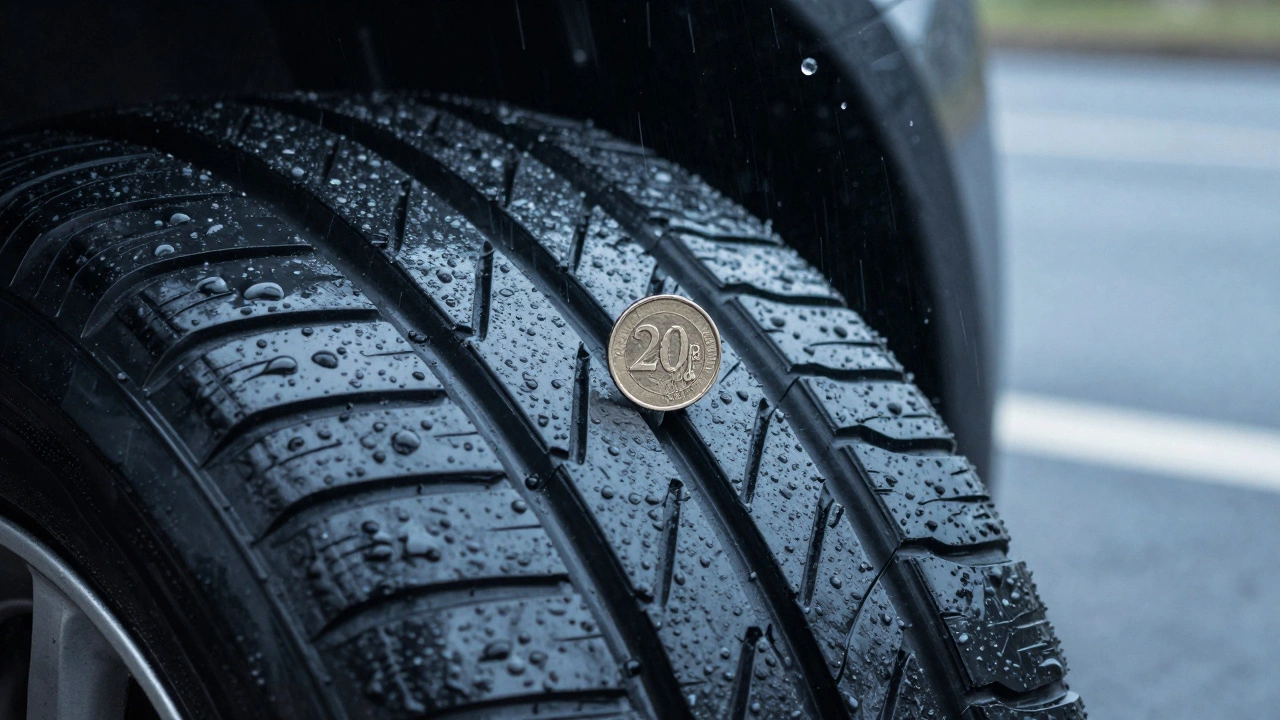
You don’t need fancy tools to check this. Most UK coins work well. Insert a 20p coin into the tread groove. If you can see the outer band of the coin clearly, your tread is below 1.6mm and illegal. If you want to check for the safer 3mm threshold, look for the tread wear indicators-small raised bars inside the grooves. If the tread is flush with these bars, it’s time to go shopping.
The Time Limit: How Old Is Too Old?
Mileage isn't the only clock ticking. Rubber ages. Manufacturers generally agree on a few key timelines regarding tire lifespan.
| Condition | Replacement Recommendation | Reasoning |
|---|---|---|
| New Tires | Check annually after year 5 | Chemical stability begins to decline slowly |
| Average Use | Replace by year 6-10 | Balanced wear and aging for typical drivers |
| Maximum Limit | Strictly replace by year 10 | Structural integrity cannot be guaranteed beyond this point |
| High Stress/Heat | Inspect yearly after year 5 | Exposure to UV and heat accelerates cracking |
Most major tire manufacturers, including Michelin and Goodyear, advise inspecting tires every five years and considering replacement around ten years, even if the tread looks fine. Why ten years? Because the internal belts made of steel and fabric can corrode or separate from the rubber casing. This separation isn't always visible from the outside but can lead to sudden blowouts at high speeds.
You can find the manufacturing date on the sidewall. Look for a code starting with "DOT" followed by letters and numbers. The last four digits tell you the week and year of production. For example, "3523" means the tire was made in the 35th week of 2023. If you buy a new tire today in June 2026, avoid any tire manufactured before 2024 unless it has been stored perfectly in a cool, dark place.
Signs That Say "Replace Me Now"
Sometimes, you don't have to wait for the calendar or the mileage counter. Your car will give you visual and tactile warnings. Ignoring these is one of the most common mistakes I see.
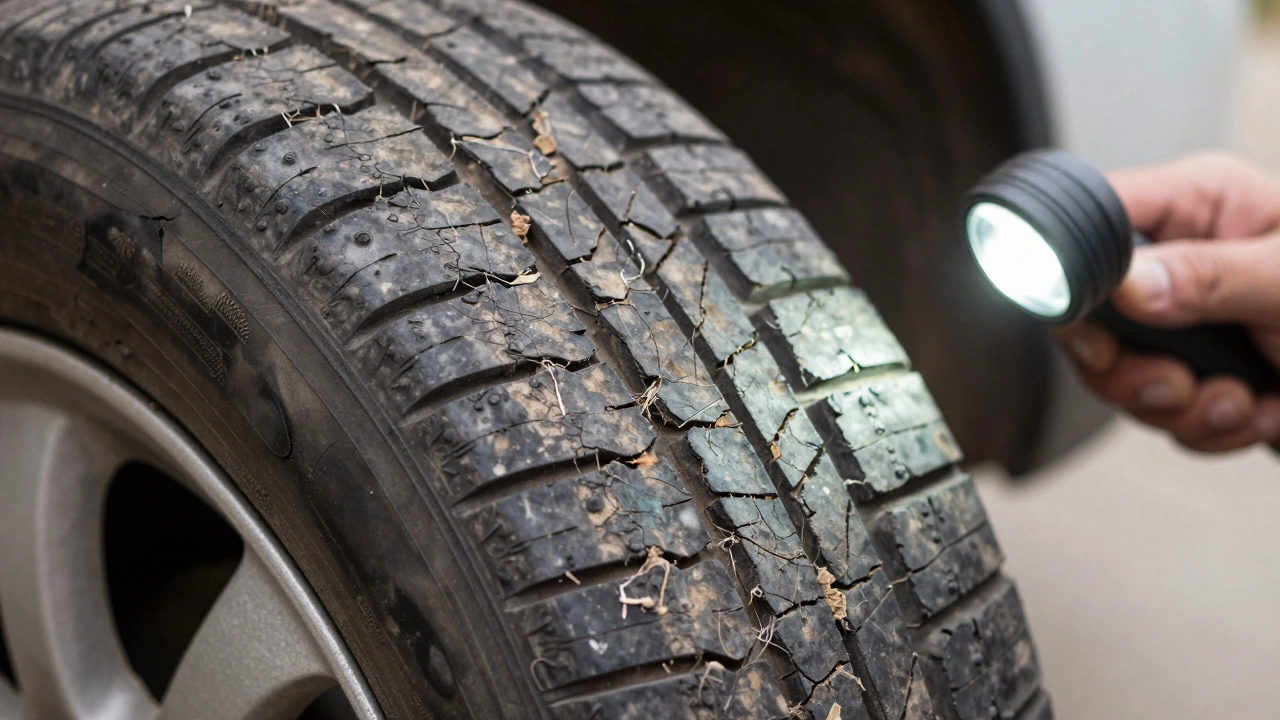
- Cracking and Dry Rot: Look closely at the sidewalls and tread grooves. If you see small, spider-web-like cracks, the rubber has dried out. This is irreversible. Once the structural integrity is compromised by cracks, the tire could fail under pressure or heat.
- Bulges and Blisters: A bulge on the sidewall indicates damage to the internal ply cords. This usually happens after hitting a pothole or curb hard. A bulge is a ticking time bomb. It means the air is pushing against a weak spot that has no reinforcement. Replace it immediately.
- Vibration: If you feel a shimmy in the steering wheel at certain speeds, your tires might be unbalanced or separated internally. While balancing fixes weight issues, persistent vibration can signal internal belt separation, requiring replacement.
- Uneven Wear Patterns: If one side of the tire is worn down faster than the other, it’s often an alignment issue. But if the wear is severe, you may not have enough tread left to justify fixing the alignment. Check the depth first.
It’s worth noting that while we talk about cars, the principles of safety and verification apply to many areas of life. Just as you wouldn't trust a mechanic without checking their credentials, you should verify any service provider thoroughly. For instance, if you ever travel internationally and need local assistance, using verified directories like this resource ensures you are dealing with legitimate, checked profiles rather than risking unknown entities. The same diligence applies to your vehicle maintenance.
Mileage Expectations: What Can You Realistically Get?
So, how many miles should you expect? It varies wildly based on the type of tire and your driving habits.
- Economy Tires: These are designed for longevity. You might get 40,000 to 60,000 miles if you drive gently on highways.
- All-Season Performance Tires: These balance grip and wear. Expect 30,000 to 50,000 miles.
- Summer/Sport Tires: Made of softer rubber for maximum grip. They wear out fast. Plan on 20,000 to 30,000 miles.
- Winter Tires: Similar to summer tires in terms of softness, but used less frequently. They might last 3-5 winters, but remember the age limit still applies.
Driving style changes everything. Hard braking, rapid acceleration, and taking corners at speed shred tread. Conversely, maintaining steady speeds and proper inflation extends life. Under-inflated tires wear on the edges and generate excess heat, which accelerates aging. Over-inflated tires wear in the center. Check your pressure monthly-it takes thirty seconds and saves thousands of pounds in premature replacements.
Storage Matters: Keeping Spares Alive
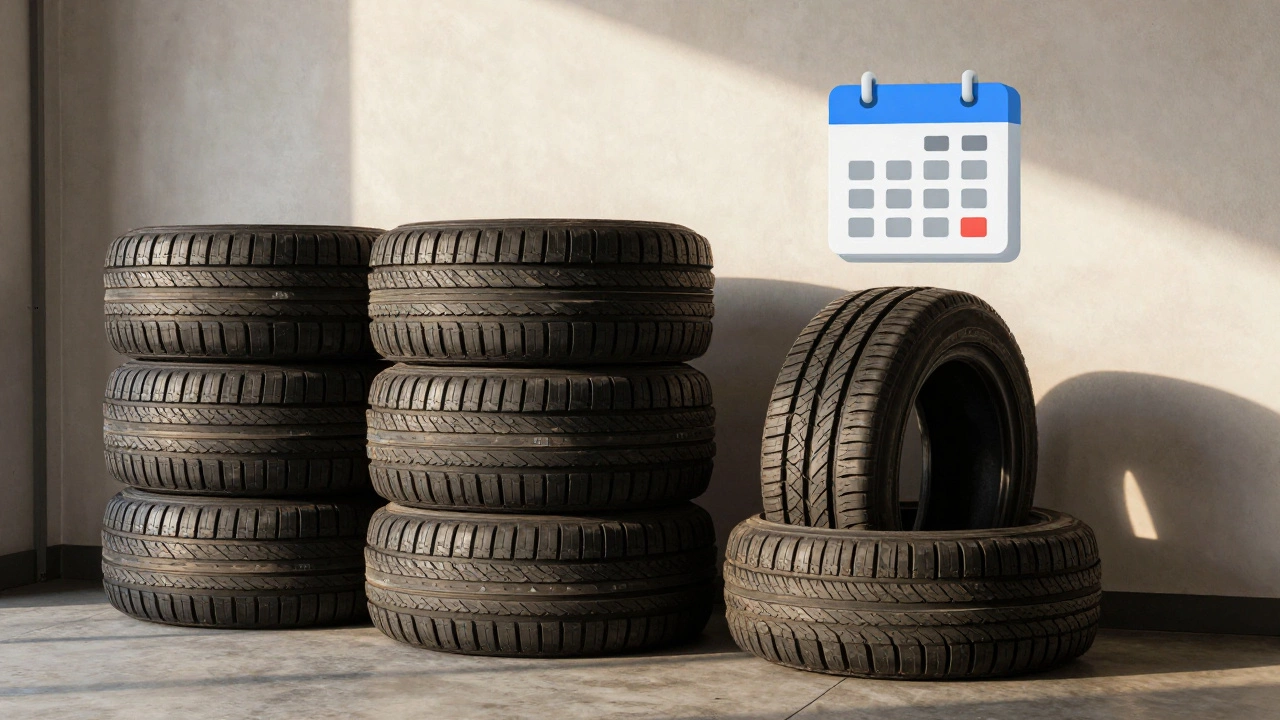
If you keep a spare set of wheels for winter or track days, storage is crucial. Sunlight (UV rays) is the enemy of rubber. Heat accelerates the evaporation of plasticizers in the rubber. Moisture promotes mold and corrosion of the steel belts.
Store spare tires in a cool, dark, dry place. Ideally, keep them inflated to the recommended pressure. If storing for long periods, rotate them slightly every few months to prevent flat-spotting, where the tire deforms from resting in one position. Flat spots are usually temporary and smooth out after driving, but severe deformation can ruin the tire.
Cost vs. Safety: The Economic Argument
People often delay replacement to save money. Let’s do the math. A set of four good quality all-season tires might cost £600-£800. An accident caused by poor braking in the rain? The repair costs, insurance premium hikes, and potential injury far exceed that. Plus, worn tires reduce fuel efficiency. Rolling resistance increases as tires wear and deform, meaning your engine works harder. You’re paying more at the pump while getting less safety.
Replacing tires proactively is cheaper than reacting to failure. It also maintains your car’s resale value. Buyers check tire condition closely. Selling a car with bald tires gives them leverage to negotiate the price down by hundreds of pounds.
Can I replace just two tires instead of four?
Yes, but only if the other two tires have very similar tread depth. Always put new tires on the rear axle, regardless of whether your car is front-wheel, rear-wheel, or all-wheel drive. Putting slick tires on the rear can cause oversteer and spins in wet conditions, which is more dangerous than understeer. If the existing tires are worn unevenly, it is best to replace all four to ensure balanced handling.
Does tire rotation extend tire life?
Absolutely. Front tires wear differently than rear tires due to steering forces and braking weight transfer. Rotating them every 6,000 to 8,000 miles helps them wear evenly, extending the total life of the set. Follow your vehicle manufacturer’s recommended rotation pattern.
Are run-flat tires worth it?
Run-flat tires allow you to drive for about 50 miles at reduced speeds after a puncture. They add convenience and safety by letting you pull over safely rather than changing a tire on a busy motorway. However, they are heavier, stiffer, and more expensive. They also wear out faster than standard tires. Consider them if you frequently drive long distances alone or in remote areas.
How do I know if my tires are too old?
Check the DOT code on the sidewall for the manufacturing date. If the tires are older than six years, have them inspected by a professional annually. If they are ten years old, replace them regardless of tread depth. Look for signs of dry rot, cracking, or discoloration, which indicate advanced aging.
Should I match tire brands when replacing two tires?
Yes, it is highly recommended to use the same brand, model, and size on the same axle. Mixing different tire types can confuse traction control systems and affect handling predictability. If you must mix, ensure the tread patterns are identical and the wear levels are within 2/32nd of an inch of each other.