Wiper Blade Lifespan Calculator
Find out when to replace your wiper blades
Enter your conditions to get an estimated lifespan based on the article's insights.
Your wiper blades will likely need replacement in 0 months.
Replace them before they fail to ensure safe driving visibility.
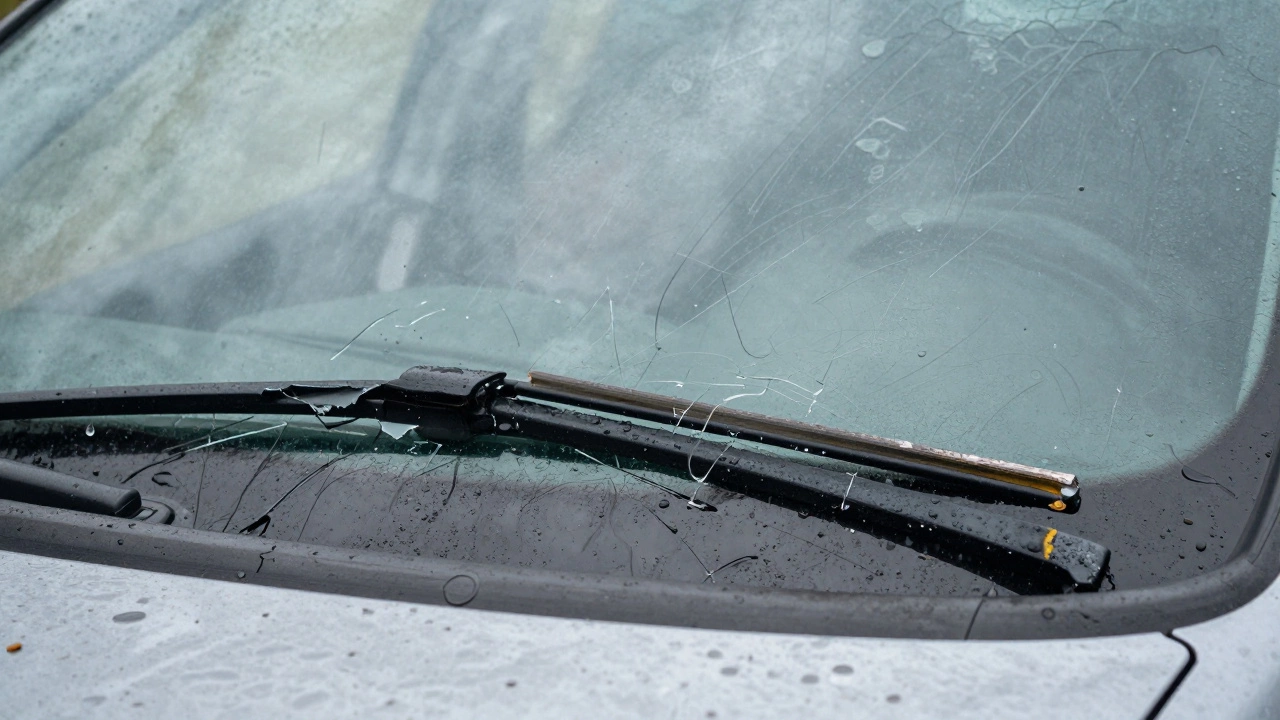
Ever noticed how your wiper blades start streaking after just six months? You replaced them last spring, and now they’re smearing rain across your windshield like a drunk artist. It’s not just you. Most people expect wiper blades to last a year or more, but they often fail way sooner. Here’s why.
The Rubber Isn’t What You Think
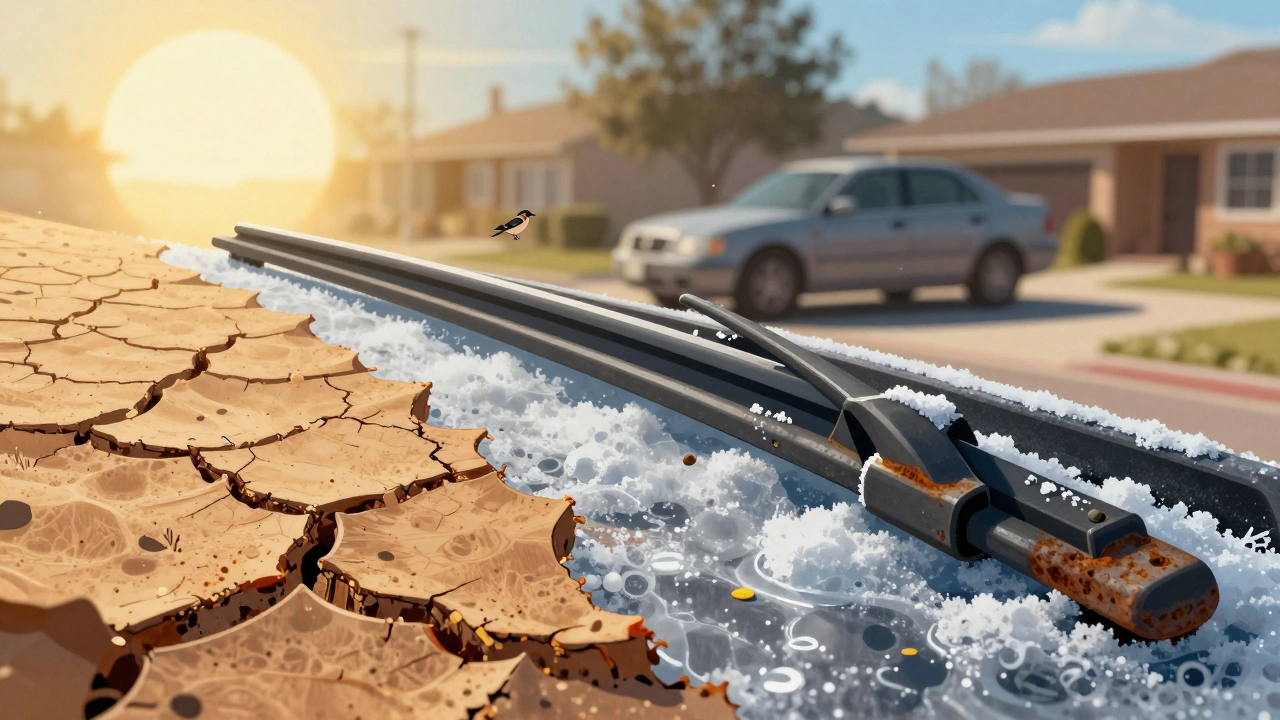
Wiper blades aren’t made of cheap plastic. They’re made of rubber - but not the kind you find on a tire. The rubber compound used in wiper blades is designed to be soft and flexible so it molds to your windshield. That’s great for cleaning, but it’s also the first thing to break down. Sunlight, especially UV rays, eats away at the rubber like acid. Even on cloudy days, UV radiation gets through. After 6-12 months of daily exposure, that rubber hardens, cracks, and loses its grip on the glass.
Heat makes it worse. If you park outside in summer, your wiper blades sit in 140°F temperatures. That’s hotter than an oven on broil. The rubber softens, stretches, and starts to deform. When it cools down, it doesn’t snap back. That’s why you get that weird gap between the blade and the glass - the wiper can’t seal properly anymore.
It’s Not Just the Sun - It’s the Grime
Every time you use your wipers, you’re dragging dirt, dust, pollen, and road salt across the glass. That grit acts like sandpaper on the rubber edge. Over time, the once-smooth blade develops nicks, tears, and uneven wear. You don’t see it until the streaks start, but the damage builds up fast.
Tree sap, bird droppings, and bug guts are even worse. They stick to the blade and dry into sticky residue. That residue hardens the rubber and clogs the edge. When the blade sweeps, it doesn’t glide - it drags. That’s why you hear that squeaky noise. It’s not the motor. It’s the rubber struggling to move.
Weather Isn’t Just Rain and Snow - It’s Freeze-Thaw Cycles
If you live where winters hit, your blades are getting pounded. Ice forms between the blade and the glass. When you turn on the wipers, the blade tries to lift off a frozen surface. That yanks the rubber, stretches it, and sometimes tears the metal frame inside. Even if the blade looks fine, the internal spring tension gets messed up. That’s why blades that look okay still skip or chatter.
And don’t forget the salt. Road salt dries on the blade and corrodes the metal frame. A rusted frame doesn’t hold the rubber evenly. One corner lifts, and now you’ve got a blind spot on the driver’s side. No amount of cleaning fixes that.
Manufacturers Don’t Build Them for Longevity
Wiper blades are designed to be replaceable. That’s not a bug - it’s the business model. Most blades are made with a one-season lifespan in mind. The rubber compounds are cheaper than they used to be. The frames are thinner. The springs are weaker. Why? Because it’s cheaper to make, and people replace them anyway.
There’s a reason premium blades cost more. Brands like Bosch, Rain-X, and Michelin use higher-grade rubber, silicone coatings, and reinforced frames. They last longer because they’re built to. But even those won’t survive two full years in harsh climates.
How to Make Them Last Longer
You can’t stop the sun or the salt. But you can slow the damage.
- Wash your windshield weekly. Dirt builds up on glass faster than you think. Use a glass cleaner, not just water. Less grit means less wear on the blade.
- Don’t use wipers on a dry windshield. If it’s dusty or snowy, spray washer fluid first. Running dry grinds grit into the rubber.
- Clear ice before turning on the wipers. Use a plastic scraper. Don’t let the blades fight frozen debris.
- Park in shade or use a windshield cover. Even a simple sunshade cuts UV exposure by 70%. That’s 6 extra months of blade life.
- Check them every 3 months. Lift the blade and run your finger along the edge. If it feels rough, has cracks, or doesn’t bend smoothly, replace it.
When to Replace Them - Not When You Think
Most people wait until the streaks are unbearable. That’s too late. By then, you’ve already damaged the windshield with repeated scraping. Replace blades every 6 to 12 months - no exceptions. Even if they look fine.
Here’s a simple test: spray water on the windshield and turn on the wipers. If they leave streaks, smears, or skip in spots, replace them. If the rubber looks brittle, cracked, or curled at the edge, replace them. If the frame is bent or rusted, replace them.
Don’t wait for rain. Don’t wait for a ticket from a cop because you can’t see. Wiper blades are a safety item, not a cosmetic one.
Why Premium Blades Are Worth It
A $10 blade might seem smart. But if it smears in heavy rain and you have to slow down or pull over, that’s not saving money - it’s risking your life.
Premium blades use silicone-infused rubber. They resist UV damage better. They stay flexible in cold. They don’t pick up grime as easily. They last 18-24 months in most climates. The cost difference is maybe $5-$10 per blade. That’s less than a tank of gas.
And if you drive in harsh weather - snow, salt, desert heat - premium blades are the only choice. You won’t regret it.
Final Thought: It’s Not Your Fault
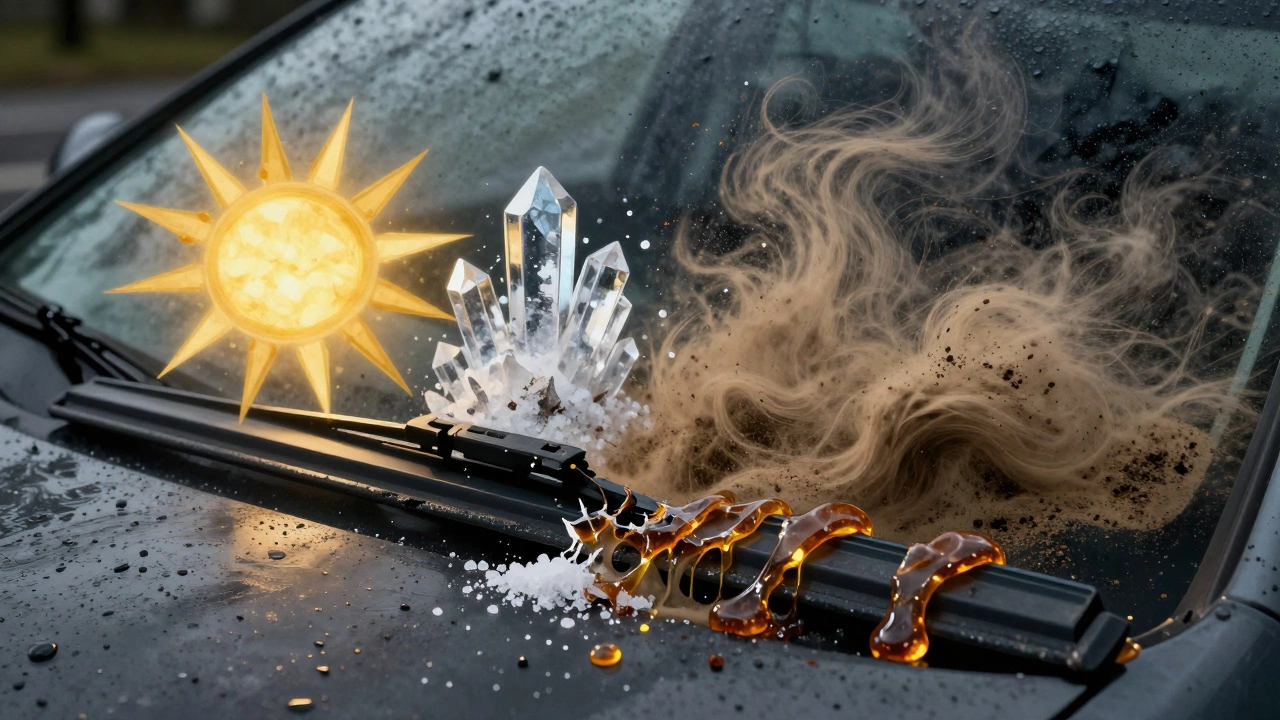
Wiper blades degrade fast because they’re exposed to everything: sun, dirt, ice, salt, bugs, and chemicals. They’re not built to last. That’s just how it is.
But you can control how often they fail. Replace them before they fail. Clean the glass. Protect them from the sun. Don’t let them drag across dry glass. That’s all it takes.
Your visibility matters. Don’t gamble with it.