Wiper Blade Replacement Calculator
Based on your blades and conditions, you should replace your wiper blades every months.
Recommended action: Replace your blades now if they're older than months.
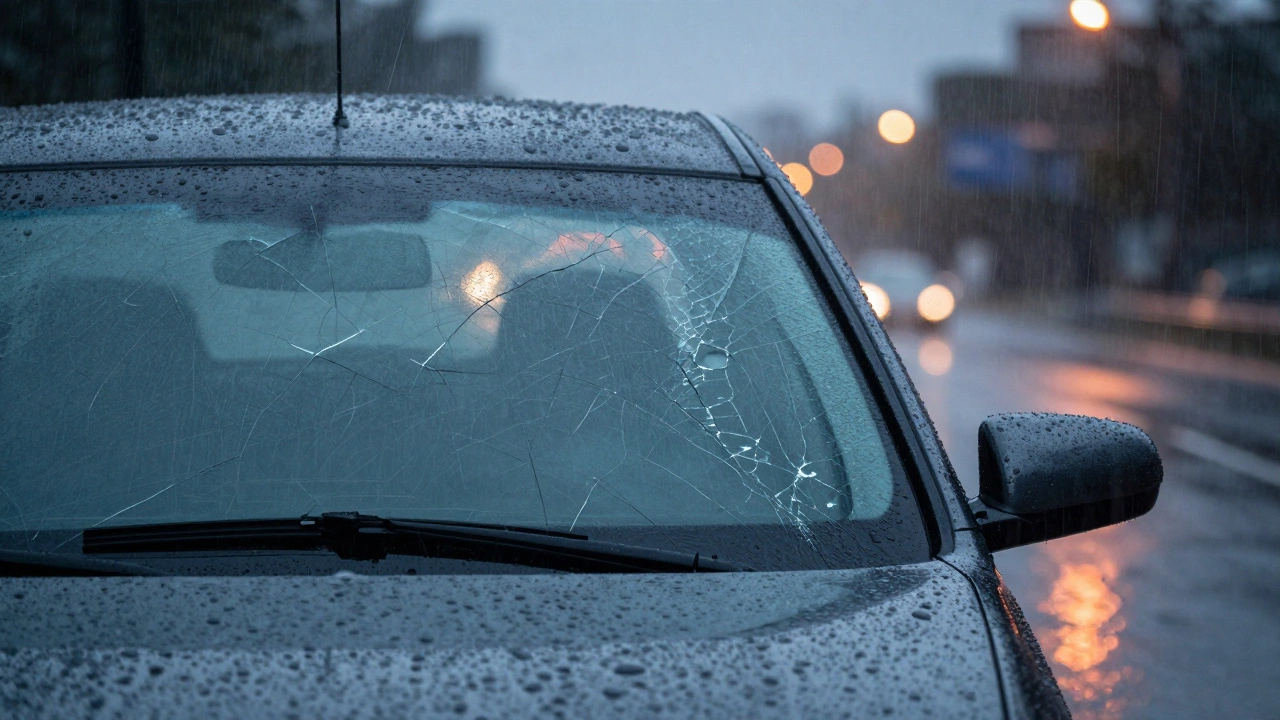
Windshield wipers are one of those parts you only notice when they stop working. You’re driving in the rain, and the blades smear water across the glass instead of clearing it. Suddenly, your visibility drops - and you realize you’ve been ignoring them for too long.
How Often Should You Replace Windshield Wiper Blades?
Most manufacturers recommend replacing windshield wiper blades every six to twelve months. That’s not a suggestion - it’s a safety rule. Even if they look fine, rubber degrades over time. Sunlight, heat, cold, and road grime slowly break down the material. By the time you see streaks or hear squeaking, the blades are already failing.
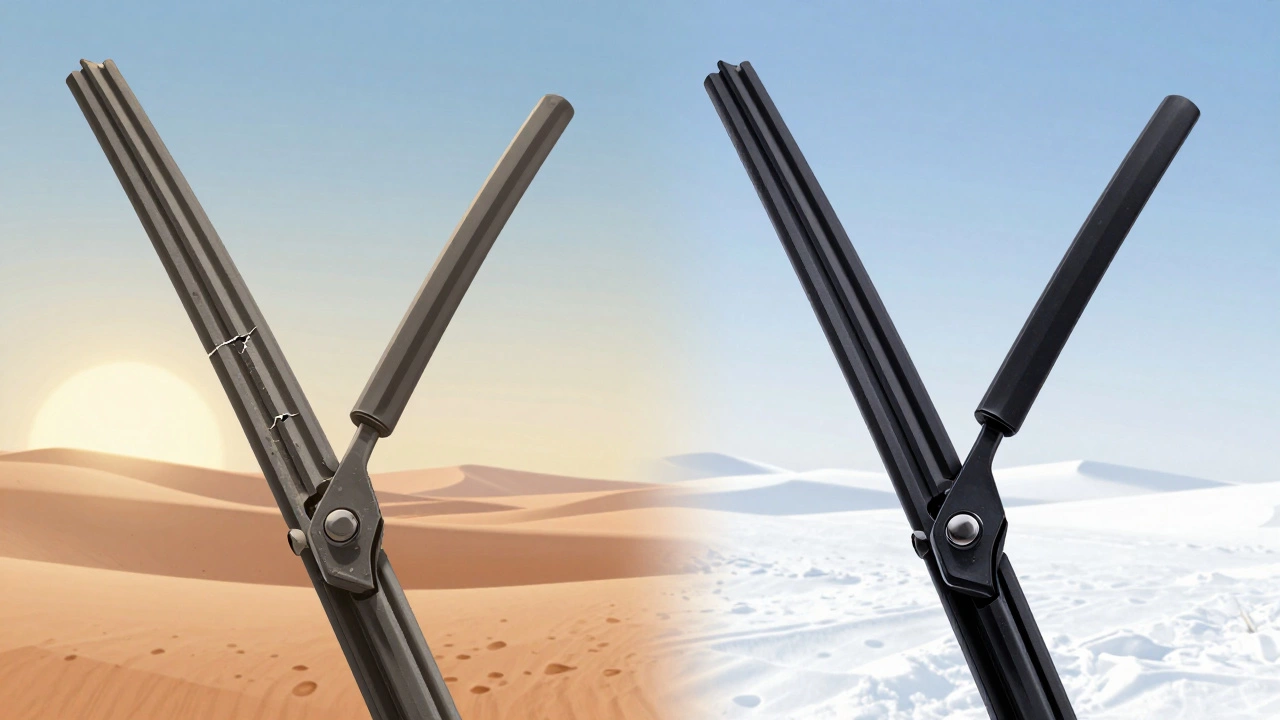
Drivers in areas with harsh weather - hot summers, snowy winters, or dusty roads - should replace blades closer to the six-month mark. If you live in Arizona or Minnesota, don’t wait for the first rainstorm to find out your wipers are useless.
Signs Your Wiper Blades Need Replacing
You don’t need a mechanic to tell you when it’s time. Here’s what to look for:
- Streaking - Water leaves smears or cloudy patches instead of clearing cleanly.
- Skipping - The blade jumps across the glass, leaving dry spots.
- Squeaking or chattering - A loud noise during operation means the rubber isn’t making even contact.
- Cracked or brittle rubber - Look closely at the edge. If it’s flaking, splitting, or hard to the touch, it’s done.
- Missing pieces - If part of the rubber is gone, the metal frame is scraping your windshield. That can scratch the glass.
Test them on a dry windshield. If they jump or drag, they won’t perform better when wet. And if you’ve had the same blades since 2023, you’re overdue.
Why Rubber Degrades Faster Than You Think
Wiper blades aren’t made to last. The rubber compound is designed to be soft enough to glide smoothly over glass - but that same softness makes it vulnerable. UV rays from sunlight break down the molecular structure. Heat makes the rubber harden and crack. Cold makes it brittle. Road salt and dirt act like sandpaper.
Studies from the Auto Care Association show that wiper blades lose up to 40% of their effectiveness after just nine months, even in moderate climates. That means your visibility in light rain is already compromised. You’re not just being impatient - you’re driving with reduced safety.
Seasonal Replacement: A Smart Habit
Many experienced drivers swap wiper blades twice a year: once in the spring, once in the fall.
- Spring replacement - Removes winter wear from ice, salt, and debris. Prepares for rainy season.
- Fall replacement - Ensures clear vision before heavy rains, snow, and leaf-covered roads.
This isn’t overkill. It’s preventive maintenance. Think of it like changing your car’s oil - you’re not fixing something broken. You’re avoiding a breakdown.
Types of Wiper Blades and Lifespan Differences
Not all blades are made the same. Here’s how they compare:
| Blade Type | Lifespan | Best For |
|---|---|---|
| Conventional (frame-style) | 6-12 months | Most vehicles, budget-friendly |
| Beam (frameless) | 12-18 months | High winds, snow, better aerodynamics |
| Hybrid (frameless with support) | 12-24 months | Extreme weather, heavy rain |
Beam blades are becoming the standard because they press evenly across the entire blade, reducing streaking. Hybrid blades add a metal spine for extra pressure in high winds - useful if you drive on highways or in mountainous areas. Conventional blades are cheaper but wear out faster and can lift in strong winds.
What Happens If You Wait Too Long?
Waiting until your wipers fail completely is a gamble. You might get lucky and have a dry stretch of weeks. But if you get caught in a sudden downpour, your reaction time drops. Visibility shrinks. Accidents spike.
According to the National Highway Traffic Safety Administration, poor visibility due to faulty wipers contributes to over 1,000 crashes every year in the U.S. alone. Most of those happen in light to moderate rain - exactly when drivers assume they’re still safe.
And if you keep driving with worn blades, you risk scratching your windshield. The metal frame, no longer cushioned by rubber, grinds against the glass. A scratched windshield isn’t just ugly - it distorts light from oncoming headlights at night. That’s a hidden danger you can’t ignore.
How to Pick the Right Blades
Not all blades fit all cars. Check your owner’s manual or use an online fit guide from a trusted brand like Rain-X, Bosch, or Michelin. Pay attention to:
- Length - Measure your current blades or look up the correct size.
- Connection type - Hook, pin, or bayonet? Make sure the adapter matches.
- Climate rating - Some blades are labeled for “all-season,” “winter,” or “high-wind” use.
Don’t buy the cheapest set you can find. A $10 pair will wear out in three months. A $25 pair made for your climate will last longer and perform better. It’s not an expense - it’s an investment in safety.
Quick Tip: Clean Your Windshield Too
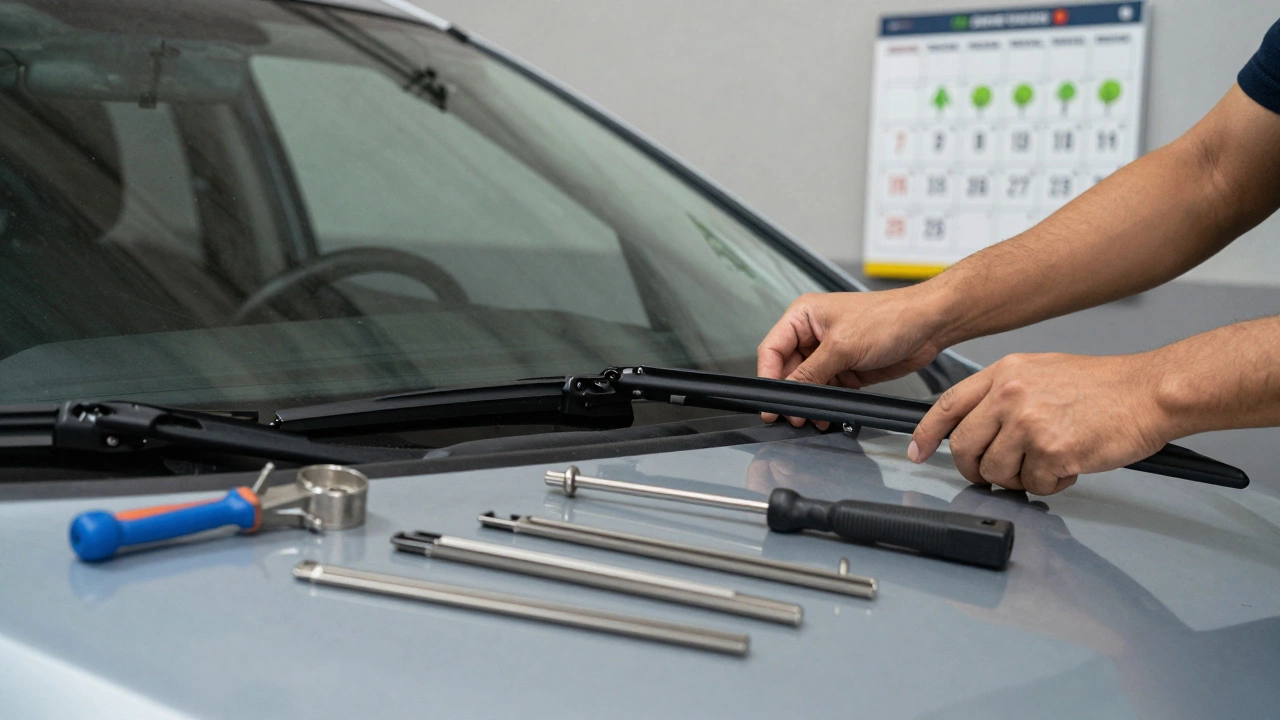
Wiper blades don’t work well on dirty glass. Road grime, tree sap, and insect residue build up and accelerate rubber wear. Clean your windshield with glass cleaner and a microfiber cloth every time you replace the blades. It helps the new rubber glide smoothly and last longer.
Also, top off your windshield washer fluid with a winter-rated blend if you live where it freezes. Using plain water in cold weather can crack the reservoir and damage the pump.
What About Wiper Arm Issues?
If your new blades still streak or chatter, the problem might be the wiper arms. Over time, the springs in the arms weaken. They lose pressure and can’t hold the blade flat against the glass. That causes skipping and uneven wiping.
Test the arm pressure: lift the arm slightly and let it snap back. If it bounces or doesn’t return firmly, the spring is worn. Replacement arms cost $15-$40 each and are easy to install. Don’t assume the blades are the only issue.
Final Rule: Don’t Wait for Failure
Windshield wipers are one of the easiest and cheapest safety upgrades you can make. Replacing them takes ten minutes. It costs less than a coffee. But the payoff? Clear vision in rain, snow, and fog. That’s priceless.
If you drove through a storm last month and couldn’t see clearly, it’s time. If your blades are older than a year, it’s time. If you haven’t checked them since last winter, it’s time.
Do it now. Your eyes - and your safety - will thank you.
Can I extend the life of my wiper blades?
Yes, but only slightly. Keep your windshield clean, avoid using wipers on dry glass, and park in shade or a garage when possible. These steps can add a few extra months, but they won’t stop rubber from aging. Replacement every 6-12 months is still necessary.
Do expensive wiper blades last longer?
Generally, yes. Premium blades use higher-grade rubber, better aerodynamic designs, and reinforced frames. A $30 beam blade will outperform a $10 conventional blade in heavy rain and wind - and last up to twice as long. You pay more upfront, but you save money over time and gain better visibility.
Can I replace just the rubber insert instead of the whole blade?
Some conventional blades allow you to replace just the rubber refill. It’s cheaper and eco-friendly. But beam and hybrid blades don’t support refills. If your blade is older than a year, it’s often easier and more reliable to replace the whole unit. Refills can be tricky to install and may not seal properly.
Is it okay to use wiper blades from a different car model?
No. Blades are sized and shaped specifically for each vehicle. Using the wrong size can cause improper contact, damage the windshield, or even interfere with the wiper motor. Always match the length and connection type to your car’s requirements.
Why do my new wiper blades still streak?
If new blades streak, the issue is likely dirty glass, worn wiper arms, or incorrect installation. Clean the windshield thoroughly, check that the blade is properly seated on the arm, and test the arm’s spring tension. If the problem persists, the blade might be defective - return it.
If you’ve been putting off wiper blade replacement, now is the time. It’s simple, affordable, and critical. Don’t risk your safety on worn rubber.