Suspension System Identifier & Cost Estimator
Select your vehicle characteristics below to identify the most common suspension configuration for your car and understand its maintenance profile.
Front Axle:
Rear Axle:
You’re driving down a bumpy backroad in Manchester, and your car feels like it’s floating. Or maybe you just hit a pothole so hard that your teeth rattled. In both cases, you are feeling the direct result of your suspension system. It’s the unsung hero keeping your tyres glued to the tarmac and your spine intact. But if I asked you what type of suspension your car actually uses, could you answer? For most drivers, this is a mystery. Yet, knowing the specific design under your chassis changes how you drive, how you maintain your car, and what parts you’ll need when things wear out.
So, what is the most common suspension? If we look at modern passenger cars sold globally, the answer is overwhelmingly the MacPherson strut. Developed by Earle S. MacPherson at General Motors in the late 1940s, this design revolutionized automotive engineering because it was cheap, compact, and light. You will find it on everything from a Ford Fiesta to a Tesla Model 3. However, "most common" doesn't mean "best for every situation." The landscape of automotive suspension technology is diverse, with different designs serving different purposes.
The King of Compact Cars: MacPherson Strut
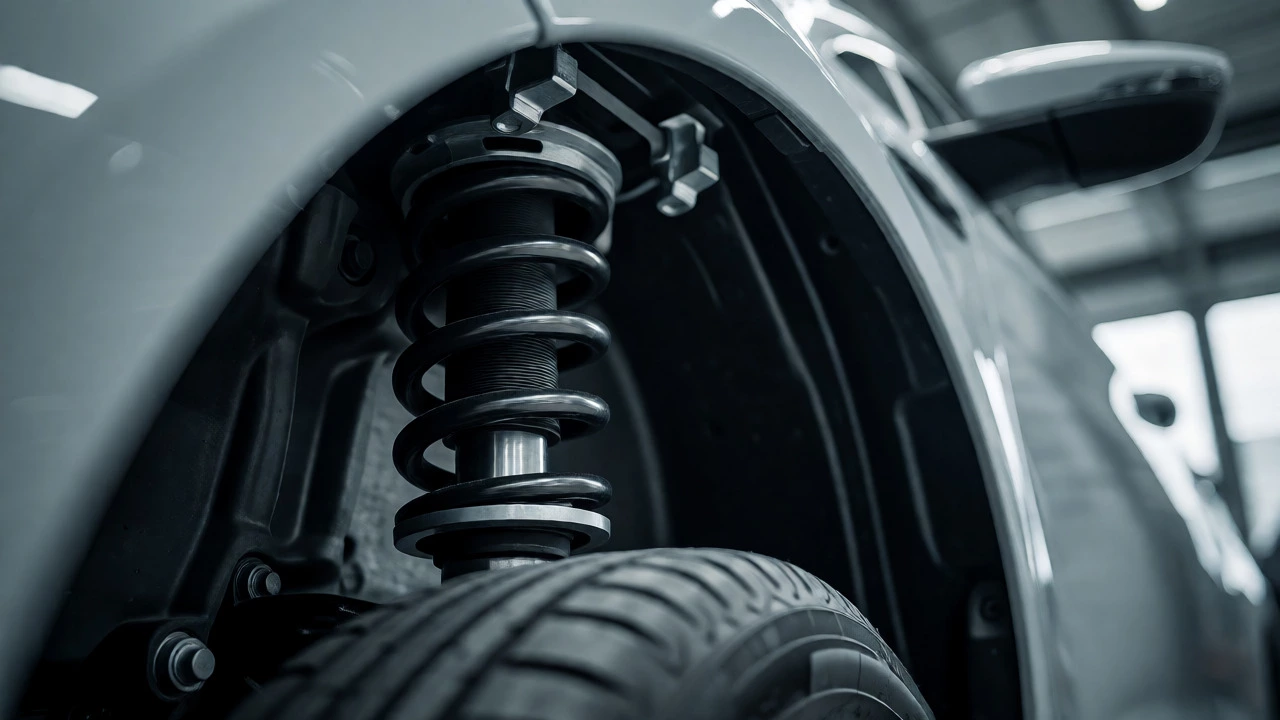
Let’s start with the heavy hitter. The MacPherson strut isn’t just a part; it’s a structural component. Unlike older designs where the shock absorber was separate from the spring, the MacPherson strut integrates them into one unit. This unit also acts as an upper pivot point for the wheel assembly. Why does this matter to you? Because it frees up space in the engine bay. That extra room allows manufacturers to fit larger engines or more safety crumple zones in smaller cars.
But there’s a trade-off. Because the strut holds the wheel in place, any bump sends force directly up through the mounting points. Over time, these mounts can fail, leading to clunking noises. Also, because the geometry is simpler, the camber (the angle of the tyre) changes significantly when the car leans in a corner. This means less grip during aggressive driving compared to more complex setups. If you own a hatchback or a mid-size sedan, you almost certainly have this setup on the front axle.
The Sporty Alternative: Double Wishbone
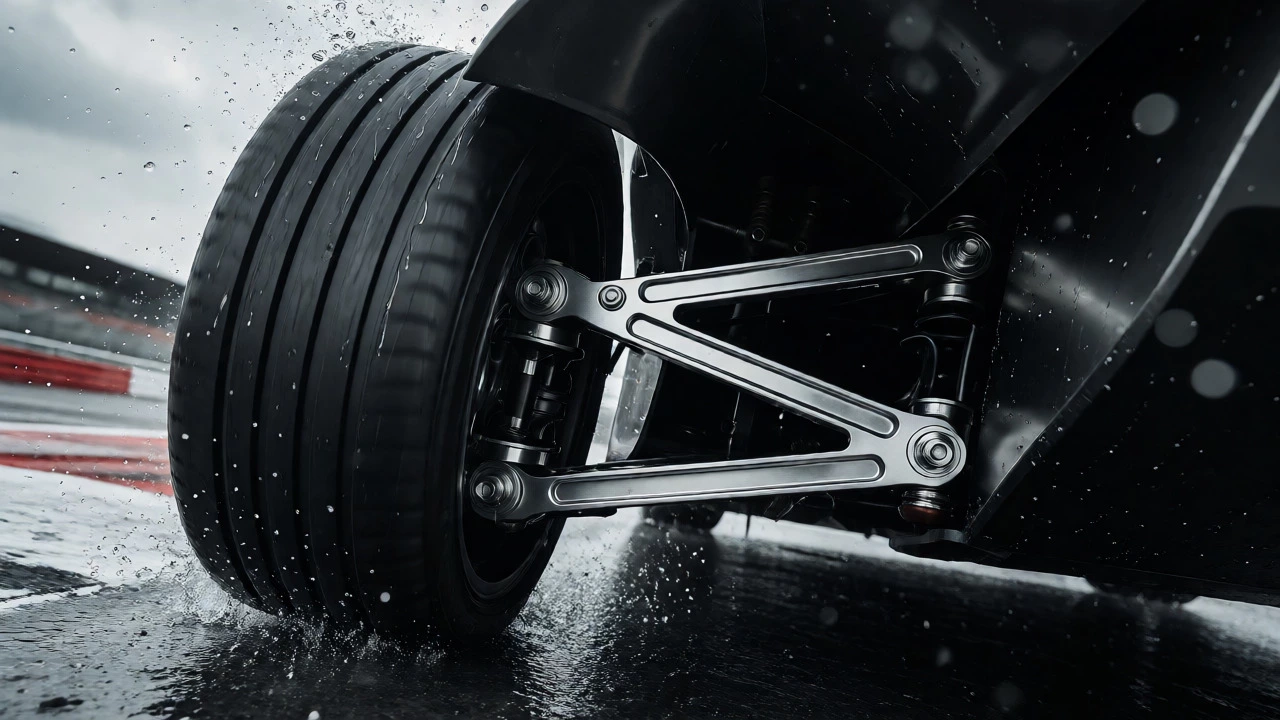
If you’ve ever admired a sports car or a luxury SUV, you’ve likely seen double wishbone suspension, also known as unequal-length control arms. Imagine two triangles stacked on top of each other, connecting the wheel hub to the chassis. This design separates the steering axis from the suspension movement. What does that achieve? Superior control over camber and toe angles throughout the suspension travel.
In plain English: when you turn sharply, the tyre stays flat against the road rather than rolling onto its edge. This provides better traction and feedback. Brands like BMW, Mercedes-Benz, and high-performance variants of Audi often use double wishbones on the front wheels. The downside? It takes up more lateral space and costs significantly more to manufacture and repair. If you crash a MacPherson strut, you might replace one part. With a double wishbone, you might be replacing lower arms, ball joints, and bushings.
The Rear Axle Standard: Multilink Suspension
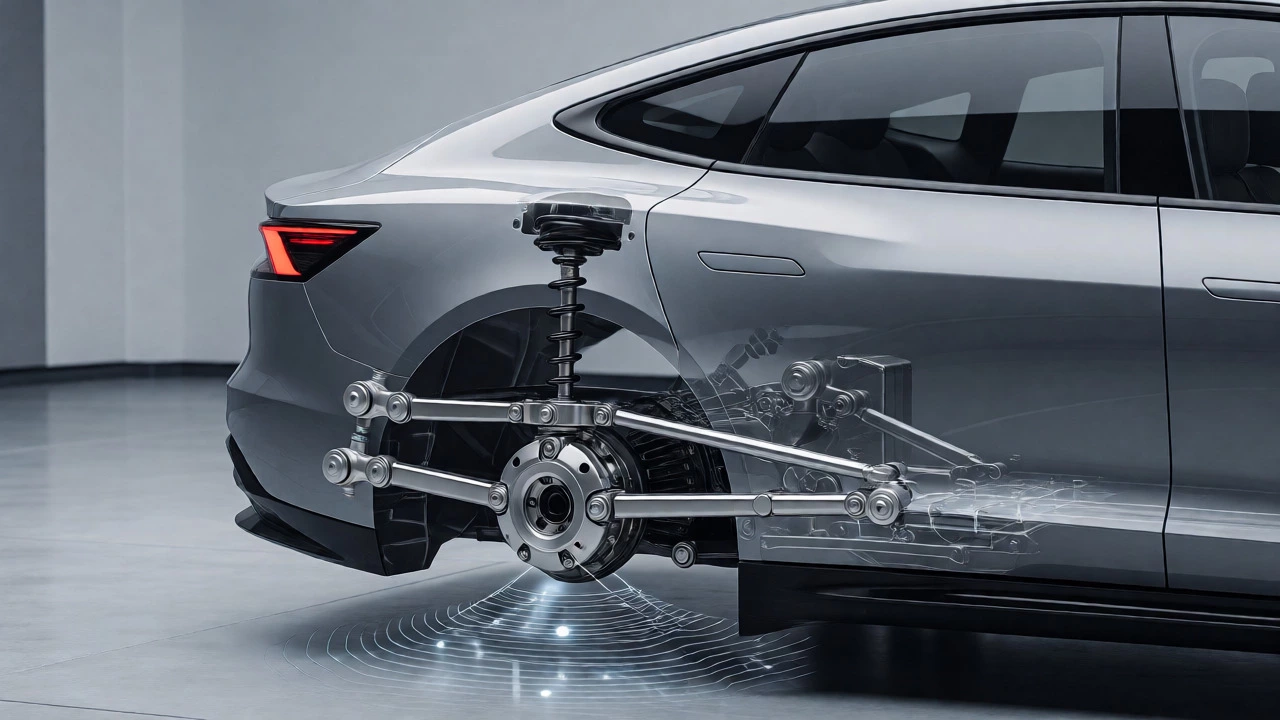
While the front determines steering, the rear determines stability. For decades, solid axles were standard for trucks and budget cars. Today, independent multilink suspension has become the norm for the rear axle in most sedans and crossovers. A multilink system typically uses three to five separate links (arms) to locate the wheel hub.
This complexity allows engineers to tune ride comfort and handling independently. One link might control longitudinal forces (acceleration/braking), while another controls lateral forces (cornering). This separation reduces noise, vibration, and harshness (NVH) inside the cabin. It’s why modern electric vehicles, which are heavy due to battery packs, still feel composed. The weight distribution benefits from the precise wheel control multilinks provide. However, diagnosing issues here is tricky. Worn bushings in multiple links can cause vague steering or uneven tyre wear, often mistaken for alignment problems.
Comparing the Top Designs
To help you identify what you might have, or what to look for when buying a car, here is a breakdown of the key attributes. Note that many cars mix these designs-commonly MacPherson front/multilink rear.
| Suspension Type | Complexity | Cost | Best For | Common Vehicles |
|---|---|---|---|---|
| MacPherson Strut | Low | Low | Economy, Space Efficiency | Hatchbacks, Sedans, EVs |
| Double Wishbone | High | High | Performance, Precision | Luxury Cars, Sports Cars |
| Multilink | Very High | Medium-High | Ride Comfort, Stability | Rear Axles of Modern Cars |
| Torsion Beam | Low | Very Low | Budget Economy | Small City Cars, Older Models |
Why Does It Matter to Your Wallet?
You might think, "I don't care about the engineering, I just want it to work." Fair enough. But understanding your suspension type helps you predict maintenance costs. Let’s say you drive a VW Golf (MacPherson front). If you hear a knock, it’s often just the strut mount or the stabilizer bar link. These are relatively cheap parts. Repair bills stay low.
Now, imagine you drive a Porsche Cayenne (often double wishbone or advanced multilink). A similar knock could indicate a worn control arm bushing or a failing air spring compressor. Parts are expensive, and labour hours are higher because mechanics have to dismantle more components to access the faulty piece. When shopping for used cars, checking the suspension type can save you thousands in future repairs. A car with simple struts is generally cheaper to keep running than one with complex wishbones, unless you are specifically looking for track-day performance.
Signs Your Suspension Is Failing
Regardless of the design, all suspensions wear out. Here is how to spot trouble before it becomes dangerous:
- Dipping Nose: If your car pitches forward heavily when braking, your front shocks/struts are weak. They aren't controlling the weight transfer anymore.
- Uneven Tyre Wear: Look at your tyres. If the inner or outer edges are bald while the centre looks new, your suspension geometry is off. This is common in worn double wishbone bushings.
- Bouncing: Push down firmly on one corner of your car and let go. It should rebound once and settle. If it bounces up and down like a pogo stick, the damper is dead.
- Steering Wander: On a straight, flat road, if you have to constantly correct the steering wheel, check your tie rods and ball joints. Loose components create play.
Don't ignore these signs. Bad suspension increases stopping distances significantly. On wet roads, a worn shock absorber can increase braking distance by several metres. That’s not just a comfort issue; it’s a safety hazard.
Future Trends: Air and Adaptive Damping
The conversation around suspension is changing. While mechanical springs remain dominant, air suspension is moving from luxury limos to mainstream SUVs. Instead of steel coils, air bags support the vehicle. This allows drivers to raise ground clearance for off-roading or lower the car for highway efficiency and aerodynamics.
Additionally, adaptive dampers are becoming common even in mid-range cars. These systems use sensors to read the road surface hundreds of times per second and adjust the damping force instantly. You might see buttons labelled "Comfort," "Sport," or "Eco." This isn't just marketing fluff; it physically changes how stiff your suspension feels. As electric vehicles grow heavier, these smart systems are crucial to prevent the car from feeling sluggish or wallowing.
Is MacPherson strut bad for handling?
Not necessarily. While it offers less geometric precision than double wishbone, modern tuning and electronic stability control make MacPherson struts perfectly capable for daily driving and spirited weekend trips. It’s a compromise between cost, space, and performance that works very well for 90% of drivers.
How long do suspension parts last?
It varies wildly based on road conditions and driving style. Shock absorbers typically last between 50,000 and 100,000 miles. Bushings and ball joints can last longer but degrade faster on rough roads. Regular inspections are the best way to know for sure.
Can I upgrade my suspension myself?
Replacing struts or shocks is a moderate DIY job requiring spring compressors and proper torque tools. However, upgrading from MacPherson to double wishbone is rarely feasible without major chassis modifications. Stick to replacing like-for-like or installing coilover kits designed for your specific model.
Does air suspension require more maintenance?
Yes. Air bags can leak, compressors can burn out, and height sensors can fail. Repairs are significantly more expensive than fixing steel spring systems. However, they offer superior ride quality and adjustability that many owners find worth the cost.
What is the cheapest suspension system?
The torsion beam (or twist beam) is generally the cheapest to manufacture and repair. It connects the left and right wheels via a flexible beam. It’s simple, robust, and cheap, but it compromises independent wheel movement, affecting ride comfort on uneven surfaces.