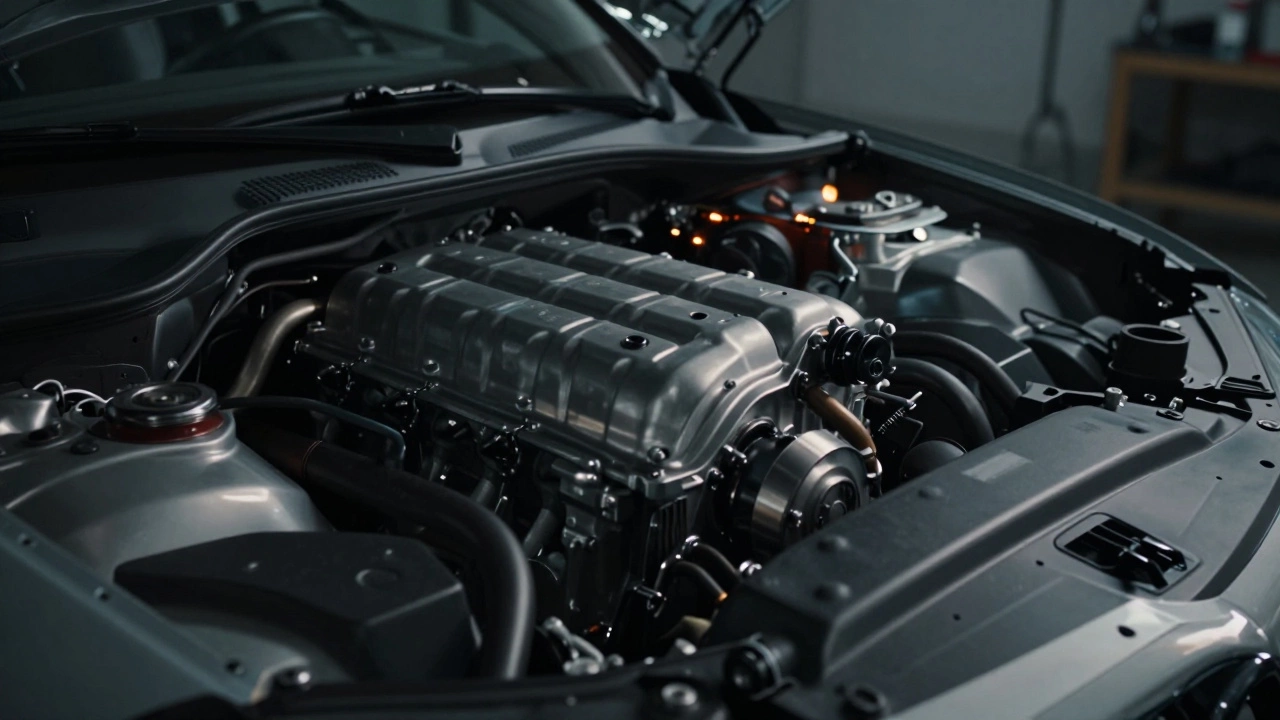
Quick Guide: Spotting the Damage
- Engine Shaking: A rough idle that feels like the car is about to stall.
- Misfiring: Sudden jerks or stutters during acceleration.
- Fuel Smell: Unburnt petrol smelling like raw fuel from the exhaust.
- Poor MPG: A noticeable drop in how many miles you get per gallon.
- Check Engine Light: Often triggering codes like P0300 through P0306.
The Science of the Spark Leak
To understand why a crack is a disaster, you have to look at how the Ignition System works. Your Ignition Coil sends thousands of volts to the plug. That electricity is supposed to travel down the center electrode and jump across the gap. However, electricity is lazy; it always takes the path of least resistance.
When the ceramic insulator is cracked, the electricity finds a shortcut. Instead of jumping the gap to create a spark, it leaks through the crack and arcs directly to the engine head. This is called "tracking." Because the spark never reaches the fuel, that cylinder doesn't fire. You're now running on fewer cylinders than you should be, which puts massive strain on the rest of the engine.
Visual Warning Signs During Inspection
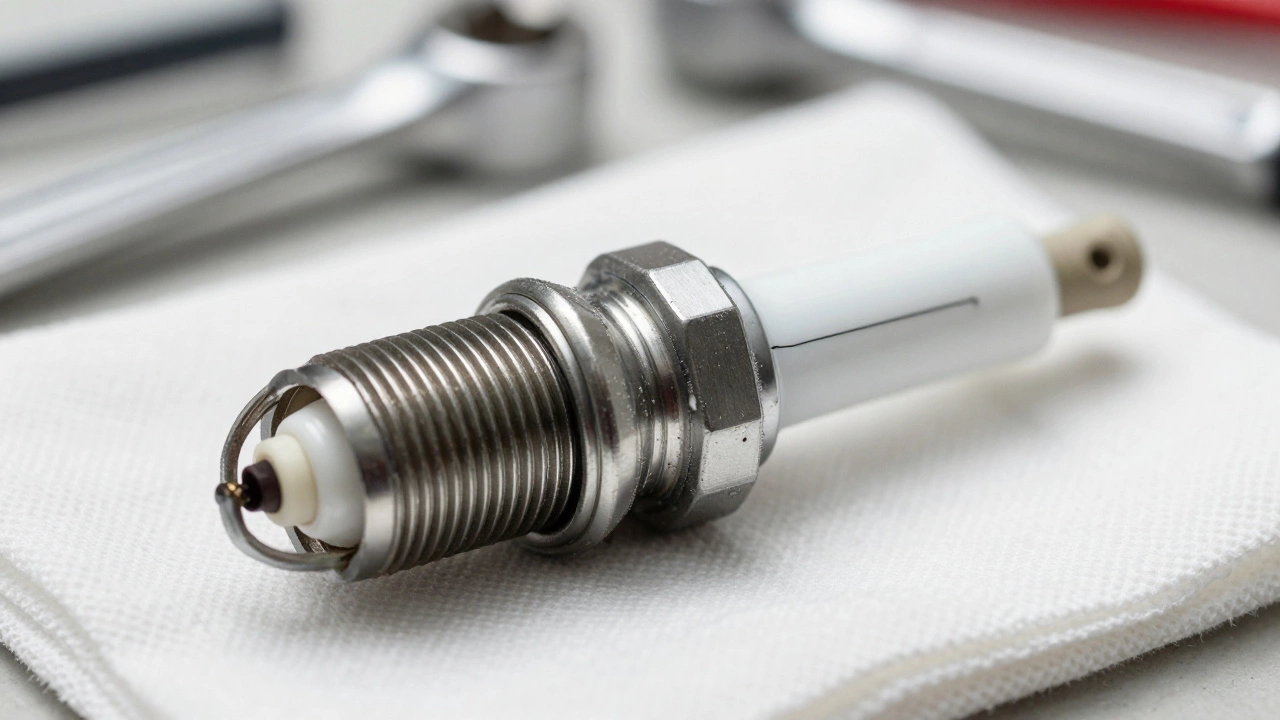
You can't always tell a plug is cracked just by listening. Sometimes you need to get your hands dirty. When you pull a plug out using a socket wrench, don't just look at the tip. Inspect the white ceramic ribs.
Look for thin, hairline fractures running vertically along the insulator. In some cases, you'll see a distinct "carbon track"-a thin black line that looks like a pencil mark. This is actually a trail of burnt material where the electricity has been leaping across the ceramic. If you see these lines, the plug is toast. Even a crack so small you can barely see it can cause a total misfire under the high pressure of a running engine.
| Symptom | Cracked Insulator | Fouled Plug (Carbon) | Worn Electrodes |
|---|---|---|---|
| Visual Clue | Hairline cracks / Black tracks | Sooty black coating | Rounded/melted tip |
| Engine Feel | Sharp, sudden misfires | Consistent sluggishness | Hard starting |
| Fix | Immediate replacement | Cleaning or replacement | Standard interval change |
The DIY Leak Test
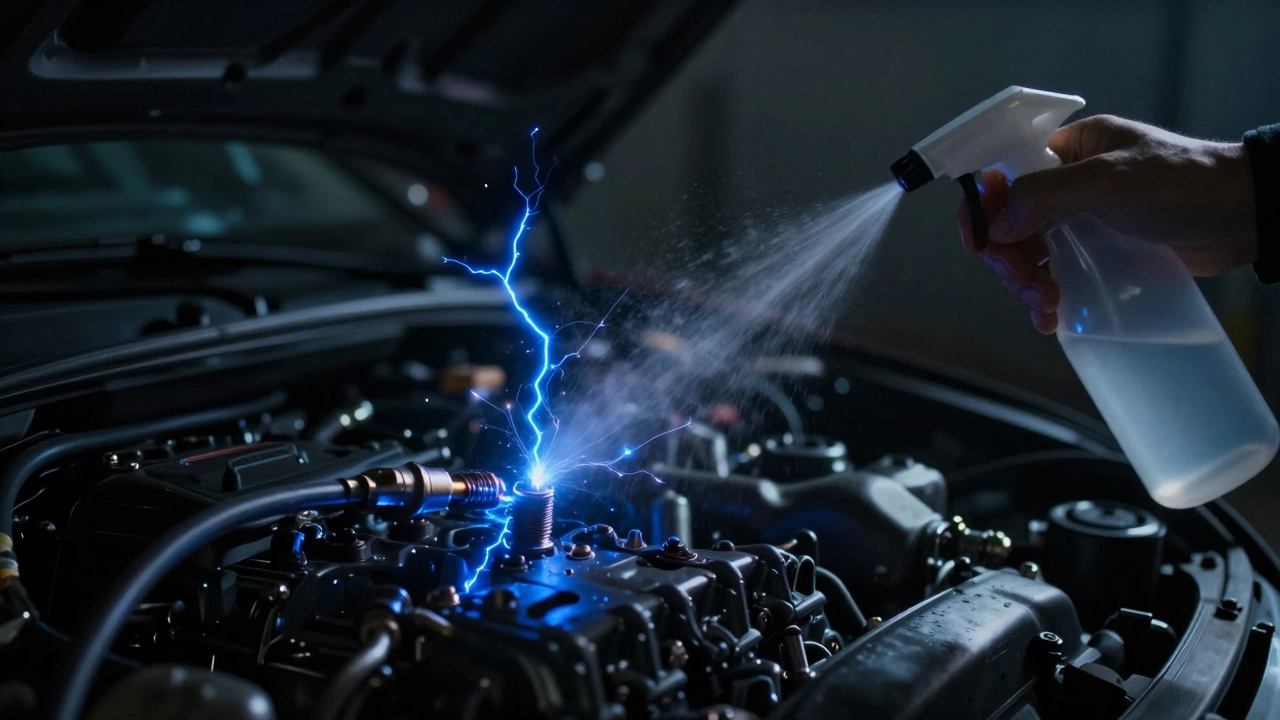
If your car is acting up but the plugs look okay when they're out, you can try a "mist test" while the engine is running. This is an old-school trick that works wonders. With the engine idling in a dark garage, lightly spray a fine mist of water from a spray bottle around the Spark Plug Boots.
If there is a crack in the ceramic or a leak in the boot, you will see small, blue electric sparks jumping from the plug to the engine block. It looks like a tiny lightning storm. If you see these arcs, you've found your leak. Just be extremely careful not to touch any moving parts of the engine or the high-voltage wires while doing this.
Why Do Spark Plugs Crack in the First Place?
It's rarely just bad luck. Usually, it's one of three things. First, there's "thermal shock." If you've been idling for a long time and then suddenly floor it, the rapid temperature change can cause the ceramic to snap. Second, there's mechanical damage. If you drop a plug during installation or over-tighten it with a torque wrench, you create internal stress points that eventually crack.
Lastly, consider the environment. In very old engines, heavy vibration or severe engine knocking (pre-ignition) can physically shake the plug's internals until the porcelain gives way. Using the wrong heat range plug for your specific engine can also lead to overheating, which weakens the ceramic structure over time.
The Ripple Effect on Your Engine
Leaving a cracked plug in your car isn't just about a bumpy ride. It's a chain reaction. When a cylinder misfires, raw fuel is pumped directly into the Exhaust System. This is a nightmare for your Catalytic Converter. The converter is designed to handle exhaust gases, not liquid petrol. The fuel ignites inside the converter, causing it to overheat and potentially melt the internal honeycomb structure.
Furthermore, the Engine Control Unit (ECU) will try to compensate for the lack of power by dumping more fuel into the system. This washes the lubricating oil off your cylinder walls, leading to increased wear on the piston rings. What started as a £10 spark plug problem can quickly turn into a £1,000 engine rebuild.
Preventing Future Fractures
The best way to stop cracks is to follow a strict maintenance schedule. Don't wait for the light on the dashboard to tell you something is wrong. If you're using Iridium Spark Plugs, they generally last longer and resist wear better than standard copper ones, but they are actually more brittle. You have to be even more careful not to drop them.
Always use a gap tool to check the distance between the center and side electrodes before installing. If you force a plug in that has a piece of debris in the gap, you can crack the ceramic instantly. Also, use a torque wrench to ensure you aren't crushing the plug into the head, which is a common cause of stress fractures in the insulator.
Can a cracked spark plug cause a dead battery?
Not directly. However, if you're struggling to start a car with cracked plugs, you'll be cranking the engine much longer than usual. This puts a heavy drain on the battery and can eventually leave you stranded with a dead battery because the engine refuses to fire on all cylinders.
Will the check engine light always come on for a cracked plug?
Usually, yes. Modern cars have sensors that detect "misfire events." If the ECU sees that a cylinder isn't contributing power, it will trigger a P0300 series code. But in older cars without sophisticated computers, you'll have to rely on the physical feel of the engine and manual inspection.
Can I just seal a crack with a special glue?
Absolutely not. The temperatures and pressures inside a combustion chamber are extreme. No glue or sealant can withstand those conditions. A cracked plug is an unfixable part and must be replaced immediately.
Do all spark plugs need to be replaced if one is cracked?
Yes. Spark plugs usually wear out at the same rate. If one has failed due to age or heat, the others are likely close behind. Replacing them as a set ensures the engine runs smoothly and prevents you from having to do the job again in two weeks.
What is the difference between a fouled plug and a cracked one?
A fouled plug has a buildup of carbon, oil, or fuel on the tip that prevents the spark from jumping. A cracked plug has a structural failure in the ceramic. Fouling is often caused by bad fuel or oil leaks; cracking is caused by thermal shock or physical damage.
What to do next
If you suspect a crack, your first step is to pull the plugs. If you find a crack, don't just replace that one plug. Check the ignition coil that was sitting on top of it. Often, a leaking spark plug will "burn" the boot of the coil, meaning you'll need to replace both to actually fix the problem.
If you're not comfortable working around high-voltage systems, take it to a mechanic and specifically ask them to check for "carbon tracking" on the insulators. If you've been driving with a misfire for a while, it's also a good idea to have your catalytic converter tested to make sure it hasn't been damaged by unburnt fuel.