Suspension Diagnosis Tool
What's happening with your car?
Select symptoms you're experiencing to identify possible suspension issues.
Diagnosis Results
Important Safety Note: If you notice severe clunking, loose steering, or any component that could cause loss of control, have your vehicle inspected by a professional immediately.
If your car feels bouncy, pulls to one side, or makes clunking noises over bumps, your suspension is likely failing. A bad suspension isn’t just uncomfortable-it’s dangerous. It affects braking, steering, and tire wear. Fixing it doesn’t always mean replacing everything, but you need to know what’s broken and why.
What Does a Bad Suspension Feel Like?
Most drivers notice suspension problems long before they check under the hood. Here’s what to listen for and feel:
- Your car bounces too much after hitting a speed bump
- It leans heavily when turning, or feels unstable at highway speeds
- You hear clunking, knocking, or squeaking from the wheels
- The vehicle dips forward when braking
- Tires wear unevenly-especially on the inside or outside edges
- Steering feels loose or unresponsive
These aren’t normal. Even if the car still drives, a worn suspension can turn a small repair into a major one. For example, bad shocks can cause tires to wear out in under 10,000 miles instead of 50,000.
Key Suspension Components and How They Fail
Your suspension system has four main parts. Each one wears differently:
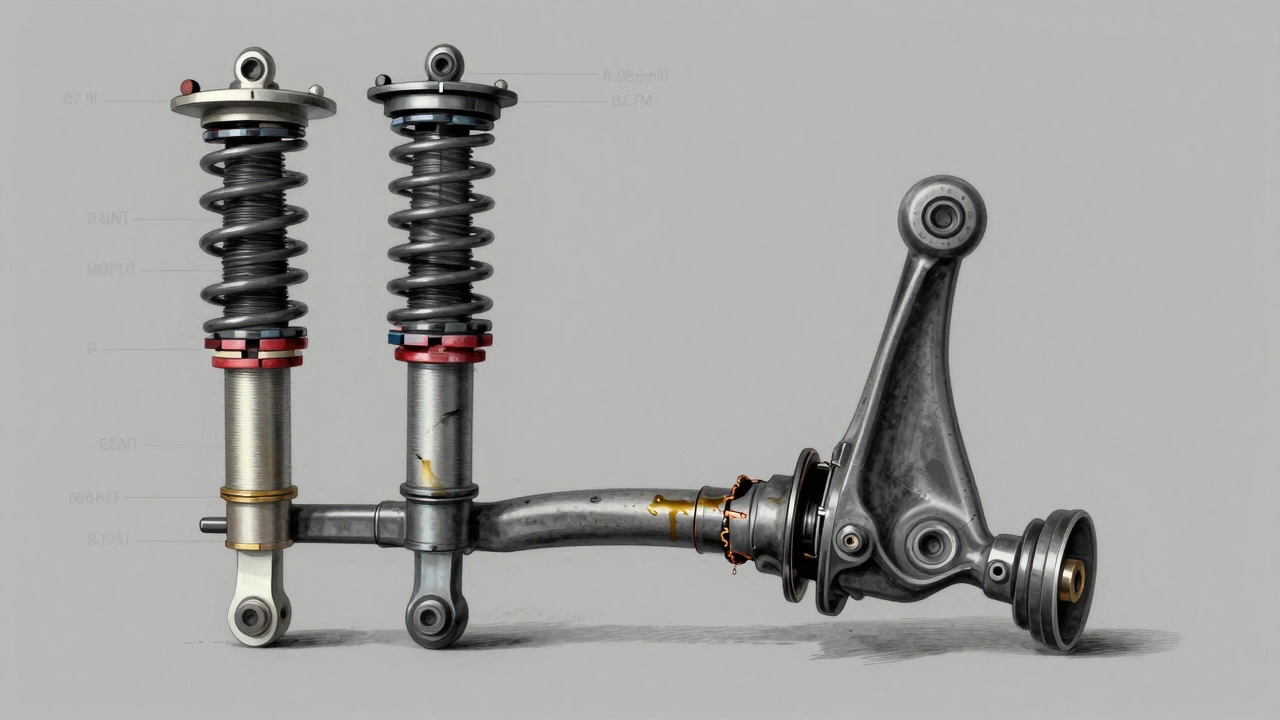
- Shock absorbers - These control bounce. When they fail, your car rides like a trampoline. Most last 50,000-80,000 miles. Oil leaks or worn seals mean they’re done.
- Struts - These combine shock absorbers and coil springs. They’re structural. If a strut is broken, your wheel can shift out of alignment. Look for rust, dents, or fluid leaks.
- Control arms - These connect the wheels to the frame. Worn bushings here cause clunking and uneven tire wear. You’ll often hear it when going over bumps.
- Ball joints - These let the wheels turn and move up/down. If they’re loose, your steering wanders. A worn ball joint can snap-this is a safety risk.
These parts don’t fail all at once. One bad shock can overload the others. That’s why replacing them in pairs is standard practice.
How to Diagnose the Problem
You don’t need a mechanic to find the issue. Here’s how to check it yourself:
- Do the bounce test. Push down hard on each corner of the car. If it bounces more than once or twice, the shocks or struts are worn.
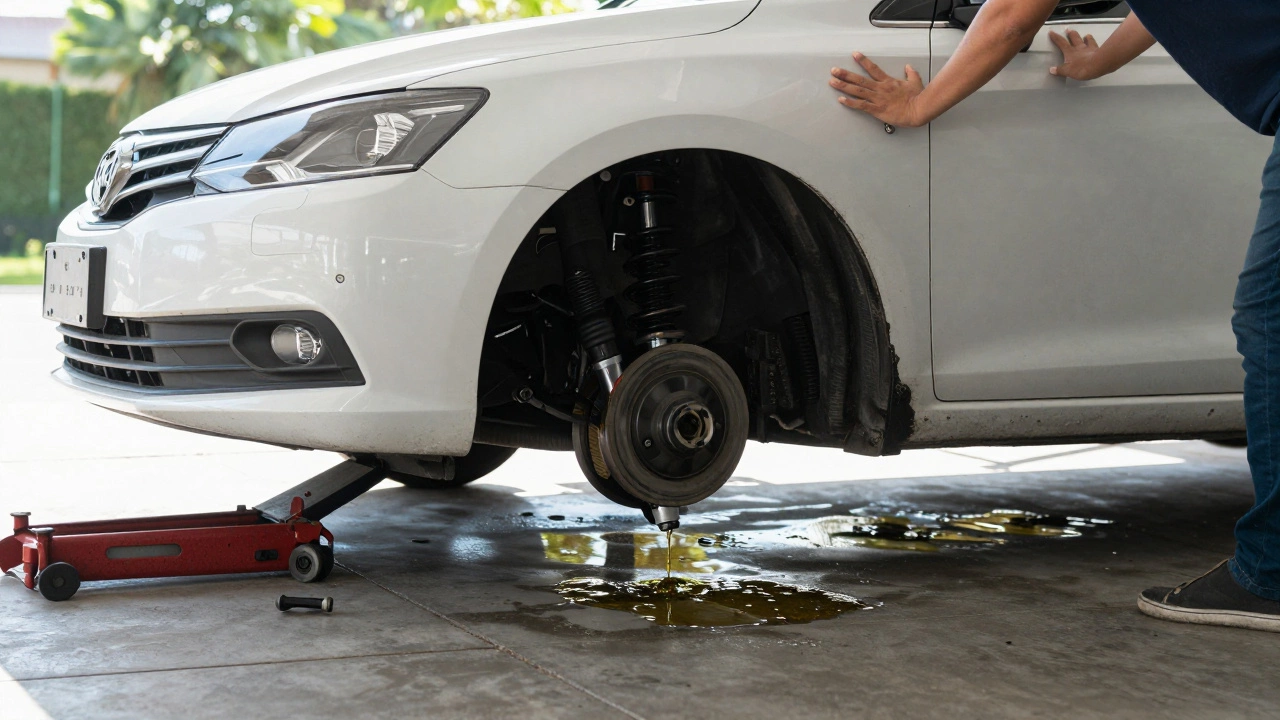
- Inspect for leaks. Look under the car. If you see oil or grease on the shock body, it’s leaking. That’s a clear sign of failure.
- Check for uneven tire wear. Use a coin to measure tread depth. If one side is much lower than the other, your alignment is off due to worn suspension parts.
- Look for physical damage. Rust, cracks, or bent metal on control arms or struts? Replace them. No exceptions.
- Check ball joints. Jack up the front wheel. Grasp the tire at 9 and 3 o’clock. Try to wiggle it. If there’s play, the ball joint is worn. Do the same at 12 and 6 o’clock-this checks the strut or bearing.
These tests take 15 minutes. If any of them show problems, you’ve got a clear target.
When to Replace Parts
You can’t fix a worn shock or ball joint. You replace them. Here’s what to replace together:
- Always replace shocks or struts in pairs. Even if only one is bad, the other is close behind. Replacing just one creates an imbalance. Your car will pull to one side.
- Replace control arm bushings and ball joints when you replace shocks. Labor is expensive. Do all the worn parts at once.
- Replace front and rear sets at the same time. If the rear shocks are 70,000 miles old, they’re not far behind the front ones.
Some parts, like sway bar links, can be replaced individually. But if you’re already under the car, check them. A broken sway bar link makes cornering feel floaty.
Tools You Need
Fixing suspension isn’t for beginners, but it’s doable with the right gear:
- Jack and jack stands
- Socket set and torque wrench
- Spring compressor (for struts)
- Breaker bar (for stuck bolts)
- Penetrating oil (like WD-40 Specialist)
- New parts (shocks, struts, ball joints, etc.)
Don’t skip the torque wrench. Over-tightening can break components. Under-tightening lets parts move and wear out faster.
Step-by-Step: Replacing Shocks and Struts
Here’s how to replace front shocks or struts on a typical sedan:
- Loosen wheel nuts while the car is on the ground.
- Jack up the car and secure it on jack stands. Never work under a car held only by a jack.
- Remove the wheel.
- Disconnect the sway bar link and brake line bracket (if in the way).
- For struts: Remove the top mount nut inside the trunk or under the carpet. Then unbolt the strut from the steering knuckle.
- Use a spring compressor to safely compress the coil spring. Remove the top plate.
- Install the new strut assembly. Reassemble in reverse order.
- Torque all bolts to manufacturer specs. Check your manual or a repair database like AllData.
- Reinstall the wheel and lower the car.
- Get an alignment. Always.
Replacing shocks without struts is simpler-you just unbolt the top and bottom. But alignment is still needed.
Why Alignment Matters After Suspension Work
Even if you didn’t touch the alignment, replacing suspension parts changes the geometry. A car with bad shocks might have worn tires, but the alignment was already off. After repair, you must get an alignment.
Without it, your tires will wear out again in months. You’ll also notice steering pull or vibration. A good alignment costs £50-£80 in the UK, but it saves you hundreds on tires.
What Not to Do
- Don’t mix brands. Using different shocks on each side creates imbalance. Stick with the same model.
- Don’t ignore noise. A clunk isn’t just annoying-it’s a warning. It means metal is hitting metal.
- Don’t use cheap parts. Aftermarket shocks under £30 are often made with thin steel and weak seals. They’ll leak in 6 months.
- Don’t skip the alignment. This is the #1 mistake people make.
How Long Do Suspension Parts Last?
There’s no set timeline. Driving on rough roads, heavy loads, or aggressive cornering cuts life in half. Here’s a rough guide:
| Component | Typical Lifespan | Signs of Wear |
|---|---|---|
| Shock absorbers | 50,000-80,000 miles | Bouncing, oil leaks |
| Struts | 50,000-100,000 miles | Clunking, leaning, fluid leaks |
| Control arm bushings | 70,000-120,000 miles | Clunking over bumps, uneven tire wear |
| Ball joints | 70,000-150,000 miles | Steering wander, play in wheel |
| Sway bar links | 50,000-100,000 miles | Clunking in turns, loose steering |
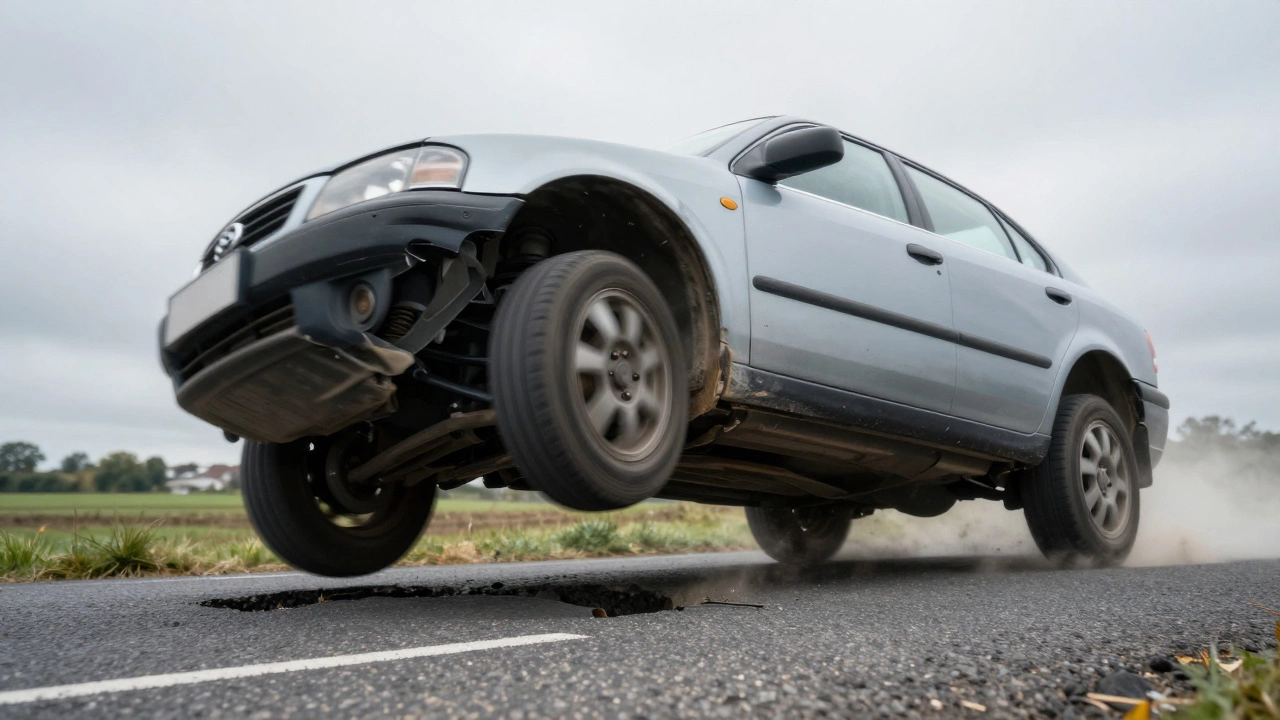
These numbers assume normal UK driving-mix of motorway and urban roads. If you drive on pothole-ridden streets in Manchester, expect to replace parts 2-3 years sooner.
When to Call a Pro
Some jobs are best left to mechanics:
- If you’re not comfortable using a spring compressor
- If your car has complex suspension (like air ride or adaptive dampers)
- If you suspect a bent control arm or frame damage
- If the alignment tool isn’t available
Getting a quote from a local garage is smart. Many offer free inspections. If they say you need £600 in work, get a second opinion. Suspension repairs are often overdiagnosed.
Preventing Future Problems
Extend suspension life with these habits:
- Avoid potholes and speed bumps at high speed
- Don’t overload your car. Excess weight crushes springs and shocks
- Get alignments every 12,000 miles or after any impact
- Inspect suspension every 20,000 miles-especially if you drive on rough roads
A quick visual check every time you change oil takes 2 minutes. Look for leaks, cracks, or rust. Catching a problem early saves money and keeps you safe.
Can I drive with a bad suspension?
Technically, yes-but you shouldn’t. A bad suspension affects braking distance, increases tire wear, and makes steering unpredictable. In wet conditions, it can cause hydroplaning or loss of control. If your shocks are completely gone, you risk damaging other parts like the steering or wheels. Drive only to the nearest garage.
How much does it cost to fix a bad suspension?
Replacing a pair of shocks costs £150-£300 for parts, plus £100-£200 in labor. Struts are more expensive: £250-£500 for parts, with labor around £150-£300. If you’re replacing control arms and ball joints too, expect £800-£1,500 total. DIY cuts labor costs by 70%.
Do I need to replace all four shocks at once?
Yes, always. Even if only one side is leaking, the other side is worn to about the same degree. Replacing only one creates imbalance. Your car will pull to the good side, and the new shock will wear out faster. It’s cheaper and safer to do all four at once.
What’s the difference between shocks and struts?
Shocks are standalone dampers. Struts are structural-they support the weight of the car and hold the wheel in alignment. Struts combine a shock absorber and a coil spring in one unit. Most modern cars use struts on the front and shocks on the rear. You can’t swap them. Always replace them with the same type.
Can I replace shocks myself?
Yes, if you have basic tools and a jack. Front shocks on many cars are simple: unbolt the top and bottom, pull out, insert new. Struts are harder because of the spring. If you’re not confident with spring compressors, get help. A mistake here can be dangerous.
Fixing a bad suspension isn’t glamorous, but it’s one of the most important things you can do for safety and savings. Don’t wait until the car feels like a rollercoaster. Check it now. Fix it right. Drive better.