Car Oil Health Diagnostic Tool
Select the symptom you are experiencing to receive an immediate assessment of severity and required action.
Symptoms & Signs
Select a symptom from the list to see the diagnosis.
You’re driving down the M60, cruising at a steady 70 mph, when a strange noise starts coming from under the bonnet. It’s not quite a rattle, but it’s definitely not the smooth hum you’re used to. Your heart sinks. You pull over, pop the hood, and check the dipstick. The oil is barely touching the bottom mark. What now?
Running low on oil isn’t just an inconvenience; it’s one of the fastest ways to kill your engine. Unlike fuel, which runs out gradually, oil depletion can lead to catastrophic failure in minutes if ignored. But how do you know before it’s too late? Does your car scream for help, or does it whisper? Let’s break down exactly what happens to your vehicle when the oil level drops, so you can catch it before it becomes a five-figure repair bill.
The First Clue: Dashboard Warnings
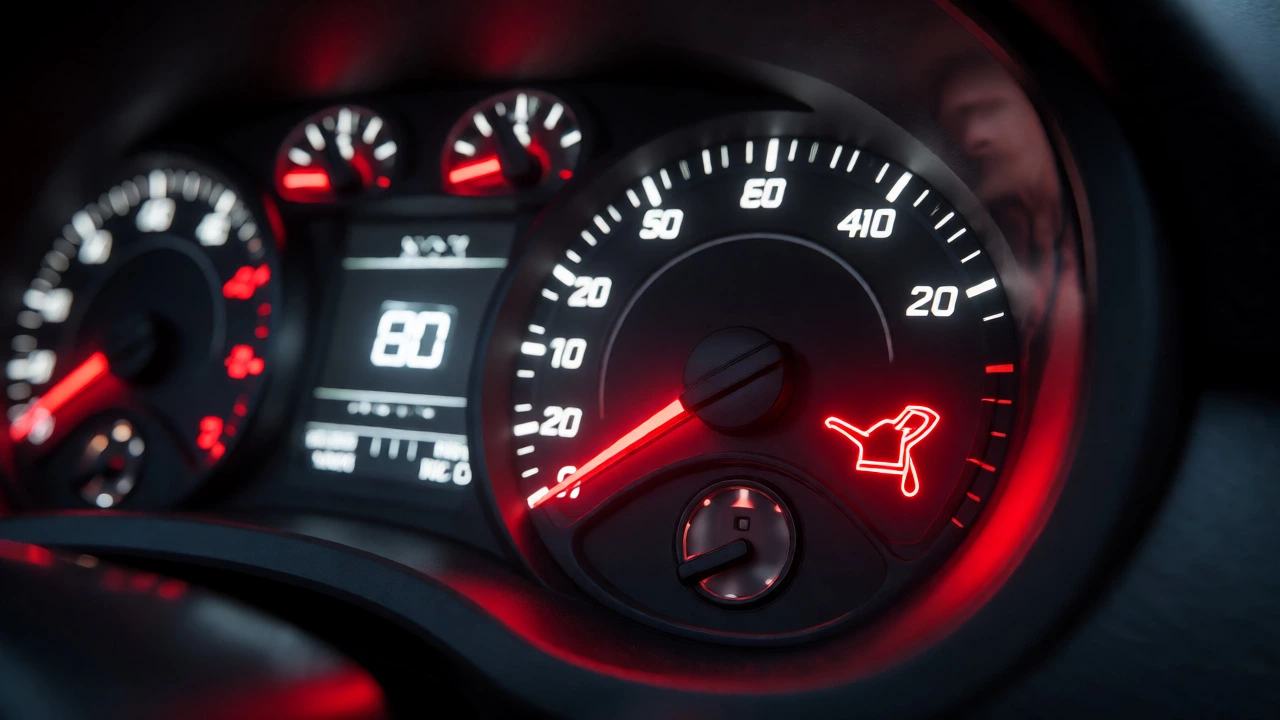
Your car talks to you through its dashboard. If you ignore these signals, you’re asking for trouble. There are two main lights related to oil that often get confused, but they mean very different things.
Oil Pressure Light (a red icon resembling an oil can with a drip) is the emergency brake of engine health. This light doesn’t just mean “low oil”; it means “the oil isn’t circulating.” If this pops on while driving, stop immediately. Turn off the engine. Driving even a mile with low oil pressure can destroy bearings because metal-on-metal contact begins instantly. In contrast, the Low Oil Level Indicator (often yellow or orange) simply tells you the quantity is below optimal levels. You have time to top up, but don’t wait weeks.
Modern cars, especially those sold in the UK since 2015, often display text warnings like “Check Engine Oil Level” on the infotainment screen. Don’t dismiss this as a minor nag. While less urgent than the red pressure light, ignoring it leads to the same eventual outcome: starvation.
Audible Symptoms: The Sound of Starvation
If you miss the dashboard lights, your ears will tell you something is wrong. Oil acts as a cushion between moving parts. Without enough of it, friction skyrockets, creating distinct noises.
- Ticking or Tapping: This is often the first audible sign. It sounds like a sewing machine running inside the engine bay. This usually indicates hydraulic lifters (components that adjust valve clearance) aren’t getting enough oil pressure to stay quiet. It’s annoying, but not immediately fatal if caught early.
- Rod Knocking: This is the nightmare sound. A deep, rhythmic thudding that matches the engine’s RPM. It means the connecting rods are hitting the crankshaft because the oil film has vanished. If you hear this, your engine is dying. Do not drive it home. Call a recovery truck.
- Grinding or Whining: Accessories like the alternator or power steering pump rely on belt-driven pulleys, but the internal gears need lubrication too. A whine that changes pitch with acceleration can indicate low fluid levels affecting multiple systems.
In Manchester, where stop-start traffic is common, these noises are easier to hear at idle. Listen closely when you’re stuck at a red light on Deansgate. If the ticking persists after the engine warms up, check your oil.
Performance Issues: Sluggishness and Overheating
Oil doesn’t just lubricate; it cools. Up to 40% of an engine’s heat is carried away by the oil, especially in high-friction areas like the piston rings and camshafts. When oil levels drop, cooling capacity plummets.
You might notice your temperature gauge creeping higher than usual, even on a cool autumn day. This isn’t necessarily a radiator issue-it’s thermal overload from within. The engine works harder because parts are dragging against each other. You’ll feel a lack of power, particularly during overtaking or climbing hills. The car feels “lazy,” struggling to maintain speed despite pressing the accelerator deeper.
| Symptom | Likely Cause | Severity | Action Required |
|---|---|---|---|
| Yellow Oil Can Icon | Low Quantity | Medium | Top up within 50 miles |
| Red Oil Can Icon | Low Pressure | Critical | Stop immediately |
| Ticking Noise | Lifter Starvation | High | Check level and leak source |
| Rod Knock | Bearing Failure | Catastrophic | Tow to garage |
| Overheating | Poor Heat Dissipation | High | Inspect cooling system & oil |
Smell and Smoke: The Visual and Olfactory Cues
Have you ever smelled burnt toast or hot metal coming from your vents? That’s often burning oil. When levels are critically low, oil can seep into places it shouldn’t, such as the exhaust manifold or turbocharger seals. As it burns off, it produces acrid smoke.
Blue smoke from the exhaust tailpipe is a classic indicator of oil entering the combustion chamber. This usually points to worn piston rings or valve stem seals, exacerbated by low oil volume allowing more blow-by. If you see blue smoke, your oil consumption rate is likely high, meaning topping up alone won’t fix the root cause. You’re leaking or burning it faster than normal.
Additionally, check the ground under your car after parking overnight. Pools of dark brown or black liquid near the front centre of the vehicle confirm a leak. Common culprits include the oil pan gasket, drain plug, or rear main seal. In older VW Golf or Ford Focus models popular in the UK, timing cover leaks are frequent and can mimic head gasket failures.
Why Modern Engines Are More Sensitive
Older engines were forgiving. They had larger tolerances and could run happily on lower-quality oil. Today’s engines, like the 1.0-litre EcoBoost or the Volkswagen EA888, are engineering marvels packed with tight clearances. These small spaces require precise oil volumes to function.
Many modern cars use variable valve timing (VVT) solenoids that rely entirely on oil pressure to adjust camshaft position. If oil is low, VVT fails, leading to poor fuel economy and erratic idling. Furthermore, turbocharged engines spin at up to 200,000 RPM. Without adequate oil flow, the turbo bearings will seize in seconds. Replacing a turbo costs £1,500-£3,000; replacing a seized turbo caused by neglect can cost twice that due to collateral damage.

What To Do If You Suspect Low Oil
Don’t panic, but act fast. Here is a simple checklist to follow safely:
- Find a Safe Spot: Pull over on flat ground. Never check oil on a slope, as the reading will be inaccurate.
- Let It Cool: Wait 5-10 minutes after turning off the engine. Hot oil expands and may splash; also, letting it settle ensures an accurate dipstick reading.
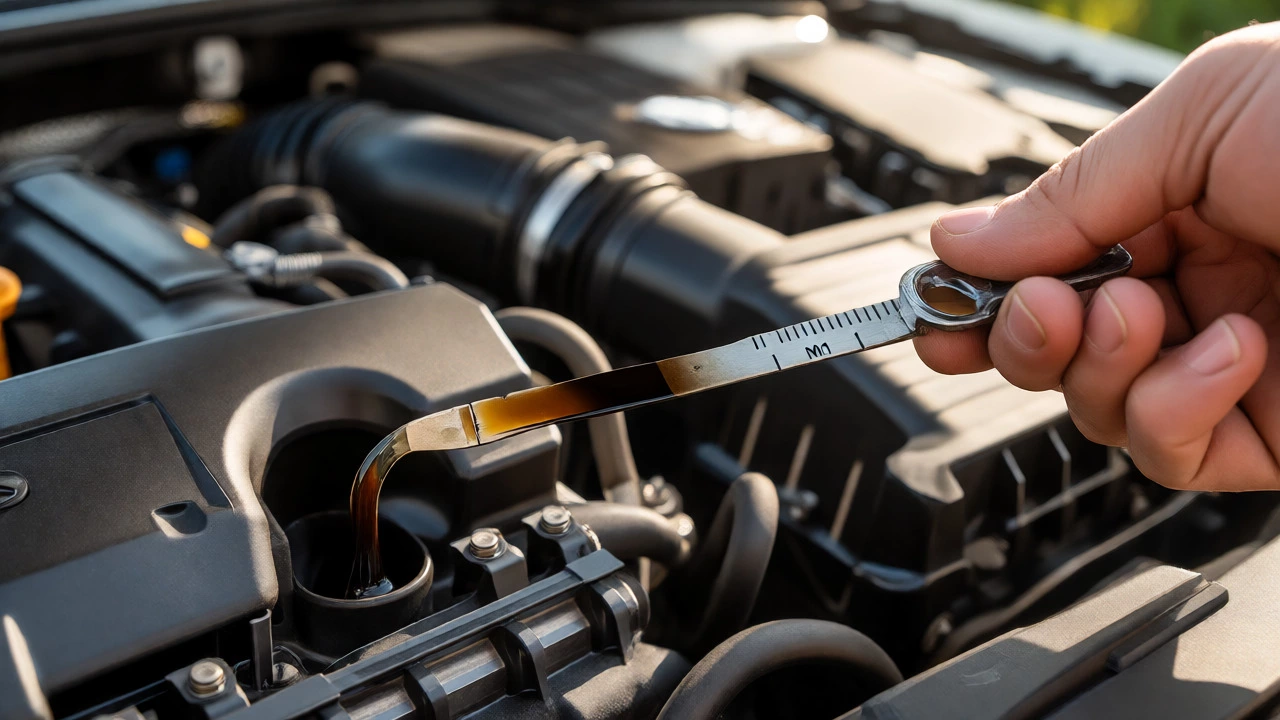
- Check the Dipstick: Pull it out, wipe it clean, reinsert fully, then pull again. Look for the oil film. Is it between the Min and Max marks? If it’s below Min, you’re low.
- Inspect Condition: Good oil is amber or light brown. Black oil is normal for diesel engines but should still be slippery. Gritty or milky oil indicates contamination (coolant mix) and requires immediate professional attention.
- Top Up Correctly: Use the exact specification listed in your owner’s manual (e.g., 5W-30 C3). Adding the wrong viscosity can harm performance. Add small amounts (0.5 litres) at a time, checking frequently to avoid overfilling.
If you cannot find a leak and the oil disappears rapidly, you might have an internal issue. A compression test or leak-down test by a mechanic can diagnose worn rings or valves.
Preventing Low Oil Levels
The best way to handle low oil is to prevent it. Check your oil every two weeks or before long trips. Keep a litre of the correct spec oil in your boot. It weighs nothing but saves thousands.
Also, stick to recommended service intervals. While manufacturers often quote 10,000-15,000 miles, many independent mechanics in the UK recommend changing oil every 5,000-7,000 miles for city-driving cars. Short trips prevent the engine from reaching operating temperature, causing condensation and sludge buildup, which degrades oil quality faster.
Remember, oil is the lifeblood of your engine. Treat it with respect, listen to your car, and never ignore that little yellow light. It’s cheaper to buy a bottle of oil than a new engine block.
Can I drive my car if the oil light comes on?
It depends on the light. If it is the red oil pressure light, absolutely not. Stop immediately to prevent engine seizure. If it is the yellow/orange low oil level light, you can drive cautiously to the nearest petrol station to top up, but keep speeds moderate and avoid heavy acceleration.
How much oil loss is considered normal?
Manufacturers often state that consuming up to 1 litre per 1,000 miles is within acceptable limits for some high-performance or turbocharged engines. However, for most standard family cars, losing more than 0.5 litres between services suggests a problem worth investigating, such as a leak or wear.
What does white smoke from the exhaust mean?
White smoke is typically water vapour, which is normal on cold mornings. However, persistent thick white smoke with a sweet smell indicates coolant entering the combustion chamber, possibly due to a blown head gasket. This is different from blue smoke, which indicates burning oil.
Is synthetic oil better for preventing low oil issues?
Synthetic oil maintains its viscosity and protective properties better across extreme temperatures and longer intervals compared to conventional oil. While it doesn't prevent leaks or consumption, it offers superior protection against wear if oil levels drop temporarily, making it a safer choice for modern engines.
Can low oil cause transmission problems?
Indirectly, yes. In automatic transmissions, torque converters and gear pumps rely on hydraulic pressure generated by the engine's operation. Severe engine drag from low oil can strain the drivetrain. Additionally, some all-wheel-drive systems share differential fluids, but generally, engine oil issues affect the engine first. Transmission fluid is separate.