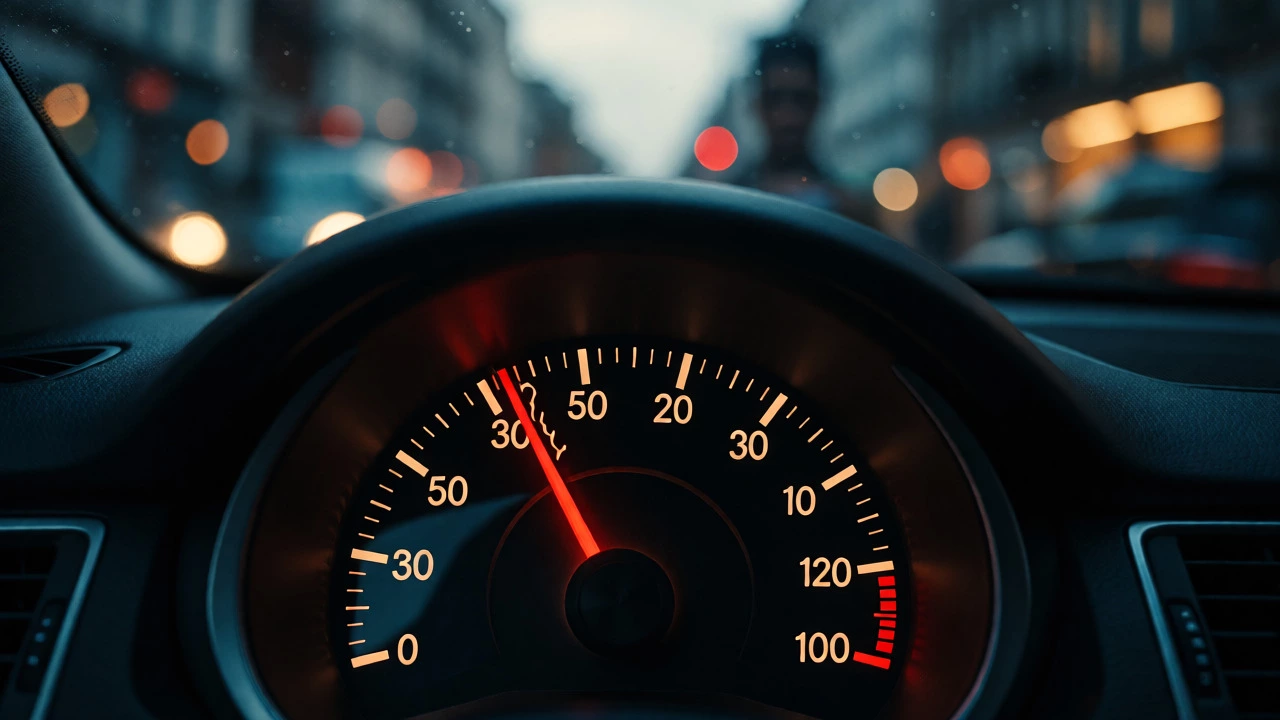
Radiator Failure Risk Calculator
Diagnose Your Situation
Select your symptoms and distance to see if you can drive safely.
You’re halfway to work, the temperature gauge is creeping toward the red zone, and you wonder: Will a car run with a bad radiator? A vehicle can technically operate with a faulty radiator for a short distance, but doing so risks catastrophic engine failure due to overheating. It’s a question that keeps many drivers up at night, especially when a repair shop quote looks steep. The short answer is yes, it will run, but not well, and certainly not for long without consequences that could cost you thousands.
The Short Answer and the Real Danger
Think of your radiator as the lungs of your cooling system. If they stop working properly, the body suffocates. In automotive terms, if the radiator fails to dissipate heat, the engine temperature spikes. You might drive five miles to get home or to a garage, but pushing past that limit is gambling with your engine’s life.
Here is the reality check: A small leak might let you drive cautiously for a day or two. A completely blocked core or a shattered tank means you have minutes, not miles. Once the coolant boils over, metal components expand beyond their tolerances. We are talking about warped cylinder heads, blown head gaskets, or seized pistons. These aren't minor inconveniences; they are engine-ending events.
| Failure Type | Symptom | Safe Driving Distance | Risk Level |
|---|---|---|---|
| Minor Leak | Drip under car, low coolant light | 10-20 miles (with monitoring) | Moderate |
| Clogged Core | Heat rises in traffic, cools on highway | 5-10 miles | High |
| Cracked Tank | Visible crack, rapid coolant loss | < 1 mile | Severe |
| Total Blockage | Gauge pegged immediately | 0 miles | Critical |
How the Cooling System Actually Works
To understand why a bad radiator is such a big deal, you need to know what else is involved. Your engine generates massive amounts of heat during combustion. The water pump circulates coolant through the engine block to absorb this heat. That hot fluid then travels to the radiator.
The radiator consists of thin tubes and fins. As air passes through these fins-either from the car’s forward motion or via the electric fan-the heat transfers from the coolant to the air. The cooled liquid returns to the engine to repeat the cycle. If the radiator is clogged, the heat stays trapped. If it leaks, there isn’t enough fluid to carry the heat away. Either way, the thermal balance breaks down.
Signs You Have a Failing Radiator
Your car usually gives you warnings before total disaster strikes. Ignoring them is where most people go wrong. Here are the clear indicators that your radiator is on its last legs:
- Temperature Gauge Fluctuations: The needle climbs higher than normal, especially in stop-and-go traffic, but drops back down when you hit the open road. This often points to a partially clogged core or a failing fan.
- Coolant Leaks: Look for puddles under the parked car. Coolant is often green, orange, or pink and has a sweet smell. Check the ground near the front grille where the radiator sits.
- Discolored Coolant: Open the reservoir cap (when cold!). If the fluid looks like rust or oil, your radiator interior is corroding or a head gasket issue is contaminating the system.
- Heater Issues: Surprisingly, a bad radiator can cause your cabin heater to blow cold air. This happens because air bubbles get trapped in the system due to low coolant levels, preventing proper circulation to the heater core.
- Bulging Hoses: If the upper or lower radiator hoses feel hard as rock or look swollen, pressure is building up because the coolant can’t flow freely.
What Happens If You Keep Driving?
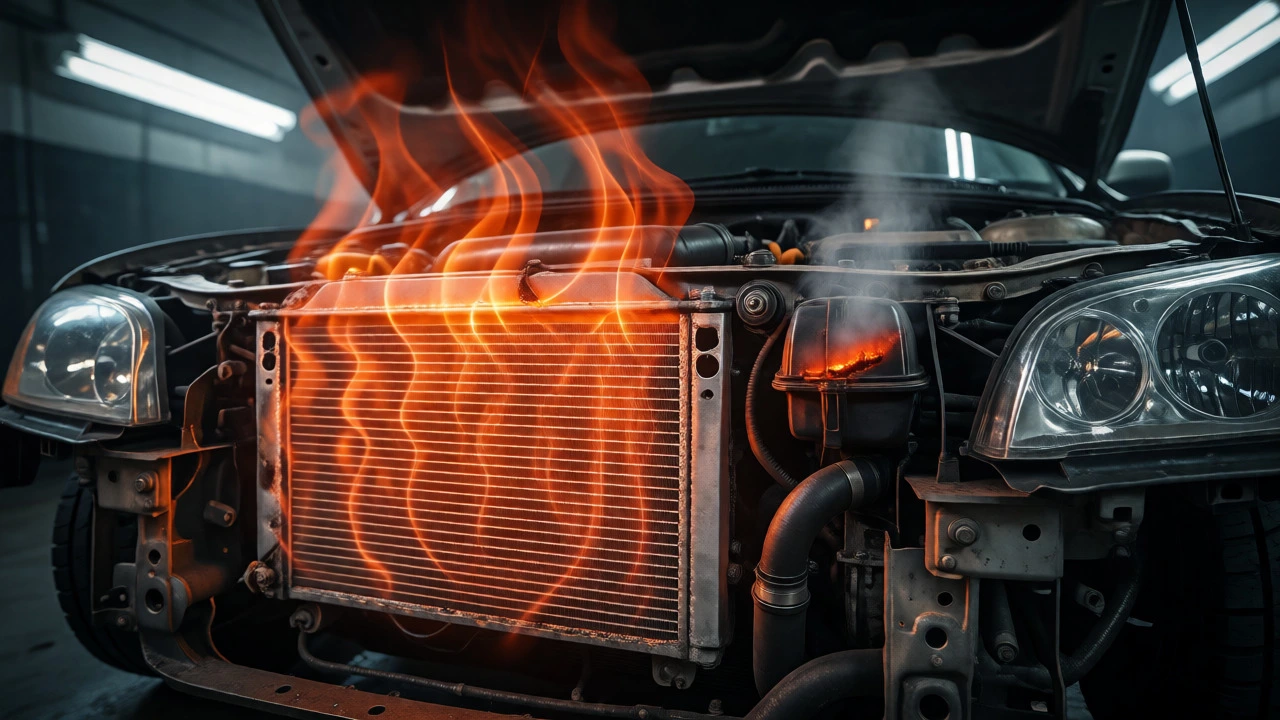
Let’s say you ignore the warning lights. You keep driving. What actually breaks inside your engine? It’s a chain reaction.
First, the thermostat gets stuck open trying to cope, or the system loses all pressure. Next, the aluminum alloy of the engine block and cylinder head expands unevenly. Aluminum warps much faster than cast iron. When the cylinder head warps, it no longer seals tightly against the block. This blows the head gasket, allowing oil and coolant to mix. You’ll see a mayonnaise-like sludge under your oil cap.
If you push further, the lack of lubrication (because oil is contaminated) causes friction. Piston rings score the cylinder walls. Bearings spin out. Eventually, the engine seizes completely. At that point, you aren’t looking at a £300 radiator replacement; you’re looking at a £3,000+ engine rebuild or replacement. The math simply doesn’t support driving on a known bad radiator.
Emergency Tips: Getting Home Safely
If you discover a minor leak and are stranded far from a mechanic, you might be able to limp home. But you must change how you drive. Turn off your air conditioning. AC puts extra load on the engine, generating more heat. Instead, turn on the cabin heater to full blast. Yes, it will be uncomfortable, but the heater core acts as a secondary radiator, pulling heat away from the engine.
Drive slowly. High speeds create more friction and heat. Avoid idling in traffic jams if possible, as there is no airflow through the radiator. If the temperature gauge hits the red line, pull over safely and shut off the engine. Let it cool for 15-20 minutes. Never open the radiator cap while the engine is hot-the pressurized steam can cause severe burns.
Repair vs. Replace: Making the Right Call
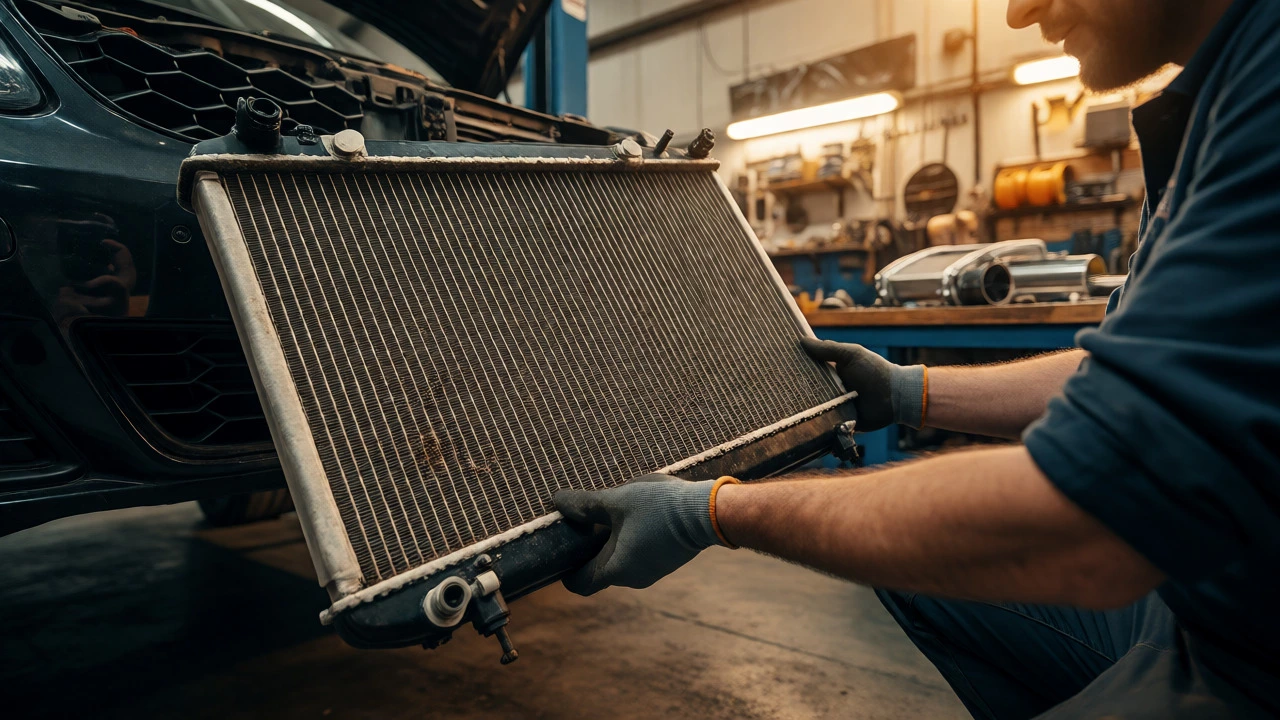
Once you’re safe, you face the decision: patch it or replace it? For modern vehicles, replacement is almost always the better option. Radiators are relatively inexpensive parts compared to labor costs elsewhere. Patching a plastic tank with epoxy tape is a temporary fix at best. These patches rarely hold up to the high pressures and temperatures of a running engine.
Consider the age of your car. If you have an older model with a corroded core, replacing just the radiator might reveal other issues like a weak water pump or old thermostat. Many mechanics recommend replacing the water pump and thermostat while the system is drained anyway. It saves labor costs later and ensures the new radiator functions perfectly.
Frequently Asked Questions
How long can I drive with a leaking radiator?
If the leak is slow and you monitor the temperature gauge constantly, you might manage 10-20 miles. However, if the coolant level drops rapidly, you should tow the car to avoid engine seizure. Always prioritize safety over saving a towing fee.
Can I drive without any coolant?
No. Without coolant, the engine has no medium to transfer heat away from the cylinders. Overheating will occur within minutes, leading to immediate and severe damage to internal components.
Is it cheaper to repair or replace a radiator?
Replacement is generally recommended. Repairs on plastic tanks often fail again quickly. New radiators are mass-produced and affordable, making replacement a more reliable and cost-effective long-term solution.
Why does my car overheat only in traffic?
This usually indicates a problem with the electric cooling fan or a partially clogged radiator. At speed, natural airflow cools the radiator, but in traffic, you rely on the fan. If the fan fails, temperatures rise.
Can a bad radiator damage the transmission?
Yes, in many cars, the automatic transmission cooler lines run through the radiator. If the radiator fails internally, coolant can mix with transmission fluid, destroying the transmission gears and valves.