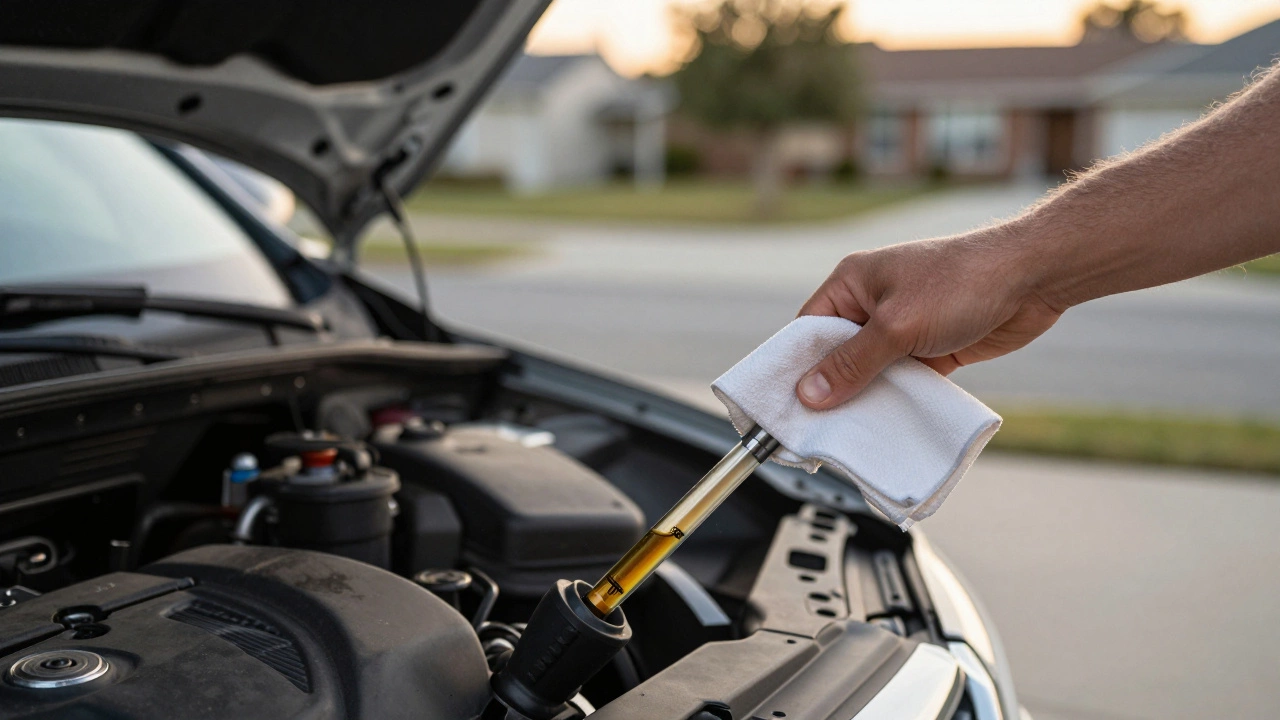
Oil Dipstick Checker
Check your oil level in seconds with this interactive dipstick tool. Just adjust the oil level indicator to match your dipstick reading.
Remember: Dark oil isn't necessarily low oil - it's just used. What matters is the quantity between MIN and MAX.
Running your car with low oil is like running a marathon without water. You might make it a few miles, but sooner or later, something breaks. And when it does, the damage isn’t just expensive-it’s often permanent. Most people wait until the engine starts making noise or the dashboard lights up red before they act. But by then, it’s usually too late. The good news? You don’t need a mechanic to spot low oil. There are clear, simple signs you can check yourself in under five minutes.
Check the Dipstick First
The dipstick is your car’s oil level meter. It’s not complicated, but most drivers skip it. To check, park on level ground, turn off the engine, and wait a few minutes for the oil to settle. Pop the hood, find the dipstick (it usually has a bright yellow or orange handle), pull it out, wipe it clean with a rag, then reinsert it fully. Pull it out again. Look at the two marks on the stick-usually labeled "MIN" and "MAX". If the oil level is below the MIN line, you’re low. If it’s barely touching the MIN line, top it up now. If it’s nowhere near either mark, you’ve got a serious problem.
Don’t rely on how the oil looks. Dark, dirty oil doesn’t mean low oil-it just means it’s been used. What matters is how much is there. A car with 1,000 miles on an oil change can still have perfectly clean oil, but if it’s below the MIN line, it’s dangerously low.
The Oil Pressure Light Isn’t Just a Warning-It’s an Emergency
If the oil pressure light comes on while you’re driving, stop the car as soon as it’s safe. This isn’t a "check engine" kind of warning. This is a "your engine is about to seize" signal. The light means oil isn’t flowing properly through the engine. That could be because there’s not enough oil, or because the pump has failed, or because the oil has turned to sludge. But in over 80% of cases, it’s simply because the oil level dropped too low.
Some older cars don’t have an oil pressure light. They rely on a low oil warning light instead, which looks like a small oil can. If that light flashes, don’t ignore it. It’s there for a reason. Even if your car is older, you can still check the dipstick manually. It’s free, it’s fast, and it could save you thousands.
Strange Noises from the Engine
When oil is low, metal parts in the engine start grinding against each other. You’ll hear it. A knocking, ticking, or clattering sound-especially when you start the car or accelerate-is a classic sign. It’s not the sound of a noisy valve or a loose belt. This is the sound of metal-on-metal contact. That ticking noise you hear at idle? That’s often the lifters. They need oil to stay lubricated. Without it, they clatter.
Some people dismiss these sounds as "normal engine noise." But if you’ve never heard it before, and it’s gotten louder over time, that’s not normal. A 2023 study by the UK’s Institute of Automotive Engineers found that 62% of engine failures linked to low oil were preceded by these noises for weeks or even months before failure. People just assumed it was fine.
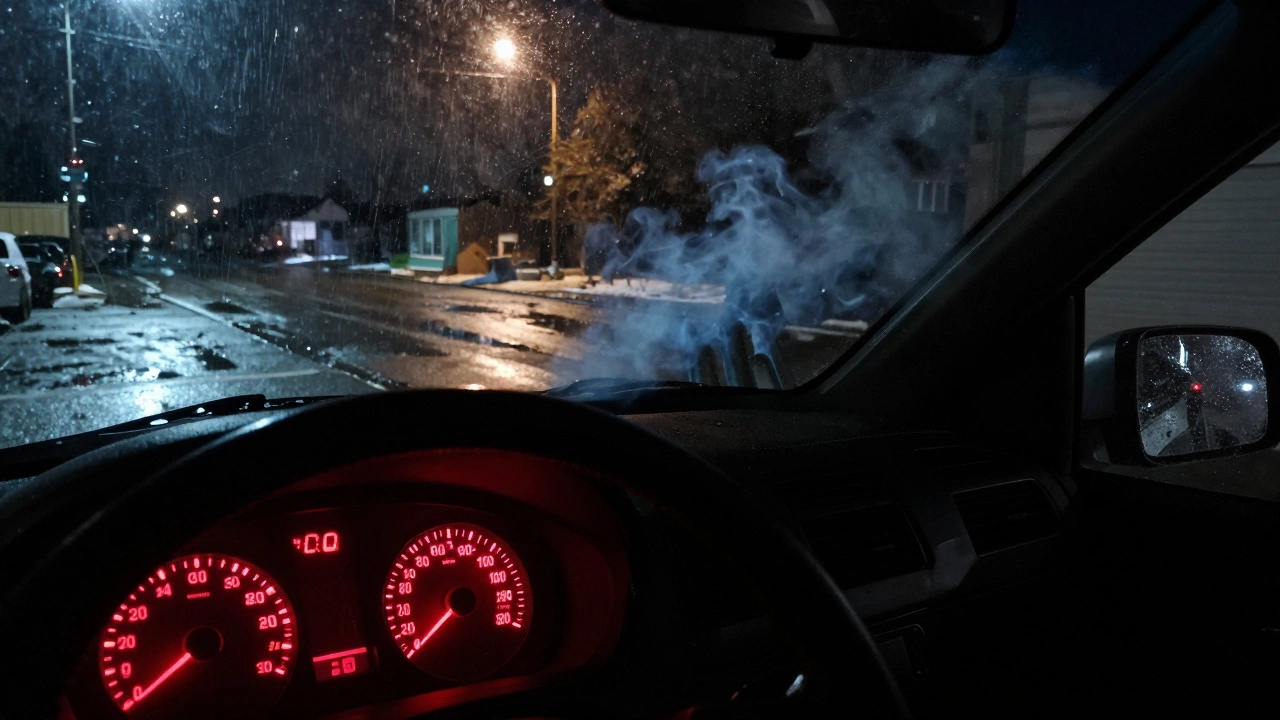
Overheating Engine
Oil doesn’t just lubricate-it also helps cool the engine. When oil levels drop, the engine runs hotter than it should. You might notice the temperature gauge creeping into the red zone, or the heater blowing less warm air than usual. A low oil level can’t absorb heat the way it should, so the engine overheats even if the coolant system is fine.
Some drivers think overheating means a radiator leak. But if you’ve checked the coolant and it’s full, and the radiator fan is working, then look at the oil. Low oil is a hidden cause of overheating that gets overlooked.
Blue Smoke from the Exhaust
If you see thick blue smoke coming out of the tailpipe-especially when you start the car or accelerate-it’s a sign that oil is burning inside the engine. That doesn’t mean the oil tank is empty. It means oil is leaking into places it shouldn’t be, like the combustion chamber. This usually happens because low oil causes seals and gaskets to dry out and crack. The engine then starts sucking oil into the cylinders.
It’s not always easy to spot blue smoke in daylight. Try checking at night or in a garage with the engine running. If you see even a faint puff of blue smoke, get the oil level checked. It’s not just low oil-it’s a sign that internal damage is already happening.
Oil Smell Inside the Cabin
Have you noticed a strange, burning smell when you’re driving? Not the usual hot engine smell, but something oily, like burning motor oil? That’s another red flag. Oil can leak onto hot engine parts and burn off, creating fumes that get sucked into the cabin through the ventilation system. This often happens when oil levels are low and seals are worn. The smell might come and go, but it’s a clear signal that something’s wrong.
How Often Should You Check?
Most manufacturers say to check the oil every few weeks. That’s not enough. If you drive more than 500 miles a week, check it every time you fill up. If you drive less, check it at least once a week. And always check before a long trip. A 2024 survey of UK mechanics found that 47% of breakdowns in older cars were caused by drivers who hadn’t checked the oil in over a month.
Here’s a simple rule: check the oil every time you fill the gas tank. It takes 90 seconds. You’re already at the pump. Why not grab a rag and peek under the hood?
What Happens If You Ignore It?
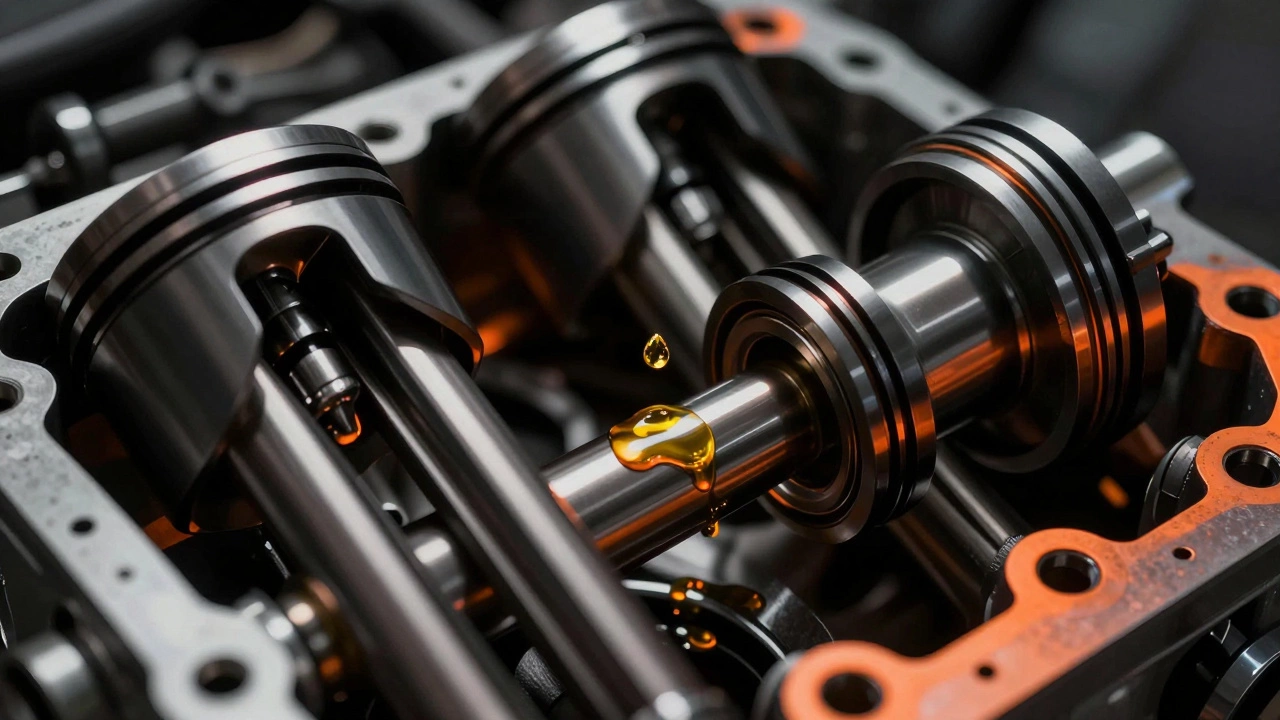
Low oil doesn’t just cause problems-it destroys engines. Without enough oil, bearings, pistons, and camshafts overheat and seize. A seized engine means a new engine. And a new engine for a 10-year-old car? That’s £3,000 to £5,000. For most people, that’s more than the car is worth.
It’s not just about money. In the UK, over 2,000 breakdowns each year are directly linked to oil neglect. Most of them happen in winter, when engines work harder and oil thickens. If you live in Manchester, you know how cold it gets. Your car needs oil to survive.
What to Do If You’re Low
If the dipstick shows low oil, don’t panic. Buy the right type of oil-check your owner’s manual for the correct viscosity (like 5W-30 or 10W-40). Most garages sell oil in 1-litre bottles. Add half a litre, wait a minute, then check again. Don’t overfill. Too much oil can cause foaming and damage the engine too.
If you’re adding oil more than once a month, you’ve got a leak. That needs professional attention. A small leak is cheaper to fix than a seized engine.
Keep a bottle of oil in your boot. It’s a small thing, but it could save you from being stranded on the M62.