Brake Service Decision Tool
Answer the following questions based on your vehicle's behavior and what you see on your brake discs to get a recommended action.
1. Do you feel a pulsing or shaking sensation in the steering wheel when braking at highway speeds?
2. Looking at the rotor surface, do you see deep grooves or a significant "lip" around the outer edge?
3. Have you heard loud, metallic grinding sounds for several weeks?
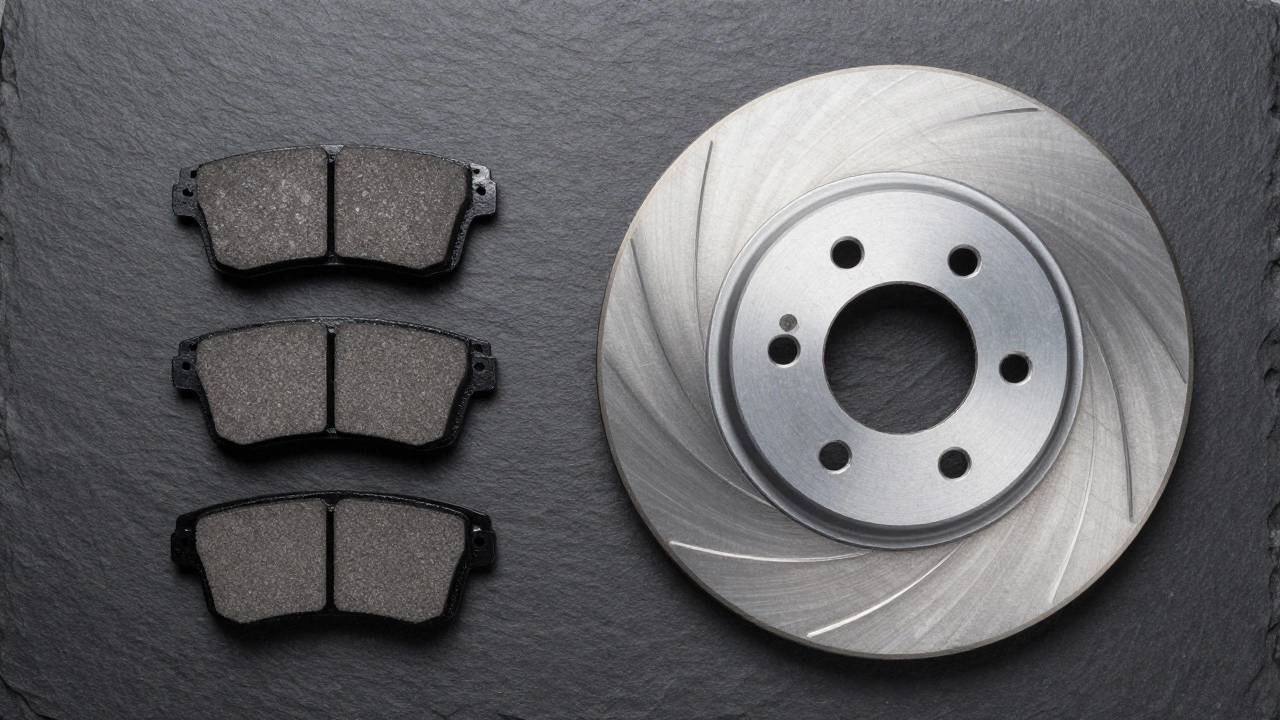
Brake Pads is the sacrificial friction material that presses against the rotor to stop a vehicle through friction. They are designed to wear down over time so that the more expensive parts of the system don't have to. When these wear out, you lose stopping power and risk damaging other components.
How to tell if you can skip the rotors
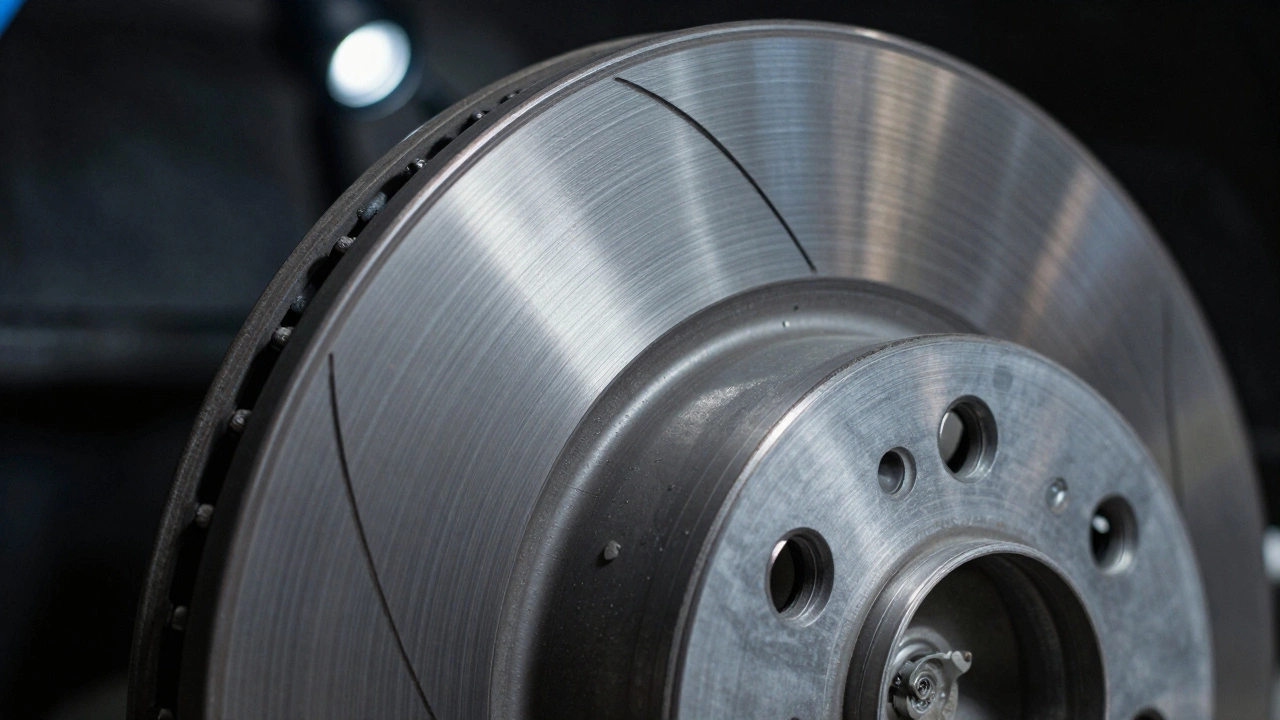
Before you decide to just swap the pads, you need to look at the Brake Rotor. This is the heavy metal disc that spins with your wheel. If the rotor surface is smooth and flat, you're golden. But if you see deep grooves-think of them like tiny canyons carved into the metal-you have a problem. These grooves are caused by debris or pads that were worn down to the metal backing plate.
Another red flag is a "lip" around the outer edge of the disc. As the pads rub against the rotor over thousands of miles, they carve a valley into the center. If that outer ridge is significant, your new pads won't have a perfectly flat surface to grip, which means your brake pad replacement won't be as effective as it should be. If you feel a pulsing sensation in the steering wheel when you brake at highway speeds, your rotors are warped. No amount of new pads will fix a wobble.
| Rotor Condition | Action Required | Why? |
|---|---|---|
| Smooth surface, no pulsing | Pads Only | Maximum material remains; surface is flat. |
| Light scoring/grooves | Resurface or Replace | New pads need a flat surface to "bed in." |
| Deep grooves or "Lip" | Replace | Insufficient metal left to maintain heat dissipation. |
| Warped (Steering shake) | Replace | Physical deformation causes uneven pressure. |
The danger of "bedding in" on old rotors
When you install new pads, they go through a process called "bedding in." This is where a thin layer of friction material transfers from the pad to the rotor, creating a consistent surface. If your Brake Disc is uneven, the new pads will try to mold themselves to those imperfections. Instead of a flat contact patch, you get a patchy one.
What happens next? You get noise. That annoying squeal or grinding often isn't a "bad" part, but rather the new pads fighting against the old, uneven metal. In some cases, this leads to uneven wear, meaning you'll be replacing those expensive new pads way sooner than the manufacturer's promised mileage. It's a bit like trying to wipe a dirty table with a clean sponge-if the table has dried glue on it, the sponge just gets ruined.
The middle ground: Brake resurfacing
If your rotors are slightly worn but still have plenty of thickness, you don't always have to buy new ones. You can opt for Brake Lathe Resurfacing, often called "turning" the rotors. A mechanic puts the rotor on a specialized machine that shaves off a thin layer of metal to make the surface perfectly flat again.
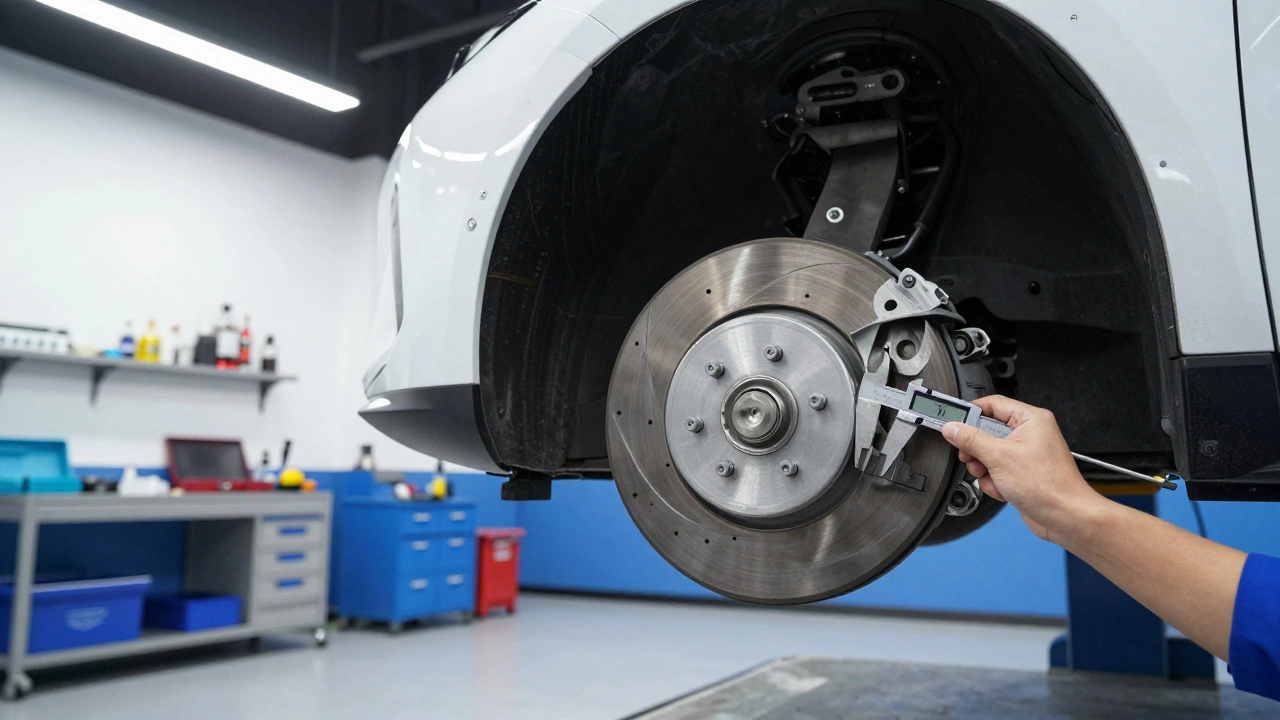
This is a great cost-saving move, but there's a catch: every rotor has a "minimum thickness" specified by the manufacturer. If the rotor is already too thin, shaving more metal off makes it dangerous. Thin rotors can't handle heat. When you slam on the brakes in an emergency, the metal gets incredibly hot. If it's too thin, the rotor can crack or warp instantly under the stress, leading to total brake failure.
Signs you absolutely must replace everything
There are a few scenarios where "pads only" is a dangerous gamble. First, if you've heard a loud, metallic grinding sound for weeks, you've likely worn through the friction material and the steel backing plate has been chewing into the rotor. That creates deep gouges that cannot be surfaced away.
Second, consider your driving style. If you do a lot of heavy towing or drive aggressively in hilly areas, your Braking System takes a beating. Heat is the enemy of metal. Over time, constant high-heat cycles can cause the metal to crystallize or warp. In these cases, starting fresh with a full kit-pads and rotors-is the only way to ensure you can stop the car in the shortest distance possible during an emergency.
Comparing the costs: Pads vs. Full Service
Let's be real: the cost is usually why people ask if pads alone are okay. New pads are relatively cheap and easy to install. Rotors add a significant chunk to the bill because they are heavy, expensive to manufacture, and require more labor to swap.
However, think about it in terms of "cost per mile." If you spend $100 on pads and they wear out in 15,000 miles because they were rubbing against a bad rotor, you've wasted money. If you spend $400 on a full set and they last 50,000 miles, the long-term cost is actually lower. Plus, you avoid the risk of having to go back to the shop three months later because the car started shaking every time you hit the brakes.
Practical tips for long-term brake health
If you want to keep your rotors healthy so you can just change the pads next time, change how you brake. Avoid "riding the brakes" on long descents; instead, downshift to use engine braking. Also, be mindful of your Brake Fluid. If the fluid is old and contaminated with moisture, it can boil under high heat, which leads to brake fade and puts more physical stress on the pads and rotors.
Keep an eye on your dust. Some high-performance pads produce a lot of metallic dust. If you don't wash your wheels and brake assemblies occasionally, that dust can actually contribute to surface corrosion over time, especially in rainy or salty climates like the UK. A quick spray with a hose every few weeks helps keep the rotors clean.
Will new pads on old rotors make a noise?
Yes, it's very common. If the rotors have grooves or a glaze of burnt material, the new pads won't make full contact. This creates vibrations that sound like squealing or humming until the pads eventually wear down to match the rotor's shape.
How often should I actually replace rotors?
Typically, rotors last as long as two or three sets of brake pads. However, this depends on how hard you brake. If you do a lot of city stop-and-go driving, you'll wear them out faster than someone who spends most of their time on the motorway.
Can I just sand the rotors myself?
Using sandpaper to remove surface rust is fine. However, trying to "sand down" grooves or warping is a bad idea. You'll end up with a surface that isn't perfectly flat, which causes pedal pulsation and reduces braking efficiency.
Is it safe to change pads on only one axle?
Yes, it is common to change only the front pads, as they do most of the work stopping the car. Just ensure you change both wheels on that same axle (e.g., both fronts) so the car brakes evenly and doesn't pull to one side.
What is "brake fade" and does it affect rotors?
Brake fade happens when your brakes overheat to the point where the friction material can't grip the rotor. If your rotors are too thin or poorly ventilated, fade happens much faster, which is why replacing worn-out rotors is a safety priority.
What to do next
If you're currently staring at your wheels and wondering what to do, start with a visual check. Use a flashlight to look for those deep grooves or an outer lip. If you see them, don't even bother with the "pads only" route-you'll just be throwing money away.
If you're taking the car to a shop, ask the mechanic to show you the rotors before they start the work. A good technician will be happy to point out the wear patterns. If they suggest resurfacing, ask them to verify that the rotor thickness is still above the minimum limit. If you're doing the work yourself, always remember to compress the caliper piston carefully and use a torque wrench to tighten your lug nuts to the manufacturer's spec.