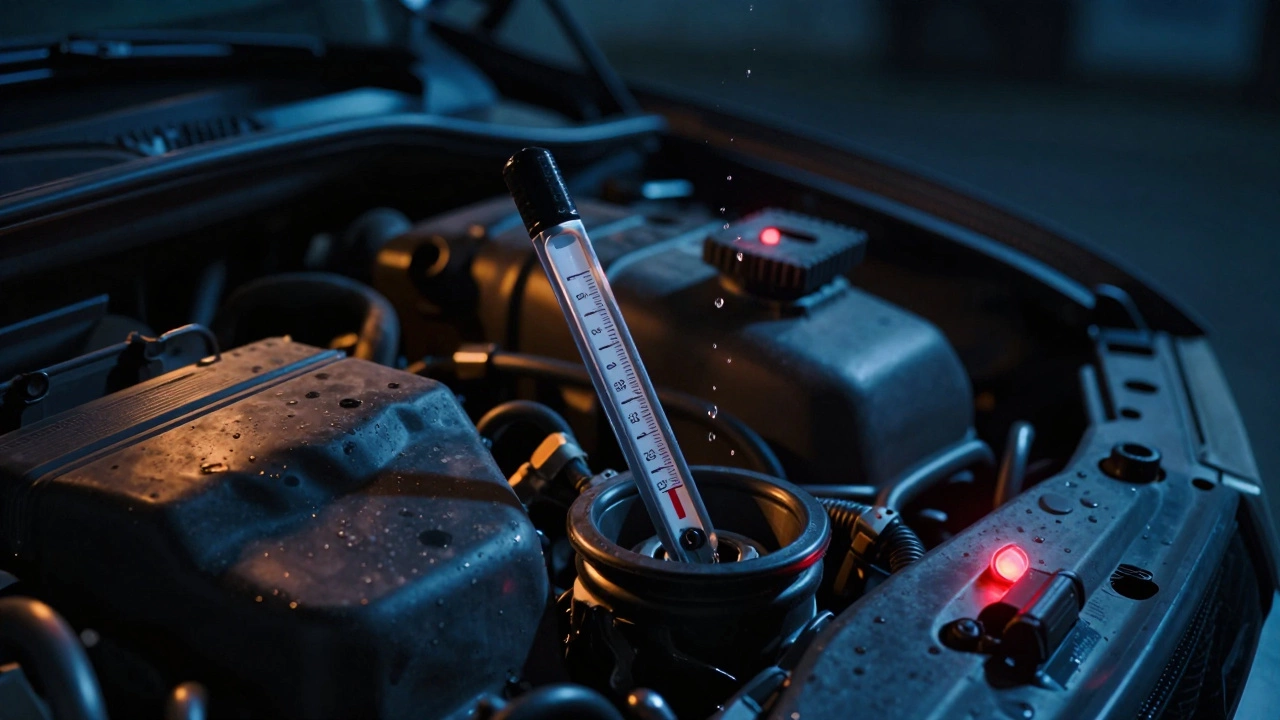
Oil Level Checker
STOP! Critical Oil Level
Engine damage can occur within 30 seconds when oil level drops below minimum. Metal components begin grinding immediately, causing irreversible damage. Stop driving now and check oil level.
If your car’s oil warning light comes on, don’t ignore it. Driving with low oil isn’t just a nuisance-it’s a fast track to serious engine damage. You might think you’ve got a few miles left before trouble starts, but the truth is, engines can fail in minutes without enough oil. It’s not an exaggeration. I’ve seen too many cars towed into garages in Manchester because someone thought, "It’s just a little low. I’ll top it up later." Engine oil isn’t just a lubricant. It’s your engine’s lifeline. It cools hot parts, cleans out debris, seals gaps between moving components, and prevents metal from grinding against metal. When oil levels drop too low, all of that stops. And when it stops, your engine starts to break down. Here’s what actually happens when you keep driving with low oil.
1. Metal Starts Grinding Against Metal
Your engine has dozens of moving parts-pistons, crankshafts, camshafts, valves-all sliding and spinning at thousands of revolutions per minute. Without enough oil, those parts don’t get coated properly. The thin film of lubrication that normally keeps them apart disappears. That’s when metal touches metal. The first signs? A knocking or tapping noise from the engine. It might be faint at first, like a loose bolt. But it gets louder. Faster. Within minutes, you could be hearing a deep, rhythmic clunk-signaling that bearings or rods are failing. Once that happens, repair costs jump from a few hundred pounds to several thousand.2. Overheating Starts Quickly
Oil doesn’t just lubricate. It carries heat away from the hottest parts of the engine. The piston rings, cylinder walls, and turbochargers (if you have one) rely on oil to stay cool. When oil levels are low, those parts overheat. I’ve worked on cars where drivers thought the temperature gauge was fine because it didn’t hit the red zone. But engine heat doesn’t always show up on the gauge right away. Oil-starved components can hit 300°C+ internally while the coolant system still reads normal. That’s when you get warped cylinder heads, cracked pistons, or a seized engine.3. Oil Pressure Drops-And That’s When Things Get Critical
Modern engines have oil pressure sensors that trigger the warning light. But that light doesn’t come on until the oil level is dangerously low. By then, damage may already be underway. Low oil means low pressure. The oil pump can’t push enough fluid through the narrow passages that feed critical components like the timing chain tensioners or variable valve timing systems. When those systems lose oil pressure, they stop working. In some engines, that means the timing chain skips teeth. In others, the valves don’t open or close properly. Either way, the engine can’t run.4. Sludge Builds Up Faster
Oil breaks down over time. It picks up dirt, metal shavings, and combustion byproducts. Clean oil has detergents that keep those contaminants suspended so they can be filtered out. But when oil levels are low, the remaining oil gets overloaded. It can’t do its job. That’s when sludge forms. Thick, sticky gunk that clogs oil passages and blocks oil filters. Sludge doesn’t just reduce lubrication-it traps heat and prevents oil from reaching parts that need it most. Cleaning sludge out of an engine often requires a full teardown. Sometimes, replacement is cheaper.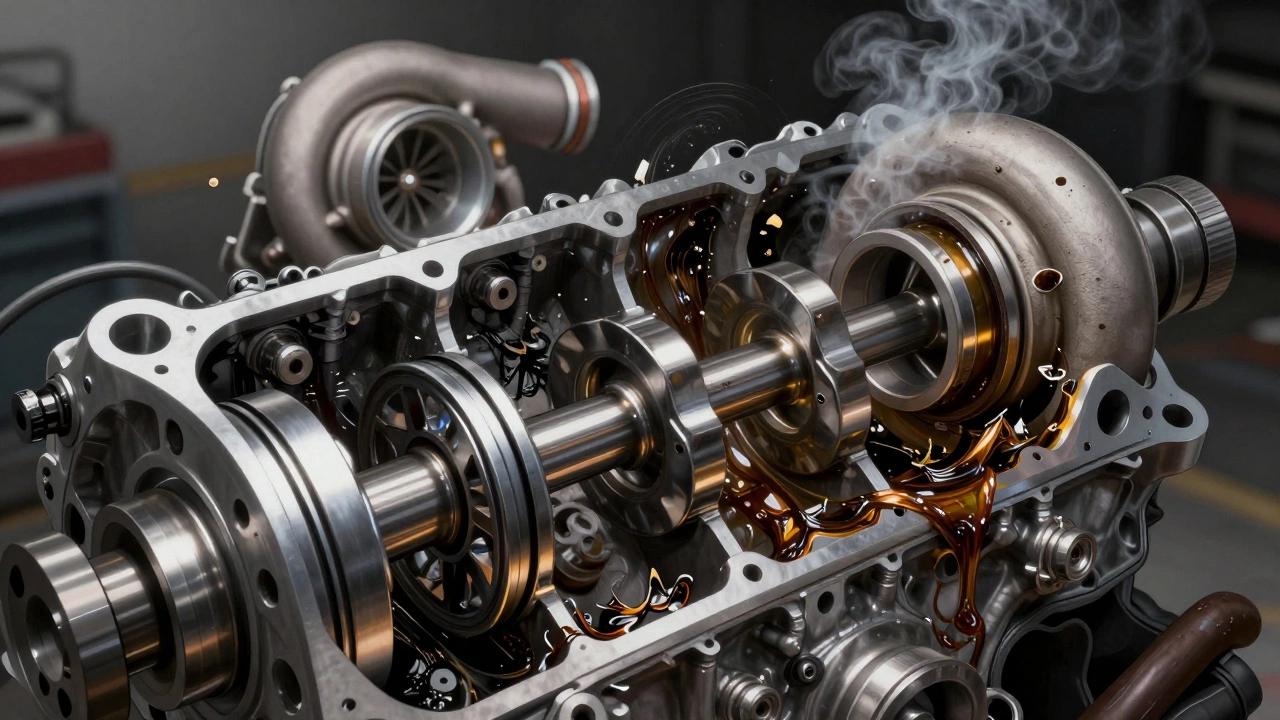
5. Turbochargers Fail Without Enough Oil
If your car has a turbocharger, low oil is even more dangerous. Turbochargers spin at over 100,000 RPM and rely entirely on oil for cooling and lubrication. They don’t have coolant lines-just oil feeds. A turbo running on low oil can overheat in seconds. The bearings wear out, the shaft seizes, and the blades can break. Replacing a turbocharger costs between £800 and £2,500 depending on the model. That’s a bill you can avoid by checking your oil once a week.How Low Is Too Low?
Most dipsticks have two marks: minimum and maximum. If your oil is below the minimum mark, you’re at risk. But here’s the thing-some engines can run for a while with oil just 0.5 litres below full. Others, especially high-performance or older engines, will start showing damage with just 0.2 litres missing. A good rule of thumb: if you’re halfway between the two marks, you’re fine. If you’re below the minimum, top up immediately. And if you’re constantly topping up, there’s a leak or an internal problem. Get it checked.What to Do If You Notice Low Oil
- Stop driving as soon as it’s safe. Don’t drive more than a few hundred metres if the warning light is on.
- Let the engine cool for 10-15 minutes before checking the oil. Hot oil gives false readings.
- Use the right oil type. Check your owner’s manual. Mixing oils can cause sludge.
- Top up with the correct grade. Most modern cars use 5W-30 or 5W-40. Older engines might need 10W-40.
- If you’re still low after topping up, or if the oil looks milky, black, or gritty, don’t drive. Call a mechanic.
How Often Should You Check Oil?
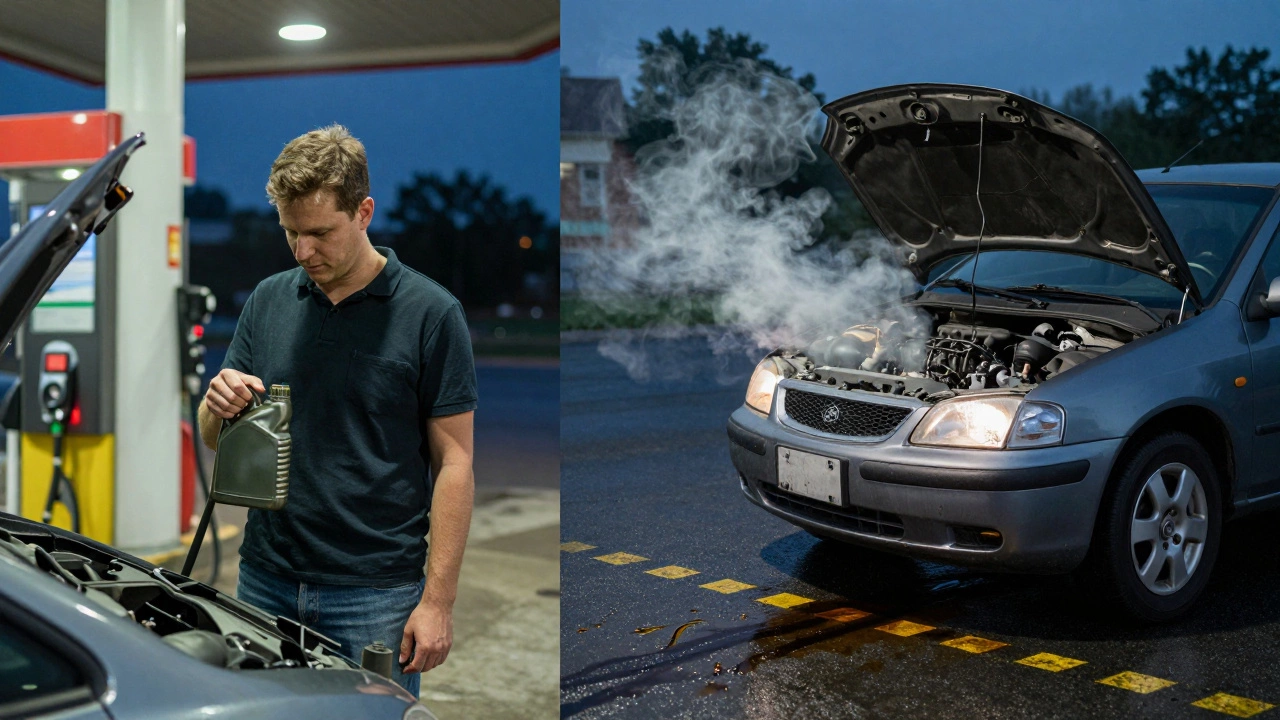
Modern cars don’t need oil changes every 5,000 miles anymore. Many can go 10,000-15,000 miles between changes. But checking the level? That’s weekly. Seriously. Make it part of your routine-like checking your tyres. Pull over at a petrol station, pop the hood, wipe the dipstick, reinsert it, then pull it out again. Look for the level and the colour. Dark, thick oil? Time for a change. Low level? Top it up. Milky oil? That’s coolant mixing in-big problem. I’ve had customers come in with 10,000-mile service reminders and say, "I didn’t think I needed to check." Then they’re surprised when the engine blows. It’s not magic. It’s physics.What About Cars That Don’t Have a Dipstick?
Many newer cars, especially European models, use electronic oil level sensors. These are accurate-but they don’t replace human vigilance. If the dashboard says "Low Oil Level," treat it like a red light. Don’t wait. Don’t assume it’s a glitch. Some of these systems can be reset after topping up. Others require a diagnostic tool. Either way, if the warning stays on after adding oil, there’s a leak. Get it checked.Real-World Example: A Manchester Ford Focus
Last winter, a driver brought in a 2018 Ford Focus with a knocking noise. He’d been driving for three weeks after the oil light came on. He thought it was "just being old." When we pulled the oil pan, we found a layer of sludge thick enough to block the oil pickup tube. The crankshaft bearings were worn down to bare metal. The engine was done. He spent £2,400 on a replacement engine. He could’ve topped up the oil for £5 and avoided it all.Prevention Is Cheaper Than Repair
Checking your oil takes less than two minutes. It costs nothing. And it can save you thousands. If you drive a car with a petrol engine, check it once a week. If you drive a diesel, check it twice a week. Diesel engines burn more oil, especially as they age. Keep a bottle of the right oil in your boot. You don’t need to be a mechanic to top up. Just follow the steps. And if you’re unsure, ask. A garage will show you how for free. The truth is simple: low oil doesn’t just reduce performance. It destroys engines. Fast. There’s no second chance. Once the damage starts, it’s irreversible. Don’t wait for the noise. Don’t wait for the smoke. Don’t wait for the warning light to flash twice. Check your oil. Now.Can I drive a few miles if my oil is low?
No. Even driving a few miles with low oil can cause permanent damage. The engine’s moving parts begin to grind together within seconds of losing proper lubrication. If the oil warning light is on, stop as soon as it’s safe and check the level. If it’s below the minimum mark, do not drive further. Call for assistance.
What does low oil look like on the dipstick?
The dipstick has two marks: minimum and maximum. If the oil level is below the minimum mark, it’s too low. Some dipsticks have crosshatch markings between the two. If the oil is below the bottom of the crosshatch, you need to top up. Also, check the colour-dark, thick, or gritty oil means it’s overdue for a change, even if the level looks okay.
Can low oil cause the engine to overheat?
Yes. Engine oil helps transfer heat away from critical parts like pistons and turbochargers. When oil levels are low, those components overheat, even if the coolant temperature gauge looks normal. Overheating from low oil can warp cylinder heads, melt pistons, or cause a blown head gasket-all expensive repairs.
Why does my car burn oil?
Older engines, especially those with high mileage, can burn oil due to worn piston rings or valve seals. This causes oil to enter the combustion chamber and burn with fuel. If you’re topping up oil every 500-1,000 miles, you likely have an internal leak. It’s not normal-and it’s not harmless. Left unchecked, it leads to sludge, overheating, and eventual engine failure.
Is it okay to mix different types of engine oil?
In an emergency, mixing oils won’t immediately destroy your engine. But it’s not recommended. Different oils have different additives and viscosities. Mixing synthetic and conventional oil can reduce performance. Mixing different weights (like 5W-30 with 10W-40) can affect oil pressure and flow. Always use the type specified in your owner’s manual. If you’re unsure, use the same brand and grade as what’s already in the engine.
If you’re still unsure about your oil level or type, visit a local garage. Most will check it for free. A few minutes now could save you thousands later.