Radiator Replacement Cost Calculator
Get Your Estimate
Estimated Costs
Enter your details above to see your estimate
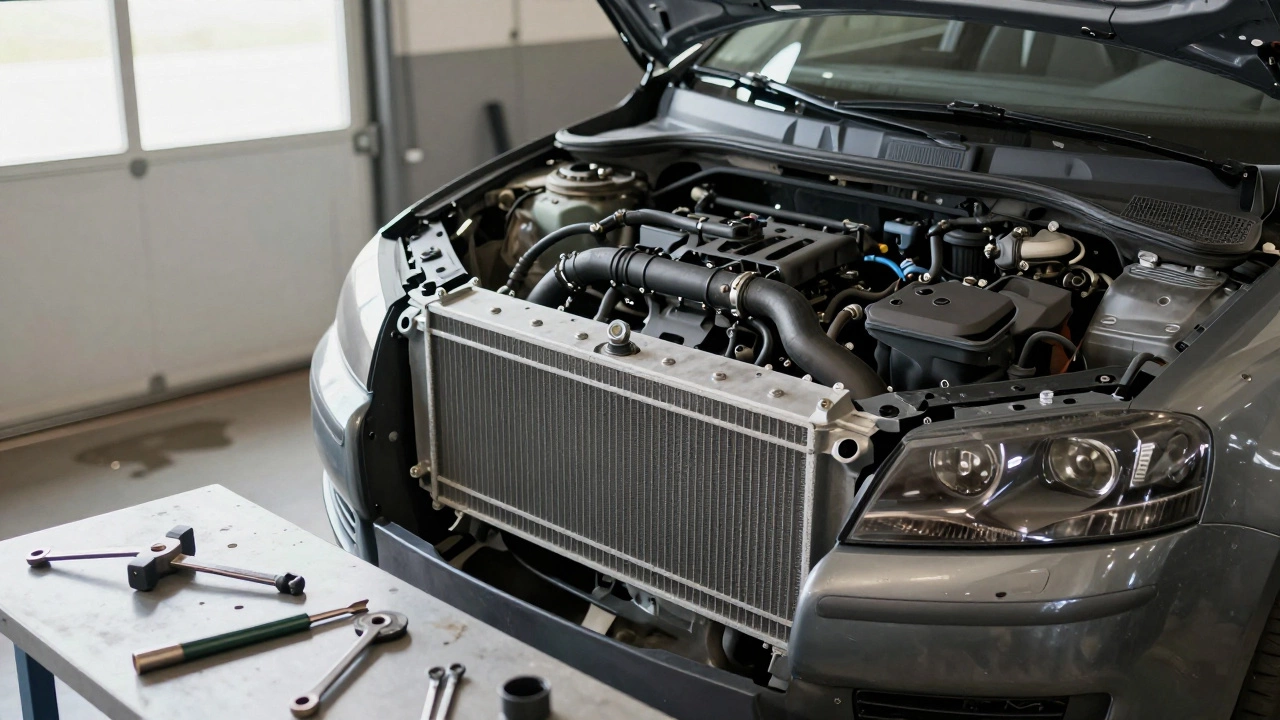
When your car starts overheating, the last thing you want to hear is that the radiator needs replacing - and that it’ll cost a fortune. But here’s the truth: car radiators aren’t automatically expensive. The price depends on your car, where you live, and whether you’re buying a brand-new part or a used one. In the UK, most people pay between £150 and £500 to replace a radiator, but some models can cost way more - or way less.
What Makes a Radiator Cost More?
Not all radiators are built the same. A basic radiator for a 10-year-old Ford Focus might cost £80 to £120, while a new radiator for a luxury SUV like a Range Rover could run £400 or more. Why the difference? It comes down to materials, design, and how complex the cooling system is.
Aluminum radiators are lighter and more efficient than older copper-brass ones, which is why most modern cars use them. But aluminum parts are pricier to manufacture. High-performance engines need larger core sizes, more tubes, and tighter tolerances - all of which add to the cost. Then there’s the fit: if your radiator is integrated with the air conditioning condenser or sits deep behind the front bumper, labor gets complicated.
For example, replacing a radiator in a BMW 3 Series might cost £350 in parts alone because it’s a direct-fit OEM unit. But if you go with a reputable aftermarket brand like Behr or Valeo, you can cut that down to £180-£220. The same radiator on a Toyota Corolla? You’re looking at £90-£130. The car’s age and popularity matter too. Common models have cheaper parts because they’re made in bulk. Rare or discontinued models? You’re paying for scarcity.
Labour Costs: The Hidden Price Tag
Parts are only half the story. Labour often makes up 50-70% of the total bill. In Manchester, garage rates average £75-£95 per hour. A straightforward radiator swap on a front-wheel-drive car takes 2-3 hours. That’s £150-£285 in labour alone.
But if your car has a tight engine bay - like a Honda Civic Type R or a Mini Cooper - it could take 5 hours. Mechanics have to remove the bumper, coolant lines, fans, and sometimes even the AC system. That pushes labour costs to £400+. Some garages charge a flat rate for radiator replacements. Others bill by the hour. Always ask for a written estimate before they start.
One thing most people don’t realize: if your radiator is leaking because of corrosion or a cracked tank, there’s a good chance other parts are worn too. The thermostat, water pump, or hoses may be close to failing. A smart mechanic will check them. You might pay £50 extra to replace a £20 hose now - but save £300 later when the engine overheats again.
New vs. Used vs. Aftermarket: What’s Worth It?
You’ve got three choices when replacing a radiator:
- New OEM - made by the original manufacturer (e.g., Denso for Toyota). These are the most expensive but come with a warranty and perfect fit.
- Aftermarket - made by third-party brands like Koyorad, CSF, or Mishimoto. These are 30-50% cheaper and often just as reliable. Many mechanics prefer them.
- Used - pulled from salvage yards. You might find one for £30-£60, but there’s no guarantee it won’t leak again in a month. Not worth the risk unless you’re on a tight budget and know the part’s history.
A 2022 study by the UK Automotive Aftermarket Federation found that 78% of radiator replacements done with aftermarket parts lasted over 5 years - the same as OEM. The difference? Warranty length. OEM usually offers 2 years. Aftermarket often gives 1-3 years. That’s still solid for most drivers.
Signs You Need a New Radiator (Not Just a Repair)
Before you spend money, make sure you actually need a replacement. A small leak might be fixed with radiator sealant - but only if it’s a pinhole, not a cracked tank. Here’s what to look for:
- Green or orange coolant puddles under the car - especially near the front.
- Overheating after 15 minutes of driving, even with a full coolant level.
- Rusty, sludgy coolant in the reservoir - a sign of internal corrosion.
- Bubbles in the coolant when the engine is running - this can mean a cracked head gasket, not a radiator issue.
Don’t fall for quick fixes. Products like Radiator Stop Leak might plug a small leak for a few weeks, but they clog the cooling system over time. That can lead to a blown water pump or even engine damage. If your radiator is more than 8 years old and you’ve had leaks before, replacement is cheaper than repeated repairs.
How to Save Money on a Radiator Replacement
You don’t have to pay garage prices. Here’s how to cut costs without cutting corners:
- Buy the part yourself. Order an aftermarket radiator online from a trusted UK supplier like Autodoc or Euro Car Parts. Save £50-£150 on parts.
- Find a local independent garage. Chain garages like Kwik Fit or Halfords charge more for labour. Independent shops often charge £65/hour instead of £90.
- Get multiple quotes. Always ask for three estimates. One might include a free coolant flush or new thermostat.
- Do it yourself. If you’re handy, a radiator swap takes about 4 hours with basic tools. YouTube tutorials for your exact model are reliable. You’ll save £200+ on labour.
One driver in Manchester replaced his 2010 VW Passat radiator for £160 total: £110 part, £50 labour. He bought the part online and took it to a local mechanic who charged £35/hour. He saved £270 compared to the first quote he got.
What Happens If You Don’t Replace a Failing Radiator?
Ignoring a bad radiator isn’t just expensive - it’s dangerous. The engine runs hot, and heat is the #1 killer of internal combustion engines. Overheating can warp the cylinder head, crack the block, or melt pistons. A new engine costs £2,000-£5,000. A radiator? £300.
Even if the car doesn’t overheat right away, a leaking radiator slowly drains coolant. Without enough fluid, the water pump runs dry. That leads to bearing failure. Then the pump seizes. Then the belt snaps. Then the engine dies on the motorway. All because you ignored a £50 leak.
Most UK breakdown services report that 1 in 5 overheating calls are caused by radiator failure - not thermostat issues or water pump failure. It’s the most common cooling system failure by far.
How Long Should a Radiator Last?
With proper maintenance, a radiator should last 8-12 years. But that depends on coolant changes. Most manufacturers say to flush the coolant every 4-5 years. But in the UK’s damp climate, corrosion builds up faster. If you haven’t changed the coolant in 6 years, your radiator is already at risk.
Use the right coolant. Don’t mix green and orange. Don’t use tap water. Use a 50/50 mix of distilled water and ethylene glycol-based coolant. That’s the standard for all modern cars. Skipping this step cuts radiator life in half.
When to Replace vs. When to Repair
Here’s a quick decision guide:
- Replace if: the tank is cracked, the core is corroded, coolant is dirty, or you’ve had repeated leaks.
- Repair if: there’s a single pinhole leak, coolant is clean, and the radiator is under 5 years old.
But even repairs aren’t always worth it. A professional weld on an aluminum radiator costs £80-£120 - almost as much as a new aftermarket unit. And it rarely lasts more than a year. Unless it’s a rare classic car, replacement is almost always better.
Final Verdict: Are Car Radiators Expensive?
No - not if you know what you’re doing. For most drivers, a radiator replacement costs £200-£400 total. That’s less than a new set of tyres. It’s also far cheaper than engine damage. The key is catching the problem early, choosing the right part, and not overpaying for labour.
If your car is overheating, don’t panic. Don’t assume it’s a £1,000 repair. Get a diagnosis. Compare quotes. Buy smart. And don’t let fear drive you into a garage that charges double just because you’re worried.
Most radiator replacements are routine. They’re not emergencies. They’re maintenance - and they’re totally affordable if you’re informed.
How long does a radiator replacement take?
Most radiator replacements take between 2 and 5 hours, depending on the car model. Simple setups on front-wheel-drive cars can be done in 2-3 hours. Cars with tight engine bays, integrated AC systems, or complex coolant routing may take 4-5 hours. Labour time is the biggest factor - not the part itself.
Can I drive with a leaking radiator?
You shouldn’t. Even a slow leak can drop coolant levels enough to cause overheating. Once the engine gets too hot, you risk warped cylinder heads, blown head gaskets, or even a seized engine. If you notice a leak, get it checked within 24 hours. If you must drive, top up the coolant and monitor the temperature gauge constantly - but don’t drive more than 10 miles.
Do I need to replace the thermostat when replacing the radiator?
It’s not required, but it’s highly recommended. The thermostat is cheap (£20-£40) and often fails around the same time as the radiator. Since you’re already draining the coolant and removing parts, adding a new thermostat costs less than £100 extra and prevents future overheating. Most mechanics include it in the quote.
Is it cheaper to repair or replace a radiator?
For most modern cars, replacement is cheaper than repair. Welding a cracked tank or patching a leak costs £80-£120, but it rarely lasts more than a year. A new aftermarket radiator costs £100-£200 and comes with a 1-3 year warranty. Unless you’re restoring a classic car, replacement is the smarter long-term choice.
What coolant should I use in my car?
Always use the coolant type specified in your owner’s manual. Most modern cars use OAT (Organic Acid Technology) coolant - usually red, orange, or yellow. Never mix types. Never use tap water. Always mix coolant with distilled water in a 50/50 ratio. Using the wrong fluid can cause corrosion, blockages, or even radiator failure within months.
How often should I flush my radiator?
Flush your radiator every 4-5 years, or every 60,000-80,000 miles. In the UK’s damp, salty climate, coolant breaks down faster. If you’ve never flushed it and your car is over 8 years old, do it now. Dirty coolant accelerates radiator corrosion and reduces cooling efficiency.