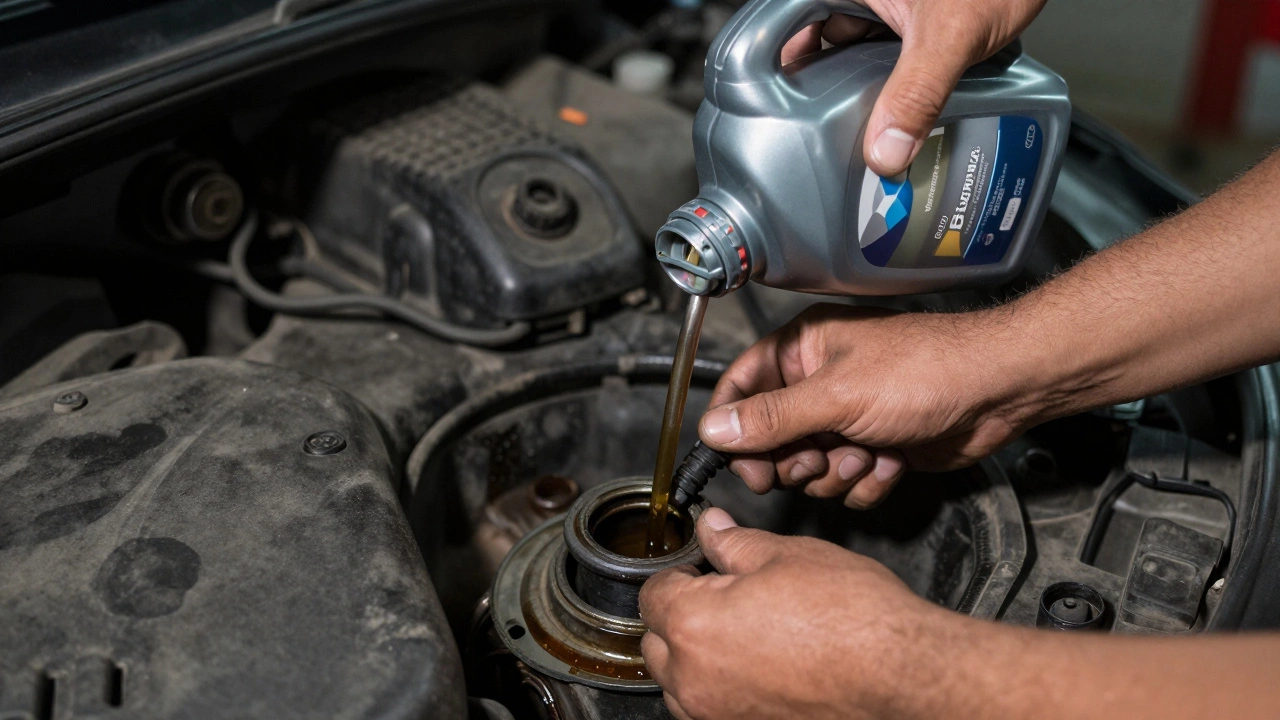
If your dipstick comes out completely dry, your engine is running on fumes-and that’s not a metaphor. You’re one bad turn away from a seized engine. The good news? You can fix this. The bad news? You might already be too late. But if you catch it early and act fast, you can save yourself hundreds, maybe thousands, in repairs.
Why a dry dipstick is a red flag
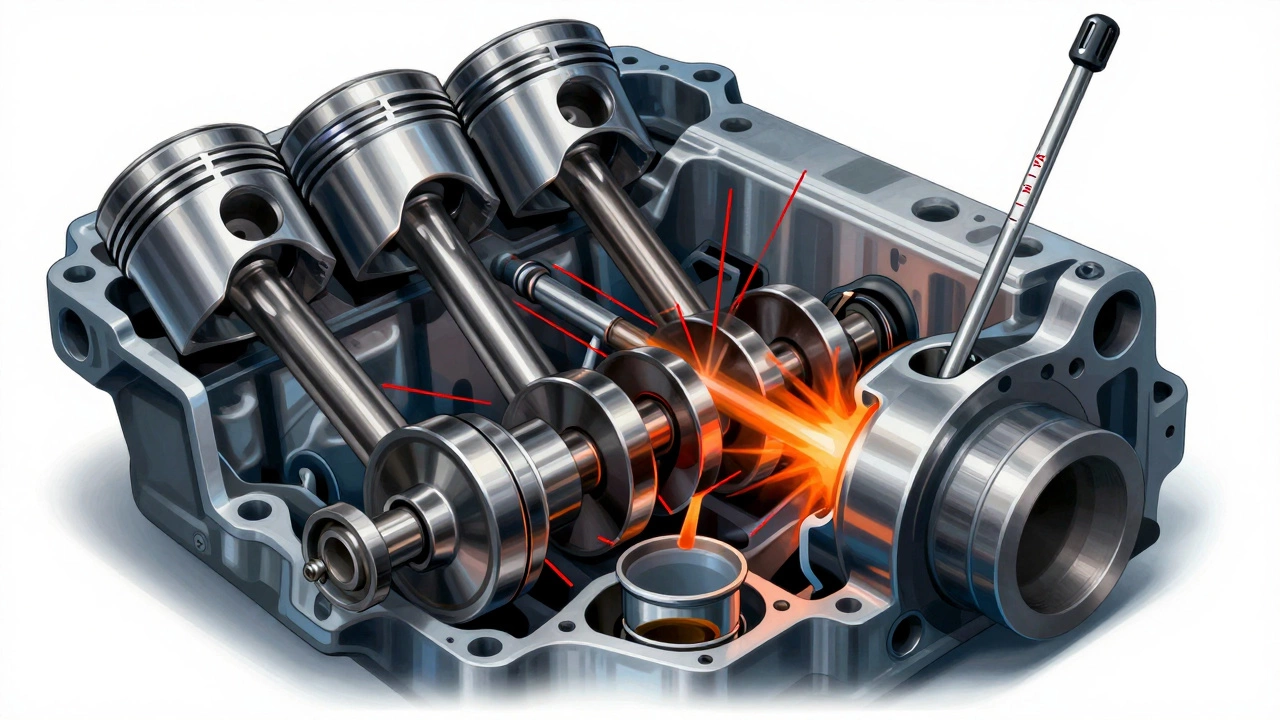
Most cars hold between 4 and 6 litres of engine oil. Even the smallest engines need at least 3.5 litres to run safely. If the dipstick shows zero, you’re not just low-you’re empty. Oil isn’t just lubrication. It cools moving parts, cleans sludge, and seals piston rings. Without it, metal grinds on metal. At highway speeds, that’s not a slow wear-it’s a meltdown. I’ve seen engines fail in under 10 minutes with no oil. One driver I knew drove 20 miles with a dry dipstick. He thought he’d be fine. His engine blew a rod. Cost: £3,200 to replace.Don’t guess-measure
Never just pour in a full litre and hope. You might overfill, which is just as dangerous. Too much oil creates foam. Foam doesn’t lubricate. It causes pressure spikes, leaks, and even damage to the catalytic converter. The right amount? It’s not a fixed number. It depends on your car.Check your owner’s manual. Look for the oil capacity under “Engine Specifications.” A typical 1.5-litre petrol engine holds about 4.2 litres. A 2.0-litre diesel might need 5.5. But here’s the trick: you don’t need to refill the whole tank. You need to refill to the correct level.
Most dipsticks have two marks: MIN and MAX. If it’s completely dry, you’re below MIN. That means you’re likely missing at least 1.5 to 2 litres. Start by adding one litre. Wait five minutes. Then check again. If it’s still below MIN, add half a litre. Check again. Repeat until the oil hits the middle of the MIN and MAX marks. Don’t go past MAX. Ever.
What kind of oil should you use?
Not all oils are the same. Using the wrong one can cause problems even if you get the level right. Your manual will list the correct viscosity-like 5W-30 or 10W-40. It might also say “API SN” or “ACEA C3.” Stick to those. If you’re unsure, take the dipstick to a garage or parts store. They can match it by your car’s make, model, and year.Don’t mix old and new oil unless you’re sure they’re the same type. Mixing synthetic with conventional can cause sludge. Mixing different viscosities can affect engine performance. If you’re in a rush and only have a different grade, use it as a temporary fix-but change it properly within 500 miles.
Why did the oil disappear?
If your dipstick is dry, the oil didn’t vanish into thin air. It went somewhere. There are three main reasons:- Leak-Check under the car. Look for dark stains on the driveway or garage floor. Common leak spots: oil pan gasket, valve cover gasket, oil filter housing.
- Burn-If your exhaust is smoking blue, especially on startup, you’re burning oil. That’s usually worn piston rings or valve seals.
- Neglect-You just didn’t check it. This happens more than you think. People forget to check oil for months. A car can lose a litre every 1,000 miles if it’s old or worn.
Fix the cause. Otherwise, you’ll be adding oil every week. And that’s not maintenance-that’s a bandage on a broken pipe.
How to check oil properly
You can’t trust a dry dipstick if you checked it wrong. Here’s how to do it right:- Turn off the engine and wait 5-10 minutes. Oil needs to drain back into the pan.
- Pull the dipstick out and wipe it clean with a lint-free rag.
- Reinsert it fully-don’t just push it in halfway.
- Pull it out again. Look at the end. The oil should sit between MIN and MAX.
- If it’s below MIN, add oil slowly.
Do this every 1,000 miles or once a month. If you drive in stop-and-go traffic, check every two weeks. Cold weather makes oil thicker and harder to flow-so check more often in winter.

What to do if you’ve already driven with no oil
If you noticed the dry dipstick after driving, don’t restart the engine. Call a tow truck. Running the engine without oil-even for 30 seconds-can cause irreversible damage. If you’re lucky, you might just need an oil change and a new oil filter. If you’re not, you could be looking at a new engine.Some mechanics will test for damage by checking the oil pressure with a gauge or listening for knocking sounds. If the engine turns over but makes a loud clatter, it’s likely damaged. No amount of oil will fix that.
Prevention: Make oil checks routine
The cheapest repair is the one you never need. Put a reminder in your phone: “Check oil every 1st and 15th.” Keep a bottle of the right oil in your boot. Keep a rag and gloves in the glovebox. If you’re the kind of person who forgets to check your tyres, you’ll forget to check your oil. Make it easy.Modern cars have oil life monitors, but they’re not magic. They estimate based on driving patterns, not actual oil levels. If your dipstick is dry, the monitor doesn’t care. It still thinks you’re fine.
When to call a pro
If you’ve added oil and it’s still disappearing fast-if you’re topping up every 300 miles-you need a mechanic. Same if you see smoke, strange noises, or warning lights. A £50 diagnostic can save you £2,000 in repairs.Don’t wait for the engine to die. Don’t assume it’s “just a little low.” Oil isn’t like water. It doesn’t refill itself. And when it’s gone, your engine doesn’t get a second chance.
Can I drive my car if the dipstick is dry?
No. Driving with a dry dipstick means your engine has no oil. Metal parts are grinding together without lubrication. Even driving a few miles can cause catastrophic damage like seized pistons, bent rods, or a cracked block. If you notice the dipstick is dry, stop the engine immediately and do not restart it. Call for a tow.
How much oil should I add if the dipstick is completely dry?
Start by adding one litre of the correct oil type. Wait five minutes, then recheck the dipstick. If it’s still below the minimum mark, add half a litre at a time. Most engines need between 1.5 and 2 litres to reach the safe level from completely dry. Never exceed the MAX mark-overfilling can cause oil foaming and engine damage.
What happens if I put too much oil in my engine?
Too much oil creates foam when the crankshaft churns it. Foamy oil can’t lubricate properly, leading to overheating and increased pressure. This can blow out seals, damage the catalytic converter, and cause oil leaks. In severe cases, it can lead to engine failure. Always fill to the middle of the MIN and MAX marks-not above MAX.
Why does my oil keep disappearing even after I top it up?
If you’re constantly adding oil, there’s a leak or internal problem. Common causes include a leaking oil pan gasket, worn piston rings, or damaged valve seals. Blue smoke from the exhaust means you’re burning oil. Dark puddles under the car mean you’re leaking it. Either way, a mechanic should inspect the engine within a few hundred miles to prevent major damage.
Can I use any engine oil if I don’t know the exact type?
You can use any oil with the same viscosity (like 5W-30) and API rating (like SN or SP) as a temporary fix. But don’t mix synthetic with conventional unless you know they’re compatible. If you’re unsure, take your dipstick to a garage-they can look up your car’s specs. Replace the oil with the correct type within 500 miles.