
Engine Oil Viscosity Calculator
Find the Right Oil for Your Car
Select your climate conditions and vehicle type to determine the recommended engine oil viscosity. Using the correct oil protects your engine from damage and extends its life.
Climate Conditions
Recommended Oil Viscosity
Based on your selections, we recommend:
Why this oil?
For modern engines, 5W-30 provides optimal flow in cold temperatures while maintaining protection at operating temperatures.
What if you use the wrong oil?
Using 10W-40 instead of 5W-30
10W-40 is too thick for cold start conditions, leading to increased engine wear during startup. In hot weather, it may not flow properly through narrow engine passages, potentially causing overheating and low oil pressure. This can damage bearings, pistons, and the timing chain.
Benefits of using the correct oil
Proper oil viscosity maintains optimal engine lubrication, reduces wear, improves fuel efficiency, and helps prevent sludge buildup. Using the correct oil as specified in your owner's manual can save you thousands in potential repairs.
It’s 7 a.m. You’re late for work. Your car’s oil light flickers. You open the hood, spot the dipstick, and realize you’re low. All you’ve got in the garage is that half-used bottle of oil from last year’s change - the one labeled "10W-40" - but your manual says "5W-30." Do you just pour it in? Or risk being late? Most people think: "It’s all oil, right?" But that’s like thinking all water is the same - whether it’s tap, bottled, or seawater. The truth? engine oil isn’t just a lubricant. It’s a precision-engineered fluid that keeps your engine alive. Using the wrong type doesn’t just hurt performance - it can kill your engine faster than you think.
Why Engine Oil Isn’t Just Oil
Engine oil isn’t a single thing. It’s a mix of base oils and additives designed for specific temperatures, pressures, and engine designs. Modern engines run hotter, tighter, and faster than ever. A 1990s engine could survive a mix of oils. Your 2024 Toyota Corolla or Ford Focus? Not so much.The two biggest factors that make oil different are viscosity and type.
Viscosity is how thick or thin the oil flows. It’s shown as two numbers - like 5W-30. The first number (5W) tells you how well it flows in cold weather. The "W" stands for winter. Lower numbers mean thinner oil at startup - crucial in UK winters. The second number (30) tells you how thick it stays when hot. Too thick, and the oil won’t reach small engine parts fast enough. Too thin, and it can’t protect under load.
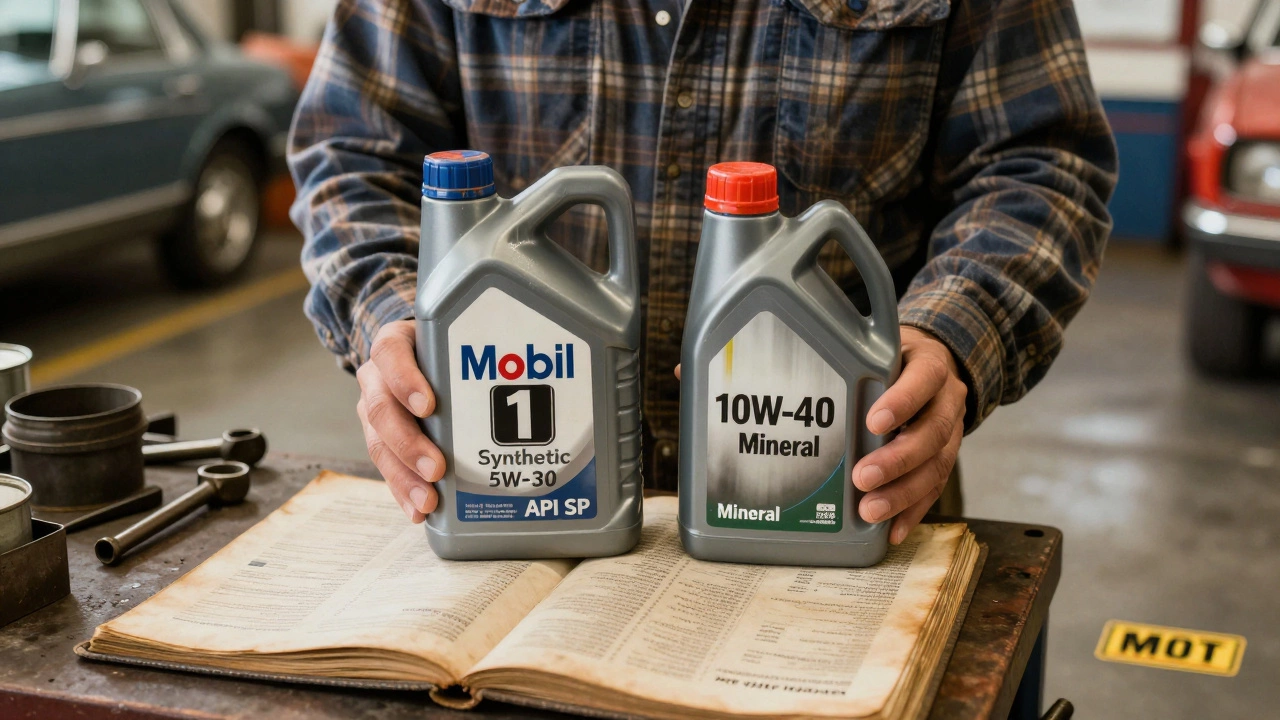
Your car’s manual doesn’t pick 5W-30 randomly. It’s based on how your engine was built. If you use 10W-40 instead, you’re forcing the oil to be thicker when cold. That means slower lubrication at startup - when 80% of engine wear happens. In Manchester’s January frost, that’s not a small risk.
Synthetic vs. Mineral: The Real Difference
Not all oils are created equal. There are three main types:- Mineral oil: Refined from crude oil. Cheaper, but breaks down faster. Good for older cars with looser tolerances.
- Synthetic oil: Chemically engineered. More stable, resists heat better, flows easier in cold. Used in almost all new cars.
- Synthetic blend: Mix of both. A middle ground - better than mineral, but not as good as full synthetic.
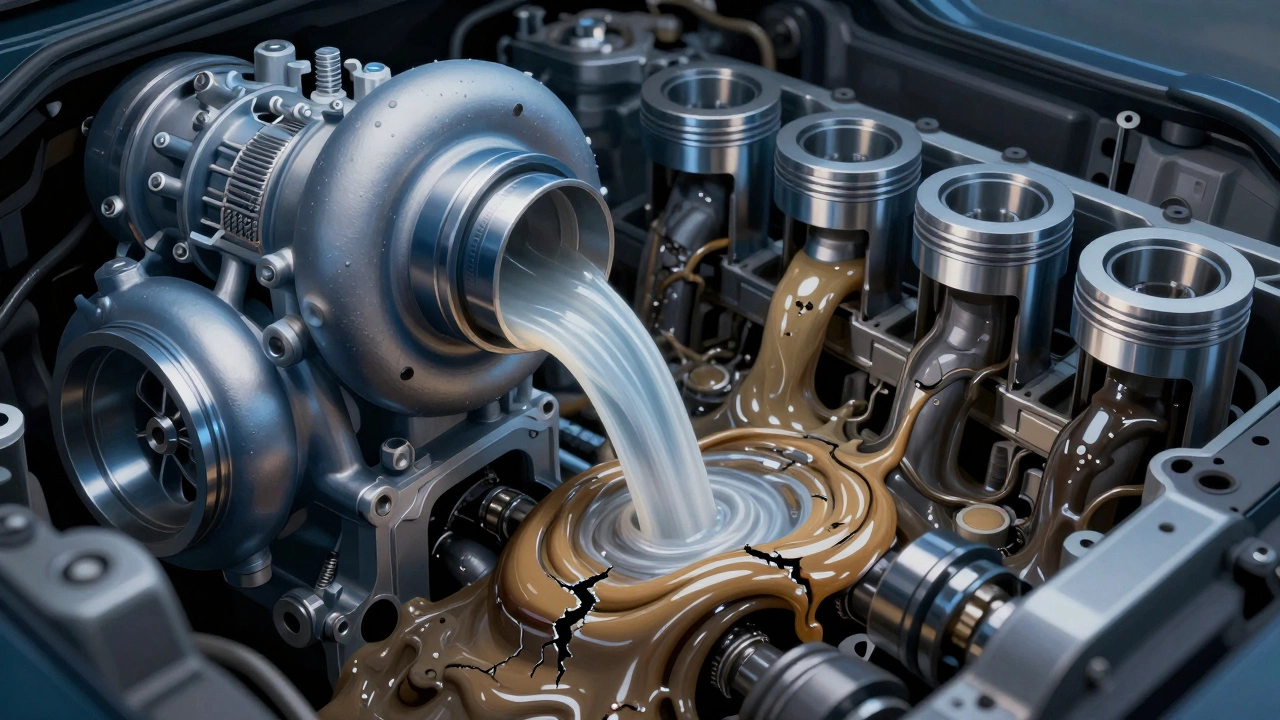
Most cars made after 2010 require full synthetic. Why? Because modern engines have things like variable valve timing, turbochargers, and direct injection. These parts need oil that won’t break down under extreme heat or form sludge. Mineral oil? It’ll turn into gunk inside your turbo or camshaft phasers. And once sludge builds up, cleaning it out costs more than a new engine.
Back in 2020, a UK MOT study found that 23% of failed inspections were linked to oil degradation - mostly from using the wrong or old oil. That’s not just a maintenance issue. It’s a safety issue.
What Happens If You Mix Oils
You might think: "I’ll just top up with whatever I’ve got." But mixing oils isn’t like mixing tea and coffee. It’s more like mixing glue and water - you might not see the damage right away, but it’s happening.Synthetic and mineral oils have different additive packages. Mixing them can cause additives to fight each other. Some additives are designed to clean. Others reduce friction. Some prevent oxidation. When they clash, you lose protection. You might not notice until your oil pressure drops, or your engine starts knocking.
And don’t assume "all 5W-30 is the same." Two oils with the same viscosity can have totally different performance levels. Look for the API certification (like SP or CK-4) and ACEA ratings (A3/B4, C3). These tell you the oil meets industry standards for your engine type. A cheap supermarket oil might say "5W-30" but lack the additives your turbo needs.
What Your Manual Actually Says (And Why You Should Trust It)
Your owner’s manual isn’t a suggestion. It’s a legal and engineering document. Manufacturers test thousands of hours with specific oils. They know exactly what works - and what breaks.For example:
- BMW: Requires LL-01 or LL-12FE certified synthetic
- Toyota: Often recommends 0W-20 synthetic for fuel efficiency
- Volvo: Uses C3 or C4 low-ash oil to protect diesel particulate filters
Using the wrong oil can void your warranty - even if you’re not the original owner. Many UK garages now check oil type during servicing. If it doesn’t match the spec, they’ll refuse to work on the car. And if you have an engine failure later? The insurer might deny your claim.
Real-World Consequences: Stories From the Garage
I’ve seen it too many times. A man in Salford put 15W-40 diesel oil into his petrol Ford Focus. He thought "diesel oil is tougher." Six months later, his engine started misfiring. Turned out the thicker oil clogged the variable valve timing system. Repair cost: £2,100.A woman in Oldham used a cheap mineral oil in her 2021 Hyundai Kona. She stretched her oil change to 18,000 miles. The engine began burning oil. The turbo seized. She needed a new engine - £3,500.
These aren’t rare cases. In 2025, the AA reported that oil-related engine failures rose 17% year-over-year. Most of them were preventable.
How to Pick the Right Oil - Simple Checklist
You don’t need to be a mechanic. Just follow these steps:- Check your owner’s manual. Look for the oil specification - usually on page 20-30.
- Write down the viscosity (e.g., 5W-30) and the certification (e.g., API SP, ACEA C3).
- Buy oil that matches both. Don’t guess.
- Look for the API donut symbol on the bottle. If it’s not there, walk away.
- Stick with reputable brands: Castrol, Shell, Mobil 1, Total, or BP. Avoid no-name brands from discount stores.
- Even if you’re topping up, use the same brand and type. Don’t mix.
And if you’re unsure? Take the bottle you have to a garage. Most will check it for free. Better than a £3,000 repair.
What About Electric Cars?
Electric cars don’t need engine oil - but they still need lubricants. Gearboxes, differentials, and bearings in EVs use special fluids. If you drive a Tesla, Nissan Leaf, or Kia EV6, you still need to check fluid levels. But that’s a different topic. Stick to engine oil for your petrol or diesel car.Final Answer: Yes, It Matters - A Lot
Using the wrong oil isn’t a "maybe". It’s a risk you’re taking every time you drive. You wouldn’t put diesel in a petrol car. Why take the same chance with oil?Your engine is a high-precision machine. It needs the right fluid. The right viscosity. The right additives. The right brand. Skimping here doesn’t save money - it just delays the bill.
Next time you’re low on oil, don’t grab the first bottle you see. Pull out your manual. Match the specs. Spend the extra £5 on the right oil. Your engine will thank you in 100,000 miles - not in a repair bill.
Can I use synthetic oil in an older car?
Yes - and often you should. Modern synthetic oils are safe for older engines. In fact, they offer better protection than mineral oil. Older engines with high mileage might have seals that are dried out, but synthetic oil doesn’t cause leaks unless the seals are already damaged. If your manual recommends mineral oil, you can still switch to synthetic - just check for leaks after the first change.
How often should I change engine oil?
It depends on the oil and your car. Most modern cars with synthetic oil can go 10,000 to 15,000 miles between changes. Older cars or those using mineral oil need changes every 5,000 to 7,500 miles. Always follow your manual’s recommendation. Some cars have oil life monitors - trust them over fixed mileage intervals.
What happens if I use 10W-40 instead of 5W-30?
In cold weather, 10W-40 will flow slower than 5W-30. That means your engine gets less lubrication at startup, increasing wear. In hot conditions, it might be too thick to flow through small oil passages, causing overheating or low oil pressure. You might not notice immediately, but over time, this can damage bearings, pistons, and the timing chain.
Can I mix synthetic and mineral oil in an emergency?
Yes - in a true emergency, mixing won’t cause instant damage. But it’s not safe long-term. The additives in each type can react poorly, reducing performance and protection. Use it only to get you to a garage. Then drain and refill with the correct oil as soon as possible.
Does the brand of oil really matter?
The brand matters less than the specification. But reputable brands invest in testing and quality control. A £5 bottle from a discount store might meet the viscosity rating but lack the detergent and anti-wear additives your engine needs. Stick to brands that clearly list API and ACEA ratings on the bottle.