Engine Oil Level Diagnostic Tool
Enter your vehicle's recommended oil capacity and the amount you have poured in to determine if your engine is at risk.
Input Data
You’re standing in your driveway or garage, the drain plug is back in, and you’ve just poured in a bit more oil than the manual called for. Maybe you misread the bottle, maybe the old filter didn’t fully drain, or maybe you just wanted to be "safe." Now you’re staring at the dipstick, wondering if you’ve just killed your engine or if it’s no big deal.
Here is the short answer: A tiny overfill-like half a quart-is usually fine. But one full extra quart? That’s where things get dicey. It won’t necessarily blow up your engine on the spot, but it creates conditions that can lead to expensive repairs if ignored. Let’s break down exactly what happens inside your engine when you cross that line, how to tell if you’re in trouble, and what to do about it.
The Physics of Overfilling: Why More Isn’t Better
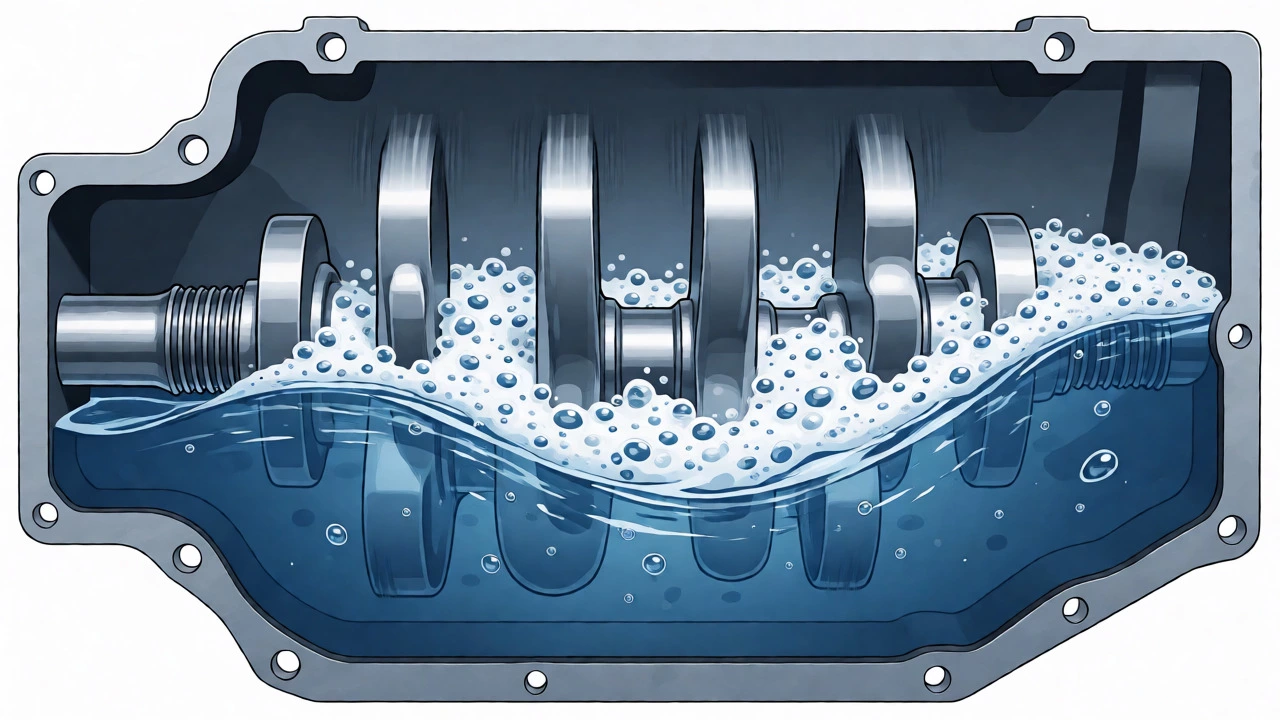
People often think engine oil is like gas in a tank; if you have more, you have more cushion. But an engine isn’t a storage container-it’s a high-speed machine with moving parts spinning at thousands of revolutions per minute (RPM). The oil sits in the oil pan at the bottom, and the crankshaft swings through it to pick up lubrication.
When you add too much oil, you raise the fluid level. If it gets too high, the counterweights on the crankshaft start slapping into the oil instead of swinging freely through the air gap above it. This isn’t just inefficient; it’s destructive. The rapid churning turns the smooth, viscous liquid into frothy foam. Foam doesn’t lubricate well. It doesn’t pump well. And it definitely doesn’t cool your bearings effectively.
Symptoms You Might Notice Immediately
If you’ve overfilled by a quart, you might not see smoke billowing out immediately, but you will likely notice changes in how the car behaves. Here is what to look for:
- Whining or Whistling Noise: As the crankshaft hits the oil, it creates drag. You might hear a higher-pitched whine from the engine bay, especially at idle or low RPMs.
- Rough Idling: If the foam reaches the pickup tube, the oil pump sucks in air bubbles along with oil. This causes inconsistent pressure, leading to a shaky idle.
- Oil Leaks: Excess volume increases internal pressure. This forces oil past seals and gaskets that are designed to handle normal pressure levels. Check around the valve cover gasket and the rear main seal.
- Blue Smoke from Exhaust: If the pressure forces oil into the combustion chambers via the PCV (Positive Crankcase Ventilation) system, you’ll burn oil. This shows up as blue-ish smoke from the tailpipe.
How to Accurately Check Your Oil Level
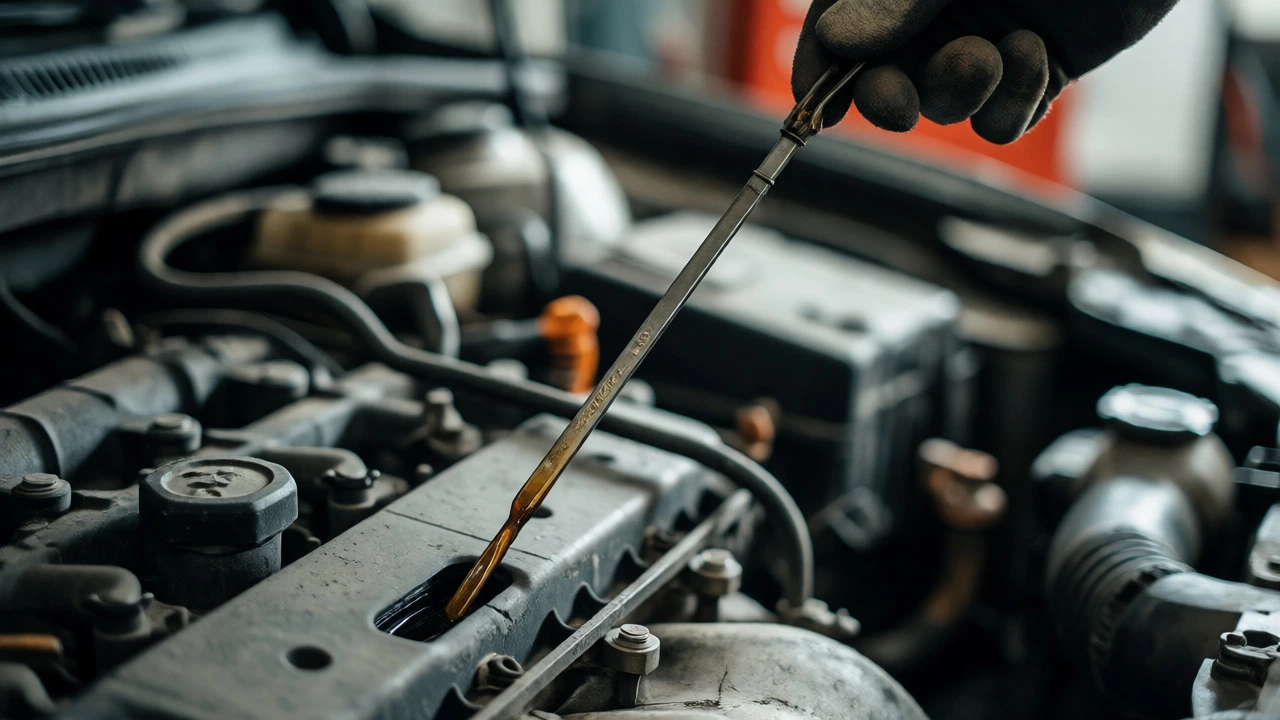
Before you panic, make sure you’re reading the dipstick correctly. Many people get false positives because they check the oil incorrectly.
- Park on Level Ground: If your car is on a slope, the oil pools to one side, giving a misleading reading.
- Let the Engine Cool: Turn off the engine and wait at least 5-10 minutes. This allows the oil to drain back into the pan. Checking immediately after driving gives a lower, inaccurate reading because oil is still coating the upper components.
- Clean the Dipstick: Pull it out, wipe it clean with a lint-free cloth, reinsert it fully, then pull it out again to read.
- Read Between the Marks: Most modern cars have two holes or a cross-hatched area indicating the minimum and maximum safe levels. If the oil is significantly above the top mark, you are overfilled.
| Condition | Crankshaft Interaction | Risk Level | Recommended Action |
|---|---|---|---|
| Below Min Mark | No contact; risk of starvation | High | Add oil immediately |
| Between Min & Max | Clearance maintained | Safe | No action needed |
| Up to 0.5qt Over | Marginal clearance loss | Low/Medium | Monitor; remove if possible |
| 1qt+ Over | Crankshaft hits oil; foaming | High | Remove excess oil |
The Real Danger: Hydrolock and Seal Failure
The biggest fear with severe overfilling is hydrolock. This happens when so much oil is forced into the cylinders that the piston cannot complete its compression stroke because liquids don’t compress. In extreme cases, this can bend a connecting rod or crack a piston. While a single quart rarely causes immediate hydrolock in most passenger cars, it puts significant stress on the system.
A more common issue is seal failure. Your engine has rubber O-rings and gaskets designed to keep oil in and dirt out under specific pressures. When you overfill, you increase crankcase pressure. Over time, this pushes oil past the turbocharger seals (if equipped), the front crankshaft seal, and the valve stem seals. Once these seals fail, you’re looking at a persistent leak that requires labor-intensive repairs to fix.
How to Fix an Overfilled Engine
Don’t drive around worrying. Fix it. You have three main options, ranging from DIY to professional help.
Option 1: The Drain Plug Method
This is the standard mechanic approach. Put a drain pan under the car, loosen the drain plug slightly, and let a small amount of oil trickle out. Recheck the dipstick frequently. This works, but it’s messy and easy to accidentally drain too much, putting you back at square one.
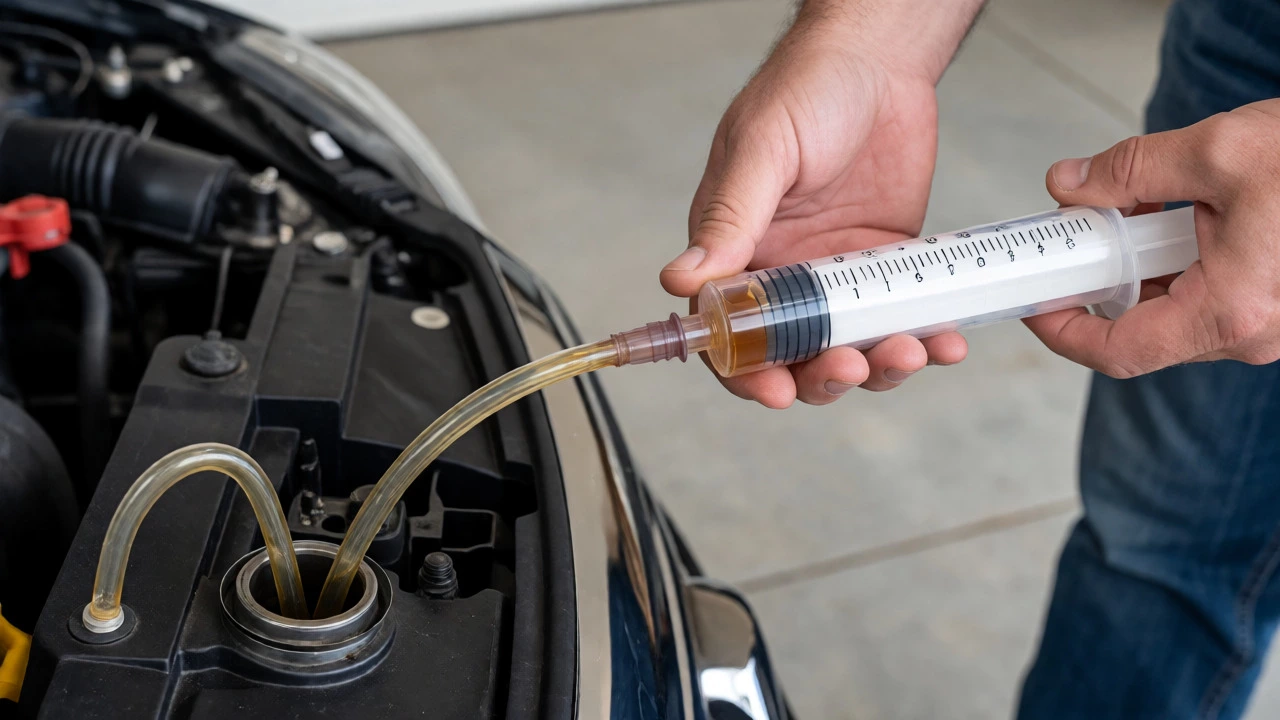
Option 2: The Syringe Method (Best for Small Cars)
If you have access to the dipstick tube, buy a large medical syringe (60ml or larger) and some flexible vinyl tubing that fits snugly into the dipstick hole. Insert the tube until it touches the bottom of the pan, then slowly suck out the excess oil. This is precise, clean, and lets you stop exactly when you hit the correct level. It takes patience but saves a trip to the shop.
Option 3: Professional Extraction
Most quick-lube shops or mechanics will extract excess oil for free or a nominal fee if you brought your own oil. They use a vacuum extraction tool that pulls oil directly from the pan without removing the drain plug. If you’re unsure, pay the $20-$40 to have them do it. It’s cheaper than a new turbocharger.
Preventing Future Overfills
Why did this happen? Usually, it’s because we forget that the oil filter holds oil too. When you change your oil, you should pre-fill the new filter with a little fresh oil before screwing it on. This prevents dry starts. However, many people forget that the old filter held ~0.5 quarts, which stayed in the engine if it wasn’t fully drained, or they simply miscount their bottles.
Always consult your owner’s manual for the exact capacity. For example, a common 2.0L four-cylinder engine might take 4.5 quarts including the filter. Pour in 4 quarts first, check the level, and add the last half-quart slowly. Never dump the whole jug in blindly.
Is it better to be slightly low or slightly high on oil?
It is generally safer to be slightly low than significantly high. Running low risks friction and overheating, which damages metal surfaces quickly. Running high risks foaming and seal leaks, which degrades performance but rarely causes immediate catastrophic failure unless extremely overfilled. However, both extremes require correction. Aim for the middle of the dipstick range.
Can I drive my car if the oil is one quart over?
You can drive short distances to get home or to a repair shop, but avoid highway speeds or heavy acceleration. High RPMs increase the chance of the crankshaft hitting the oil surface, causing foaming. Keep the drive gentle and fix the level as soon as possible.
Will adding one quart of oil hurt a diesel engine?
Diesel engines often have tighter tolerances and higher compression ratios. An overfill can cause the engine to run away (rev up uncontrollably) if oil enters the intake via the PCV system, though this is rare with just one quart. It also places more stress on turbo seals. Treat diesel overfills with the same urgency as gasoline ones.
How long does it take for oil foam to clear?
If you’ve been driving with an overfill, turn off the engine and let it sit for at least 15-20 minutes. This allows the air bubbles to rise to the surface and pop. However, if the seals have already started leaking due to pressure, the problem persists regardless of foam clearing.
Does synthetic oil make overfilling worse?
Not necessarily. Both conventional and synthetic oils foam when churned by the crankshaft. Synthetic oils may resist foaming slightly better due to additives, but they are not immune. The mechanical issue of the crankshaft hitting the fluid level remains the same regardless of oil type.