HVAC Filter Suitability Checker
Your Situation
Select your options and click Analyze to find your ideal filter rating.
Walk into any hardware store or browse a major online retailer, and you’ll see shelves stacked with hundreds of different air filters. It’s overwhelming. You have fiberglass ones that look like cheap foam, thick pleated ones promising "hospital-grade" cleanliness, and expensive electrostatic options that claim to last forever. But if you had to pick just one-the absolute standard that most homeowners actually use-what would it be?
The short answer is the MERV 8 rated pleated filter. It sits right in the middle of the spectrum: effective enough to keep your heating and cooling system running smoothly without choking the airflow, yet affordable enough to change every few months. It is the workhorse of residential HVAC systems.
Why MERV 8 Is the Default Choice
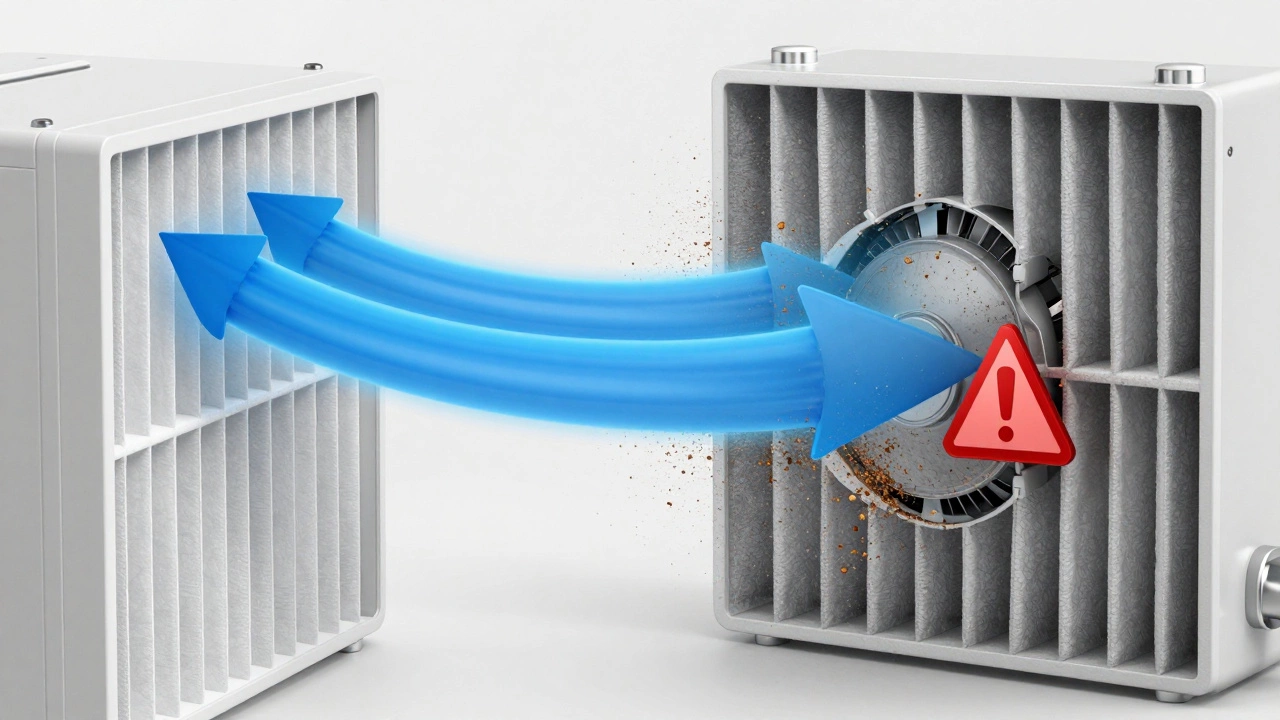
To understand why this specific rating dominates the market, we need to look at how HVAC systems are built. Your furnace or air handler isn’t designed to push air through a brick wall. It needs a steady flow of air to cool the coils in summer and heat them in winter. If the filter is too dense, the fan struggles. This leads to higher energy bills, frozen evaporator coils, and eventually, a broken blower motor.
On the flip side, if the filter is too loose, it lets dust, pollen, and pet dander straight into your ductwork. That grime coats your internal components, reducing efficiency and circulating allergens back into your living room.
MERV 8 is the minimum efficiency reporting value rating that balances filtration capability with airflow resistance for standard residential systems. It captures larger particles like dust mites, mold spores, and hair fibers effectively. It doesn’t catch microscopic viruses or smoke, but it does the heavy lifting of keeping your machinery clean and your air reasonably breathable. Because it hits this sweet spot, manufacturers design most standard home units to handle MERV 8 filters out of the box.
The Confusing World of MERV Ratings
You can’t shop for filters without encountering the acronym MERV. Standing for Minimum Efficiency Reporting Value, this scale runs from 1 to 20. The higher the number, the smaller the particles the filter can trap. However, higher numbers also mean more restriction on airflow.
| Filter Type | Typical MERV Rating | Lifespan | Best For |
|---|---|---|---|
| Fiberglass (Disposable) | MERV 1-4 | 1 month | Budget protection; large debris only |
| Pleated (Standard) | MERV 5-8 | 3 months | Average homes; balanced airflow & filtration |
| Pleated (High-Efficiency) | MERV 9-13 | 6-12 months | Allergy sufferers; newer high-static systems |
| HEPA / Electrostatic | MERV 14-20 | Varies | Hospital environments; specialized medical needs |
Most older homes and budget-friendly HVAC setups are optimized for MERV 8. If you jump straight to a MERV 13 filter in a system not designed for it, you might notice your house takes longer to cool down. That’s because the fan is working overtime to push air through the denser media. Over time, this extra strain can lead to costly repairs. MERV 8 avoids this pitfall while still removing about 30-40% of airborne particles, which is significant compared to the bare-bones fiberglass filters.
Fiberglass vs. Pleated: The Real Contenders
When people ask what filter they should buy, the debate usually comes down to two physical formats: fiberglass and pleated.
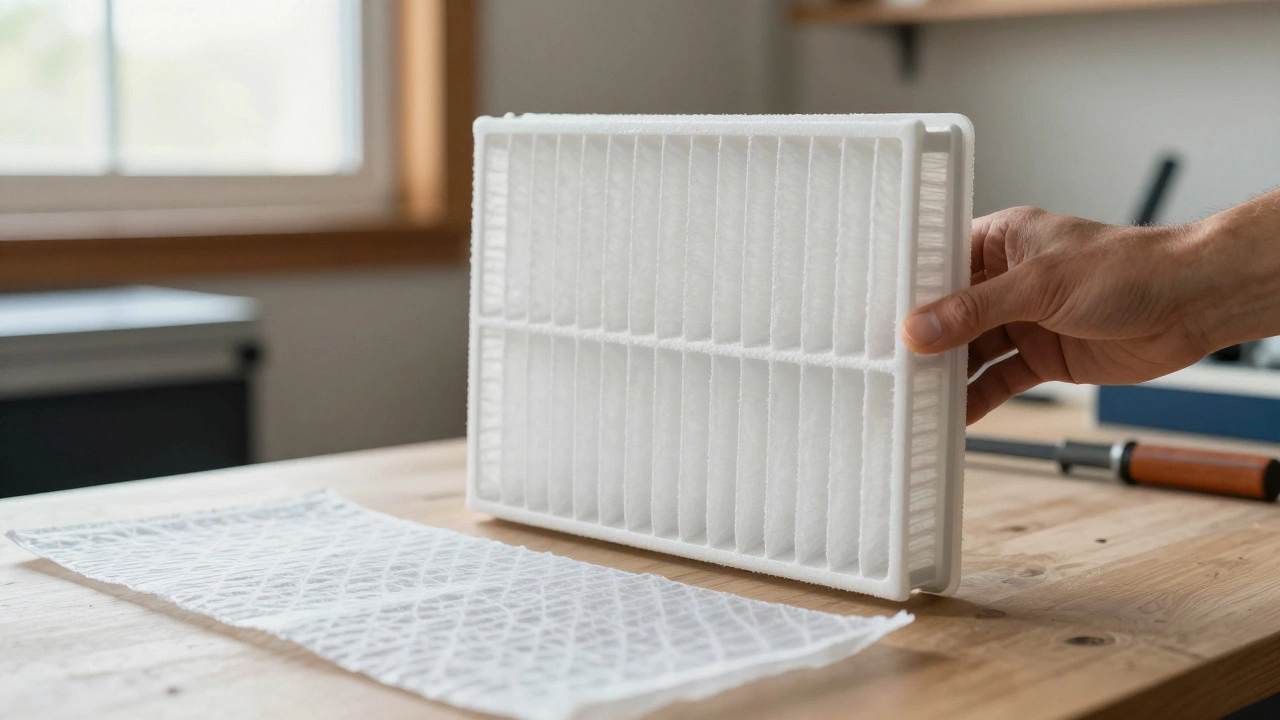
Fiberglass filters are thin, white, disposable panels made of glass fibers that act as basic screens. They are the cheapest option, often costing just a few pounds or dollars. You’ll find these pre-installed in many new homes because they meet the bare minimum code requirements. Their job isn’t really to clean the air; it’s to keep large chunks of debris out of the blower. They offer almost no resistance to airflow, which is good for the machine, but bad for your lungs. Dust passes right through them.
Pleated filters are filters with folded fabric surfaces that increase surface area for better particle capture. By folding the material, manufacturers pack more filtering surface into the same frame size. This allows them to trap smaller particles without restricting airflow as much as a flat, dense sheet would. A MERV 8 pleated filter is significantly more effective than a fiberglass one. It catches the everyday dust that settles on your furniture and the pollen that triggers mild allergies. Because they last longer (typically three months) and protect the system better, they have become the default choice for conscientious homeowners.
When Should You Upgrade Beyond MERV 8?
While MERV 8 is the most common, it isn’t always the best. There are specific scenarios where bumping up to MERV 11 or 13 makes sense.
- Severe Allergies: If someone in your household suffers from asthma or severe seasonal allergies, MERV 8 might not be enough. These filters let through finer particles like bacteria and tobacco smoke. A MERV 11-13 filter captures these smaller threats.
- Newer HVAC Systems: Modern furnaces and air handlers are often built with stronger fans and tighter tolerances. Many come with manufacturer recommendations allowing for MERV 13 filters. Always check your unit’s manual or the label inside the filter slot.
- Post-Renovation: If you’re remodeling and dealing with drywall dust, a higher-rated filter helps prevent fine particulate matter from circulating throughout the house during construction.
However, upgrading requires caution. Before switching to a higher MERV rating, check your system’s static pressure limits. If your current filter reads MERV 8, try stepping up to MERV 11 first. Monitor your energy bill and comfort levels. If the house feels stuffy or the AC runs constantly without reaching the set temperature, you’ve likely restricted the airflow too much. Drop back down to MERV 8.
Common Mistakes Homeowners Make
Even knowing which filter is best, people often mess up the installation or maintenance routine. Here are the biggest errors I see.
- Ignoring the Arrow: Every filter has an arrow printed on the frame indicating the direction of airflow. Installing it backward forces air against the intended path, reducing efficiency and potentially damaging the filter media. It’s a simple fix, but it happens all the time.
- Wrong Size: Filters aren’t universal. A 16x25x1 filter will not fit properly in a slot designed for 16x25x4. Even a slight gap allows unfiltered air to bypass the filter entirely, rendering it useless. Measure your existing filter or the slot itself before buying.
- Forgetting to Change It: A clogged filter is worse than no filter. When a MERV 8 gets packed with dust after six months, it acts like a chokehold on your system. Set a reminder on your phone to check it every three months. In homes with pets or smokers, check it monthly.
- Buying "Lifetime" Filters: Washable electrostatic filters sound great until you realize they rarely achieve high MERV ratings. They often struggle to capture small particles and require regular cleaning to maintain even mediocre performance. For consistent air quality, disposable pleated filters are more reliable.

How to Choose the Right Filter for Your Home
Choosing a filter isn’t just about picking the highest number on the shelf. It’s about matching the filter to your specific environment and equipment. Start by looking at your current filter. Note the dimensions and the MERV rating. If it says MERV 8, stick with that unless you have a reason to upgrade.
If you’re unsure what your system can handle, look for a sticker inside the filter compartment. Manufacturers often list the maximum recommended MERV rating there. If there’s no sticker, consult your owner’s manual. When in doubt, MERV 8 is the safest bet. It won’t harm your system, and it provides a noticeable improvement over fiberglass.
Consider your lifestyle too. Do you have shedding dogs? Are you prone to hay fever? Do you live near a busy road? These factors influence how quickly your filter loads up with debris. High-pollen areas might benefit from changing MERV 8 filters more frequently rather than jumping to a denser filter that restricts airflow.
Cost vs. Benefit Analysis
Let’s talk money. Fiberglass filters are cheap upfront but need replacing monthly. Over a year, that adds up, and you’re paying for poor performance. Pleated MERV 8 filters cost slightly more per unit but last three times as long. More importantly, they protect your HVAC investment. Replacing a blower motor or fixing a refrigerant leak due to poor airflow costs hundreds, sometimes thousands, of pounds. Spending a bit more on a quality filter is insurance against those big repair bills.
Energy efficiency plays a role too. A clean, appropriately rated filter allows your system to run at peak efficiency. A dirty or overly restrictive filter forces the system to work harder, driving up electricity or gas bills. The savings on energy often offset the cost of premium filters within a single season.
Can I use a HEPA filter in my central HVAC system?
Generally, no. True HEPA filters are extremely dense and create too much resistance for standard residential HVAC blowers. Using one can damage your motor or cause coils to freeze. Stick to MERV 13 or lower for central systems unless your unit is specifically designed for high-efficiency filtration.
How do I know if my filter is clogged?
Visually inspect the filter. If it looks gray or black instead of its original color, it’s time to replace it. Also, pay attention to airflow from your vents. If it feels weak or you notice dust accumulating rapidly on surfaces, your filter may be blocked.
Does the thickness of the filter matter?
Yes. Thicker filters (like 4-inch or 5-inch deep pleats) have more surface area, allowing them to capture more particles while maintaining better airflow than thin 1-inch filters. However, your HVAC slot must accommodate the thicker depth. Check your system’s specifications before upgrading.
Are washable filters worth it?
Washable filters save money in the long run by eliminating replacement costs, but they typically offer lower filtration efficiency (lower MERV ratings). They also require regular cleaning to remain effective. For most homeowners seeking better air quality, disposable pleated filters provide superior performance and convenience.
What is the difference between MERV and FPR ratings?
MERV is an industry-standard rating developed by ASHRAE, ensuring consistency across brands. FPR (Filter Performance Rating) is a proprietary scale created by one major manufacturer. While both indicate filtration level, MERV is universally recognized and easier to compare across different products. Stick to MERV for clarity.