Oil Change Calculator
When Should You Change Your Oil?
Get a personalized recommendation based on your oil type, mileage, and driving habits.
Most people think engine oil lasts forever until the dashboard light flashes. But that’s not how it works. Oil doesn’t just wear out from driving - it breaks down from heat, contamination, and time. So how long does engine oil actually last? The answer isn’t a simple number. It depends on the oil type, your driving habits, and your car’s design. Let’s cut through the noise and give you real numbers based on how oil behaves in real cars, not just what’s printed on a bottle.
Conventional Oil: The 3,000-Mile Myth
You’ve heard it a thousand times: "Change your oil every 3,000 miles." That rule came from the 1970s, when engines were less efficient and oil was much simpler. Today, that number is outdated for most cars. Modern conventional motor oil, the kind labeled 10W-40 or 5W-30 without any "synthetic" tag, typically lasts between 5,000 and 7,500 miles. That’s a big jump from the old standard.
But don’t just clock the miles. Time matters too. If you drive only 3,000 miles a year, your oil still degrades. Moisture builds up from short trips, dirt gets in through the air filter, and additives slowly burn off. Most manufacturers say six months is the max for conventional oil, even if you haven’t hit the mileage. So if you’re a low-mileage driver, don’t wait for 7,500 miles - change it before the calendar says six months.
Synthetic Oil: The New Standard
If your car came with synthetic oil, you’re likely good for 7,500 to 10,000 miles. Some high-end synthetics, like those with full ester bases, can stretch to 15,000 miles under ideal conditions. But "ideal" is rare. Most drivers don’t get that.
Synthetic oil is engineered to handle heat better, resist thickening in cold weather, and hold onto its additives longer. That’s why it lasts longer. But here’s the catch: it doesn’t last forever. Even the best synthetic oil starts to break down after 6 months. Heat cycles from stop-and-go traffic, fuel dilution from frequent short trips, and contaminants from worn piston rings all chip away at its performance.
Real-world testing by the American Automobile Association (AAA) in 2024 showed that after 10,000 miles, even top-tier synthetic oils lost 18% of their lubricating ability. That’s not a failure - it’s normal. But it’s why you shouldn’t push past 12,000 miles without a change.
What Makes Oil Break Down?
Oil doesn’t just get dirty. It chemically changes. Here’s what happens inside your engine:
- Heat oxidation - Every time your engine hits 200°F or higher, oxygen reacts with oil molecules. This thickens the oil and forms sludge.
- Fuel dilution - Tiny amounts of gasoline leak past piston rings during cold starts. This thins the oil, reducing its ability to protect bearings.
- Contamination - Dust, metal particles, and combustion byproducts mix in. A dirty air filter makes this worse.
- Additive depletion - Detergents, dispersants, and anti-wear agents get used up. Once they’re gone, your engine loses its shield.
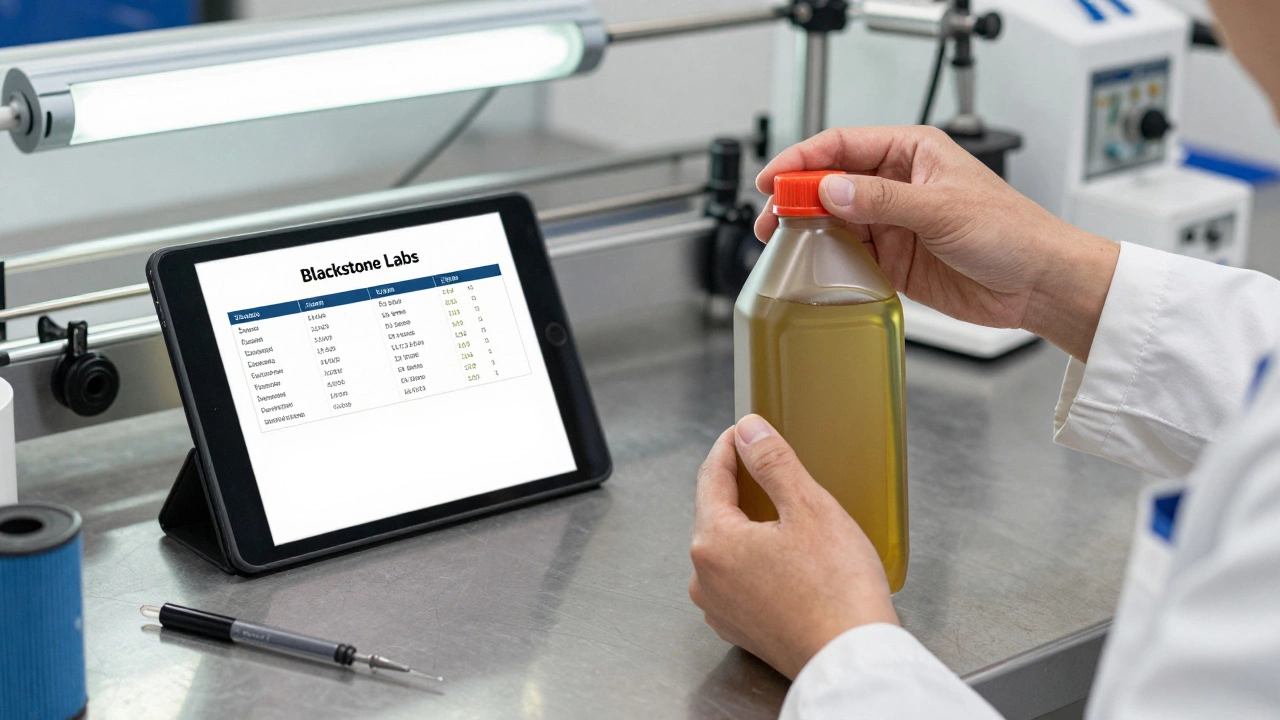
That’s why oil analysis is the gold standard. Companies like Blackstone Labs offer mail-in oil tests for under $30. They check viscosity, contamination levels, and additive depletion. Most drivers don’t do this - but if you’re trying to stretch your oil life, it’s the only way to know for sure.
Driving Style Changes Everything
Two people with the same car, same oil, same mileage - but different oil life. Why? Driving habits.
- Short trips - If you drive less than 10 miles at a time, your engine never fully warms up. Moisture doesn’t evaporate. Oil stays contaminated. This cuts oil life by 40%.
- Towing or hauling - Carrying heavy loads increases engine heat. Oil breaks down faster. You might need to change oil every 5,000 miles, even with synthetic.
- Highway driving - Consistent speeds and steady temps help oil last longer. This is where you can hit the full 10,000-15,000 mile range.
- Extreme temperatures - Cold winters cause thicker oil at startup. Hot summers accelerate oxidation. Both shorten oil life.
One mechanic in Manchester told me about a delivery van that did 12,000 miles a year - all city driving with 50 short stops daily. The owner was changing oil every 10,000 miles. After a sample test, the oil had 1.2% fuel dilution and 20% viscosity loss. They switched to 5,000-mile intervals. Engine performance improved immediately.
Manufacturer Recommendations Aren’t Always Right
Your owner’s manual says 10,000 miles. But that’s under "ideal" conditions. Most manufacturers test cars on smooth roads, in moderate climates, with no load. Real life isn’t like that.
Here’s what automakers don’t tell you: their oil life monitors (OLMs) are programmed conservatively. They use algorithms based on engine temperature, RPM, and driving time - not actual oil quality. A 2023 Consumer Reports study found OLMs were accurate within 15% - meaning they could say "change at 10,000 miles" when the oil was already degraded at 8,500.
For older cars without OLMs, stick to 5,000-7,500 miles for conventional, 7,500-10,000 for synthetic. For newer cars with monitors, use them as a guide - not a law. If you drive hard, change sooner.

When Should You Change It? The Simple Rule
Here’s the practical answer most drivers need:
- If you use conventional oil: Change every 5,000 miles or 6 months, whichever comes first.
- If you use synthetic oil: Change every 7,500 to 10,000 miles, or 12 months - but if you drive short trips or tow, drop it to 7,500 miles.
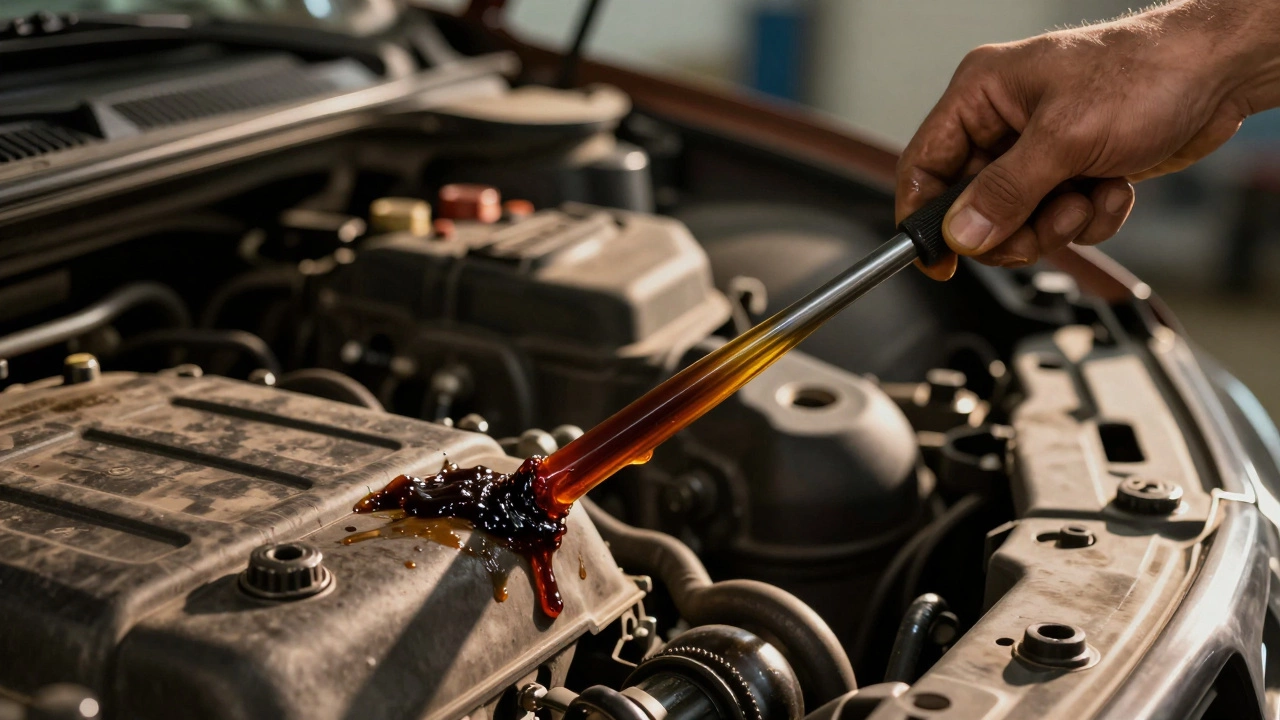
- If you’re unsure: Check your oil. Pull the dipstick. If it’s thick, dark brown, or gritty, it’s done. If it’s still amber and smooth, you’ve got time.
There’s no benefit to changing oil too often. You’re wasting money and creating waste. But waiting too long risks engine wear. The sweet spot is between 5,000 and 10,000 miles - depending on your life.
What Happens If You Don’t Change It?
Oil doesn’t just stop working. It turns against you.
Sludge builds up in oil passages. Bearings start to score. Valves stick. Turbochargers fail from lack of lubrication. The result? A $3,000 engine rebuild instead of a $50 oil change.
One Ford F-150 owner in Leeds waited 18,000 miles between changes. When the engine seized, the mechanic found oil passages clogged with black tar. The car had a synthetic oil label - but no one changed it. That’s not engine failure. That’s neglect.
Oil is cheap. Engine replacement isn’t.
Final Tip: Use the Right Oil
Don’t just grab the cheapest bottle. Look at the API rating. For modern cars, you need API SP (the latest standard as of 2026). Older ratings like SN or SM won’t protect newer engines with direct injection and turbochargers.
Also, match the viscosity. Using 5W-40 when your car needs 0W-20 can cause poor cold-start protection. Always follow the manual’s grade.
Engine oil isn’t magic. It’s a consumable. It degrades. It gets dirty. It loses power. And if you ignore that, your engine pays the price.