Air Filter Condition Estimator
There is a small, often forgotten component under your hood that quietly dictates how efficiently your car breathes. It’s the air filter is a pleated paper or synthetic element that traps dust, dirt, and debris before they enter the engine intake system. While it doesn’t make noise when it fails, its degradation directly impacts fuel economy, horsepower, and long-term engine health. Knowing when to swap it out isn’t just about following a manual; it’s about recognizing the subtle shifts in how your vehicle performs.
Visual Inspection: The First Line of Defense
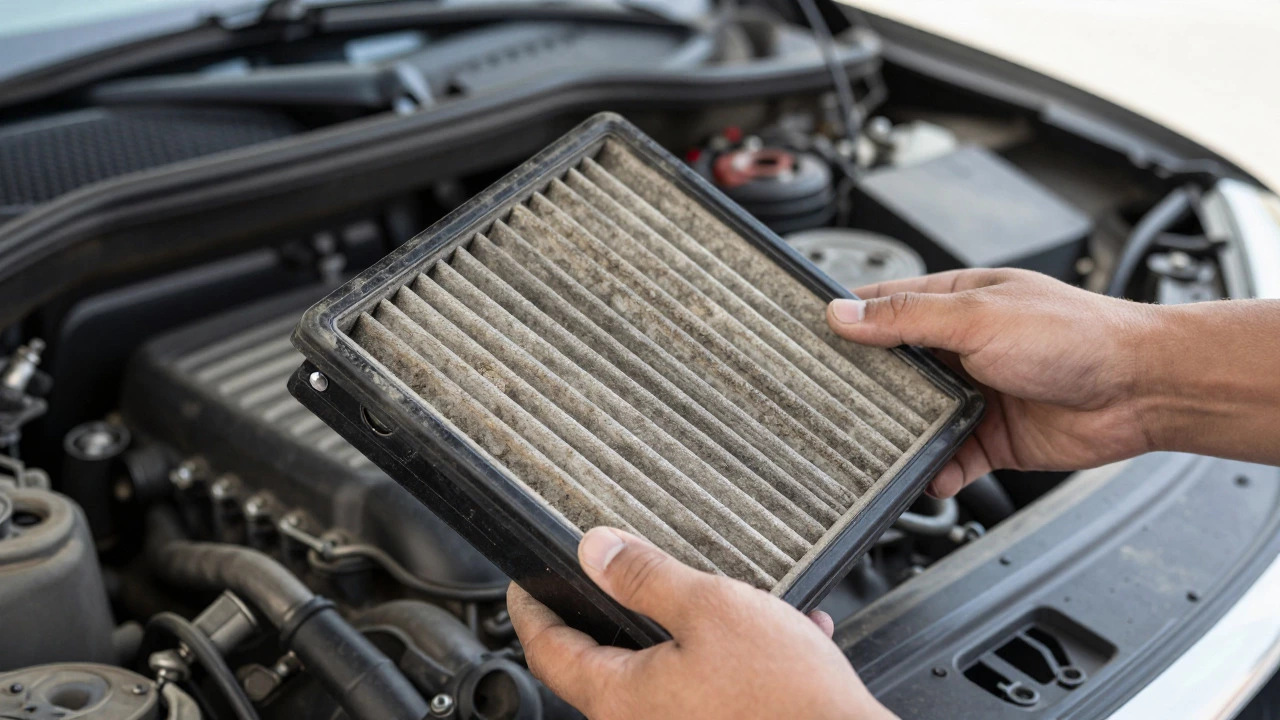
The most straightforward way to check your filter is by looking at it. Most modern vehicles have an accessible air box located near the front of the engine bay, usually covered by a plastic housing with clips or screws. Open this box, remove the filter, and hold it up to a light source. If you can see clear light passing through the pleats, it’s likely still functional. If the light is blocked by a thick layer of grayish-brown gunk, it’s time for a replacement. A healthy filter should look relatively clean, while a clogged one will appear dark and saturated with particulate matter.
Don’t rely solely on color, though. Some high-quality filters use charcoal layers that are naturally darker. In those cases, focus on the texture. Run your finger lightly across the surface (gently, to avoid tearing). If it feels gritty or if particles stick to your skin, the filter has reached its capacity. This visual check takes less than two minutes and requires no tools other than a screwdriver for stubborn clips.
Performance Clues: How Your Car Feels
If you’re not comfortable opening the hood, pay attention to how the car drives. A restricted airflow forces the engine to work harder to draw in enough oxygen for combustion. This imbalance shows up in several ways:
- Reduced acceleration: You might notice the car feels sluggish when merging onto highways or climbing hills. The engine may rev higher but produce less power because it’s starved for air.
- Poor fuel economy: When the air-fuel mixture is off, the engine computer compensates by injecting more fuel than necessary. Drivers often report a drop of 1-3 miles per gallon after ignoring a dirty filter for too long.
- Check Engine Light: In severe cases, the Mass Air Flow (MAF) sensor detects inconsistent airflow, triggering a diagnostic trouble code. While not always caused by the filter alone, it’s a common culprit alongside MAF sensor issues.
These symptoms don’t happen overnight. They creep in gradually, which is why many drivers miss them until the problem becomes noticeable. If your car used to feel crisp and responsive but now feels like it’s dragging weights behind it, the air filter is a prime suspect.
Mileage Guidelines: When to Replace
Manufacturer recommendations vary, but general industry standards provide a solid baseline. For most passenger vehicles, replacing the air filter every 12,000 to 15,000 miles is standard practice. However, your driving environment plays a huge role in this timeline.
| Driving Condition | Typical Interval | Reason |
|---|---|---|
| Clean city/highway mix | 15,000 - 20,000 miles | Low dust exposure, stable airflow |
| Dusty rural roads | 7,500 - 10,000 miles | High particulate load clogs pleats faster |
| Construction zones/farming areas | 5,000 - 7,500 miles | Extreme dust and debris accumulation |
| Short trips only | Every 6 months | Moisture buildup prevents proper drying |
If you live in a dry, dusty region like the American Southwest or drive frequently on unpaved roads, halve your replacement interval. Conversely, if you mostly drive in urban areas with paved roads and mild weather, you might stretch it slightly beyond the manufacturer’s recommendation without risking damage.

Common Myths About Air Filters
A lot of misinformation circulates online about air filter maintenance. Let’s clear up the biggest myths so you can make informed decisions.
Myth 1: You can clean and reuse a paper filter. While some people blow compressed air through old filters, this often damages the pleat structure or pushes fine particles deeper into the media. Once a paper filter is loaded with dirt, its filtration efficiency drops significantly. Reusing it is like trying to drink water through a clogged straw-you’ll get less flow and potentially push contaminants past the barrier.
Myth 2: High-flow aftermarket filters last longer. Performance-oriented filters, often made of oiled cotton gauze, do allow more airflow. However, they require periodic cleaning and re-oiling. If neglected, they become even more restrictive than standard paper filters. For the average driver, a quality OEM or premium paper filter offers better reliability and easier maintenance.
Myth 3: A dirty filter causes immediate engine failure. This is rarely true. Modern engines are designed to handle minor airflow restrictions without catastrophic damage. The risk lies in long-term neglect, where abrasive particles bypass the compromised filter and wear down internal components over thousands of miles.
How to Replace Your Air Filter Yourself
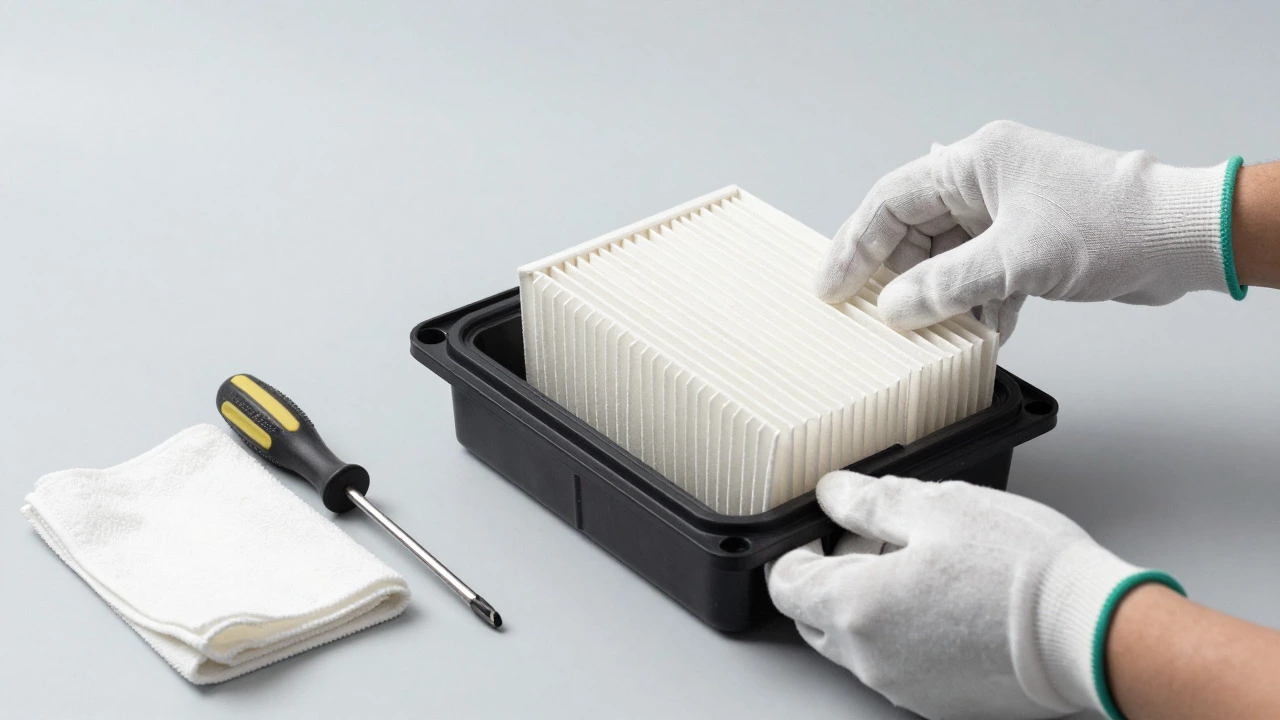
Replacing an air filter is one of the easiest DIY tasks in automotive maintenance. Here’s a step-by-step guide:
- Locate the air box: It’s typically a black plastic box near the battery or front fender. Look for a hose connecting it to the throttle body.
- Open the housing: Loosen the clamps or screws holding the top cover. Some boxes have a spring-loaded latch; others require a Phillips-head screwdriver.
- Remove the old filter: Slide it out carefully. Note its orientation (usually marked with an airflow arrow).
- Inspect the box: Use a damp cloth to wipe out any loose debris inside the housing. Don’t let dirt fall into the intake tube.
- Insert the new filter: Place it in the same position as the old one, ensuring the airflow arrow points toward the engine.
- Close the housing: Secure all clips and screws tightly to prevent unfiltered air from entering around the edges.
The whole process takes about 10-15 minutes. You’ll need a basic screwdriver set and a pair of gloves. Cost-wise, a quality replacement filter ranges from $10 to $25, making it one of the most cost-effective upgrades you can make.
When to See a Professional
While most drivers can handle this task, certain situations warrant professional help. If the air box is difficult to access due to crowded engine bays (common in some European models), a mechanic can ensure no clips break during removal. Also, if you’re experiencing persistent Check Engine Lights related to airflow, a technician can test the MAF sensor and intake manifold for leaks that a simple filter change won’t fix. Combining a filter replacement with a full intake inspection ensures you’re addressing all potential sources of restriction.
Frequently Asked Questions
Can I drive with a dirty air filter?
Yes, you can drive safely with a moderately dirty filter. It won’t cause immediate breakdowns, but prolonged use reduces fuel efficiency and may lead to premature engine wear. Replace it at the first sign of significant clogging.
How often should I replace my air filter?
For most drivers, every 12,000 to 15,000 miles is sufficient. If you drive in dusty conditions or take many short trips, check it every 6 months or 7,500 miles. Always consult your owner’s manual for specific recommendations.
Does a new air filter improve gas mileage?
If your current filter is heavily clogged, yes. Restoring optimal airflow allows the engine to burn fuel more completely, potentially improving fuel economy by 1-3%. If the filter was already clean, the difference will be negligible.
What happens if I forget to change my air filter?
The engine will work harder to pull air, leading to reduced power and increased fuel consumption. Over time, tiny particles may bypass the filter and cause abrasion inside the engine, though this takes years of neglect to become serious.
Are OEM air filters better than aftermarket ones?
OEM filters meet the exact specifications of your vehicle. Many aftermarket brands offer equivalent or superior filtration at lower prices. Choose reputable brands that specify compatibility with your make and model. Avoid cheap, no-name filters that may not fit properly.