
Brake Job Cost Estimator: DIY vs. Professional
Your Requirements
Estimated Cost Breakdown
You're sitting in your car, and you hear it: that high-pitched screech or a weird grinding sound every time you hit the pedal. You know it's time for new pads, but the quote from the local garage makes your eyes water. It leaves you wondering if you're being ripped off or if you could just grab the parts online and do it in your driveway. The short answer is yes, you will save a significant amount of cash by sourcing your own parts, but the real question is whether those savings are worth the risk if you've never touched a caliper before.
Key Takeaways
- Buying your own pads eliminates the "shop markup," where garages often charge 50-100% more than retail.
- You gain full control over the material quality (ceramic vs. semi-metallic).
- The primary "cost" of DIY is your time and the potential for expensive mistakes if you don't have the right tools.
- Labor is usually the most expensive part of a professional brake job, often outweighing the cost of the parts themselves.
The Hidden Markup of the Mechanic's Shop
When a garage tells you they'll handle your brakes, they aren't just charging you for the time they spend turning a wrench. They are charging for the parts. Brake pads are the sacrificial friction material that presses against the brake rotor to stop a vehicle. Most shops buy these in bulk, but they still add a margin to the price to cover their overhead and profit.
If a set of quality pads costs £40 at a retail store, a shop might bill you £80 for them. When you combine that with a labor rate that can range from £60 to £120 per hour, the bill balloons quickly. By sourcing the parts yourself, you immediately shave off that markup. You can hunt for deals, compare brands, and ensure you aren't getting the cheapest possible generic part while paying a premium price.
Breaking Down the Actual Costs
To see the real difference, let's look at a typical scenario for a standard hatchback. If you take it to a professional, you're looking at a package deal. If you go the DIY route, you're paying for the parts and a few specialized tools. Buy brake pads from a reputable supplier, and you're mostly just paying for the raw materials and shipping.
| Expense Item | DIY Approach | Professional Shop |
|---|---|---|
| Brake Pads (Pair) | £30 - £70 | £70 - £140 |
| Labor | £0 (Your Sweat) | £80 - £180 |
| Consumables (Brake Cleaner/Grease) | £10 - £15 | Included in Labor |
| Specialty Tools (One-time buy) | £20 - £40 | £0 |
| Total Estimated Cost | £60 - £125 | £150 - £320 |
Choosing Your Materials: Not All Pads Are Equal
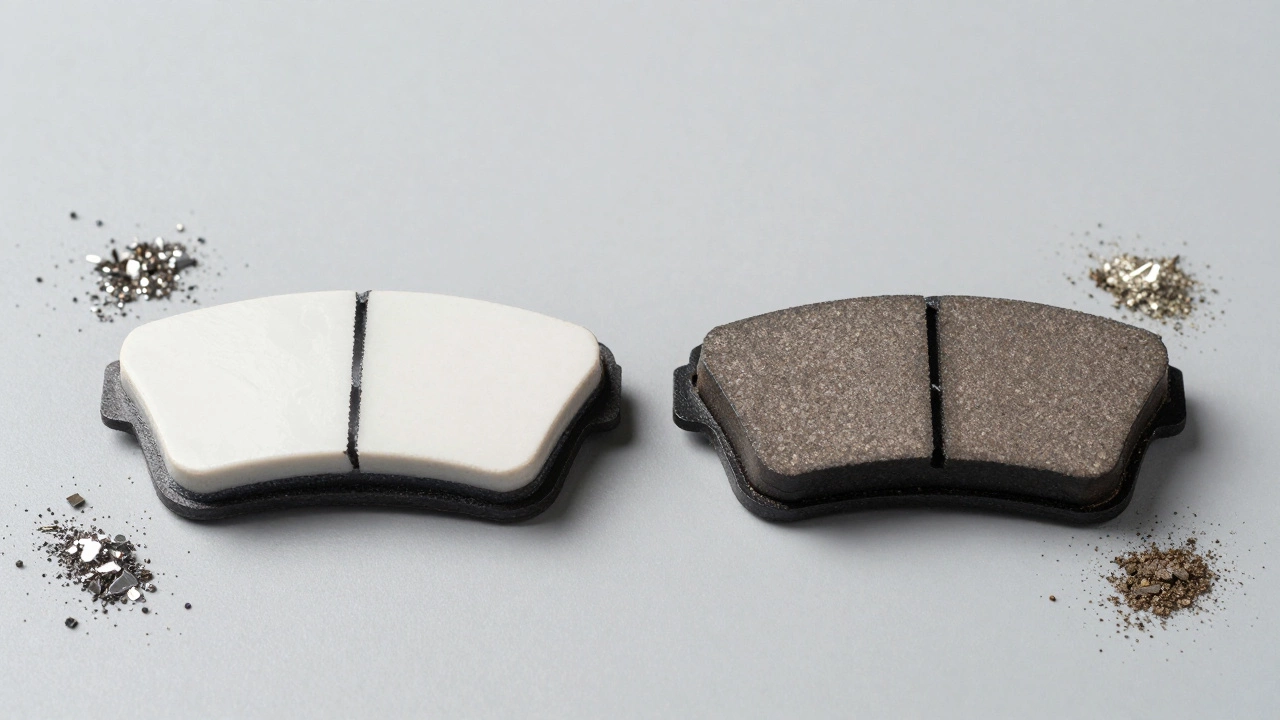
When you buy your own parts, you enter a world of material choices that most mechanics won't explain to you in detail. Depending on how you drive, the wrong pad can actually cost you more in the long run due to faster wear or ruined rotors.
Ceramic brake pads are made from ceramic fibers and fillers, known for producing less dust and offering a quieter ride. These are great for daily commuting in the city where you stop and start constantly. They last longer and keep your wheels looking cleaner, but they can be more expensive upfront.
Semi-metallic brake pads, on the other hand, consist of a mix of metal fillers and ceramic. They are generally better at dissipating heat, making them the go-to for heavy vehicles or people who do a lot of mountain driving. However, they are louder and wear down your brake rotors-the metal discs the pads grip-much faster than ceramics do.
The Tools You'll Need to Actually Save Money
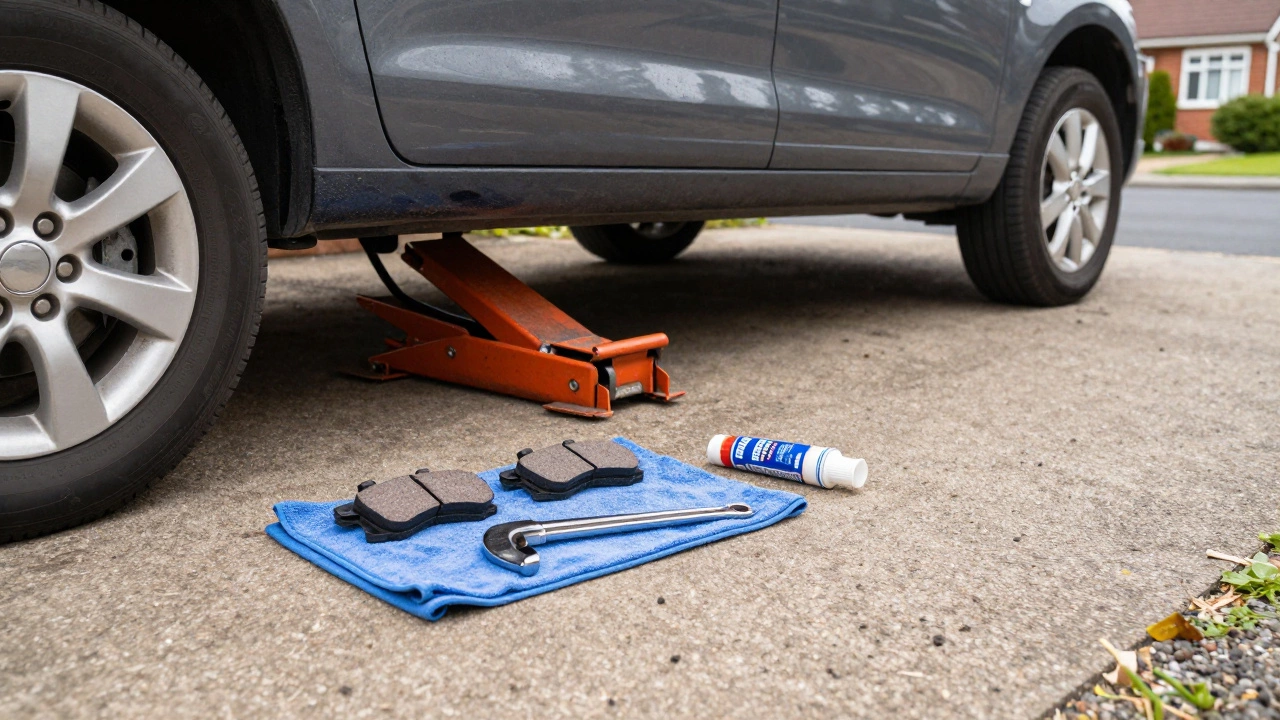
You can't just walk up to a car with a screwdriver and expect to change the brakes. To make the DIY route cheaper, you need a basic kit. If you have to rent every single tool, the savings start to disappear.
- Lug Wrench: To get the wheels off. Most cars come with a cheap one, but a breaker bar makes the job 10x easier.
- C-Clamp or Brake Piston Tool: This is crucial. You need to push the piston back into the brake caliper to make room for the thicker new pads.
- Jack and Jack Stands: Never, ever work under a car held up only by a hydraulic jack. Safety stands are a non-negotiable cost.
- Brake Grease: Applying a high-temp lubricant to the back of the pads prevents that annoying squealing sound.
Common Pitfalls That Kill the Savings
The "cheap" route becomes the most expensive route the moment something goes wrong. A common mistake for beginners is neglecting the brake fluid. If you push the piston back and the fluid overflows from the reservoir, you've got a mess. Even worse, if you don't bleed the lines properly and introduce air into the system, your pedal will feel spongy, and your stopping distance will increase dangerously.
Another trap is ignoring the rotors. If your pads are worn down to the metal, they've likely scored the rotors with deep grooves. Putting brand new pads on scarred rotors is a waste of money; the new pads won't seat properly, they'll wear out in half the time, and they'll make a terrible noise. In this case, you'd need to buy brake discs as well, which adds to your parts bill but is still cheaper than a full shop overhaul.

Is the DIY Route Right for You?
If you're comfortable with basic mechanics and have a flat, safe place to work, buying your own pads is a no-brainer. You save a bit of money, learn how your car works, and you know exactly what quality of part is installed on your vehicle.
However, if the thought of a bolt snapping or a caliper sticking makes you panic, pay the professional. Brakes are the single most important safety system in your car. A mistake here isn't just a financial loss; it's a safety hazard. If you're unsure, you can always try a middle ground: buy the parts yourself and find a local "mobile mechanic" who will charge a flat labor fee to install them. You still avoid the shop's part markup, but you get the peace of mind that comes with a professional installation.
Will buying my own brake pads void my car's warranty?
Generally, no. In many regions, including the UK and US, laws protect consumers' rights to perform maintenance. However, if you install the pads incorrectly and cause damage to other components, the manufacturer won't cover those specific repairs under warranty. Always keep your receipts for the parts you bought.
How often should I actually change my brake pads?
It depends on your driving style. City drivers who stop every few seconds wear pads faster than motorway drivers. Most pads last between 20,000 and 50,000 miles. Check your pads every time you get your tires rotated; if the remaining friction material is less than 3mm, it's time for a change.
Can I just change the pads without changing the rotors?
Yes, if the rotors are smooth and not warped or deeply grooved. If you feel a vibration in the steering wheel when braking, your rotors are likely warped and need to be replaced or "resurfaced" (machined flat) to ensure the new pads work efficiently.
Do I need to change the brake fluid when replacing pads?
Not necessarily. Brake fluid is usually replaced every 2 years or according to the manufacturer's schedule. However, if you notice the fluid in the reservoir is dark brown or black, it's contaminated and should be flushed out while you have the wheels off.
Are expensive brake pads actually better?
To a point, yes. High-end pads use better bonding agents and higher-quality ceramics that resist "brake fade" (loss of stopping power when hot). But for a standard commuter car, you don't need racing-grade pads. A mid-range, well-reviewed brand will perform perfectly for 95% of drivers.
Next Steps & Troubleshooting
If you've decided to go the DIY route, start by searching for a "brake kit" specific to your car's make, model, and year. This ensures you get the correct fit and often includes the necessary shims and clips. If you find that the caliper piston won't budge even with a tool, check your brake fluid reservoir; if the cap is tightened too far, it can create a vacuum that prevents the piston from moving.
For those who aren't confident in their mechanical skills, the best next step is to get a second opinion. Most garages provide a free brake inspection. Use that to identify if you need just pads or a full rotor replacement before you start shopping for parts online.