19 April 2026
How to Test Your Air Filter: Signs It's Time for a Replacement
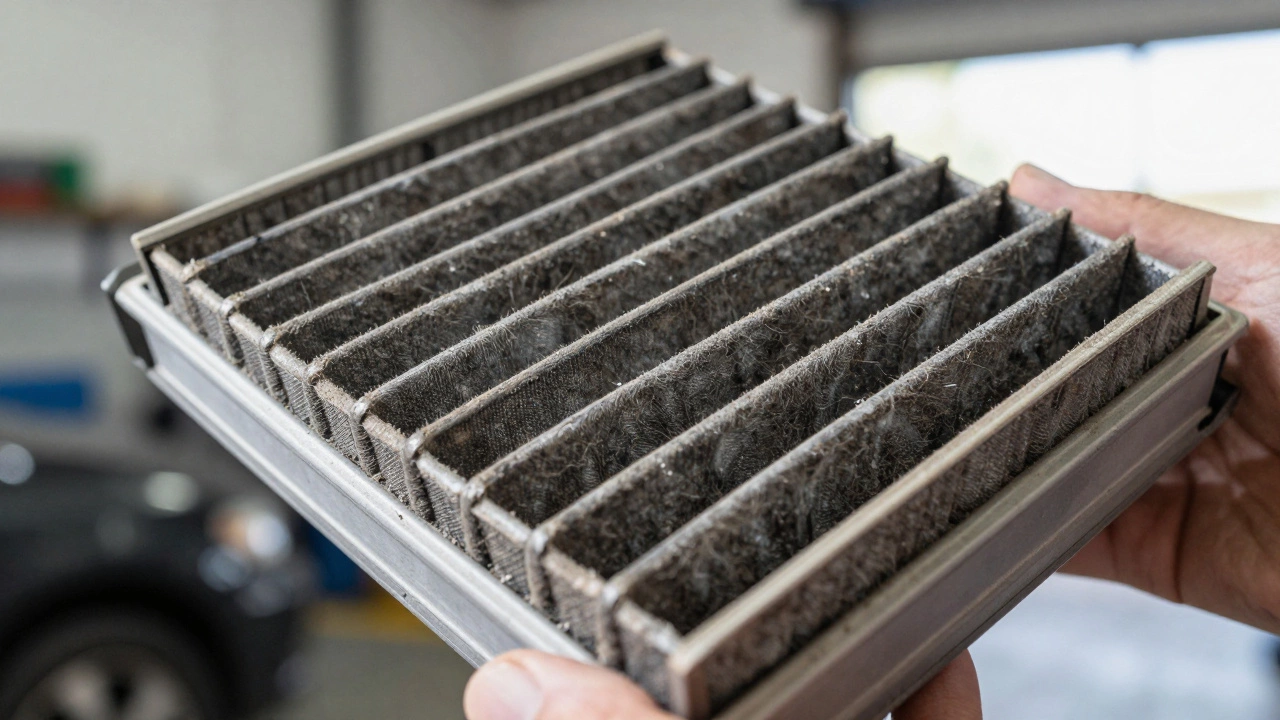
Quick Check: Is Your Filter Dead?
- The Light Test: Hold the filter up to a bright light; if you can't see light passing through the pleats, it's clogged.
- Visual Inspection: Look for grey/black discoloration, holes, or trapped debris like leaves and bugs.
- Performance Drops: Watch for sluggish acceleration in cars or weak airflow from vents at home.
- Smell Test: A musty or damp smell often indicates mold or excessive moisture buildup in the filter media.
The Visual Inspection: Your First Line of Defense
Before you get into complex tests, start with your eyes. For most people, the simplest way to test air filter health is a direct visual scan. Remove the filter from its housing and lay it on a clean surface. A new filter is usually bright white or yellow. If yours looks charcoal grey or has a thick layer of grime, it's likely reached the end of its life.
Look closer at the pleats. Pleats are the folded sections of the filter media designed to increase the surface area for trapping particles . If these folds are packed tight with dirt, the air can't flow. Also, check the edges. If the rubber seal is cracked or the cardboard frame is warped, air will leak around the filter instead of going through it. This is called "bypass," and it means your engine or furnace is sucking in unfiltered air, which can cause internal damage over time.
The Flashlight Test: Checking for Airflow
Sometimes a filter looks clean on the surface but is clogged deep inside the fibers. This is where the flashlight test comes in. Take the filter outside into a shaded area or go into a garage. Hold a high-lumen LED flashlight directly against the intake side of the filter and look through the opposite side.
If the light shines through clearly in a consistent pattern, your filter is likely still breathable. However, if you see dark patches or if the light barely penetrates the material, the pores are blocked. This happens often with HEPA Filters, which use a dense web of fibers to trap microscopic particles . Because they are so dense, they trap more debris and clog faster than standard fiberglass filters.
Monitoring Engine Performance and Fuel Economy
If you're testing a car filter, the engine will tell you it's struggling long before a warning light comes on. A dirty air filter restricts the volume of air entering the combustion chamber. For a fire to burn efficiently, it needs a precise mix of fuel and air. When the air is restricted, the engine may try to compensate by pulling more fuel, which kills your gas mileage.
Pay attention to these red flags during your drive:
- Sluggish Acceleration: Does the car feel "heavy" or slow to respond when you hit the gas?
- Engine Hesitation: Do you feel a slight stumble or jerk when accelerating from a stop?
- Black Smoke: If you see dark soot coming from the exhaust, your engine is likely running "rich" (too much fuel, not enough air).
Modern cars use a MAF Sensor, or Mass Air Flow sensor, which measures the amount of air entering the engine . When the filter is clogged, the MAF sensor sends a signal to the ECU (Engine Control Unit) that airflow is low, which can lead to poor idling and reduced horsepower.
Evaluating Home HVAC Airflow and Pressure
Testing a home filter is slightly different because you're dealing with volume and pressure rather than combustion. The most immediate sign of a failed home filter is a drop in "static pressure." This means your Blower Motor, the fan that pushes air through your ducts , has to work twice as hard to push air through a wall of dust.
Check your vents. If you notice that some rooms are suddenly colder or warmer than others, or if the air coming out of the vent feels like a whisper instead of a breeze, your filter is likely the culprit. You can also check the temperature of the air returning to the furnace. If the return air is significantly warmer than usual, the system is overheating because it can't "breathe," which can lead to a tripped limit switch and a complete system shutdown.
| Filter Type | Primary Material | Best Test Method | Typical Lifespan |
|---|---|---|---|
| Paper/Cellulose | Compressed Wood Fiber | Light Test / Visual | 12,000 - 30,000 miles |
| HEPA | Glass Microfibers | Airflow Pressure Drop | 6 - 12 Months (Home) |
| Foam | Polyurethane | Squeeze/Visual | Washable (Semi-permanent) |
The Danger of Over-Cleaning
You'll see a lot of people suggesting that you just blow out your filter with compressed air to "reset" it. Be very careful here. While this works for some heavy-duty foam filters, doing this to a paper or pleated filter can be a disaster. High-pressure air can create microscopic holes in the media. You won't see these holes with your eyes, but they act like open doors for dust and grit to enter your engine or HVAC unit.
If you use a Washable Air Filter, such as those made by K&N, follow the manufacturer's cleaning kit instructions exactly. Using dish soap or a pressure washer can break down the oil-impregnated fibers, rendering the filter useless and letting contaminants through. A filter that looks clean but has lost its structural integrity is more dangerous than a dirty one.
When to Stop Testing and Just Replace
There comes a point where testing is a waste of time. If you've had your filter for more than a year, or if you've been driving on dirt roads daily, just swap it out. The cost of a new filter is a tiny fraction of the cost of a new Cylinder Head or a furnace blower motor. If you notice a musty smell in your car's cabin or your home's air feels "stale," the filter has likely become a breeding ground for bacteria and mold.
For those who want a systematic approach, keep a simple log. Note the date you installed the filter and the mileage on your car. Most filters are rated for specific intervals, but real-world conditions vary. If you live in a city with high smog or a rural area with lots of pollen, you should be testing your filters twice as often as the manual suggests.
Can I use a vacuum cleaner to clean my air filter?
It's generally not recommended for paper filters. Vacuuming can pull the dirt deeper into the pleats or tear the delicate fibers, allowing contaminants to bypass the filter entirely. For foam filters, a gentle vacuum might work, but washing with specialized soap is better.
Why does my car smell like rotten eggs when the filter is dirty?
While a dirty filter usually causes performance issues, a clogged cabin air filter can trap moisture and organic debris, leading to mold growth. If the smell is coming from the exhaust, however, that's usually a sign of a failing catalytic converter, not a clogged air filter.
How often should I actually test my filters?
For home HVAC, check every 30 to 90 days. For vehicles, a visual check every 5,000 to 7,500 miles is a good rule of thumb, especially if you drive in dusty environments or have pets that shed a lot of hair.
Does a high-MERV rating mean the filter lasts longer?
Actually, it's often the opposite. A higher MERV (Minimum Efficiency Reporting Value) rating means the filter captures smaller particles. Because the mesh is tighter, it fills up faster and can restrict airflow more quickly than a lower-rated filter.
Will a clogged filter cause my engine to overheat?
Indirectly, yes. When an engine struggles to breathe, it works harder and runs less efficiently, which can increase operating temperatures. In home systems, a clogged filter is a primary cause of furnace overheating and subsequent system shutdowns.
Troubleshooting Common Filter Issues
If you've replaced your filter and you're still experiencing poor airflow or engine hesitation, the problem might be further downstream. In cars, check for a collapsed intake hose or a dirty MAF sensor. In homes, check for blocked return vents or a slipping blower belt.
If you find that your filters are clogging way faster than they should-say, every two weeks-you might have a leak in your ductwork or air intake. This allows the system to suck in unfiltered air and dust from the attic or crawlspace, which then gets trapped in the filter instantly, overwhelming it.