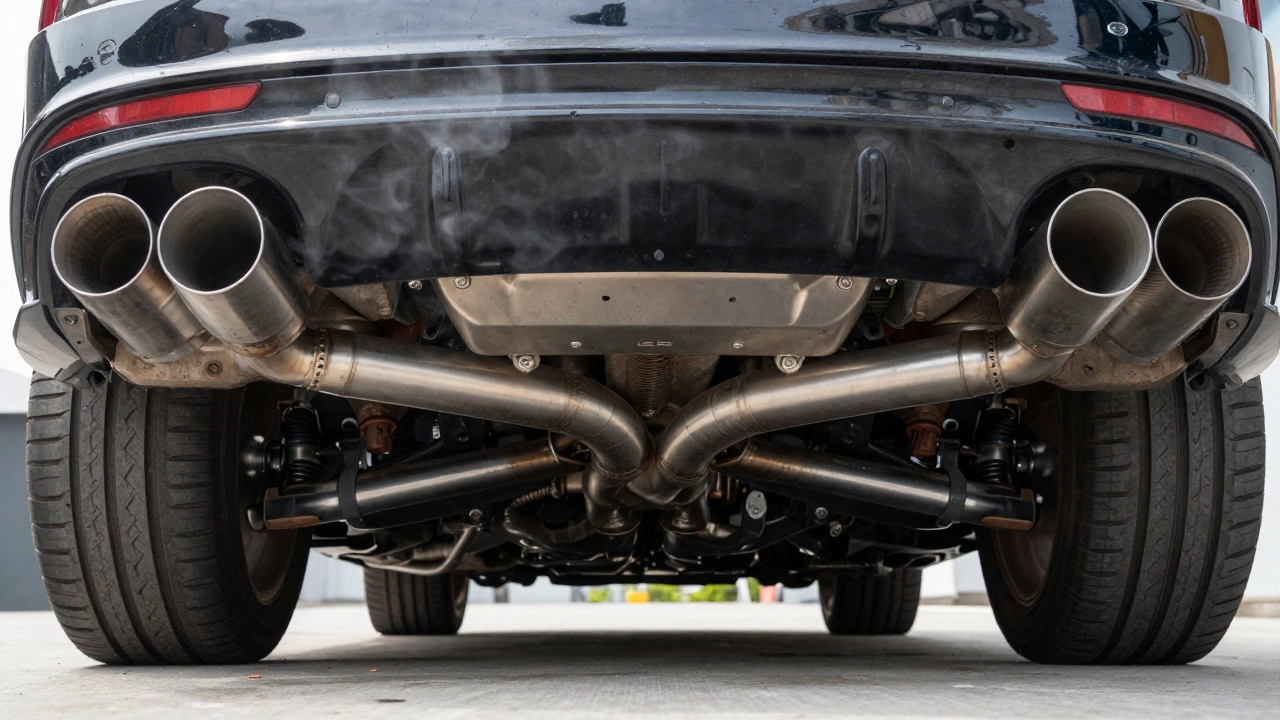
Exhaust System Performance Calculator
Estimate your potential performance gains from a full exhaust system upgrade based on your vehicle's specifications and driving style.
Your Vehicle Details
Fuel Economy
When you hear the word exhaust, most people think of noise, smoke, or that rattling sound your car makes on the motorway. But if you’re thinking about replacing your stock exhaust with a full system, you’re not just fixing a leak-you’re changing how your engine breathes. And that matters more than you think.
Let’s cut through the marketing hype. A full exhaust system isn’t just a louder pipe. It’s a complete replacement of the factory exhaust from the engine’s manifold all the way to the tailpipe. That includes the downpipe, catalytic converter, mid-pipe, and muffler. Most people upgrade because they want more power, better sound, or improved fuel economy. But does it actually deliver?
What a Full Exhaust System Replaces
Your factory exhaust is designed for one thing: meeting emissions rules and keeping noise down. It’s not built for performance. The pipes are often narrow, crimped, or bent at sharp angles. The mufflers are packed with sound-dampening material. The catalytic converter? Usually a restrictive, high-backpressure unit designed for longevity, not flow.
A full system swaps all that out. You get:
- Large-diameter stainless steel or titanium pipes
- Smooth, mandrel-bent curves (no kinks)
- High-flow catalytic converters (if legally compliant)
- Performance mufflers with less restriction
- Lighter materials (in some cases)
These changes don’t just sound different-they change how exhaust gases leave the engine. And that’s where the real impact happens.
How Exhaust Flow Affects Engine Performance
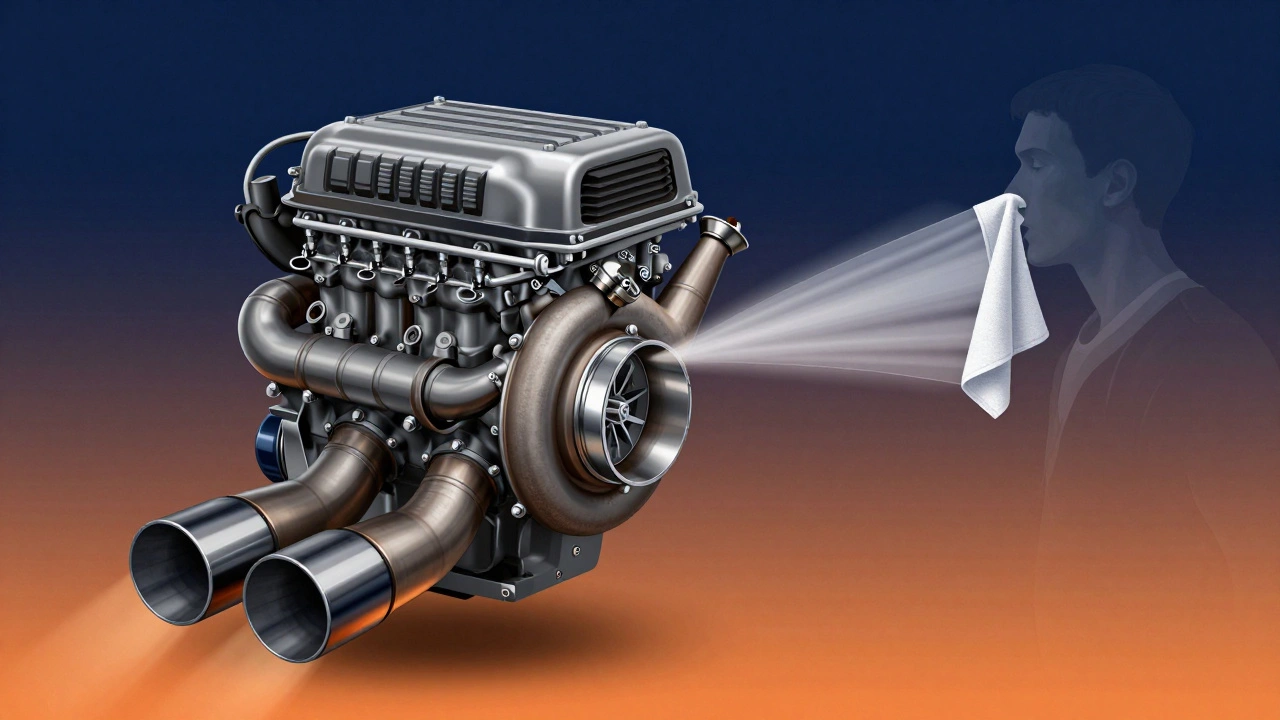
Engines work like a pump. Air comes in, fuel burns, exhaust goes out. If the exhaust can’t escape quickly, pressure builds up. That’s called backpressure. Too much of it and the engine has to work harder to push out the spent gases. That steals power, hurts throttle response, and can even cause overheating over time.
Studies from the Society of Automotive Engineers show that reducing exhaust backpressure by just 15% can increase horsepower by 3-8% on naturally aspirated engines. On turbocharged cars, the gains are even bigger-up to 12%-because the turbo needs to spin freely, and a clogged exhaust makes it work harder.
Think of it like breathing. If you’re running and someone holds a towel over your mouth, you’ll tire faster. A full exhaust is like removing that towel.
Real-World Gains: Power, Sound, and Fuel
Let’s talk numbers. On a typical 2.0L turbocharged car-like a Ford Focus ST or VW Golf GTI-a quality full exhaust system can add 15-25 horsepower at the wheels. Torque gains are noticeable too, especially in the mid-range (3,000-5,000 RPM). That’s the sweet spot for daily driving. You’ll feel it when you merge onto the motorway or climb a hill.
Sound? That’s subjective. Some systems are deep and throaty. Others are aggressive and loud. The key is choosing the right muffler. A chambered muffler gives a rich tone without being obnoxious. A straight-through design is louder and more performance-focused. Avoid systems that sound like a lawnmower-those are usually cheap and poorly tuned.
Fuel economy? It’s not guaranteed, but it can improve. If your old exhaust was clogged or rusted, replacing it can reduce engine strain. Some owners report 1-3% better MPG after a full system upgrade. That’s not huge, but if you drive 15,000 miles a year, it adds up to 30-90 extra miles per tank.
When a Full Exhaust Doesn’t Help
Not every car needs this upgrade. If you drive a 1.2L city car or a 15-year-old diesel with 120,000 miles on it, a full exhaust won’t make a noticeable difference. The engine’s airflow limits aren’t in the exhaust-they’re in the intake, valves, or turbo. Spending £1,200 on a new exhaust for a car that only makes 100 horsepower is like putting racing tires on a lawnmower.
Also, if your car is still under warranty, check first. Some manufacturers void powertrain coverage if you modify the exhaust. Even if it’s legal to drive, your warranty might not cover a failed turbo or engine component if they link it to the upgrade.
And don’t forget emissions. In the UK, your MOT requires a functioning catalytic converter. Some aftermarket systems use high-flow cats, which are legal. Others don’t include one at all. Driving without a cat? You’ll fail your MOT, and it’s illegal on public roads. Always choose a system that’s certified to meet UK regulations.
What to Look for in a Full Exhaust System
Not all systems are created equal. Here’s what to check:
- Material: Stainless steel lasts longer than mild steel. Titanium is lighter but expensive.
- Bend quality: Mandrel-bent pipes flow better than crush-bent. Ask the supplier.
- Fitment: A system made for your exact model year and engine will bolt on cleanly. Generic kits often need cutting or welding.
- Cat type: Make sure it includes a legal, high-flow catalytic converter if your car originally had one.
- Warranty: Reputable brands offer 2-5 year warranties. Avoid no-name eBay sellers.
Brands like Akrapovič, Milltek, and Scorpion are known for quality in the UK market. You’ll pay £800-£1,800 for a full system, but you get what you pay for. Cheap systems rust, rattle, and don’t deliver the promised gains.
Installation: DIY or Pro?
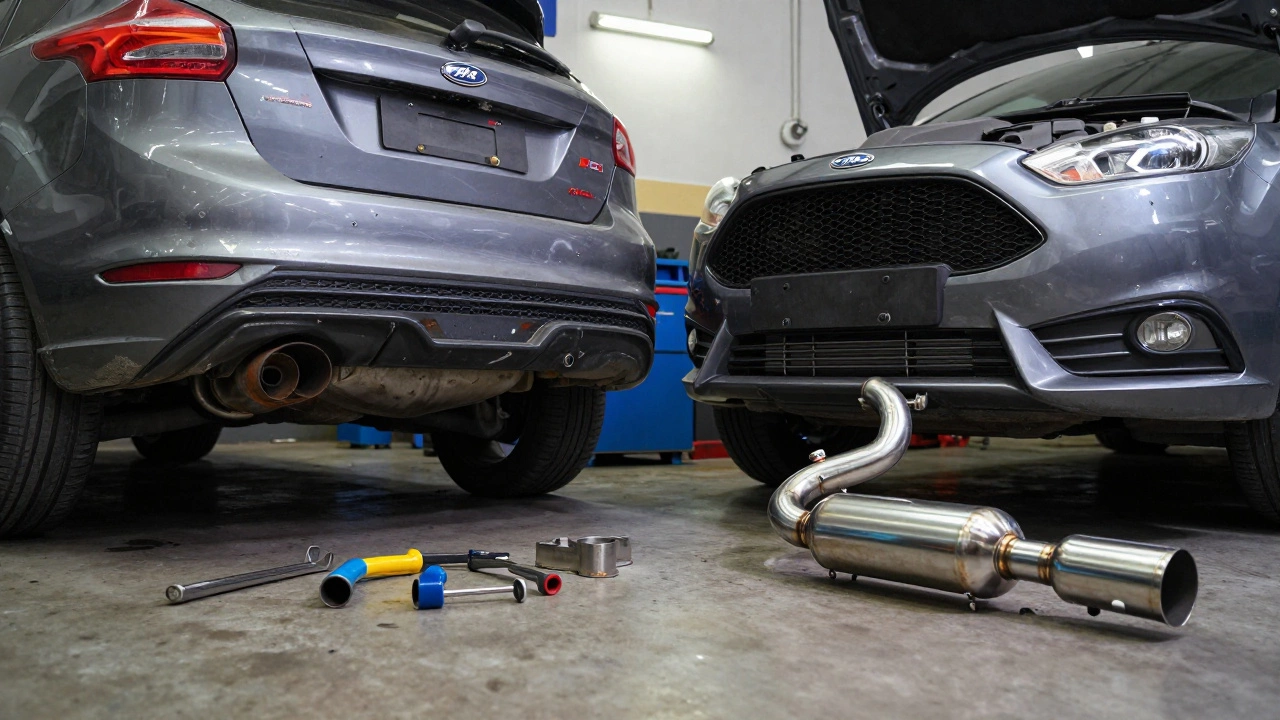
If you’ve ever changed a spark plug, you can probably install a full exhaust. Most systems bolt on with basic tools. But it’s messy. The old bolts are rusted. The old hangers are broken. The heat shields are brittle. And if you’re not careful, you’ll scratch your bumper or drop a pipe on your foot.
Most garages charge £200-£350 to fit a full exhaust. It’s worth it if you’re not confident. A bad install can cause vibrations, leaks, or even fire hazards. I’ve seen cars with exhaust pipes dragging on the road because the hangers weren’t replaced.
Is It Worth It?
Yes-if you drive a performance car and care about how it feels. If you drive a 2018 Subaru WRX, a 2020 BMW M240i, or even a 2023 Honda Civic Type R, a full exhaust will make it more responsive, more fun, and more engaging. You’ll notice the difference in acceleration, throttle snap, and engine note.
No-if you drive a family hatchback, rarely push the engine, or just want to save money. A simple cat-back system (replacing just the rear section) gives 70% of the sound and flow benefits for half the price. And it’s much easier to live with.
There’s no universal answer. The best system is the one that matches your car, your driving, and your budget. Don’t upgrade because it looks cool on Instagram. Upgrade because it makes your car better for you.
What Happens If You Don’t Upgrade?
Your car will keep running. It’ll pass its MOT. It won’t break. But over time, the factory exhaust corrodes. It gets louder. It leaks. It loses efficiency. That’s not a problem today-but in five years, you’ll be paying more for fuel, and the exhaust will rattle so badly you’ll need to replace it anyway.
Waiting doesn’t save money. It just delays the cost. And if you wait until the exhaust is falling apart, you’ll end up paying more for emergency repairs, a rushed install, and possibly damage to your catalytic converter or oxygen sensors.
Think of it like tyres. You don’t wait until they’re bald to replace them. You replace them when they’re worn. The same logic applies here.