Brake Pad Life Estimator
How Long Will Your Brake Pads Last?
Enter your driving habits and vehicle details to get a realistic estimate
Your Estimated Brake Pad Life
Pro Tip: Check your pads every 6,000 miles if you drive in city conditions or haul heavy loads.
Most drivers assume brake pads last a set number of miles-like 50,000 or 70,000-but the truth is more complicated. Your brake pads could wear out in 25,000 miles or last over 80,000. It all depends on how you drive, where you live, and what kind of car you own. There’s no single answer, but knowing what actually affects brake pad life helps you avoid dangerous surprises and unnecessary repairs.
What Brake Pads Actually Do
Brake pads are the part that presses against the brake rotor when you hit the pedal. That friction slows the car down. Over time, that friction wears the pad material away. When the pad gets too thin, it stops working properly. You might hear a screeching sound, feel a vibration, or notice the brake pedal going closer to the floor. That’s your warning.
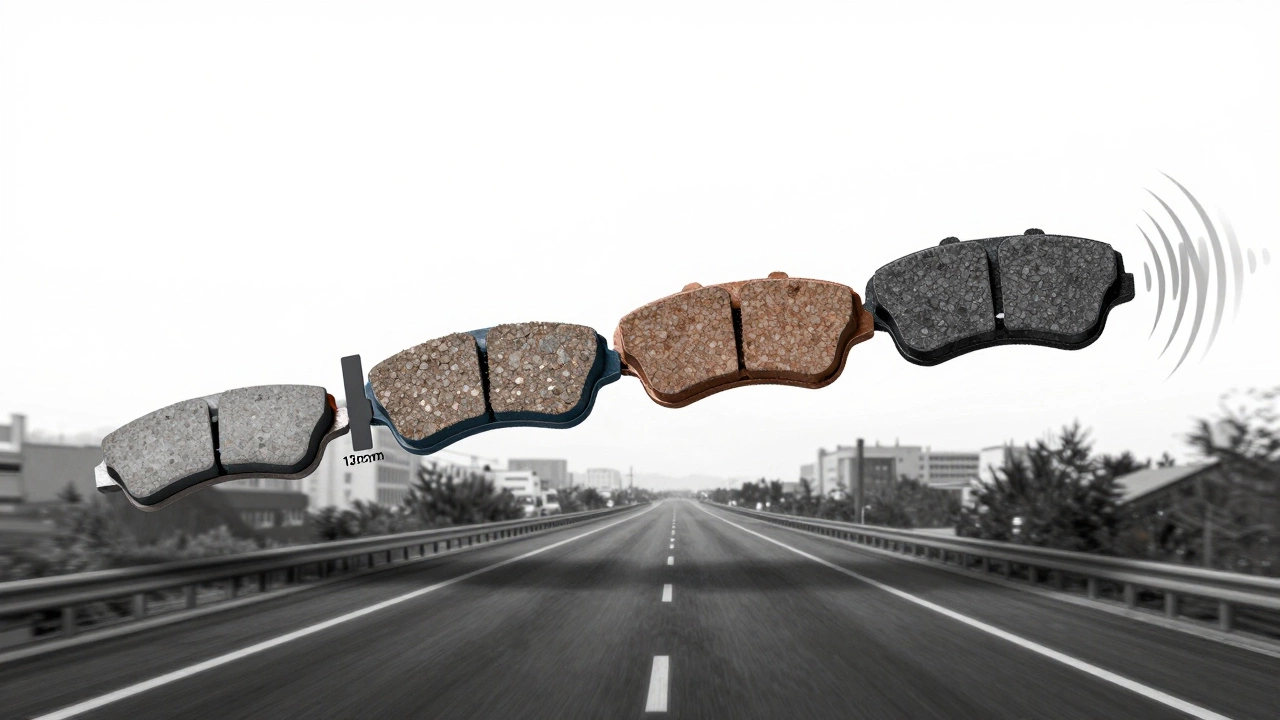
Modern brake pads are made from different materials: organic, semi-metallic, and ceramic. Each has different wear rates and performance traits. Organic pads are softer and quieter but wear faster. Semi-metallic are tougher and handle heat better, common in heavier cars. Ceramic pads last longer, produce less dust, and are quieter-but they cost more.
Typical Mileage Ranges
Most manufacturers say brake pads should last between 30,000 and 70,000 miles. But that’s a broad average. Real-world data from mechanics in the UK shows a clearer pattern:
- City drivers (stop-and-go traffic): 25,000-40,000 miles
- Highway drivers (mostly steady speeds): 50,000-70,000 miles
- Aggressive drivers (hard braking, fast stops): 15,000-30,000 miles
- Heavy vehicles (SUVs, vans, towed trailers): 20,000-45,000 miles
A 2024 survey by the UK’s RAC found that 62% of drivers replaced their brake pads before 50,000 miles. Only 18% made it past 70,000. The difference? Driving habits, not car brand.
What Kills Brake Pads Faster
It’s not just mileage-it’s how you use the brakes. Here are the biggest killers:
- Constant hard braking-Slamming the pedal every time you slow down generates way more heat and wear than gentle, early braking.
- Driving in cities-Stoplights, traffic jams, and pedestrian crossings mean your brakes are working constantly. Manchester traffic alone can cut pad life by 30% compared to rural driving.
- Hauling weight-Every extra 500kg of load (like a roof rack with bikes or a trailer) increases brake demand. Brake pads on a loaded estate car wear twice as fast as on the same car empty.
- Leaving your foot on the pedal-Even slight pressure while driving causes friction and heat buildup. It’s a silent killer.
- Low-quality pads-Cheap aftermarket pads might save money upfront but wear out 40% faster than OEM or premium brands like Akebono or Brembo.
Signs Your Brake Pads Are Worn Out
You don’t need to wait for a warning light. Here’s what to listen for and feel:
- Squealing or screeching-Most pads have a metal wear indicator that rubs against the rotor when thin. That noise is your cue.
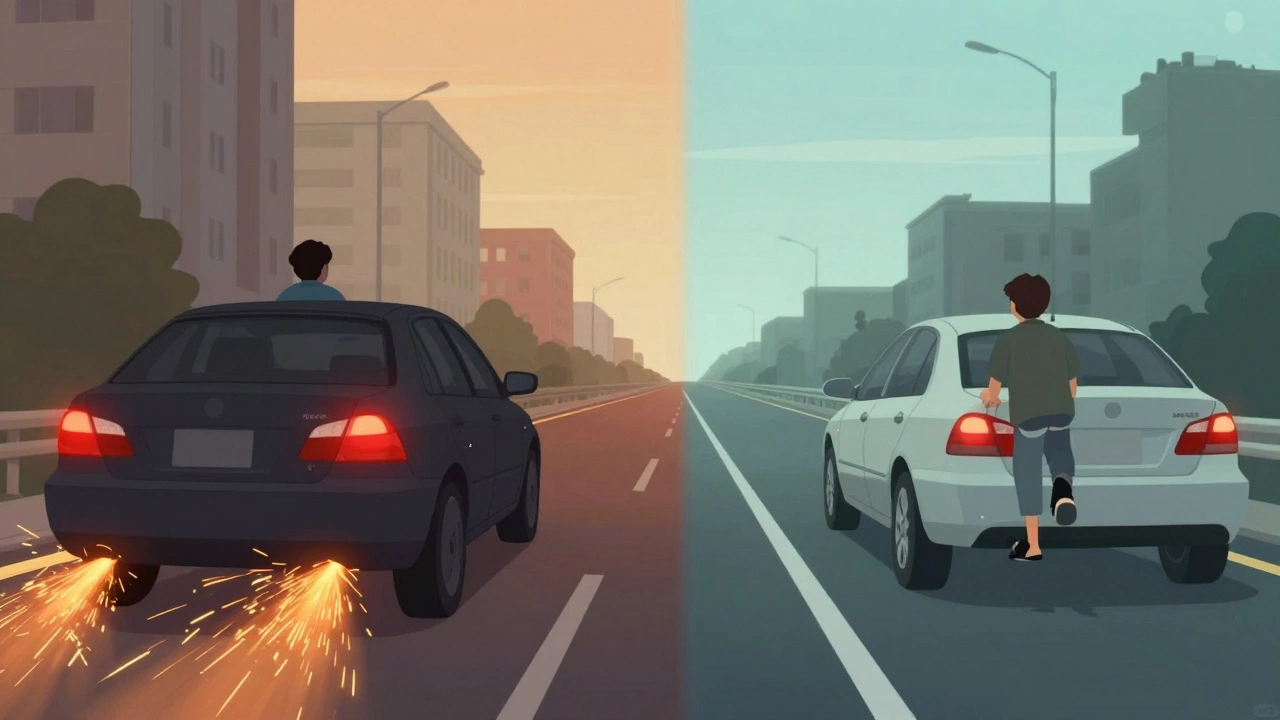
- Grinding metal sound-If you hear a rough, metallic grinding, you’re already damaging the rotors. Replace pads immediately.
- Longer stopping distance-If you notice it takes longer to stop, especially from 40mph, your pads are losing grip.
- Vibration in the pedal-Warped rotors or uneven pad wear can cause pulsing when you brake.
- Brake warning light-Some cars have sensors that trigger a dashboard light when pads hit minimum thickness.
Don’t ignore the warning signs. Worn pads don’t just mean poor braking-they can destroy your rotors, which cost 3-4 times more to replace.
How to Check Brake Pad Thickness Yourself
You don’t need a mechanic to check your pads. Most cars let you see them through the wheel spokes.
- Look through the gaps in your wheel. You should see the brake pad against the metal rotor.
- Measure the thickness of the friction material (not the metal backing plate).
- If it’s less than 3mm, replace them soon.
- If it’s under 1.5mm, get them replaced within a week.
For a more accurate check, jack up the car, remove the wheel, and use a ruler. A new pad is usually 10-12mm thick. At 4mm, you’re entering the danger zone. At 2mm, you’re risking damage to the rotor and caliper.
Does Driving Style Really Matter?
Yes. A 2023 study by the Institute of Advanced Motorists tracked 1,200 UK drivers over 18 months. Drivers who used ‘predictive braking’-lifting off the accelerator early instead of braking hard-extended brake pad life by 40-60%.
Try this: When you see a red light or slow traffic ahead, ease off the gas early. Let the car coast. You’ll save fuel, reduce wear, and drive smoother. It’s not just about brakes-it’s about driving smarter.
How Often Should You Get Them Checked?
Most manufacturers recommend brake inspections every 12,000 miles or once a year. But if you drive in the city or haul heavy loads, check them every 6,000 miles. Don’t wait for the warning light. A quick visual check every few months costs nothing and can save hundreds.
During a service, ask the mechanic to show you the pad thickness. Good shops will take a photo or give you a printout. If they won’t, find a different one.
What About Brake Rotors?
Brake pads wear out first-but rotors don’t last forever. If you’ve driven with worn pads for too long, the metal backing plate can score the rotor surface. That causes vibration, noise, and reduced braking power.
Most rotors last 2-3 pad replacements. But if you hear grinding or feel pulsing, the rotor may need resurfacing or replacement. Replacing pads without checking the rotor is like putting new tires on a bent rim.
How Much Does Replacement Cost?
In the UK, replacing brake pads on a standard family car costs between £120 and £250 for both front axles, including labour. Ceramic pads cost more-around £200-£350-but last longer and need fewer replacements.
Front pads wear faster than rear pads. On average, you’ll replace front pads twice for every one rear pad replacement. That’s normal.
Don’t get tempted by £40 brake pad deals online. They’re often cheap, noisy, and wear out in 10,000 miles. Stick with reputable brands: Akebono, Brembo, TRW, or OEM equivalents from your car maker.
Final Rule of Thumb
If you drive mostly in the city, expect to replace brake pads every 30,000-40,000 miles. If you drive mostly on motorways with smooth stops, 60,000-70,000 miles is realistic. But don’t rely on mileage alone. Watch for the signs: noise, feel, and thickness. And when in doubt, check them. Your life-and the lives of others-depend on your brakes working right.
How many miles do brake pads last on average?
On average, brake pads last between 30,000 and 70,000 miles. But this varies widely. City drivers often need replacements at 25,000-40,000 miles, while highway drivers may get 60,000-80,000 miles. Driving style, vehicle weight, and pad material matter more than the odometer.
Can brake pads last 100,000 miles?
Yes, but it’s rare. Only drivers with very light usage-mostly motorway driving, gentle braking, and no heavy loads-can reach 100,000 miles. Ceramic pads on a small, lightly driven car might make it. Most drivers will need replacements well before that.
How do I know if my brake pads are worn out?
Look for high-pitched squealing, grinding noises, longer stopping distances, vibration in the brake pedal, or a warning light. Visually, if the pad material is less than 3mm thick, it’s time to replace them. At 1.5mm or less, you’re risking rotor damage.
Should I replace brake pads and rotors together?
Not always. Replace pads when worn, and inspect the rotors. If they’re smooth, even, and over 2mm thick, they can stay. If they’re scored, warped, or thin, replace them too. Replacing pads on damaged rotors leads to poor braking and quick pad wear.
Do expensive brake pads last longer?
Generally, yes. Premium ceramic or semi-metallic pads from brands like Brembo or Akebono last 20-40% longer than cheap generic pads. They also handle heat better and produce less dust. The upfront cost is higher, but you save money over time by replacing them less often.
Is it safe to drive with worn brake pads?
No. Driving with worn brake pads reduces stopping power and can damage the rotors or calipers. If you hear grinding, your pads are already metal-on-metal-that’s dangerous. Don’t wait for a complete failure. Replace them as soon as you notice warning signs.