Brake Pad Health Checker
Recommended Actions:
Note: This tool provides estimates. Always consult a professional mechanic for definitive diagnosis.
You’re cruising down the highway, windows down, radio up, when suddenly a high-pitched squeal pierces the air. Or maybe you just stepped on the pedal for a routine stop at the grocery store, and it felt… spongy? Weird, right? That little noise or sensation is your car trying to tell you something urgent about its braking system. Ignoring it can turn a $50 repair into a $500 disaster involving rotors and calipers. But how do you actually know if your brake pads are bad, versus just noisy from rain or dust?
This isn’t rocket science, but it does require paying attention. Your brakes are safety-critical components, meaning there’s no room for "I’ll check it later." By the end of this guide, you’ll be able to spot the red flags-both audible and visual-and decide whether you need a mechanic immediately or if you have a few thousand miles left.
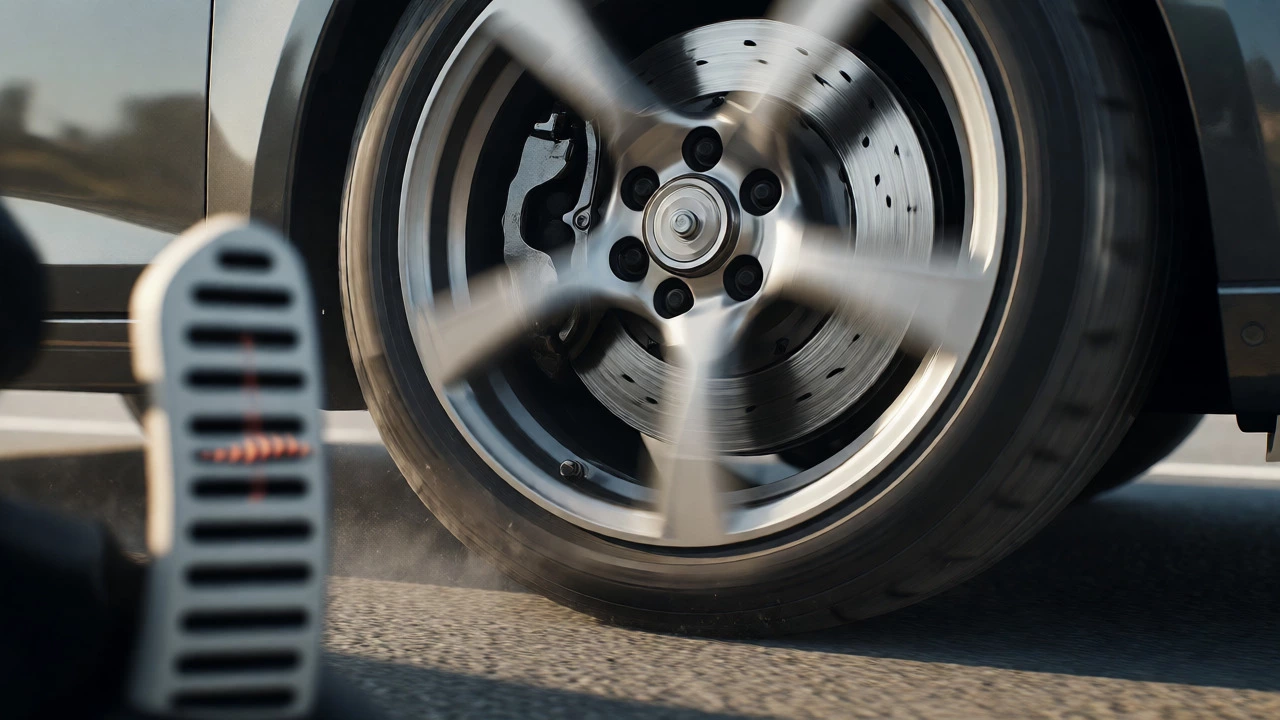
The Sound Test: What Noises Mean Trouble
Brakes talk. They scream, grind, and click. Learning their language is the fastest way to diagnose issues without lifting the car.
Squealing is the most common warning sign. Most modern brake pads come with a small metal tab called a wear indicator. When the friction material wears down to about 3-4 millimeters (roughly 1/8 inch), this tab touches the rotor. It creates that distinct, high-frequency chirp specifically designed to annoy you into action. If you hear this consistently while driving, not just when cold-starting after a rainy night, your pads are nearing the end of their life.
Grinding is worse. This is a low, harsh, metallic rasp sound that happens when the friction material is completely gone. Now, the metal backing plate of the pad is rubbing directly against the metal rotor. You might feel this vibration through the steering wheel or the brake pedal itself. If you hear grinding, stop driving as soon as safely possible. You are actively destroying your rotors, which will double or triple your repair bill because you’ll now need to replace both pads and rotors.
What about clicking? Sometimes new pads click slightly until they bed in. But persistent clicking usually means hardware is loose or missing, like anti-rattle clips. That’s a mechanical failure waiting to happen, not just wear.
Visual Inspection: Looking Behind the Wheels
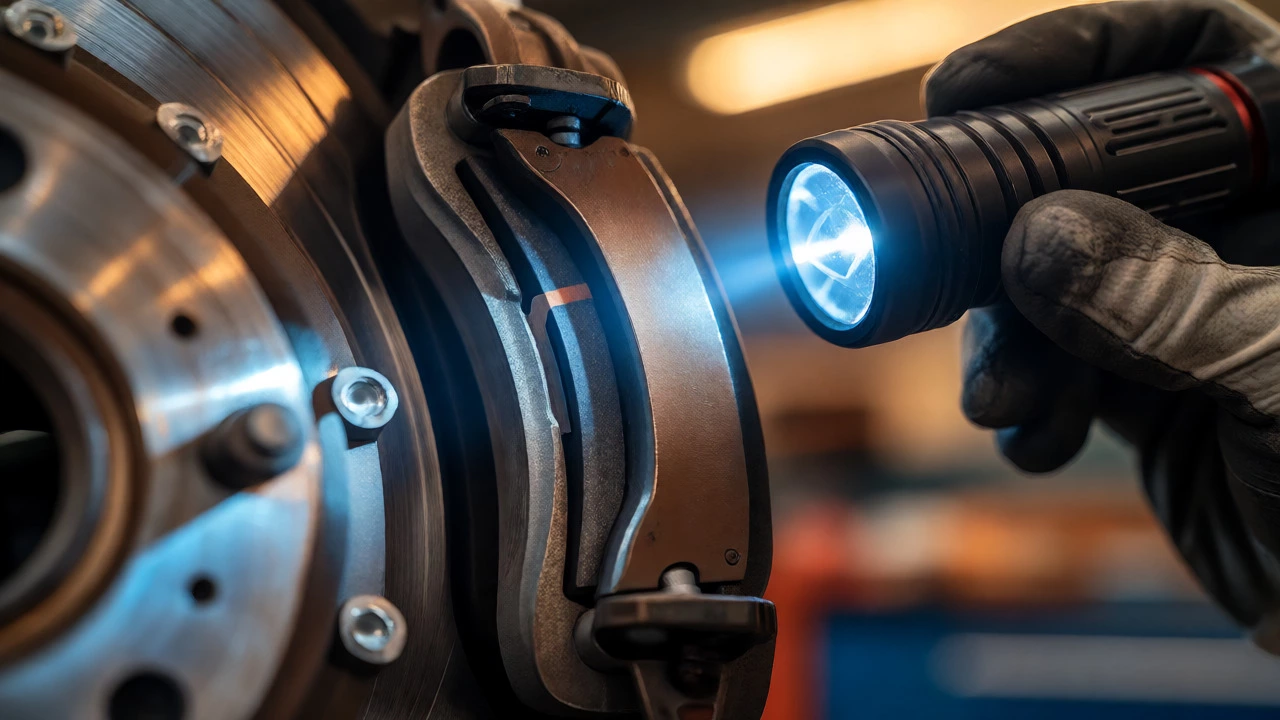
Noise is great, but seeing is believing. You don’t always need tools to check your brakes, though a flashlight helps immensely. Park on a flat surface, ensure the car is cool (never inspect hot brakes!), and look through the spokes of your wheels.
You’re looking for the thickness of the friction material. The pad sits inside the caliper, pressed against the shiny disc (rotor). New pads typically have 10-12mm of friction material. As they wear, this layer thins out.
- New: 10-12mm thick. Looks robust.
- Serviceable: 6-9mm thick. Plan replacement within 6 months or 5,000 miles.
- Critical: 3-4mm thick. Replace now. Wear indicators should be screaming.
- Danger Zone: Less than 3mm. Metal-on-metal contact likely occurring.
If you can’t see clearly through the wheel spokes, some cars allow you to peek from behind the front tire by turning the wheel fully to one side. For rear brakes, you often need to remove the wheel or use a borescope camera if you’re handy with gadgets. Remember, inner pads often wear faster than outer ones due to heat distribution and piston design, so don’t assume what you see outside is the whole story.
Pedal Feel and Performance Changes
Your foot knows before your ears do. Changes in how the brake pedal feels under pressure are critical diagnostic clues.
A spongy pedal usually indicates air in the hydraulic lines or moisture in the brake fluid, not necessarily bad pads. However, if the pedal goes all the way to the floor, that’s an emergency-likely a leak or master cylinder failure.
More relevant to pads is a vibrating pedal. While this often points to warped rotors, severe pad unevenness or glazed pads (where the surface hardens from overheating) can cause pulsation. You’ll feel this shudder primarily during moderate stops, like coming to a halt at a traffic light. If the vibration starts only when braking hard from high speeds, it’s almost certainly rotor-related, but worn pads contribute to poor heat dissipation, accelerating rotor warping.
Another subtle sign is increased stopping distance. Have you noticed you need to press harder or earlier to stop? This could mean the pads are too thin to provide optimal leverage, or the compound has degraded. Don’t rely solely on this feeling, as tire condition and road surface play roles, but combined with other signs, it’s a strong indicator.
Dashboard Warnings and Electronic Sensors
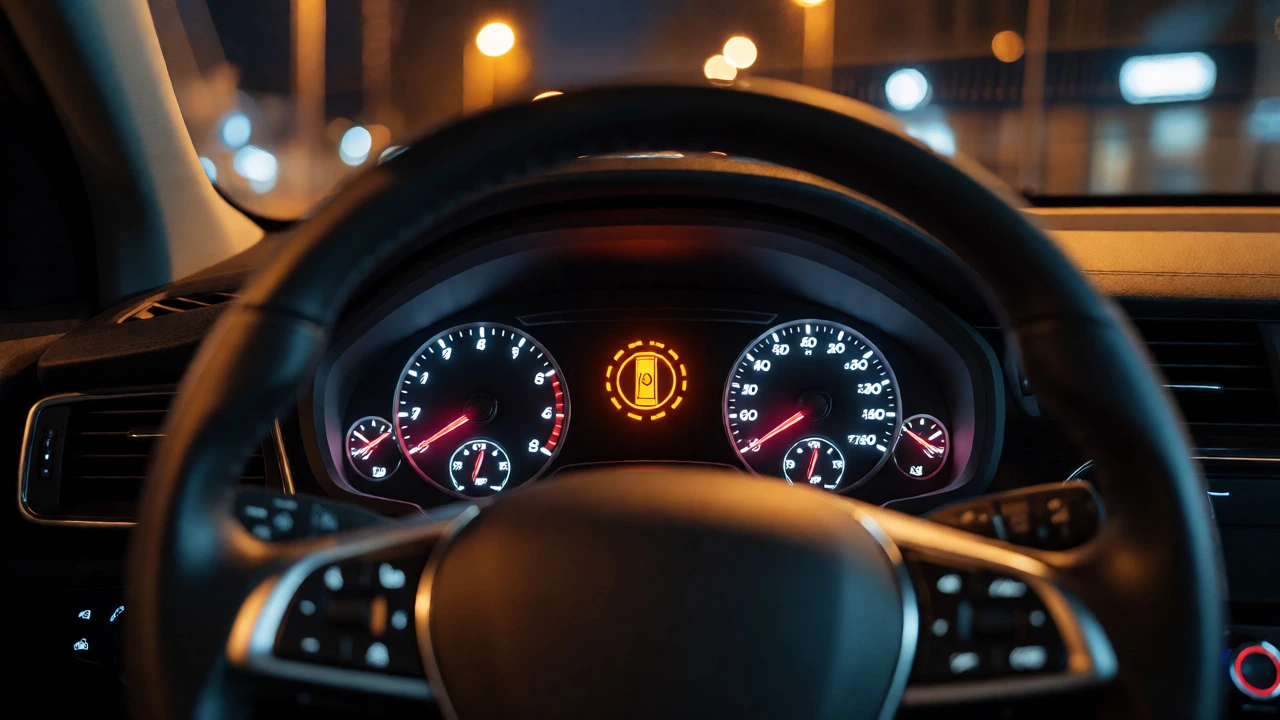
Many modern vehicles, especially European models like BMW, Audi, and Mercedes, use electronic wear sensors instead of-or in addition to-mechanical tabs. These sensors monitor electrical resistance. As the pad wears, the sensor wire eventually breaks or changes resistance, triggering a warning light on your dashboard.
If your car displays "Check Brakes" or a specific icon resembling a circle with dashed lines around it, don’t dismiss it as a glitch. Unlike older mechanical systems, these sensors are precise. Once triggered, you usually have less than 500 miles of safe driving time. Note that replacing these sensors costs extra ($20-$50 per axle) and must be done simultaneously with pad installation. Some DIYers forget this step, leading to persistent error messages even with new pads.
Common Misconceptions and Pitfalls
Let’s clear up some myths that waste money or create false security.
Myth 1: "It’s just rain/dust noise." Yes, surface rust causes temporary squeaking after sitting overnight. This disappears after a few stops. If the noise persists for more than 10 minutes of normal driving, it’s not weather-related.
Myth 2: "The car stopped fine, so I’m good." Brakes fail progressively. You might still stop today, but tomorrow the pad could disintegrate entirely, causing total loss of braking on that wheel. Safety margins disappear rapidly once you hit the 3mm mark.
Myth 3: "Ceramic pads last forever." Ceramic compounds offer cleaner operation and quieter performance, but they don’t magically extend life indefinitely. Aggressive city driving, towing, or mountain descents kill any pad type quickly.
When to Replace vs. Monitor
Here’s a quick decision matrix to help you act confidently.
| Symptom | Likely Cause | Action Required | Urgency Level |
|---|---|---|---|
| High-pitched squeal (consistent) | Wear indicator touching rotor | Schedule replacement within 1-2 weeks | Medium |
| Metallic grinding sound | Pad material gone; metal-on-metal | Tow or drive slowly to shop; replace pads & rotors | High/Critical |
| Throbbing/vibration in pedal | Warped rotors or glazed pads | Inspect rotors; likely resurface or replace | Medium/High |
| Dashboard warning light | Electronic sensor triggered | Replace pads and sensor immediately | High |
| Visible thickness < 3mm | End of service life | Replace pads now | High |
If you’re comfortable working on cars, replacing pads yourself saves labor costs. Just remember to compress the caliper pistons properly using a C-clamp or specialized tool. Failing to do this prevents the caliper from fitting over the thicker new pads. Also, always replace pads in axle pairs (both front or both rear) to maintain balanced braking force.
How many miles do brake pads usually last?
There is no single answer, but typical ranges are 30,000 to 70,000 miles. City drivers who stop frequently often get closer to 30k, while highway commuters may reach 70k+. Aggressive driving, heavy loads, and cheap pad materials significantly reduce lifespan.
Can I drive with bad brake pads?
You can drive short distances if they are merely squealing (indicating ~3mm remaining). Do not drive long distances or at high speeds. If you hear grinding, avoid driving entirely as you risk locking a wheel or damaging the hub assembly, creating a hazardous situation.
Do brake pads need to be replaced in pairs?
Yes, always replace them in axle sets (both front or both rear). Replacing only one side leads to uneven braking force, causing the car to pull to one side during stops and potentially stressing suspension components.
Why do my new brakes still squeak?
New pads need to "bed in," transferring a thin layer of material to the rotor. During this period (first 100-200 miles), slight noises are normal. Ensure you followed proper break-in procedures: several moderate stops from 30mph, cooling off between each. Persistent squealing may indicate lack of anti-squeal grease on the pad backplates.
Is it cheaper to replace pads myself?
Labor accounts for 50-70% of brake job costs. Doing it yourself saves significant money. However, you need jack stands, lug wrenches, socket set, and a piston compressor. Mistakes like cross-threading bolts or forgetting to bleed brakes can cost more than the saved labor.