Oil Level Calculator
Important Safety Note
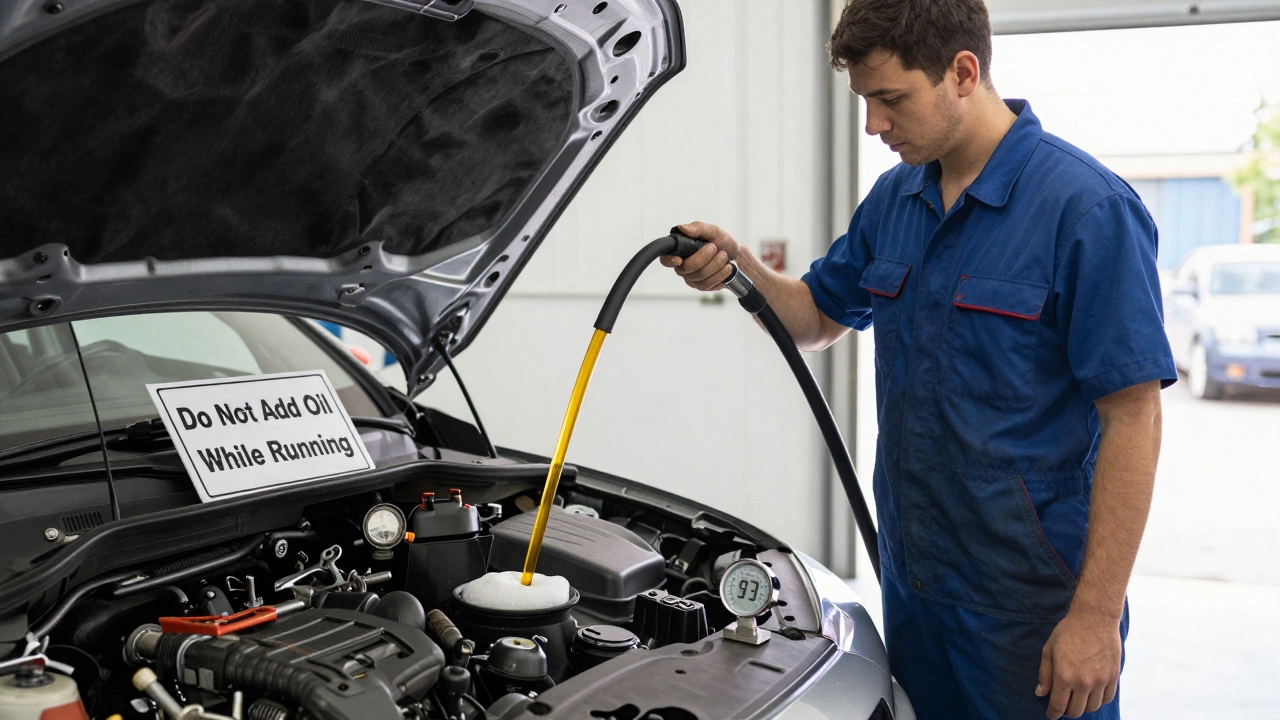
NEVER add oil while the engine is running. Adding oil with the engine running causes dangerous oil splashing, inaccurate dipstick readings, and overfilling risks. Always turn off the engine and wait 5-10 minutes before adding oil.
Results
Why This Matters
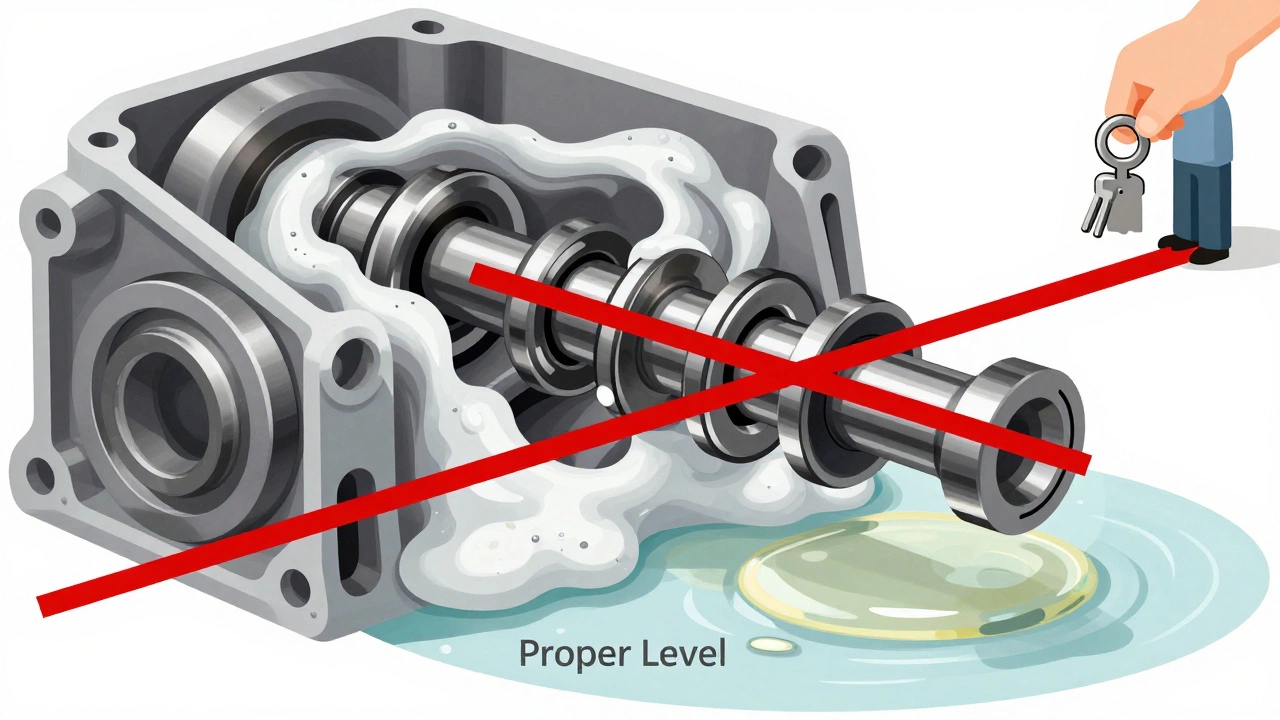
Overfilling causes oil foaming that reduces lubrication, leading to bearing damage and engine seizure. Modern engines require precise oil levels - even 0.25 quarts over full can cause problems.
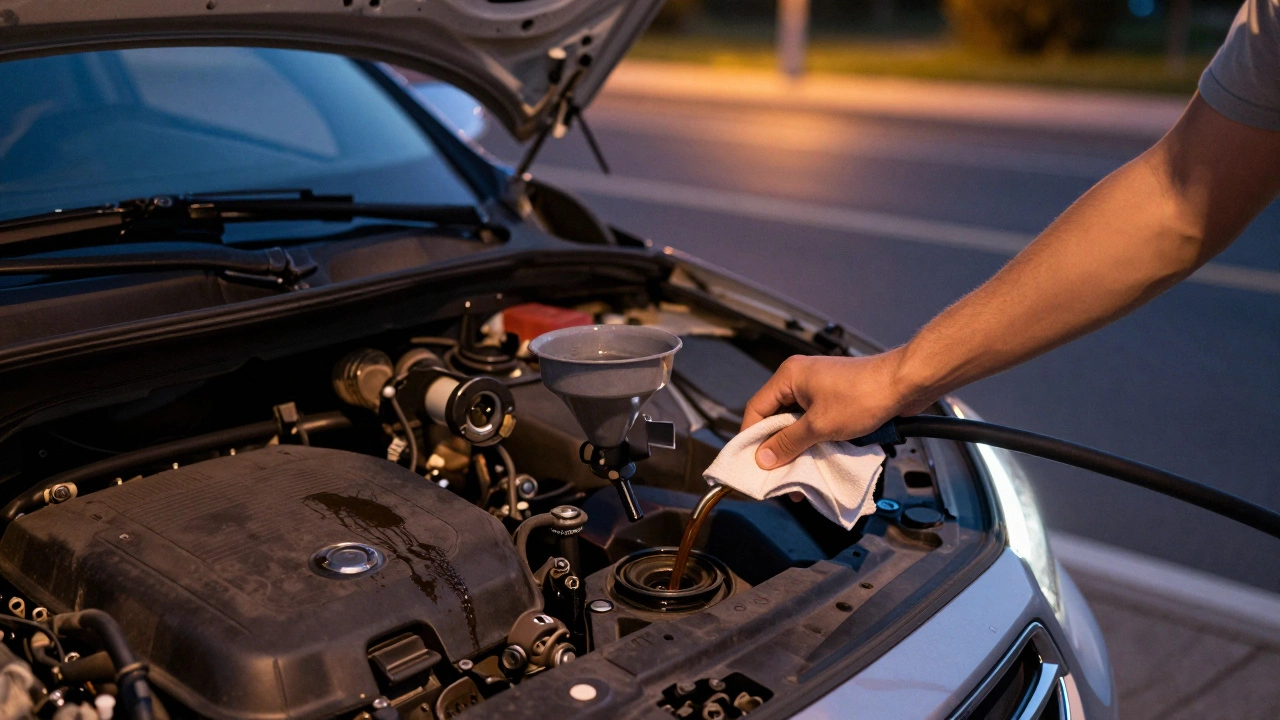
Ever pulled over to check your oil, noticed it’s low, and wondered - should I add oil while the engine is running? It’s a common question, and the answer isn’t as simple as it sounds. Most people assume it’s fine to top off oil while the engine is on, especially if they’re in a hurry. But here’s the truth: adding oil while the engine is running is a bad idea, and here’s why.
Why the Engine Should Be Off When Adding Oil
When your engine is running, the oil is circulating at high pressure through the engine’s internal passages. The oil pump pushes oil to the bearings, valves, pistons, and other moving parts. If you open the oil filler cap while the engine is running, you’re not just adding oil - you’re creating an unpredictable environment inside the crankcase.
First, hot oil can splash or even spray out of the filler neck. Engine oil gets hot - often above 200°F (93°C). That’s not just uncomfortable; it’s dangerous. A single drop on your skin can cause a burn. Second, the pressure inside the crankcase can cause oil to bubble or foam when you add more. This isn’t just messy - it can lead to inaccurate readings.
Third, and most important, you can’t get a true oil level reading while the engine is running. The dipstick measures oil sitting in the oil pan. When the engine is on, oil is being pulled up into the engine. What you see on the dipstick might show low, even if you have enough oil. That’s how people end up overfilling - they think they’re adding a little, but they’re actually pouring in too much.
What Happens If You Add Oil With the Engine Running?
Some drivers think, “I’ve done it before and nothing happened.” That’s true - sometimes nothing bad occurs immediately. But that doesn’t mean it’s safe. Here’s what can go wrong:
- Overfilling: You can’t trust the dipstick reading while the engine is running. Adding even half a quart too much can cause serious damage. Too much oil creates foam, which the oil pump can’t handle. Foam doesn’t lubricate - it just spins around uselessly. This leads to oil starvation in critical parts like the camshaft and crankshaft bearings.
- Oil leaks: Excess oil gets forced past seals and gaskets. The rear main seal, valve cover gasket, and crankshaft seals aren’t designed to hold pressure from overfilled oil. You’ll start seeing leaks under your car, and eventually, you’ll need expensive repairs.
- Engine damage: Foam in the oil reduces lubrication. Bearings wear out faster. In extreme cases, connecting rods can strike the oil surface and cause catastrophic failure. This isn’t science fiction - it’s documented in repair shops across the country.
One mechanic in Ohio told me about a customer who added oil while the engine was running because he was “just topping it off.” Three days later, the engine seized. The oil level was 1.5 quarts over full. The foam had starved the bearings of lubrication. The repair cost $4,200. He could’ve avoided it by turning the engine off for five minutes.
How to Add Oil the Right Way
Adding oil correctly takes less than ten minutes. Here’s how to do it right:
- Turn off the engine and wait 5 to 10 minutes. This lets the oil drain back into the oil pan so the dipstick gives an accurate reading.
- Park on level ground. If the car is tilted, the oil settles unevenly, and your reading will be wrong.
- Remove the dipstick, wipe it clean with a rag, then reinsert it fully. Pull it out again and check the level. The oil should be between the minimum and maximum marks.
- If it’s low, use the correct oil type (check your owner’s manual - it’s usually 5W-30 or 5W-20). Add oil slowly - half a quart at a time.
- Wait 30 seconds after each addition, then recheck the dipstick. Don’t rush. It’s easy to overfill.
- Once you’re at the right level, replace the oil filler cap and dipstick.
- Start the engine and let it run for 30 seconds. Then shut it off and check the level one more time. This catches any air bubbles or settling issues.
Pro tip: Keep a small funnel in your glove compartment. It prevents spills and keeps oil off your engine bay. Spilled oil can smoke on hot surfaces and create a fire risk.
When Should You Add Oil?
You shouldn’t be adding oil regularly. If your engine is using oil between changes, something’s wrong. Modern engines shouldn’t burn or leak oil noticeably. If you’re topping off more than once a month, you have a problem.
Common causes of low oil include:
- Worn piston rings - oil seeps into the combustion chamber and burns
- Leaking valve cover gasket - oil drips out slowly
- Failed PCV valve - causes pressure buildup and oil leaks
- Oil pan gasket failure - oil pools under the car
Adding oil is a temporary fix. It doesn’t solve the root issue. If you’re adding oil often, get your car checked. A $150 inspection now can save you $2,000 later.
Myth Busting: Common Misconceptions
Let’s clear up a few myths you might have heard:
- Myth: “The engine needs to be warm to add oil.” Truth: Warm is fine, but running is not. Let the engine cool for 5-10 minutes after driving. Cold oil is thicker and harder to pour, but it’s safer than adding it while running.
- Myth: “It’s okay if I just add a little.” Truth: Even a quarter quart too much can cause foaming. Oil doesn’t need to be “perfectly full” - it just needs to be between the marks.
- Myth: “I’ve seen mechanics do it.” Truth: Some mechanics might do it out of habit, but they’re not following best practices. Reputable shops always turn off the engine before adding oil.
What to Do If You Already Added Oil With the Engine Running
If you’ve already added oil while the engine was running, don’t panic - but don’t ignore it either.
Here’s what to do:
- Turn off the engine immediately.
- Wait 10 minutes for the oil to settle.
- Check the dipstick. If the level is above the max mark, you’ve overfilled.
- If it’s only slightly over (less than 0.25 quarts), you can probably drive to a shop and have them siphon out the excess.
- If it’s significantly over (half a quart or more), don’t start the engine. Call a tow truck. Running an overfilled engine can cause immediate damage.
Most auto shops can remove excess oil with a suction pump for under $50. It’s cheaper than replacing a damaged engine.
Final Advice: Make It a Habit
Adding oil shouldn’t be a regular part of your routine. Your engine should hold its oil for 5,000 to 10,000 miles, depending on the type and driving conditions. If you’re constantly low, get it checked.
But when you do need to add oil, make it a ritual: turn off the engine, wait, check, add slowly, recheck. It takes five minutes. It prevents thousands in repairs. It’s the difference between a car that lasts 200,000 miles and one that dies at 120,000.
Don’t risk your engine for convenience. Oil is cheap. Engine repairs aren’t.
Can I add oil while the engine is warm?
Yes, you can add oil when the engine is warm, but only after turning it off. Let it sit for 5-10 minutes so the oil drains back into the pan. This gives you an accurate reading. Never add oil while the engine is running, even if it’s warm.
What happens if I overfill the engine with oil?
Overfilling causes oil to foam, which reduces lubrication. Foam can’t protect moving parts, leading to bearing wear, oil leaks, and even engine seizure. Excess oil also gets forced past seals, causing leaks and potential fire hazards from oil dripping onto hot exhaust components.
How often should I check my engine oil?
Check your oil every time you fill up with gas - that’s about once a week for most drivers. If your car is older or has high mileage, check it twice a week. Modern cars may have electronic oil level sensors, but they’re not always reliable. Always use the dipstick as your primary check.
Can I use any type of oil to top off?
Only use the oil type specified in your owner’s manual. Mixing different viscosities (like 5W-30 and 10W-40) or synthetic with conventional oil can reduce performance and protection. If you’re out of the exact type, use the closest match - but get the correct oil at your next opportunity.
Why is my engine low on oil if I haven’t driven far?
If your oil level drops quickly without driving much, you likely have a leak or internal engine issue. Check for oil spots under your car. If there are none, worn piston rings or valve seals may be burning oil. This requires professional diagnosis - don’t just keep topping off.
Next Steps
If you’re regularly adding oil, schedule a compression test and leakdown test with a mechanic. These tests reveal internal wear that’s causing oil consumption. If you’re new to checking oil, buy a cheap funnel and a clean rag - keep them in your car. Make oil checks part of your weekly routine. It’s one of the simplest ways to extend your engine’s life.
Remember: engines don’t fail suddenly. They fail because small problems were ignored. Checking your oil isn’t a chore - it’s insurance.