Cold Air Intake HP Estimator
Configure your vehicle settings and click "Calculate" to see realistic estimates.
Projected Results
Horsepower Gain
Torque Gain (lb-ft)
Noticeability Rating:
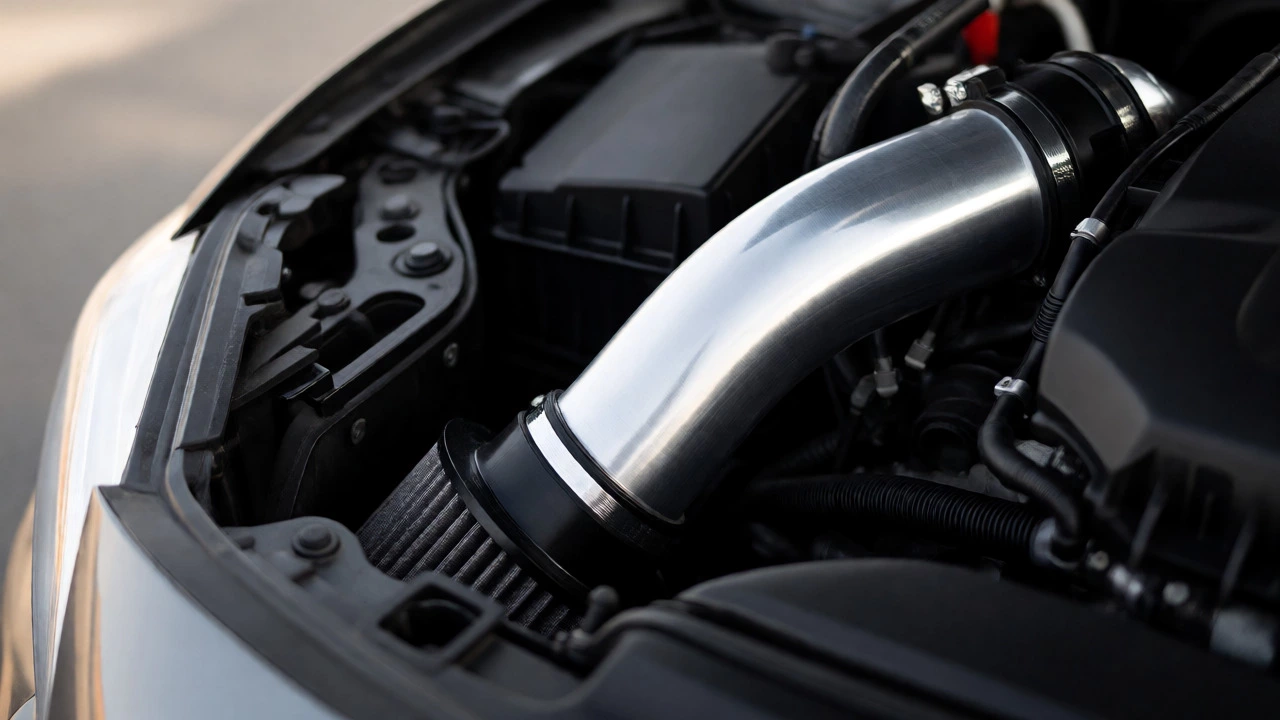
LowYou see the shiny aluminum piping in the shop window, and the sales guy promises your daily driver will suddenly feel like a race car. But does a cold air intake actually deliver on those claims? The honest answer is: it depends. For most stock engines, you are looking at modest gains, not a revolution. If you are expecting 50 horsepower from a simple bolt-on part, you will be disappointed. But if you want better throttle response and a slightly more aggressive sound, there is real value here.
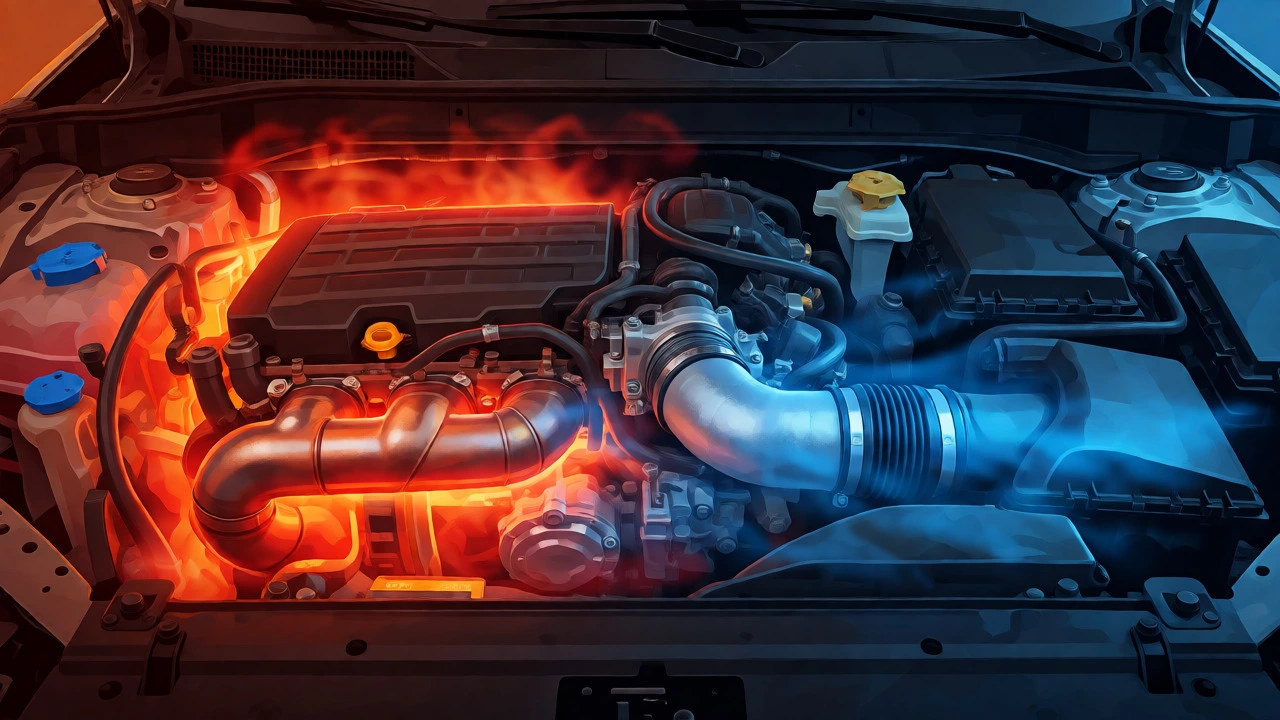
The core principle behind a cold air intake (CAI) is thermodynamics. Engines hate hot air. Hot air is less dense than cold air, meaning it contains fewer oxygen molecules per cubic foot. Since combustion requires oxygen, less oxygen means less power potential. A standard factory airbox often draws warm air from around the engine bay, where temperatures can exceed 100°F (38°C). A quality CAI relocates the intake point to a cooler area, usually near the wheel well or front bumper, and uses insulated tubing to keep that air cool before it hits the engine.
Realistic Horsepower Expectations
Let’s cut through the marketing noise. Dyno tests consistently show that a cold air intake typically adds between 5 to 15 horsepower on naturally aspirated engines. That might sound low, but context matters. On a small 1.6L four-cylinder, 10 horsepower is nearly a 10% increase. On a 5.0L V8, it is negligible. Turbocharged engines behave differently because they force air into the cylinders regardless of ambient density, so gains are often smaller unless you also remap the ECU.
| Engine Type | Typical HP Gain | Torque Gain | Noticeability |
|---|---|---|---|
| Naturally Aspirated Small (1.5-2.0L) | 5-10 HP | 5-10 lb-ft | High |
| Naturally Aspirated Large (3.0-5.0L) | 5-15 HP | 5-15 lb-ft | Low |
| Turbocharged (Stock Tune) | 0-5 HP | 0-5 lb-ft | Minimal |
| Turbocharged (Remapped) | 10-20 HP | 10-20 lb-ft | Moderate |
Why do some brands claim 20+ horsepower? They often compare their high-flow filter against a clogged paper filter in a restrictive factory box. If your current air filter is dirty, swapping to a clean CAI system will show bigger numbers simply because you removed a blockage. However, compared to a fresh OEM setup, the net gain shrinks significantly.
Beyond Horsepower: Throttle Response and Sound
Horsepower isn’t the only metric that makes a car fun to drive. Many enthusiasts install a CAI for the immediate improvement in throttle response. When the engine breathes easier, it reacts faster when you press the accelerator. This sensation of "peppiness" often feels more significant than the actual dyno numbers suggest. It makes city driving and overtaking feel less sluggish.
Then there is the audio factor. A cold air intake changes the induction note of your engine. Instead of the muffled hum of a plastic airbox, you hear a distinct whooshing sound during hard acceleration. For many drivers, this auditory feedback is worth the cost alone. It creates an emotional connection to the mechanical process happening under the hood. Just be aware that cheaper intakes can sometimes introduce annoying drone noises at cruising speeds, so read reviews carefully before buying.

The Hidden Risks: Heat Soak and Water Ingestion
It is not all sunshine and horsepower. Installing a cold air intake introduces two specific risks that factory designs mitigate effectively. First is heat soak. In stop-and-go traffic, the engine bay gets incredibly hot. If your intake tube is close to the exhaust manifold or turbocharger, it can absorb that radiant heat. Suddenly, instead of sucking in 70°F air, you are pulling in 120°F air. This negates the density advantage and can cause the ECU to pull timing, resulting in power loss rather than gain.
The second risk is hydrolocking. Factory airboxes are sealed and positioned high up. Aftermarket intakes often place the filter lower and closer to the road surface. If you drive through deep puddles or heavy rain, water can enter the intake. Unlike air, water cannot be compressed. If a large volume of water enters the cylinder, it can bend connecting rods or crack pistons. This is rare but catastrophic. Some modern CAIs include splash shields or bypass valves to help, but you need to be mindful of weather conditions.
DIY vs. Professional Installation
Most cold air intakes are designed as bolt-on modifications. You remove the old airbox, disconnect the mass airflow sensor (MAF), and clamp the new tubing into place. For a competent DIYer with basic tools, this takes about an hour. However, mistakes happen. Loose clamps can cause vacuum leaks, triggering check engine lights and rough idling. Incorrect routing of hoses can interfere with moving parts like fans or belts.
If you choose to install it yourself, double-check every connection. Ensure the MAF sensor is clean and properly seated; these sensors are sensitive and expensive to replace. If you lack confidence in working around delicate electronics, paying a mechanic $50-$100 for installation is cheap insurance against damaging a $200 component.
When Is a Cold Air Intake Worth It?
So, should you buy one? Here is a quick decision framework:
- Buy it if: You have a naturally aspirated engine, you enjoy the induction sound, you want slightly better throttle response, and you plan to keep the car for years (amortizing the cost).
- Skip it if: You have a highly tuned turbo engine without a remap, you live in a very hot climate with poor ventilation, or you expect massive power jumps.
Remember, a cold air intake is rarely a standalone miracle worker. It works best as part of a broader package. Combining a CAI with a free-flowing exhaust system and a custom tune often yields synergistic results that neither modification achieves alone. The intake provides more air, the exhaust lets it out faster, and the tune optimizes fuel delivery for the new flow characteristics.
Does a cold air intake void my warranty?
Not automatically. Under laws like the Magnuson-Moss Warranty Act in the US, manufacturers must prove that the aftermarket part caused the failure to deny a warranty claim. However, if your engine fails due to hydrolocking from a poorly installed intake, they likely won't cover it. Always document the installation and keep receipts.
Can I wash and reuse the filter?
Yes, most high-quality cold air intakes use oiled cotton gauze filters that are reusable. You need to clean them with a specific kit and re-oil them after washing. Neglecting this maintenance can lead to dirt entering the engine or the filter becoming too clogged to flow air efficiently.
Will a cold air intake improve my fuel economy?
Potentially, but don't count on it. Improved airflow can make the engine run more efficiently, leading to slight MPG gains. However, if the new throttle response encourages you to drive more aggressively, your fuel economy will likely drop. Most users see no significant change either way.
Do I need a tune after installing a cold air intake?
For most naturally aspirated cars, no. The factory computer adapts to the increased airflow within its learning parameters. For turbocharged vehicles, a tune is highly recommended to take full advantage of the extra air and prevent lean conditions under boost.
What is the difference between a short ram and a cold air intake?
A short ram intake replaces the airbox with a shorter tube and filter but keeps the intake point inside the engine bay. It offers better throttle response but suffers from heat soak. A true cold air intake routes the pipe outside the engine bay to draw cooler ambient air, prioritizing density over proximity.