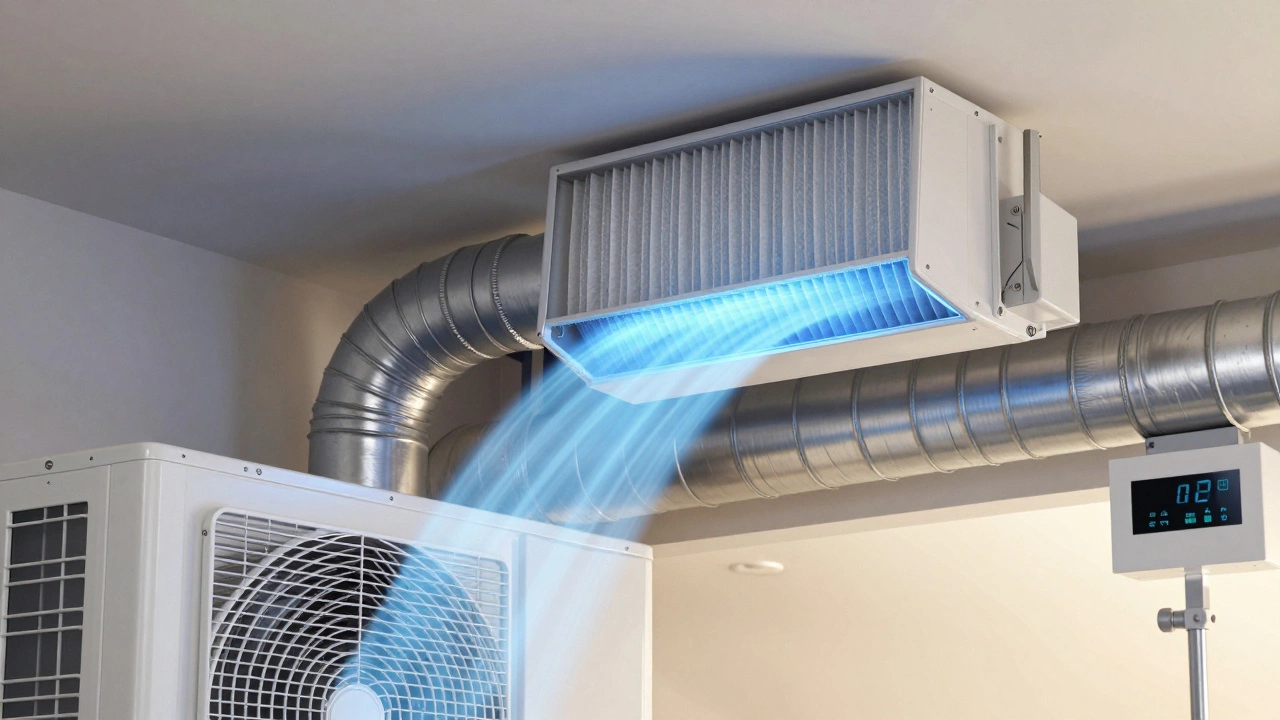
MERV Filter Compatibility Calculator
Determine if your HVAC system can safely handle MERV 13 filters based on your system's age and static pressure rating. Most modern systems (2010+) can use MERV 13, but older systems may experience issues.
If you’ve ever heard someone say, MERV 13 will wreck your AC, you’re not alone. But here’s the truth: most modern home HVAC systems handle MERV 13 filters just fine. The real question isn’t whether it’s too strong-it’s whether your system was built to deal with it.
What Does MERV 13 Even Mean?
MERV stands for Minimum Efficiency Reporting Value. It’s a scale from 1 to 20 that tells you how well a filter catches tiny particles. A MERV 8 filter catches dust and pollen. A MERV 13? It traps bacteria, smoke, and even some virus particles. That’s why hospitals and labs use MERV 13 or higher.
But here’s the catch: higher efficiency means tighter fibers. That makes it harder for air to flow through. And if your blower motor isn’t strong enough, or your ducts are clogged, that resistance can cause problems.
When MERV 13 Can Cause Problems
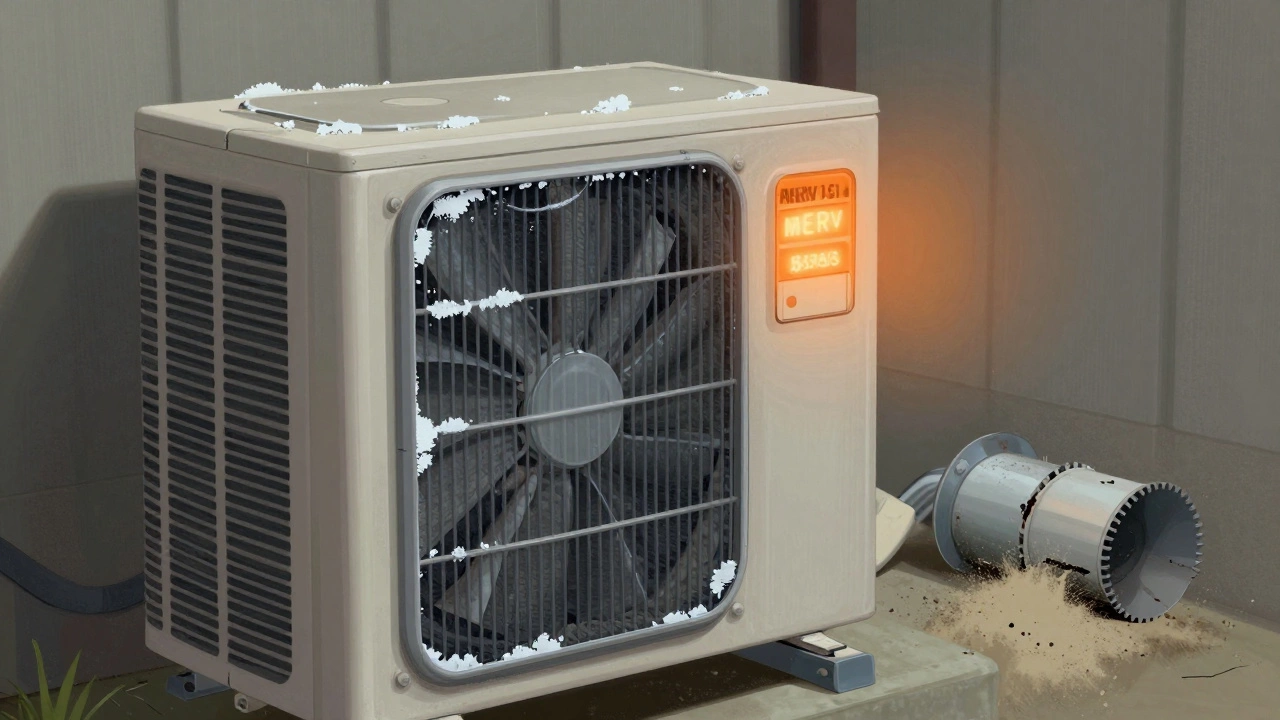
Older AC units-especially those made before 2010-are the main concern. Many of them were designed for MERV 6 to MERV 8 filters. Their motors aren’t built to push air through something as dense as MERV 13. You’ll start noticing:
- Reduced airflow from vents
- Louder than normal operation
- Longer cooling cycles
- Frost forming on the evaporator coil
- Higher energy bills
These aren’t just inconveniences. Over time, your blower motor can overheat. The compressor might cycle too often. In extreme cases, the coil freezes, and water starts leaking inside your home.
One homeowner in Ohio replaced his MERV 8 with a MERV 13 without checking his system. Within three weeks, his AC shut down. A technician found the motor was drawing 30% more current than it was rated for. He’d burned out the windings.
When MERV 13 Is Safe (Even Recommended)
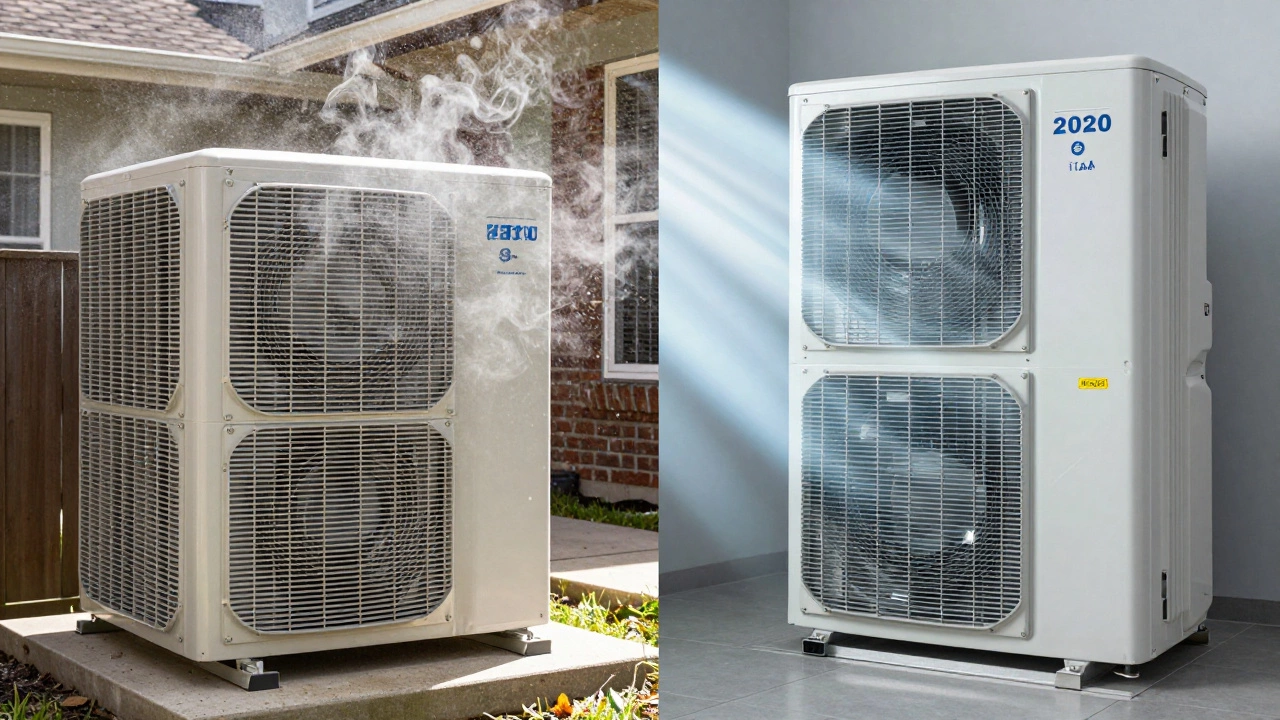
But if your AC is from 2010 or later, chances are it can handle MERV 13 just fine. Most manufacturers started designing systems with higher static pressure in mind. That means they built stronger motors and better ductwork to deal with tighter filters.
Check your owner’s manual. If it says “use MERV 8-13,” you’re good. If it says “do not exceed MERV 8,” then stick with lower. Some units even list a maximum static pressure rating-usually around 0.5 inches of water column (in. w.c.). MERV 13 filters typically add 0.2-0.4 in. w.c. of resistance. If your system has room, it’ll be fine.
Many HVAC pros now recommend MERV 13 for homes with allergies, asthma, or pets. The improvement in indoor air quality is real. Studies from the EPA and ASHRAE show MERV 13 filters reduce airborne particles by up to 85% compared to MERV 8.
How to Tell If Your System Can Handle It
Don’t guess. Test it.
- Turn on your AC and let it run for 15 minutes.
- Feel the airflow at each vent. Is it strong and even?
- Check the filter. If it’s dirty after just 30 days, that’s normal. If it’s clogged in 14 days, you might have too much resistance.
- Listen. If the blower sounds strained, like it’s working harder than before, that’s a red flag.
- Look at your energy bill. A sudden 10-15% spike after switching filters? That’s a clue.
For a more precise check, use a manometer-a tool that measures static pressure. Most HVAC technicians have one. If your system runs at 0.3 in. w.c. or less with a MERV 13, you’re in the safe zone.
What About Pleated Filters? Washable Ones? Electrostatic?
Not all MERV 13 filters are the same. A cheap, thin pleated filter might claim MERV 13 but doesn’t hold up well. A thick, high-quality pleated filter with more surface area will last longer and create less resistance.
Washable filters? Avoid them if you want MERV 13 performance. They rarely meet true MERV 13 standards and lose efficiency after each wash. Electrostatic filters? They can be good, but make sure they’re independently tested and labeled as MERV 13.
Stick with trusted brands like 3M Filtrete, Honeywell, or Nordic Pure. They test their filters in certified labs and publish results.
What to Do If You Already Installed MERV 13
If you switched and things feel off:
- Check your filter monthly. Replace it every 60-90 days, never let it sit longer than 3 months.
- Make sure your ducts are clean. Dust buildup adds resistance too.
- Consider upgrading your blower motor if it’s old. A variable-speed motor can adjust airflow automatically.
- If you’re still unsure, call an HVAC pro. They can test your system’s static pressure and confirm if you’re in the green zone.
Some people think switching back to MERV 8 is the answer. But if you’re dealing with allergies or smoke, that’s giving up air quality. The better move is to fix the system-not downgrade the filter.
Bottom Line
Will a MERV 13 damage your AC? Maybe. But only if your system is old, undersized, or poorly maintained. For most homes built in the last 15 years, MERV 13 is not only safe-it’s a smart upgrade. It cleans your air without costing you comfort or efficiency.
Don’t let fear stop you. Check your manual. Listen to your system. Replace the filter on time. And if you’re still unsure, get a professional to test it. You’ll breathe easier-literally.
Can I use a MERV 13 filter in my window AC unit?
Most window AC units are not designed for high-efficiency filters. They have very small, low-power fans and tight airflow paths. A MERV 13 will likely restrict airflow so much that the unit freezes up or shuts off. Stick with the filter type your unit came with-usually MERV 4 to MERV 6.
Does MERV 13 increase my energy bill?
It can, but only if your system struggles to push air through it. In a well-matched system, the difference is negligible-usually less than 5%. In older systems, you might see a 10-20% spike. Always monitor your bill after switching filters.
How often should I change a MERV 13 filter?
Every 60 to 90 days is ideal. In homes with pets, allergies, or heavy dust, check it every 30 days. A dirty MERV 13 becomes a bigger restriction than a clean one. Don’t wait until it’s black.
Is MERV 13 overkill for a home without pets or allergies?
Not necessarily. Even in clean homes, MERV 13 catches cooking smoke, outdoor pollution, and fine dust that MERV 8 misses. It’s about long-term air quality, not just immediate needs. If your system can handle it, it’s a worthwhile upgrade.
Can I combine MERV 13 with an air purifier?
Yes, and it’s actually a smart combo. Your HVAC filter catches larger particles. An air purifier with a HEPA filter handles the ultrafine stuff. Just make sure your HVAC system isn’t already straining-adding another restriction isn’t helpful.