Spark Plug Lifespan Calculator
Calculate Your Spark Plug Lifespan
Estimate how long your spark plugs will last based on your vehicle type and driving habits.
Enter your details above to see your spark plug lifespan estimate.
Most car owners don’t think about spark plugs until the engine starts misfiring or refuses to start. But knowing spark plug lifespan can save you money, prevent breakdowns, and keep your car running smoothly. So how long do they actually last? The answer isn’t one-size-fits-all-it depends on the type, your driving habits, and even the climate you live in.
Typical Lifespan by Spark Plug Type
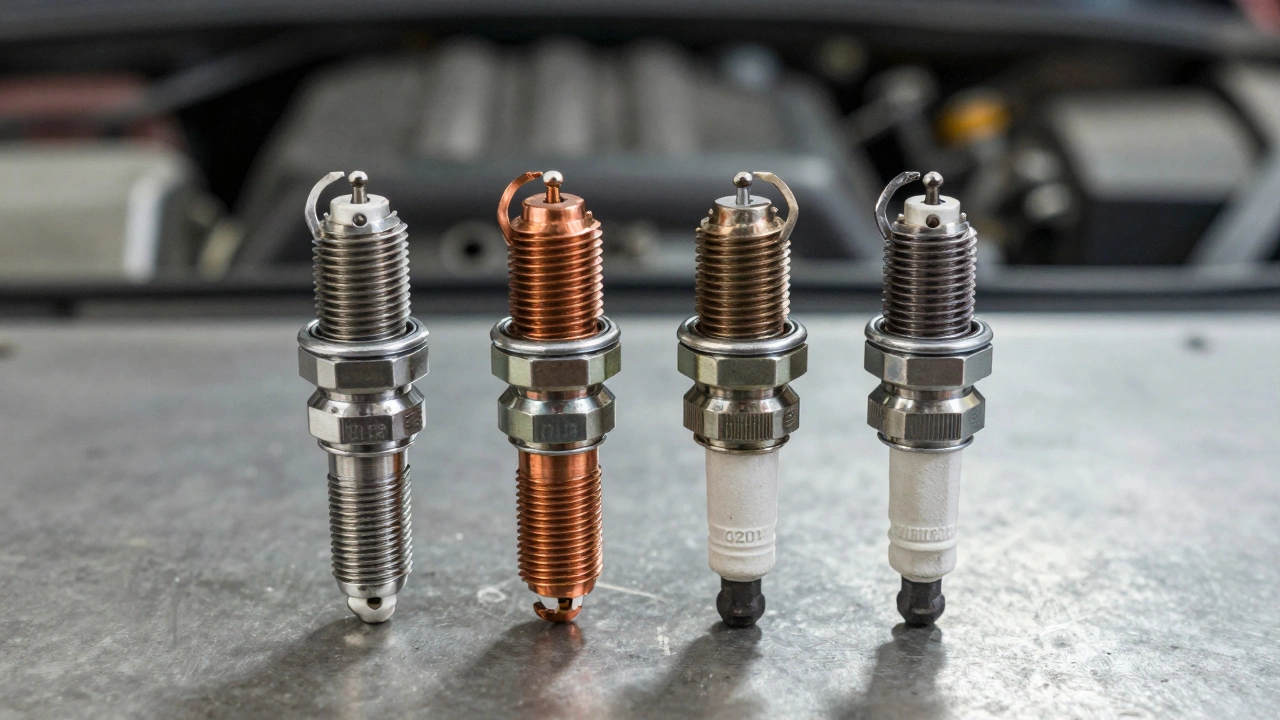
Not all spark plugs are made the same. The material used in the electrode makes a huge difference in how long they last. Here’s what you’ll typically find in modern cars:
- Standard copper spark plugs - These are the cheapest and oldest type. They last about 20,000 to 30,000 miles. If your car came with these, it’s probably an older model or a budget vehicle. They wear out fast because copper conducts heat well but erodes quickly under high temperatures.
- Platinum spark plugs - These last between 40,000 and 60,000 miles. The platinum tip resists wear better than copper, making them a common upgrade for cars from the early 2000s to mid-2010s. They’re reliable but not the longest-lasting option.
- Double platinum spark plugs - Found in some direct-fire ignition systems. They last around 60,000 to 100,000 miles. Both the center and ground electrodes use platinum, which helps maintain consistent spark timing over time.
- Iridium spark plugs - The current gold standard. These last 80,000 to 120,000 miles. Iridium is harder and more heat-resistant than platinum, so the electrode stays sharp longer. Most new cars (2015 and later) come with these installed from the factory.
If you’re unsure what type you have, check your owner’s manual. It’ll list the recommended replacement interval. If you don’t have it, a quick online search using your car’s year, make, and model will tell you.
What Actually Wears Out a Spark Plug?
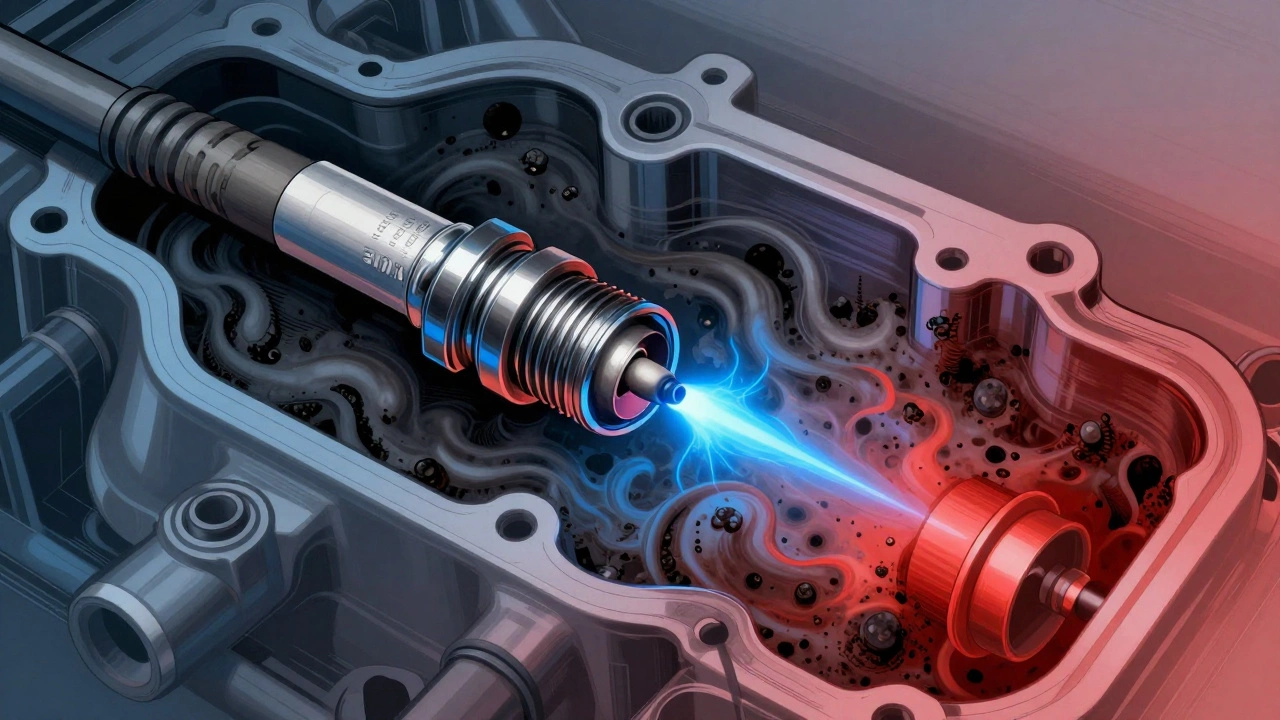
It’s not just time or mileage. Spark plugs degrade because of how they work. Every time the engine fires, a tiny electrical arc jumps between the center electrode and the ground electrode. That arc is hot-over 5,000°F-and over thousands of cycles, it slowly eats away at the metal.
Here’s what speeds up wear:
- Short trips - If you mostly drive under 5 miles at a time, the engine never fully warms up. Condensation builds up inside the cylinder, leading to carbon buildup on the electrodes. This is common for commuters or city drivers.
- Rich fuel mixtures - A clogged air filter or leaking fuel injector can flood the engine with extra fuel. That unburned fuel turns to soot and coats the plug, making it harder to spark.
- Oil leaks - If your valve cover gasket or piston rings are worn, oil can seep into the combustion chamber. That leaves a greasy film on the plug, causing misfires.
- High RPM driving - Constant hard acceleration or towing heavy loads puts extra stress on the plugs. If you drive a performance car or haul trailers often, your plugs will wear faster.
One real example: A friend in Manchester with a 2018 Honda Civic drove 15,000 miles a year-mostly short trips to work and school. His iridium plugs failed at 72,000 miles instead of the expected 100,000. The constant cold starts and stop-and-go traffic built up carbon deposits. He didn’t notice until the engine started shaking at idle.
Signs Your Spark Plugs Are Done
You don’t need a diagnostic tool to tell when they’re failing. Here are the top five signs:
- Hard starting - The engine turns over but takes longer than usual to fire up. Especially noticeable in cold weather.
- Engine misfires - You feel a jerking or hesitation when accelerating. Sometimes you’ll hear a popping sound from the exhaust.
- Reduced fuel economy - If your MPG drops suddenly and you haven’t changed driving habits, worn plugs could be the culprit. A bad plug can cut efficiency by 10-15%.
- Engine roughness - Idle feels shaky or uneven. The car vibrates more than normal, especially at a stoplight.
- Check Engine light - Codes like P0300 (random misfire) or P0301-P0308 (cylinder-specific misfires) often point to spark plug issues.
One thing to remember: These symptoms can also come from bad ignition coils or fuel injectors. But if your car has over 60,000 miles and you’ve never replaced the plugs, they’re the most likely cause.
When to Replace Them - Even If They Look Fine
Some people wait until the engine starts acting up. That’s risky. By the time you notice a problem, the damage is already done. A misfiring plug can overheat the catalytic converter, which costs hundreds-sometimes over £1,000-to replace.
Most manufacturers recommend replacing spark plugs at the interval listed in the manual. But here’s a smarter rule of thumb:
- If you drive mostly short trips or in stop-and-go traffic → Replace at 60,000 miles, even if the manual says 100,000.
- If you drive mostly highway miles in dry weather → You can wait until 80,000-100,000 miles.
- If you notice any of the symptoms above → Replace them immediately. Don’t wait for a breakdown.
Pro tip: If you’re due for an oil change and your spark plugs are close to their limit, it’s a good time to swap them. Mechanics can do both at once, saving time and labor costs.
Cost and DIY Replacement
Replacing spark plugs isn’t hard for most cars. You’ll need:
- A spark plug socket (usually 5/8" or 13/16")
- A torque wrench (critical-over-tightening cracks the plug)
- New spark plugs (match the exact type and gap)
- Dielectric grease (for the boot)
Cost-wise, a set of four iridium plugs runs £30-£60. Labor at a garage is £50-£120, depending on engine access. Some cars (like VWs or BMWs with tight engines) cost more because the intake manifold has to come off. But for a standard 4-cylinder, it’s a 1-hour job.
One thing to avoid: Never reuse old spark plugs. Even if they look okay, the electrode gap has widened, and the ceramic insulator may have micro-cracks. That’s why you should always replace them in full sets.

What Happens If You Ignore Worn Spark Plugs?
Ignoring worn plugs doesn’t just mean poor performance. It can lead to bigger, costlier problems:
- Catalytic converter damage - Unburned fuel from misfires overheats the converter. Replacement costs £800-£1,500.
- Engine damage - In rare cases, a misfire can cause piston or valve damage if left unchecked for months.
- Increased emissions - Your car will fail its MOT if the engine is misfiring too much.
One mechanic I know in Salford says he sees at least two cars a week with catalytic converter failures caused by neglected spark plugs. The owner thought they were "just fine" until the check engine light came on-and by then, the damage was permanent.
Final Rule: Keep Track
Write down when you last changed your spark plugs. Put a note in your phone or stick a reminder on your dashboard. If you bought the car used and don’t know the history, assume they’re worn out and replace them at 60,000 miles. It’s cheap insurance.
Spark plugs are small, but they’re the heartbeat of your engine. Get them right, and your car will run smoother, cleaner, and longer. Skip the maintenance, and you risk more than just a rough idle-you risk expensive repairs.
How long do spark plugs last in years, not miles?
Spark plugs typically last 4 to 10 years, depending on mileage and driving conditions. If you drive 10,000 miles a year, an iridium plug could last up to 10 years. But if you drive mostly short trips or in stop-and-go traffic, even a high-quality plug might need replacing in 5 years. Time matters as much as mileage-old plugs can degrade from moisture and corrosion, even if the car isn’t driven often.
Can I extend spark plug life with fuel additives?
No. Fuel additives won’t extend spark plug life. Some claim to clean carbon deposits, but they can’t reverse electrode wear. In fact, some additives leave behind residues that coat the electrodes and make misfires worse. The best way to keep plugs clean is to use quality fuel and replace the air filter regularly. If you’re seeing heavy carbon buildup, the issue is likely a rich fuel mixture or oil leak-not dirty fuel.
Do I need to gap spark plugs before installing them?
Most modern spark plugs come pre-gapped from the factory, and you shouldn’t adjust them unless the manual says to. Iridium and platinum plugs have very thin electrodes that can break if you try to gap them. Always check the packaging or manual. If the gap is wrong, replace the plug. A gap that’s too wide won’t spark reliably; too narrow and it won’t burn fuel efficiently.
Why do some cars need spark plug replacement at 30,000 miles?
That’s usually because they use standard copper plugs, which wear out faster. Some older or budget models still use them because they’re cheaper. High-performance engines or those with turbochargers may also have shorter intervals because they run hotter and put more stress on the plugs. Always follow the manufacturer’s schedule-not a general rule.
Is it okay to mix different spark plug brands?
It’s not recommended. Spark plugs are designed to work as a matched set. Mixing brands can lead to inconsistent firing, uneven wear, and poor performance. Even if two plugs look similar, their heat range, thread size, or electrode design might differ slightly. Stick to the same brand and model as the original equipment, or choose an exact replacement specified by your car’s manual.