Suspension System Explorer
Click on any component below to learn its function, how it wears out, and what symptoms indicate failure.
Quick Symptom Checker
Describe the noise or feeling you are experiencing:
You hit a pothole on your commute through Manchester, and that familiar clunk echoes from under the wheel arch. Most drivers ignore it until the car starts wandering on the motorway or the ride feels like you’re driving over gravel. But what exactly makes up that complex network of metal and rubber keeping your tyres glued to the road? It’s not just one part; it’s a symphony of components working together.
If you’ve ever wondered why replacing just one "shock" doesn’t always fix a bad ride, or what those heavy metal links are doing under your chassis, this breakdown clears the fog. We’ll walk through every critical piece of the puzzle, explaining what they do, how they wear out, and why ignoring them costs more than just comfort.
The Core: Springs and Shock Absorbers
At the heart of any vehicle's suspension lie two distinct but inseparable partners: the spring and the damper (commonly called the shock absorber). They have opposite jobs, yet neither works without the other.
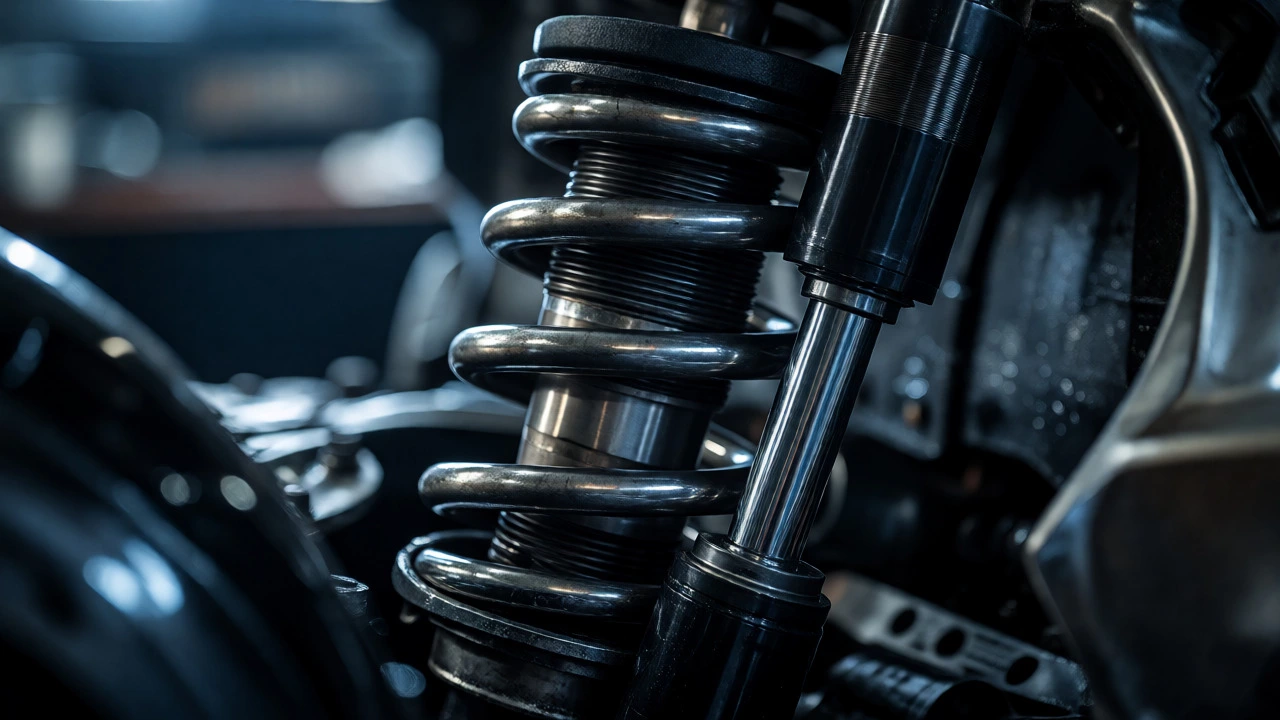
Coil Springs are the load-bearing heroes. They support the weight of the car and absorb the initial impact of bumps. Think of them as energy storage devices. When you hit a bump, the spring compresses, storing kinetic energy. Without a damper, that stored energy would release all at once, causing the car to bounce uncontrollably like a toy car on a trampoline.
This is where the Shock Absorber, or damper, steps in. Its job isn't to support weight but to dissipate energy. Inside a hydraulic cylinder, a piston forces oil through tiny valves. This friction converts the bouncing motion into heat, which then escapes into the air. If your shocks are worn, the springs still hold the car up, but you lose control over the oscillation. You might notice excessive body roll in corners or nose-diving when braking hard.
Guiding the Wheel: Control Arms and Bushings
Springs and shocks handle vertical movement, but what stops the wheels from swinging forward, backward, or sideways? That’s the job of the linkage system, primarily consisting of control arms and bushings.
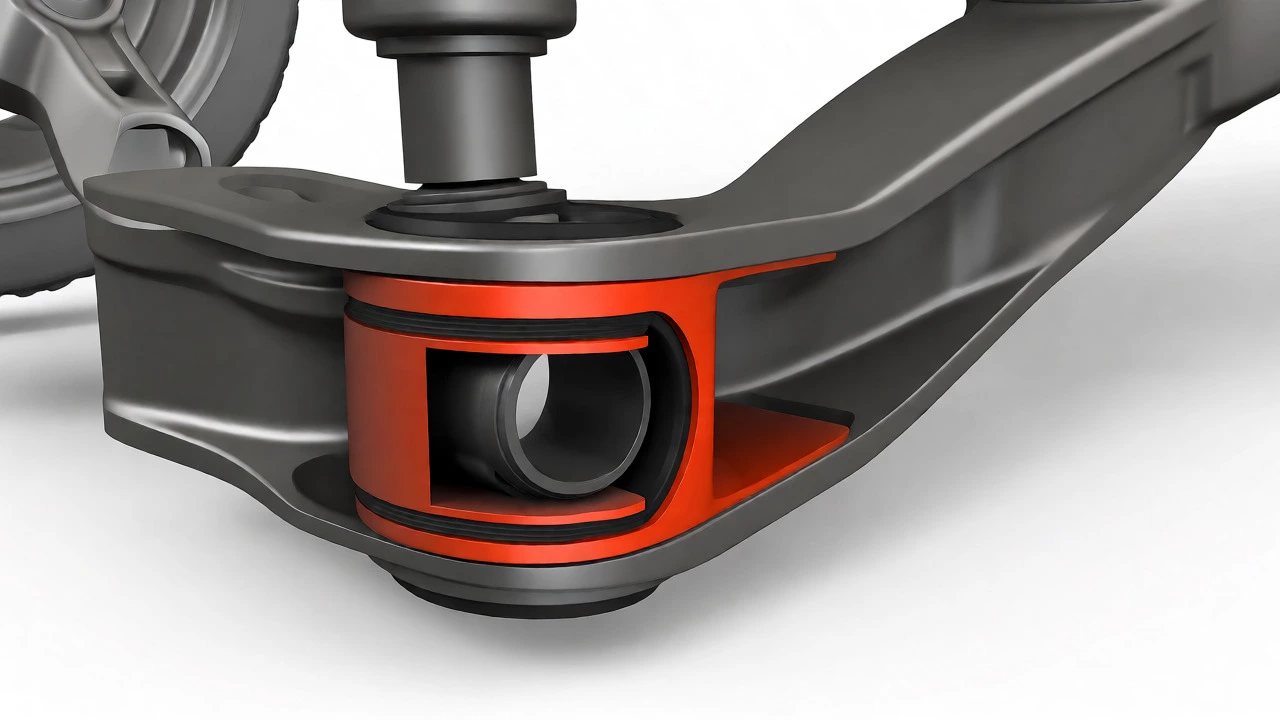
A Control Arm is essentially a lever connecting the chassis to the steering knuckle. Depending on your car’s design-MacPherson strut or double wishbone-you might have upper and lower arms, or just a single lower arm. These arms dictate the wheel's path as it moves up and down. Precision here is vital for handling and tire wear.
But metal-on-metal contact would be noisy and harsh. Enter the Bushing. These are cylindrical sleeves made of rubber or polyurethane inserted between the control arm and the frame. They act as flexible joints, allowing slight movement while isolating vibrations from entering the cabin. Over time, rubber dries out and cracks. Once a bushing splits, the control arm has play, leading to vague steering and uneven tyre wear. Replacing bushings alone can sometimes restore factory-like precision without changing the entire arm.
Fighting Roll: Sway Bars and End Links
Ever taken a roundabout too fast and felt the car lean heavily to one side? That’s body roll. To combat this, engineers use anti-roll bars, also known as sway bars.
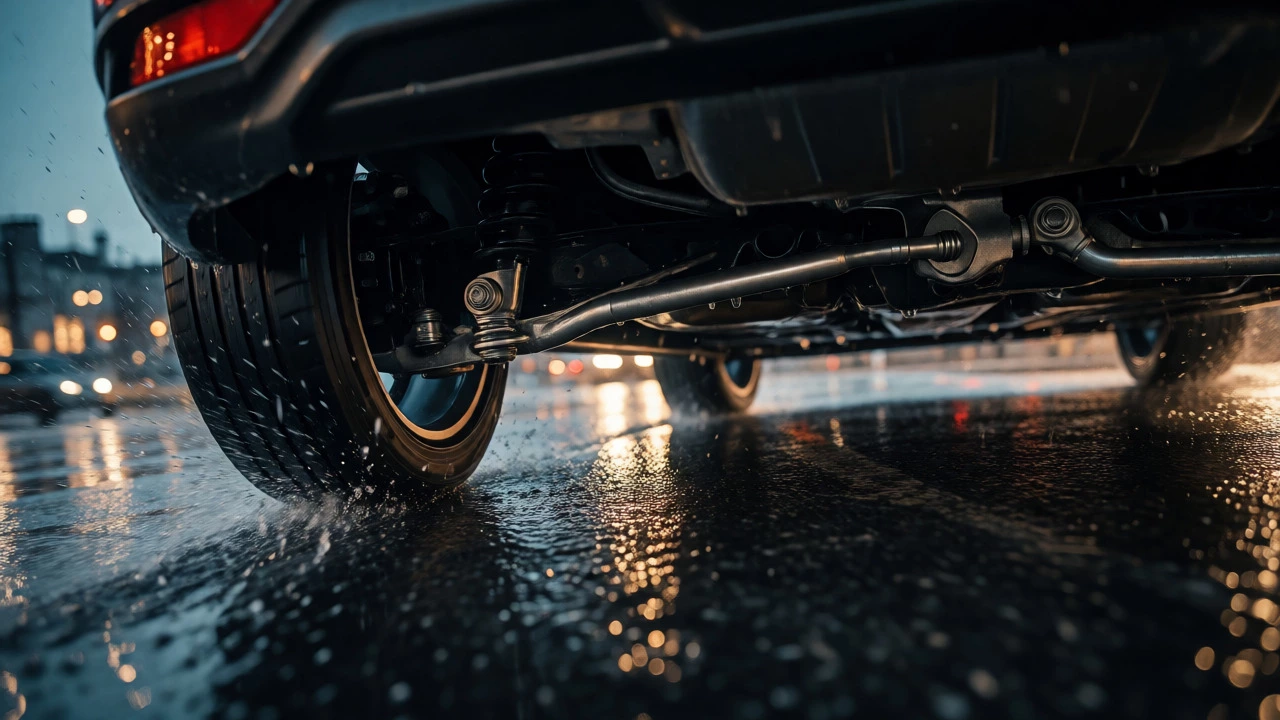
A Sway Bar is a torsion bar running across the front or rear axle. When the car leans, the bar twists, transferring force from the compressed side to the extended side, effectively pushing the car back level. Stiffer sway bars reduce roll but can make the ride harsher over small bumps if not balanced correctly with the springs.
The sway bar connects to the suspension via End Links (or drop links). These are short rods with ball joints on both ends. Because they move constantly during cornering and rough roads, end links are high-wear items. A broken end link often results in a rattling noise over bumps, which many people mistake for failing struts. Always check these cheap parts before condemning expensive suspension components.
Connecting Joints: Ball Joints and Tie Rods
Your wheels need to pivot for steering and tilt for camber adjustment. This requires robust yet movable connections. The primary culprits here are ball joints and tie rod ends.
A Ball Joint functions like a human hip joint. It allows rotation in multiple directions while supporting significant weight. Located typically at the bottom of the control arm, it connects the arm to the steering knuckle. When ball joints wear out, you might hear clicking noises when turning the steering wheel at low speeds. More dangerously, severe wear can lead to loss of control if the joint separates completely.
While ball joints handle vertical loads, Tie Rod Ends handle horizontal steering inputs. They connect the steering rack to the wheels. Worn tie rods cause loose steering feel and feathered tire wear on the inner edges. Unlike ball joints, tie rod issues usually manifest as steering wander rather than clunking noises.
Structural Integrity: Subframes and Mounts
All these moving parts attach to something solid. In modern cars, the engine and suspension often mount to a separate structural component called the subframe.
The Subframe is a rigid metal framework bolted to the main unibody chassis. It houses the lower control arms, steering rack, and sometimes the engine mounts. By decoupling the suspension from the main body, manufacturers can tune NVH (Noise, Vibration, and Harshness) levels. However, the connection points matter. Subframe Bushings isolate the subframe from the chassis. If these degrade, you may experience shuddering during acceleration or braking, mimicking drivetrain issues.
Struts vs. Shocks: What’s the Difference?
Confusion often arises between struts and shocks because they look similar and serve overlapping purposes. Here is the practical distinction:
| Feature | Shock Absorber | Strut Assembly |
|---|---|---|
| Structural Role | Non-structural; only dampens motion | Structural; supports vehicle weight and holds wheel alignment |
| Components | Damper unit only | Damper + Spring Seat + Upper Mount + Coil Spring |
| Replacement Cost | Generally lower per unit | Higher due to complexity and labor |
| Alignment Impact | Minimal change to geometry if replaced carefully | Requires full wheel alignment after replacement |
If your front suspension uses MacPherson struts, replacing the shock element means replacing the entire strut assembly or disassembling it. This is why quotes for front suspension work vary so wildly depending on whether the shop recommends individual shocks or complete strut units.
When to Replace: Signs of Wear
How do you know which part is failing? While professional diagnostics are best, there are tell-tale signs for each component.
- Springs: Look for rust flakes near the coil bottoms or visible gaps in the coil spacing indicating sag. Broken springs often snap near the bottom turn.
- Shocks/Struts: Check for oily residue on the shaft (leaking fluid). Perform the bounce test: push down firmly on each corner and release. The car should rebound once and settle. Multiple bounces mean worn dampers.
- Bushings: Inspect visually for cracking or separation from the metal sleeve. Listen for groaning sounds during tight turns.
- Ball Joints: Lift the wheel off the ground and try to rock it vertically. Any play suggests a worn joint.
- End Links: Shake the sway bar by hand while the car is parked. Clunking indicates loose end links.
Conclusion: Maintenance Saves Money
Suspension systems are intricate networks where failure in one area stresses others. Driving on worn bushings accelerates wear on ball joints and tires. Ignoring leaking shocks puts extra strain on springs. Understanding what is included in your suspension empowers you to ask better questions when visiting a mechanic. Don’t let a rattling noise become a safety hazard. Regular inspections keep your car planted, predictable, and safe on UK roads.
Can I drive with a broken suspension part?
It depends on the part. Driving with a worn bushing or slightly leaking shock is uncomfortable but rarely immediately dangerous. However, a failed ball joint, broken coil spring, or snapped control arm can lead to loss of wheel control. If you hear loud banging or see the wheel leaning oddly, stop driving and get it towed.
Do I need an alignment after replacing suspension parts?
Yes, in most cases. Replacing struts, control arms, or tie rods alters the geometry of the suspension. Even replacing just one side can cause the car to pull to one side. An alignment ensures your tires wear evenly and the car tracks straight.
Why are my new shocks making noise?
New shocks often squeak initially as the seals break in. However, persistent knocking usually means loose mounting bolts or worn top mounts. Ensure the installer torqued the nuts to spec while the car was on the ground, not hanging in the air, to prevent binding.
How long do suspension parts last?
Typically, shocks and struts last 50,000 to 100,000 miles depending on road conditions. Bushings and ball joints often last longer, around 80,000 to 150,000 miles. UK roads with frequent potholes and winter salt may shorten these lifespans significantly.
Are polyurethane bushings better than rubber?
Polyurethane is more durable and resists degradation from oil and weather better than rubber. However, it is stiffer, which transmits more vibration into the cabin. For daily driving comfort, OEM-spec rubber is often preferred unless you are tracking the car.