AC Filter Impact Estimator
Enter your details to see how a dirty filter affects your wallet and health.
Replace every 30 days.
Health & Mechanical Risks
- ⚠️ Weak airflow detected.
- ❄️ Risk of coil freezing is low/moderate.
- 🫁 Indoor air quality may degrade.
You flip the switch on your AC unit in July, expecting a blast of cool relief. Instead, you get a weak wheeze and a faint smell of dust. Most people ignore this until the system completely quits during a heatwave. But that ignored air conditioner filter is doing more than just trapping lint; it is the gatekeeper of your home's comfort and your wallet's health. If you skip changing it, you aren't just saving ten minutes of work. You are setting off a chain reaction of mechanical stress, higher energy costs, and potential health issues that hit harder than a summer storm.
The Immediate Drop in Efficiency
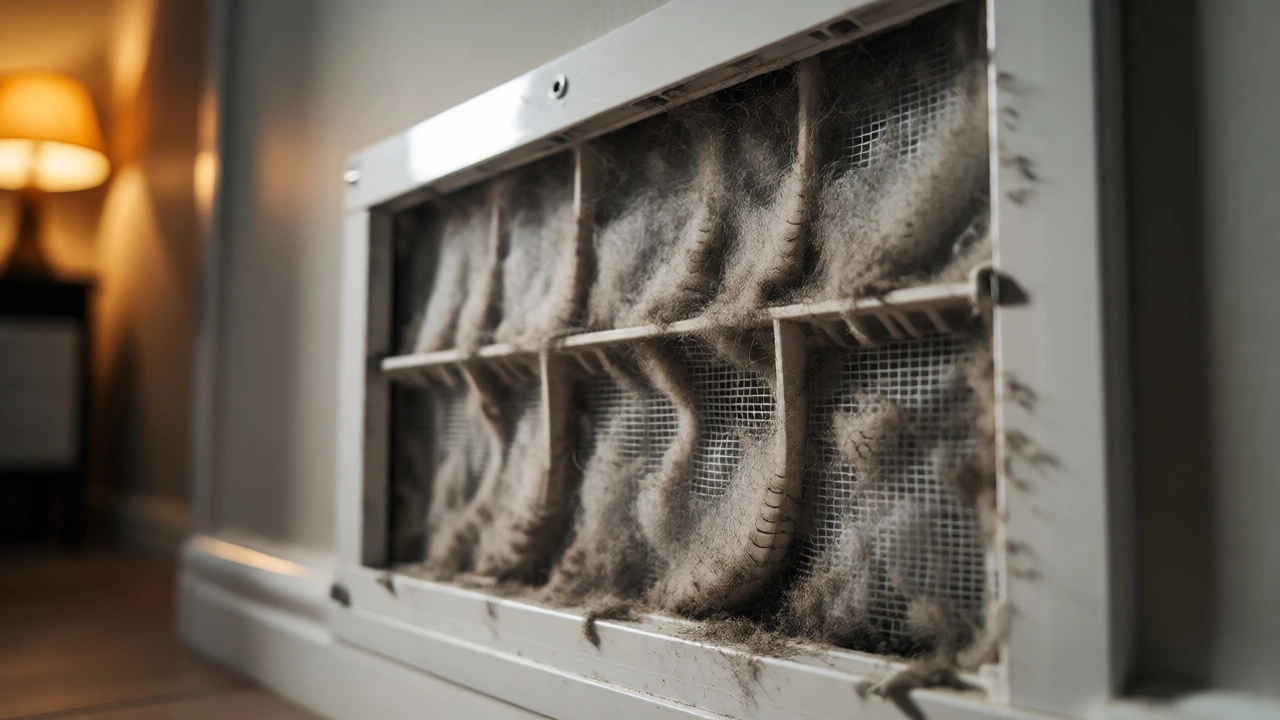
Think of your HVAC system like your lungs. It needs to breathe freely to function. The filter sits between the return ducts and the evaporator coil, catching dust, pollen, and pet dander before they reach the delicate machinery inside. When that mesh gets clogged with debris, airflow restricts significantly. This isn't just a minor inconvenience; it forces the blower motor to work twice as hard to pull the same amount of air through the system.
In my experience fixing units around Manchester, I see this constantly. Homeowners think their AC is "broken" because it feels sluggish. In reality, it is suffocating. A restricted filter can reduce airflow by up to 15% within just a few weeks of heavy use. That means your living room never quite hits the temperature you set on the thermostat. You keep turning the dial lower, but the cold air just doesn't circulate properly. The result? You feel hotter while spending more money.
Skyrocketing Energy Bills
Here is the part that hurts: your electricity bill. When airflow drops, the system loses efficiency. To compensate for the lack of cooling, the compressor runs longer cycles. It tries harder to remove humidity and heat from the air, but it is fighting against a wall of dirt.
According to the U.S. Department of Energy, a clean air filter can lower your central air conditioning energy consumption by 5% to 15%. Flip that around. A dirty filter increases that consumption by the same margin. For a typical household running an AC heavily during summer, this could mean an extra £20 to £50 on monthly bills. Over a season, that adds up to the cost of a new filter multiplied by twenty. Why pay the utility company when you could spend pennies on maintenance?
Ice Buildup on the Evaporator Coil
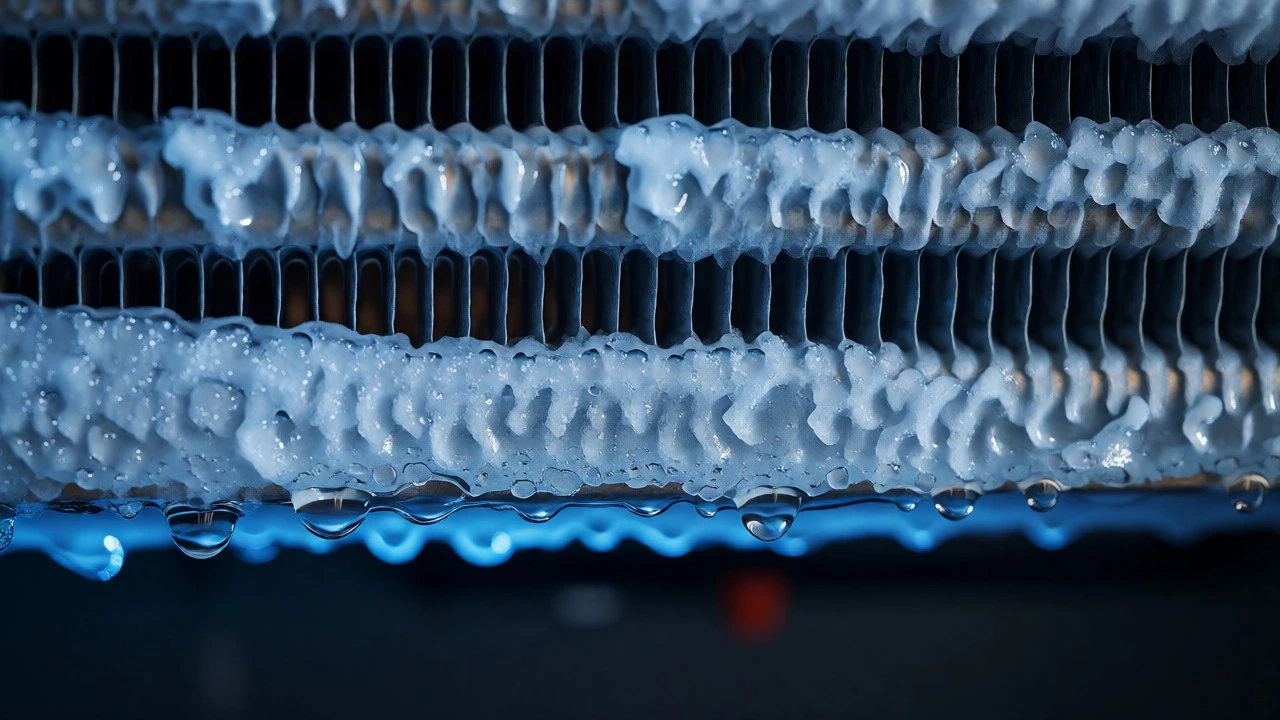
This is where things get technical, but stay with me. Your AC works by passing warm indoor air over a cold surface called the evaporator coil. Heat transfers from the air to the coil, and the refrigerant inside carries it outside. But if the filter is blocked, not enough warm air passes over the coil.
Without enough warm air to absorb the cold, the coil temperature drops below freezing. Moisture in the air freezes on the coil instead of draining away. Soon, you have a block of ice where there should be metal fins. This ice acts as an insulator, stopping the cooling process entirely. Worse, when the system finally shuts off and the ice melts, that water has nowhere to go. It can overflow the drain pan, leading to water damage in your ceiling or walls. Fixing a frozen coil often requires a professional technician, costing hundreds of pounds, all because a £10 filter wasn't swapped out.
Wear and Tear on Critical Components
Your HVAC system has moving parts that rely on smooth operation. The blower fan pushes air. The compressor pumps refrigerant. Both suffer when the filter is neglected.
- Blower Motor Strain: The fan motor draws more amperage to overcome resistance. This overheats the motor windings, shortening its lifespan. A standard blower motor might last 10-15 years under normal conditions. With constant strain from a dirty filter, it could fail in half that time.
- Compressor Failure: The compressor is the heart of your AC. It is also the most expensive part to replace, often costing more than half the price of a new unit. Low airflow causes liquid refrigerant to flood back into the compressor (a condition called "slugging"), which can destroy the internal valves instantly.
I once visited a client whose compressor failed after three summers of ignoring filter changes. They thought they were saving money by skipping maintenance. Instead, they paid for a full system replacement because the repair cost nearly matched the price of a new unit.
Deteriorating Indoor Air Quality
Let's talk about what you are breathing. The primary job of the filter is to trap pollutants. Once it reaches capacity, it stops filtering effectively. Some particles bounce off the clogged mesh and recirculate. Others force their way through tiny gaps or bypass the filter entirely if the seal breaks due to pressure buildup.
| Pollutant Type | Source | Health Impact |
|---|---|---|
| Pollen & Spores | Outdoor air ingress | Allergic rhinitis, asthma triggers |
| Dust Mites | Bedding, carpets | Skin irritation, respiratory congestion |
| Pet Dander | Cats, dogs | Chronic sinusitis, eye irritation |
| Mold Spores | Moisture on coils | Respiratory infections, fatigue |
If you suffer from allergies or asthma, a dirty filter makes symptoms worse at night. You wake up with a stuffy nose or dry throat. For households with pets, the concentration of dander becomes noticeable-you can literally see dust settling on surfaces hours after cleaning them. This isn't just annoying; it degrades your overall well-being in your own sanctuary.
When Should You Actually Change It?
There is no single rule for everyone, but here are the benchmarks I use:
- Standard Fiberglass Filters: Replace every 30 days. These are cheap and disposable. Do not try to wash them.
- Pleated Media Filters: Last 90 days. Check them monthly. If they look gray and fuzzy, swap them early.
- High-Efficiency (HEPA) or Electrostatic: Can last 6 months to a year. Follow the manufacturer’s label, but inspect quarterly.
Adjust these timelines based on your environment. Do you live near a construction site? Change filters more often. Have two shedding Golden Retrievers? Cut the interval in half. Running the AC continuously during a heatwave? Inspect weekly. Visual inspection beats any calendar reminder.
Troubleshooting Common Symptoms
Not sure if your filter is the culprit? Look for these signs:
- Weak Airflow: Hold your hand near a supply vent. If you can barely feel the breeze, check the filter first.
- Higher Utility Bills: Compare this month’s usage to the same month last year. A spike without a change in habit points to inefficiency.
- Visible Dust: Grey fuzz accumulating on the filter frame or around vents indicates saturation.
- System Freezing: Ice on the copper lines leading to the outdoor unit is a major red flag for low airflow.
Changing the filter is a five-minute job. Locate the return air grille, slide out the old filter, note the arrow direction for airflow, and insert the new one. Make sure the size matches exactly-gaps allow unfiltered air to bypass the media.
Can I wash my air conditioner filter instead of replacing it?
Only if it is specifically labeled as reusable or electrostatic. Standard fiberglass and pleated paper filters lose their fiber structure when wet and cannot be restored. Washing them usually damages the media, allowing dust to pass through easily. Always check the packaging instructions before attempting to clean a filter.
How does a dirty filter affect my heating system in winter?
The impact is similar but potentially more dangerous. Restricted airflow in winter can cause the heat exchanger to overheat because hot air isn't being carried away fast enough. Modern furnaces have safety limit switches that will shut the system down repeatedly (short-cycling) to prevent fire risks. This wears out components faster and leaves you cold in January.
Does a higher MERV rating always mean better filtration?
Not necessarily. MERV (Minimum Efficiency Reporting Value) measures how small a particle a filter can catch. Higher numbers (like MERV 13+) catch finer particles but create more resistance. If your HVAC blower motor isn't powerful enough to push air through a high-MERV filter, you'll reduce airflow and strain the system. Stick to the MERV rating recommended by your unit's manufacturer, typically between 8 and 11 for residential systems.
Why does my house smell musty even after changing the filter?
A musty smell often indicates mold growth on the evaporator coil or in the drain pan, not just the filter. While a dirty filter contributes to moisture retention, the source of the odor is likely biological growth deeper in the system. Changing the filter helps prevent future buildup, but existing mold may require professional coil cleaning and disinfection.
Is it bad to run the AC without a filter?
Yes, it is very bad. Without a filter, dust and debris enter the blower fan and coat the evaporator coil. This acts like insulation, reducing heat transfer efficiency. It also gums up the fan blades and bearings. Running bare for even a few days can lead to permanent damage that requires expensive professional cleaning or component replacement.