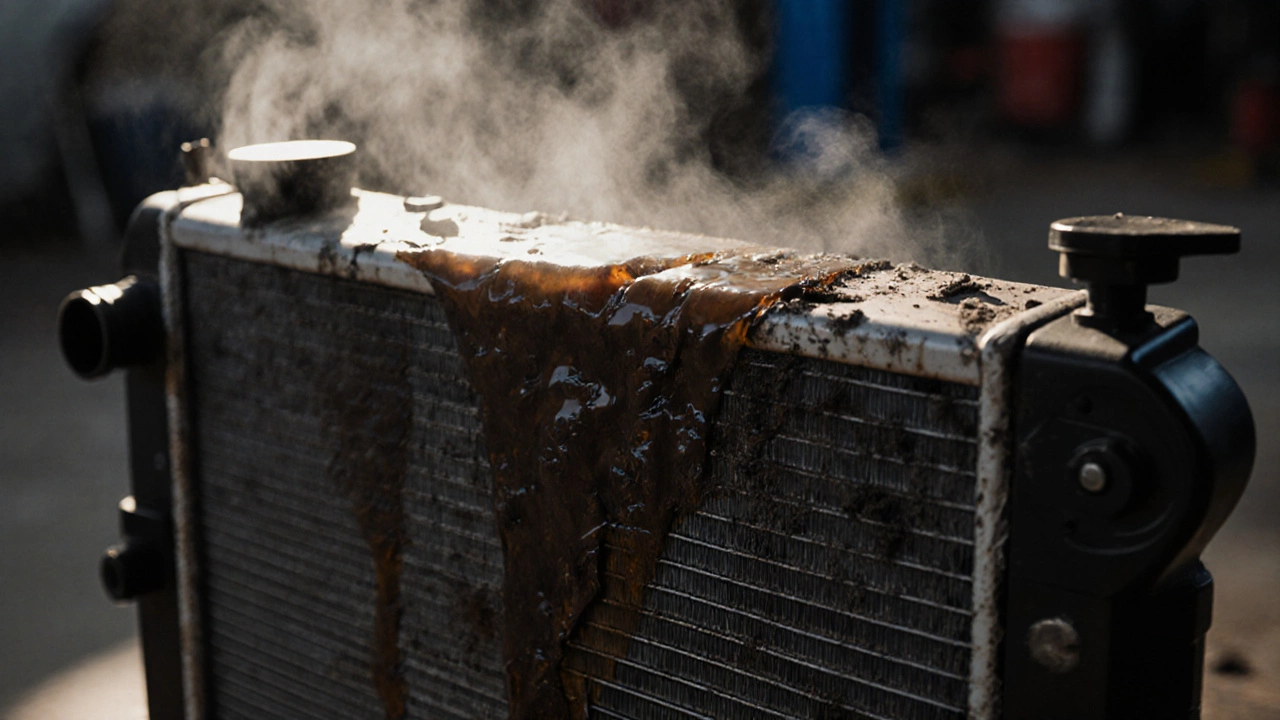
Radiator Maintenance: Keep Your Car Cool and Avoid Overheating
When your car’s radiator, a key part of the vehicle’s cooling system that transfers heat away from the engine. Also known as cooling radiator, it prevents your engine from overheating by circulating coolant through the engine block and releasing heat into the air. Without proper radiator maintenance, even a small leak or dirty coolant can turn into a costly engine failure. Most drivers don’t think about their radiator until the temperature gauge spikes — but by then, it’s often too late.
The coolant, a mixture of water and antifreeze that flows through the engine and radiator to regulate temperature is just as important as the radiator itself. Over time, coolant breaks down, picks up rust and gunk, and loses its ability to protect your engine. A simple radiator flush, the process of draining old coolant and replacing it with fresh fluid to remove debris and restore efficiency every 2-3 years can extend your engine’s life. Don’t just top up coolant when it’s low — check the level regularly, look for leaks under the car, and make sure the hoses aren’t cracked or swollen. A bad hose or a clogged radiator can cause the same symptoms as a failing water pump: overheating, steam from the hood, or a sweet smell from under the bonnet.
Your car cooling system, the full network of parts including the radiator, thermostat, water pump, hoses, and fan that work together to manage engine heat doesn’t just protect the engine — it also affects your air conditioning. If the radiator is struggling to keep the engine cool, the AC compressor may shut off to prevent further heat buildup. That’s why a radiator issue can leave you sweating in traffic even when the AC is on full blast. The same goes for your heater — if the coolant isn’t flowing properly, your cabin won’t warm up in winter.
UK drivers face unique challenges — stop-start traffic in cities, damp roads, and winter temperatures that drop below freezing. These conditions put extra stress on the cooling system. A radiator that works fine in summer might fail in January if it’s clogged with rust or old coolant. That’s why checking your radiator isn’t a seasonal task — it’s a year-round habit. Look for discolored coolant, listen for gurgling sounds near the engine, and pay attention to warning lights. If your car’s temperature rises faster than usual after a short drive, don’t ignore it. A $30 coolant flush now could save you a $2,000 engine repair later.
Below, you’ll find real-world guides from UK drivers who’ve dealt with radiator problems, coolant leaks, and overheating emergencies. Whether you’re checking your coolant level for the first time or troubleshooting why your AC isn’t cooling, these posts give you the facts you need — no jargon, no fluff, just what works.