Suspension Symptom Diagnostic Tool
Select the symptom you are experiencing with your vehicle to identify the likely culprit and recommended next steps.
Likely Culprit:
Why it happens:
Recommended Physical Test
You’re driving down a typical Manchester backstreet, hitting a pothole that shouldn’t be there, and your car groans. Maybe it’s a clunk, maybe a squeak, or perhaps the steering wheel just feels like it’s vibrating in your hands. You know something’s wrong with the suspension, but pinpointing exactly which component has given up the ghost can feel like guessing lottery numbers. It’s not always obvious. A worn ball joint can sound like a broken sway bar link, and tired shock absorbers can mimic bad tires. But here’s the good news: you don’t need a diagnostic computer to get close to the truth. By listening, looking, and doing a few simple physical checks, you can usually identify the culprit before you hand over your cash at the garage.
The Sound Test: Listening for Clues
Your ears are your first line of defense. Different parts fail in different ways, and they tend to make distinct noises under specific conditions. If you hear a loud clunk when you go over bumps or turn sharply, suspect the control arms or ball joints. These components connect the wheels to the chassis, and when their bushings wear out or the joints loosen, metal hits metal during movement.
A rhythmic knocking noise that changes speed with the wheels often points to loose lug nuts or a failing wheel bearing, though sometimes it’s a broken strut mount. If you hear a constant humming or growling that gets louder as you accelerate, especially when turning slightly left or right, it’s almost certainly a wheel bearing. This isn’t technically part of the spring/damper system, but it lives in the same neighborhood and affects ride quality similarly.
Squeaking or creaking noises, particularly when going over small bumps or during tight turns, usually indicate dry or cracked bushings. Bushings are rubber components that cushion metal-to-metal contact. When they dry out or split, they lose their ability to absorb vibration, resulting in that annoying chirp. Finally, if you hear a metallic rattling sound coming from one corner while driving on rough roads, check the sway bar links. These thin rods stabilize the car during turns, and when their ends wear out, they rattle violently against the chassis.
The Visual Inspection: What to Look For
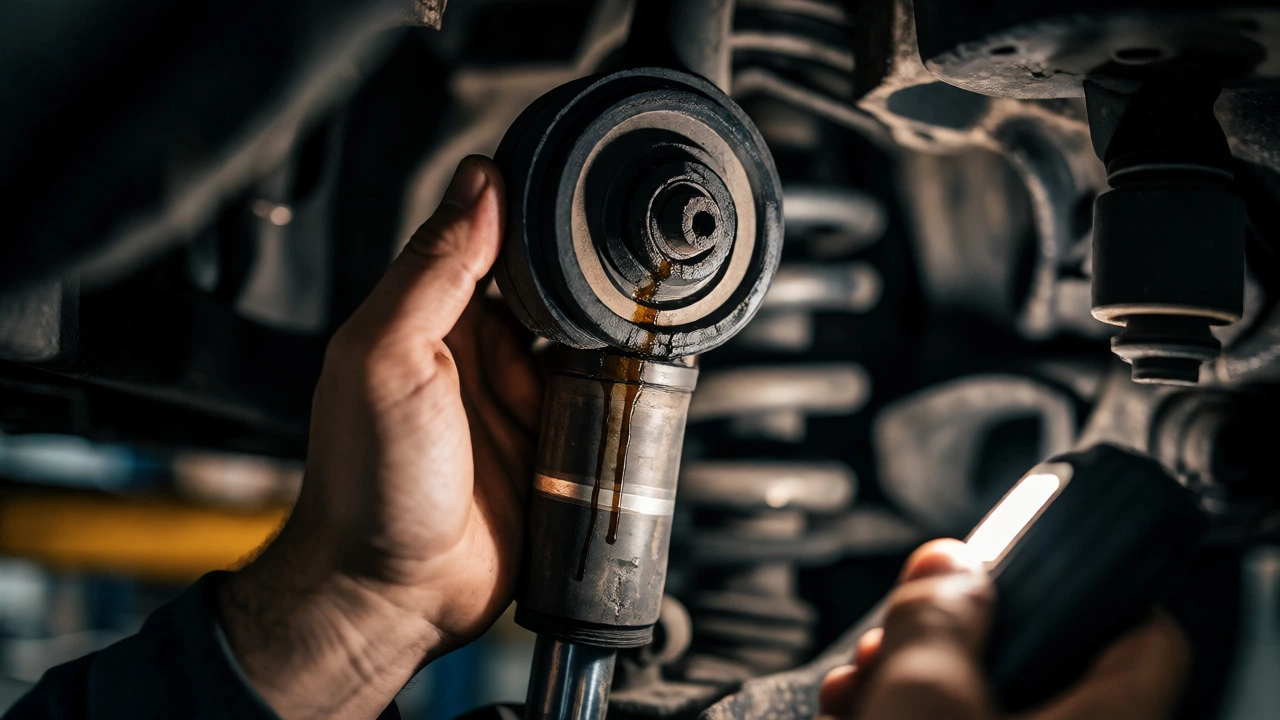
Noises give you hints, but your eyes give you proof. Park your car on level ground and walk around it. Look at each wheel arch. Do you see oil streaks running down the side of the shock absorber or strut? That’s a classic sign of a blown seal. Shocks contain hydraulic fluid to dampen oscillations; when the seal fails, the fluid leaks out, and the damper stops working effectively. You might also notice uneven tire wear. If the inner or outer edge of your tire is significantly more worn than the rest, your alignment is off, likely due to worn suspension components allowing the wheel to tilt excessively.
Check the condition of the rubber boots covering the CV joints and ball joints. If these black rubber sleeves are torn or missing, grease has likely leaked out, and dirt has gotten in. This accelerates wear dramatically. Also, look for rust or corrosion on the coil springs. While rare, a broken coil spring will cause the car to sit lower on one side and may produce a sharp popping noise when compressed.
| Symptom | Likely Component | Why It Happens |
|---|---|---|
| Clunking over bumps | Control Arm Bushings / Ball Joints | Worn rubber allows excessive play, causing metal impact. |
| Rattling on rough roads | Sway Bar Links | Loose ball joints in the link ends vibrate freely. |
| Humming/Growling (changes in turns) | Wheel Bearing | Damaged rollers create friction noise amplified by load shift. |
| Bouncing after a bump | Shocks / Struts | Failed damping allows the spring to oscillate uncontrollably. |
| Steering wanders/pulls | Tie Rod Ends / Alignment | Play in the steering linkage causes imprecise wheel control. |

The Bounce Test: Checking Your Dampers
This is the most famous DIY test for a reason-it works. Stand next to your car, place both hands on the fender above a wheel, and push down hard to compress the suspension. Then let go abruptly. The car should rebound once and settle immediately. If it bounces two or three times like a pogo stick, your shock absorbers or struts are shot. They’re no longer dissipating energy efficiently.
Repeat this for all four corners. Compare the results. If the rear bounces more than the front, or one corner behaves differently than its diagonal partner, you’ve isolated the problem area. Note that this test is less reliable on very soft-springed cars or those with air suspension, but for standard steel-spring setups, it’s surprisingly accurate.
The Shake Test: Finding Play in Joints
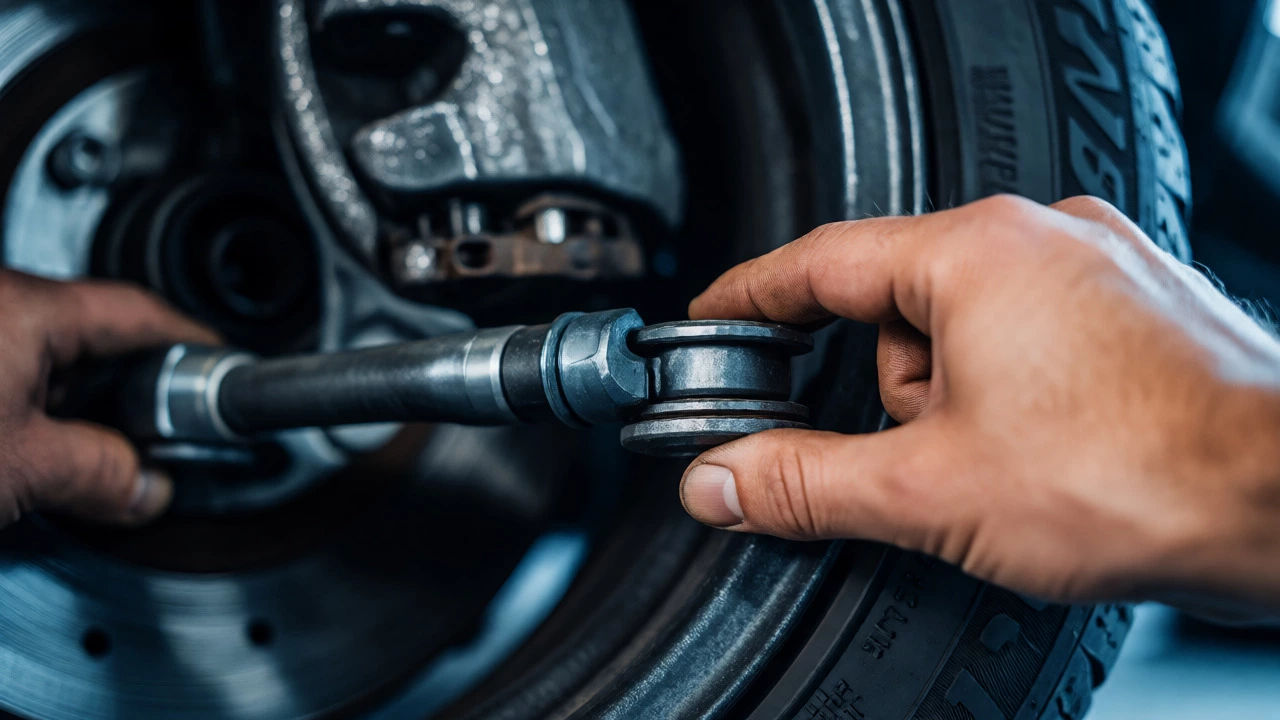
If you suspect a ball joint or tie rod end, you need to physically check for play. Jack up the affected corner so the wheel is off the ground. Grab the tire at the 12 o’clock and 6 o’clock positions and try to rock it top-to-bottom. Excessive vertical movement suggests a worn ball joint. Now grab the tire at the 3 o’clock and 9 o’clock positions and rock it side-to-side. If there’s noticeable play here, the issue is likely the tie rod ends or the steering rack itself.
For sway bar links, you can often wiggle them by hand with the wheel off. There should be minimal free play. If the link moves independently of the bar or makes clicking sounds when moved, replace it. It’s a cheap part, but ignoring it leads to noisy rides and reduced stability.
When to Call a Pro
Sometimes, the symptoms overlap. A bad wheel bearing can mask a bad strut, and vice versa. If you’ve done the visual and bounce tests but still can’t pinpoint the issue, or if you’re uncomfortable jacking up your car safely, take it to a mechanic. Ask them to perform a road test with you if possible. Hearing the noise while actively driving helps immensely. Also, if you notice significant pulling under braking, have the brakes checked too-stuck calipers can mimic suspension issues.
Remember, suspension work isn’t just about comfort. Worn components increase stopping distances and reduce tire life. Driving on a bad ball joint can lead to catastrophic failure where the wheel separates from the car. Don’t ignore the signs. Start with the simple tests above, narrow down the suspects, and you’ll save yourself time and money when you finally visit the shop.
How much does it cost to fix a bad suspension part?
Costs vary widely depending on the part and labor rates. Replacing sway bar links is relatively cheap, often £50-£150 per pair including labor. Shock absorbers or struts typically range from £150 to £400 per corner. Control arms and ball joints fall in between, usually £100-£300 per side. Always get multiple quotes.
Can I drive with a bad suspension part?
It depends on severity. A noisy sway bar link is annoying but safe for short trips. However, a bad ball joint or severely worn control arm bushing compromises handling and safety. If the car pulls significantly or feels unstable, avoid high speeds and long distances until repaired.
Do I need an alignment after replacing suspension parts?
Yes, almost always. Replacing control arms, ball joints, tie rods, or struts changes the geometry of the suspension. An alignment ensures your wheels point in the correct direction, preventing uneven tire wear and steering issues.
What is the difference between a shock and a strut?
A shock absorber is a separate component that only damps motion; the spring handles weight support. A strut is a structural part of the suspension assembly that includes a shock absorber inside a housing, supporting the vehicle's weight and serving as a pivot point for steering. Struts are more complex and expensive to replace.
Why does my car squeak when I turn?
Squeaking during turns often points to dry ball joints, worn control arm bushings, or lack of lubrication in the strut mount bearings. Sometimes it’s the brake pad wear indicator touching the rotor, but if it happens specifically during low-speed maneuvers over bumps, focus on the suspension bushings.