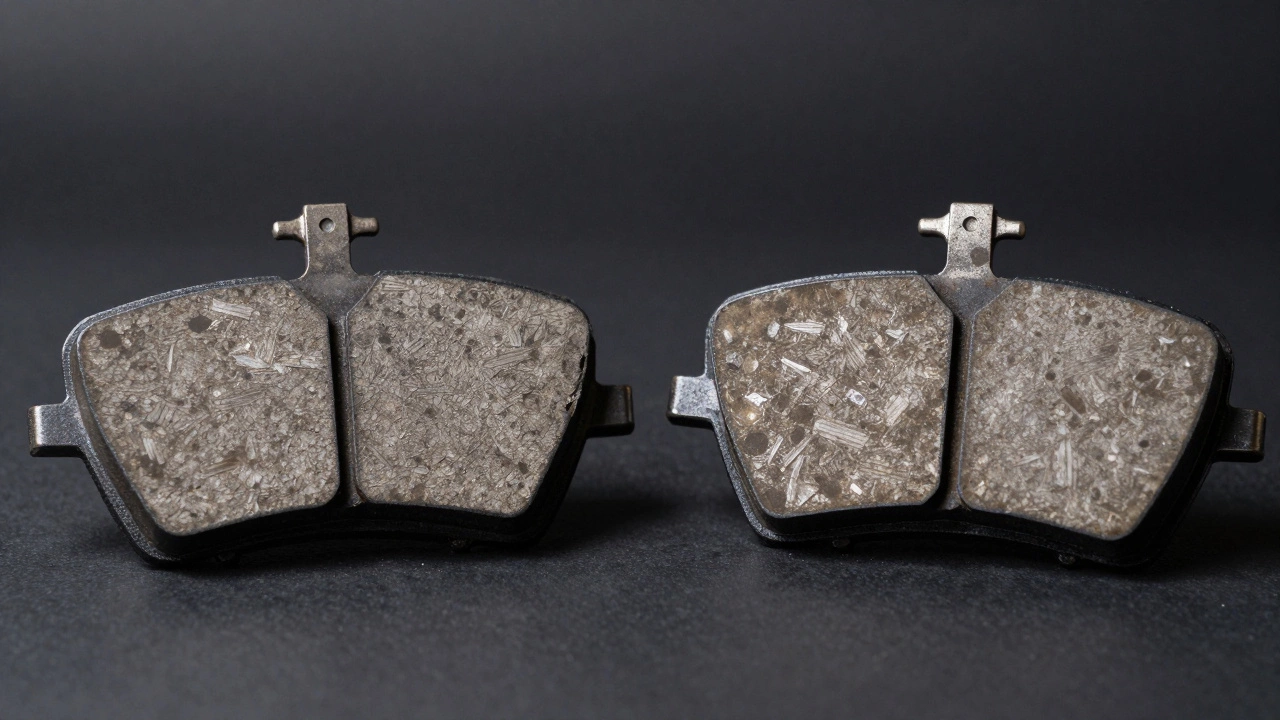
Brake Pad Replacement Cost Calculator
Recommendation
Why This Matters
You hear a squeal when you slow down. Maybe your car pulls to one side. Or your mechanic says, "Your brake pads are worn." Now you’re wondering: should I replace all 4 brake pads at once? It’s a common question, and the answer isn’t as simple as "yes" or "no." But here’s the truth most people miss: replacing all four at once isn’t just smart - it’s often the safest and cheapest move in the long run.
Why Brake Pads Wear Unevenly
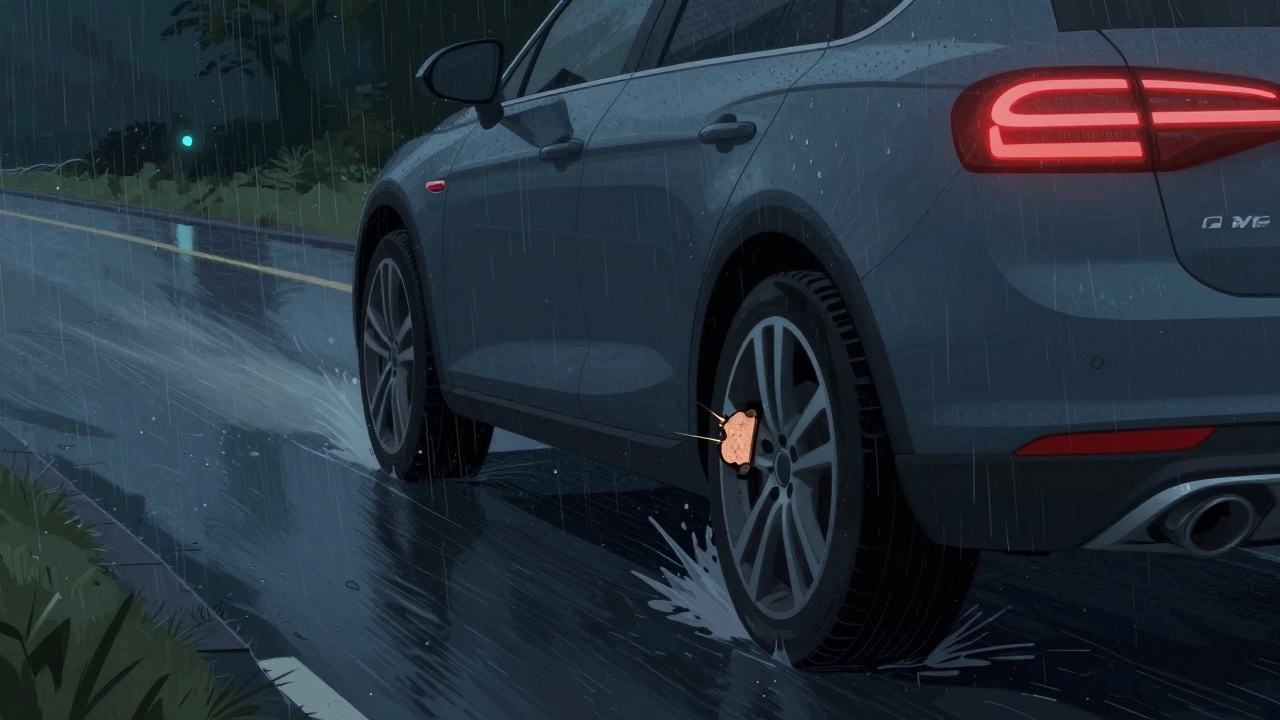
Brake pads don’t all wear out at the same time. Front pads usually wear 2 to 3 times faster than rear ones. Why? Because when you brake, your car’s weight shifts forward. That puts way more pressure on the front brakes. In fact, the front brakes handle about 70% of your stopping power. That’s why you’ll often see front pads worn down to the metal while the rear ones still have 60% life left.But uneven wear doesn’t mean you can skip replacing the rears. If you only replace the fronts, you create an imbalance. Your car might pull to one side. Or worse - the new front pads will grip harder than the old rears, causing the rear wheels to lock up more easily. That’s a recipe for skidding, especially in rain or on gravel.
What Happens When You Replace Just Two
I’ve seen this too many times. A driver comes in with worn front pads, replaces just those, and thinks they’re done. Three months later, they’re back - because now the rears are squealing, and the front pads are already wearing unevenly.Here’s why: brake pads and rotors work as a matched set. When you install new pads on old rotors, the surface isn’t smooth anymore. The old rotors have grooves, heat patterns, and warping from years of use. New pads won’t bed in properly. They’ll vibrate. They’ll chatter. And they’ll wear out faster.
Now imagine doing that on only half your brakes. The front pads are new and smooth. The rear pads are old and glazed. When you hit the brakes, the front grabs hard. The rears don’t respond the same way. That mismatch causes uneven braking force. Your ABS might kick in more often. Your steering wheel might shake. And your tires? They’ll wear unevenly too.
The Cost Myth: "It’s Too Expensive to Replace All Four"
People say, "I only need two. The others still have tread. Why spend double?"Let’s break it down. A set of front brake pads for a typical family car costs between £80 and £150. Rear pads? Usually £70 to £130. Labor? Around £60 to £90 per axle. So replacing just the fronts? Total cost: £210-£300. Replace all four? £280-£400. That’s £70-£100 more.
But here’s the catch: if you replace only the fronts now, you’ll be back in 6 to 12 months for the rears. That’s another £150-£220 in parts and labor. Plus, you’re risking damage to your rotors. If you keep driving with mismatched pads, you’ll likely need to resurface or replace the rotors too - adding another £100-£200 per axle.
Replace all four now? You pay a little more upfront. But you avoid repeat visits, extra labor, and potential rotor damage. You also get consistent braking, better control, and longer pad life. That’s not just savings - that’s safety.
When Replacing All Four Is Non-Negotiable
There are times when replacing just two isn’t just a bad idea - it’s dangerous.- Your car pulls to one side when braking. That’s a sign of uneven friction. Replacing only one side makes it worse.
- You’ve had a brake fluid leak or contamination. Moisture in the system affects all pads. Replacing only two won’t fix the root issue.
- Your rotors are worn or warped. New pads on bad rotors = bad braking. You need to resurface or replace rotors on all four wheels anyway.
- You drive in hilly areas, tow trailers, or carry heavy loads. These habits put extra stress on all brakes. Don’t risk uneven performance.
- Your car has an electronic stability control system. Modern ABS and ESC rely on balanced braking. Mismatched pads confuse the sensors.
If any of these apply to you, replacing all four isn’t optional. It’s required.
What About Brake Pads and Rotors Together?
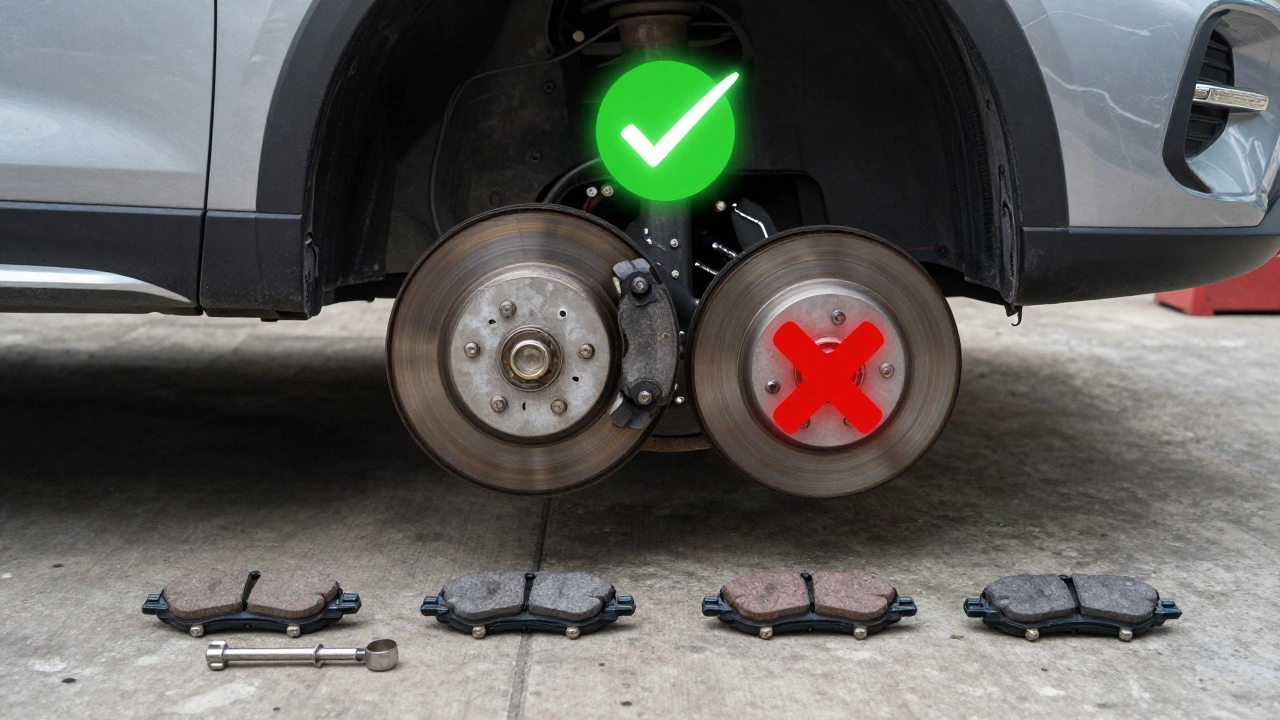
Most mechanics will suggest replacing rotors when you replace pads. Is that always necessary? No. But it’s often a good idea.Rotors last longer than pads - usually 2 to 3 pad replacements. But if your rotors are scored, warped, or thinner than the manufacturer’s minimum thickness (check your manual), they need replacing. You can’t just sand them down and call it good. A warped rotor will cause pulsing in the brake pedal and uneven pad wear - even with new pads.
If your rotors are still in good shape (smooth, no deep grooves, thickness above minimum), you can keep them. But always replace pads on both sides of the same axle. Never mix old and new pads on the same axle. That’s a recipe for pulling and brake fade.
How to Know When It’s Time
You don’t need to wait until you hear screaming. Here’s how to check your pads yourself:- Look through the wheel spokes. You should see the pad against the rotor. If the pad is less than 3mm thick, it’s time.
- Listen for squealing or grinding. Some pads have wear indicators - a small metal tab that rubs the rotor when worn. That squeal is your warning.
- Feel for vibration. If your steering wheel shakes when braking, your rotors are likely warped - and your pads are worn.
- Check your owner’s manual. Most manufacturers recommend inspection every 12,000 miles or once a year.
Don’t wait until the pads are gone. Once metal touches metal, you’re damaging your rotors. And that’s expensive to fix.
The Bottom Line
Replacing all four brake pads at once isn’t about being extra cautious. It’s about balance, safety, and long-term value. Even if your rear pads look fine, they’re part of a system. A system designed to work together.Replacing only two might save you £100 now. But it could cost you £300 later - in repairs, lost control, or worse. In the UK, where weather changes fast and roads get slick, consistent braking isn’t a luxury. It’s a necessity.
Do it right. Replace all four. And if your rotors are worn, replace them too. Your brakes are the most important safety system in your car. Don’t gamble with them.
What About Performance or Sport Pads?
If you’ve upgraded to performance pads - like ceramic or semi-metallic for better heat resistance - you still need to replace all four. Mixing types creates imbalance. Ceramic pads are smoother and quieter. Semi-metallic are more aggressive. Putting one type on the front and another on the rear? You’ll get unpredictable braking. Stick to the same brand and model on all four wheels.What If You’re on a Tight Budget?
I get it. Money’s tight. But here’s what you can do:- Replace the front pads first - they wear faster and are more critical.
- Get the rears inspected. If they’re over 4mm thick and the rotors look clean, you can delay them.
- But set a date. Don’t wait until you hear grinding. Schedule the rear replacement within 6 months.
- Use this time to save up. A set of rear pads is usually cheaper than fronts.
It’s not ideal - but it’s better than doing nothing. Just don’t make it a habit. Consistent, full brake replacements are what keep cars safe for years.