Air Filter Recommendation Tool
Analyze Your Home Environment
Current Selection
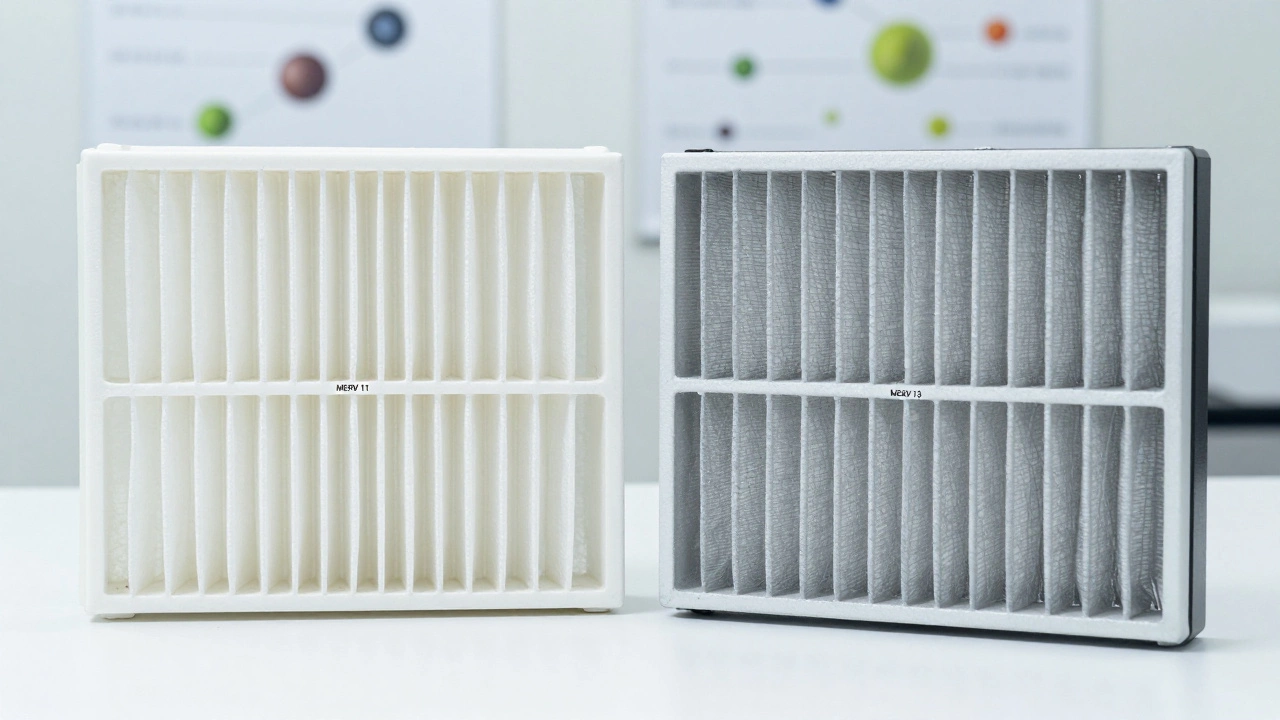
Staring at a wall of air filters in the hardware store can feel like decoding a secret language. You see numbers like 11 and 13 slapped on the boxes, but what do they actually mean for the air you breathe? The short answer is that MERV 13 is a high-efficiency air filter capable of capturing smaller particles like smoke, bacteria, and virus carriers, while MERV 13 Filter offers superior filtration compared to its lower-rated counterparts. However, "better" isn't just about catching more dust; it's about whether your furnace or AC unit can handle the resistance without breaking down or costing a fortune in electricity.
I’ve spent years testing HVAC systems here in Manchester, where damp weather and heating seasons make indoor air quality a constant battle. The choice between these two ratings depends entirely on your specific home setup, your budget, and what you’re trying to block out. Let’s break down exactly how these filters work, why the number matters, and which one will actually serve you best without turning your energy bill into a nightmare.
Understanding the MERV Rating System
Before picking a box, you need to understand what the acronym stands for. MERV stands for Minimum Efficiency Reporting Value, a standardized rating system developed by ASHRAE (American Society of Heating, Refrigerating and Air-Conditioning Engineers). This scale runs from 1 to 20. The higher the number, the smaller the particles the filter can trap. It’s not a marketing gimmick; it’s a laboratory-tested standard.
Think of it like a sieve. A low MERV filter is like a colander-it lets almost everything through except the biggest chunks. A high MERV filter is like a fine mesh strainer-it catches the tiny bits that usually slip through. Here is how the efficiency breaks down for the two contenders:
- MERV 11: Catches particles between 1.0 and 3.0 microns. This includes mold spores, dust mites, pollen, and pet dander. It’s the sweet spot for general household allergens.
- MERV 13: Catches particles between 0.3 and 1.0 microns. This range includes smoke, bacteria, legionella, and some viruses. It captures everything MERV 11 does, plus much finer particulate matter.
If you are dealing with standard house dust and seasonal hay fever, MERV 11 is often sufficient. But if someone in the house has severe asthma, allergies to fine particles, or if you live near an area with poor outdoor air quality, MERV 13 provides that extra layer of protection. The jump from 11 to 13 is significant because it moves from trapping "visible" allergens to trapping microscopic threats.
The Hidden Cost: Airflow and HVAC Strain
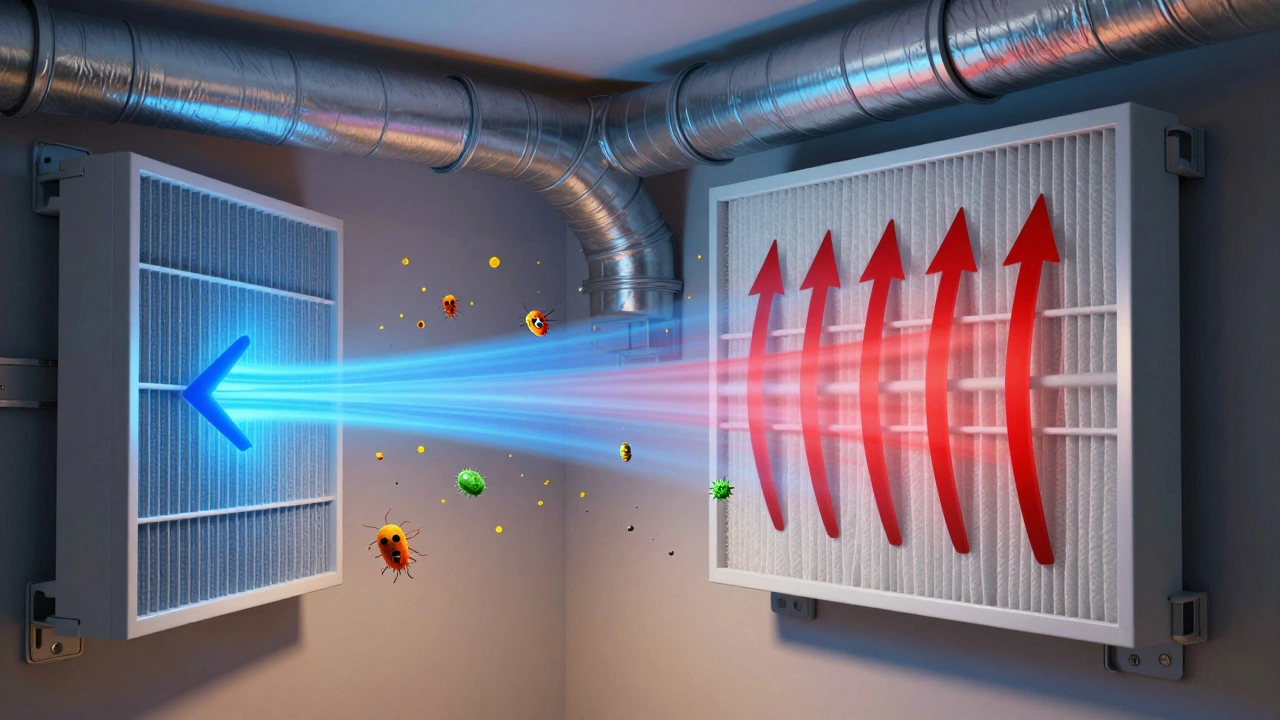
Here is the catch that most people miss. A better filter means denser material. Denser material creates more resistance to airflow. In HVAC terms, we call this "static pressure." When you install a MERV 13 filter, you are forcing your blower motor to work harder to push air through that tight mesh.
Your heating and cooling system is designed with a specific static pressure limit in mind. If you exceed that limit, several bad things can happen:
- Reduced Efficiency: The system runs longer to reach the desired temperature, driving up your energy bills.
- Equipment Wear: The blower motor strains, leading to premature failure. Replacing a furnace blower costs hundreds, far more than the savings on filters.
- Poor Comfort: Airflow drops, meaning rooms take longer to heat or cool. You might feel drafts or cold spots even when the thermostat says otherwise.
MERV 11 filters offer a good balance. They provide substantial filtration while maintaining relatively low static pressure. Most residential central air systems are designed to handle MERV 8 to 11 comfortably. Jumping to MERV 13 requires checking your system’s capabilities. If you have an older furnace, a MERV 13 might choke it. Newer, high-efficiency systems often have variable-speed blowers that can compensate for the added resistance, making MERV 13 a viable option.
Comparison: MERV 11 vs MERV 13
| Feature | MERV 11 | MERV 13 |
|---|---|---|
| Particle Size Captured | 1.0 - 3.0 microns | 0.3 - 1.0 microns |
| Key Allergens Blocked | d>Mold spores, pollen, pet dander, dust mitesAll of the above + smoke, bacteria, virus carriers | |
| Airflow Resistance | Low to Moderate | Moderate to High |
| Best For | General households, mild allergies, older HVAC systems | Sensitive individuals, sick building syndrome, newer/high-efficiency HVAC |
| Filter Lifespan | 3-6 months | 2-4 months (clogs faster due to finer capture) |
| Cost | Moderate | Higher |
Notice the lifespan difference. Because MERV 13 catches so much more stuff, it gets clogged quicker. You’ll likely need to replace it every three months, whereas a MERV 11 might last four or five. That frequency adds to the annual cost. You aren’t just paying more per filter; you’re buying them more often.
Who Should Choose MERV 11?
MERV 11 is the reliable workhorse of the air filter world. It’s the best choice for most average homes. If you don’t have specific health concerns related to airborne viruses or industrial pollution, this rating hits the sweet spot between performance and cost.
Choose MERV 11 if:
- You have pets but no one has severe allergic reactions.
- Your HVAC system is more than 10 years old.
- You want to reduce visible dust buildup on furniture without worrying about airflow issues.
- You are on a tighter budget for maintenance supplies.
In my experience in Manchester homes, where central heating runs heavily from October to April, MERV 11 keeps the air clean enough for comfort without stressing the boiler or furnace. It traps the heavy dust that makes cleaning a chore, leaving the air feeling fresher without requiring constant filter changes.
Who Should Choose MERV 13?
MERV 13 is for those who need medical-grade filtration at home. It’s not just about cleanliness; it’s about health defense. If you have family members with compromised immune systems, severe asthma, or chemical sensitivities, the extra filtration capability is worth the hassle.
Choose MERV 13 if:
- Someone in the household has severe respiratory conditions or allergies to fine particulates.
- You live in an area with frequent wildfires, high pollution, or poor outdoor air quality.
- Your HVAC system is modern, equipped with a variable-speed blower, and explicitly rated for MERV 13+.
- You have a dedicated return air duct with a large filter slot that minimizes static pressure impact.
It’s also worth noting that MERV 13 filters are thicker. Many are 4 to 5 inches deep rather than the standard 1-inch pleated style. These deeper filters have more surface area, which helps offset the airflow resistance. If you switch to MERV 13, ensure your filter housing can accommodate the depth. Forcing a thick filter into a shallow slot can cause it to collapse or bypass air entirely.

How to Check Your System’s Compatibility
Don’t guess. Checking your system’s compatibility takes five minutes and can save you hundreds in repair bills. Look inside your furnace or air handler. There should be a sticker or label listing the specifications. Look for "External Static Pressure" or "Max Static Pressure."
If the label doesn’t specify, check the owner’s manual. Manufacturers often state the recommended MERV range. If you can’t find the manual, measure the current airflow. Turn on your system and hold your hand near a supply vent. If the air feels weak or warm (in winter) / cool (in summer) despite the fan running, your current filter might already be too restrictive. Adding a MERV 13 could make it worse.
Another trick: look at the size of the filter slot. Larger slots (like 24x24 inches) allow for larger filters with more surface area, reducing resistance. Small slots (like 16x20 inches) concentrate the airflow, making high-MERV filters more problematic. If you have a small slot, stick to MERV 11 unless a professional HVAC technician confirms your system can handle more.
Pro Tips for Maximizing Filter Performance
Regardless of whether you choose MERV 11 or 13, proper usage matters. A dirty filter performs worse than a cheap new one. Here’s how to get the most out of your investment:
- Check Monthly: Set a reminder on your phone. In Manchester, during peak heating season, I recommend checking filters every month. If it looks gray and fuzzy, replace it.
- Seal the Edges: Ensure the filter fits snugly. Gaps let unfiltered air bypass the media. Use foam tape if necessary to seal edges.
- Direction Matters: The frame has an arrow indicating airflow direction. Point it toward the blower motor. Installing it backward reduces efficiency by up to 20%.
- Clean the Housing: When you change the filter, wipe down the filter slot. Dust buildup there restricts airflow before air even hits the new filter.
Also, consider upgrading to a rigid frame filter. Cheap cardboard frames warp when they get wet or humid. Warped frames create gaps. Rigid plastic or metal frames maintain their shape, ensuring a consistent seal over time.
Frequently Asked Questions
Can I use a MERV 13 filter in any HVAC system?
No. Older or standard residential HVAC systems may not have enough blower power to push air through a dense MERV 13 filter. Using one can strain the motor, reduce airflow, and increase energy costs. Always check your system’s static pressure rating or consult an HVAC professional before switching to MERV 13.
Does a higher MERV rating mean better air quality?
Generally, yes. Higher MERV ratings capture smaller particles. MERV 13 captures bacteria and virus carriers that MERV 11 misses. However, "better" air quality also depends on proper airflow. If the filter restricts airflow too much, the system may run less efficiently, potentially circulating stale air if ventilation is compromised.
How often should I replace a MERV 11 vs MERV 13 filter?
MERV 11 filters typically last 3 to 6 months, depending on usage and household factors like pets. MERV 13 filters clog faster because they trap more particles, usually lasting 2 to 4 months. In homes with multiple pets or high occupancy, you may need to replace both types more frequently.
Is MERV 13 worth the extra cost?
For most people, MERV 11 offers the best value. MERV 13 is worth the extra cost if you have severe allergies, asthma, or immunocompromised family members. It’s also beneficial in areas with poor outdoor air quality. Otherwise, the marginal gain in filtration may not justify the higher price and potential HVAC strain.
Can I use a HEPA filter instead of MERV 13?
True HEPA filters are generally too dense for most central HVAC systems and can damage them. While portable HEPA air purifiers are excellent for room-specific cleaning, central systems usually max out at MERV 13 or 14 for safe operation. Always verify compatibility before installing high-efficiency filters in your ductwork.