
Radiator Repair vs. Replace Decision Tool
Enter your vehicle details and damage assessment below to get a personalized recommendation and cost estimate.
Vehicle & Damage Details
You’re driving along, the temperature gauge starts creeping up, and suddenly you smell that distinct sweet scent of hot coolant. Panic sets in. You pull over, pop the hood, and see steam hissing from under the cap or a puddle forming on the tarmac. The mechanic tells you your car radiator is leaking. Now comes the million-dollar question (or rather, the hundred-pound question): do you patch it up, try to fix it, or just rip it out and buy a new one?
This isn’t just about saving money; it’s about avoiding being stranded on the motorway again next week. In the UK, where older cars are common and repair costs can spiral, making the right call requires understanding what’s actually broken. Is it a hairline crack? A corroded seam? Or has the plastic tank given up the ghost? Let’s break down when fixing makes sense and when you should cut your losses.
The Anatomy of Your Cooling System: Why Radiators Fail
Before we talk money, let’s talk mechanics. Your radiator is essentially a giant heat exchanger. Hot coolant from the engine flows through thin tubes inside the radiator, while air passes over fins attached to those tubes, cooling the liquid down before it returns to the engine. Most modern radiators use aluminium cores with plastic end tanks. This design is lightweight and cheap to manufacture, but it has a weakness: plastic gets brittle over time due to heat cycles and UV exposure.
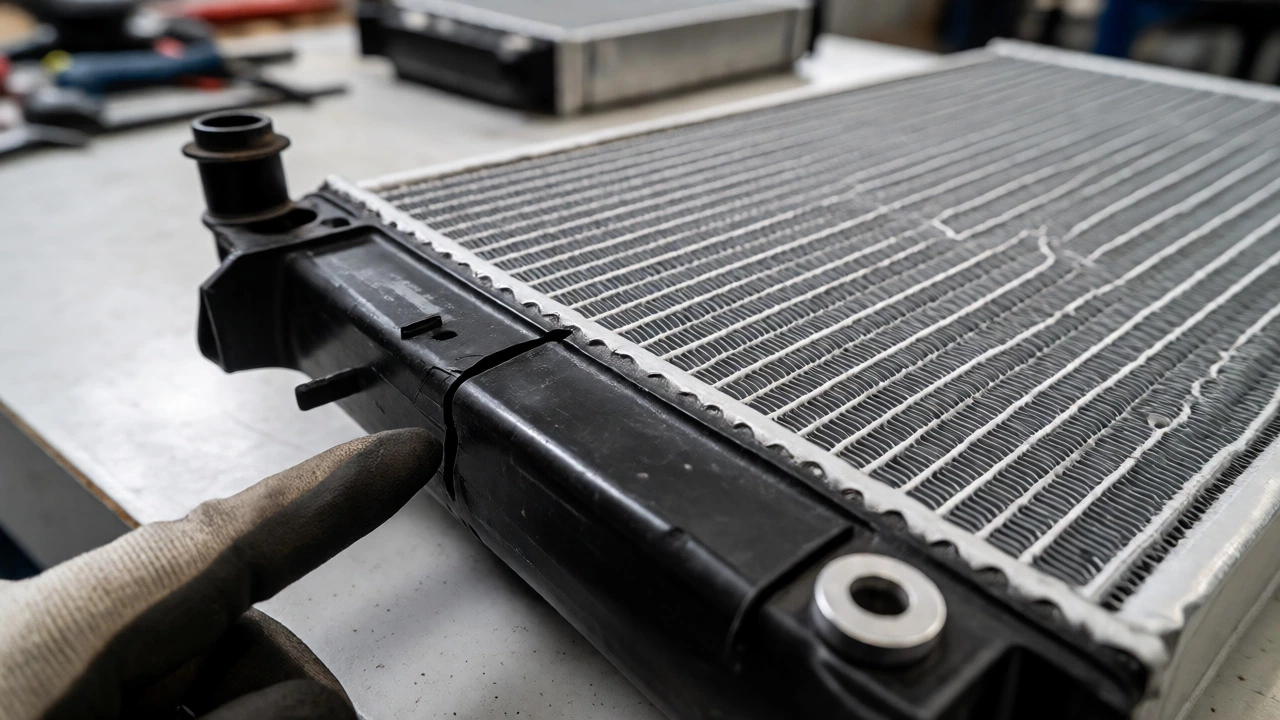
A radiator leak usually happens at one of three points: the plastic end tanks, the seams between the core and tanks, or pinholes in the aluminium core itself. Understanding where the leak is dictates whether a repair is viable. Pinholes in the core are often permanent fixes if caught early. Cracks in the plastic tanks? That’s a different story entirely.
Radiator Repair Options: From DIY to Professional
If you’re handy with tools, you might be tempted to grab some epoxy or stop-leak fluid. But hold your horses. Not all repairs are created equal, and some can actually make things worse.
- Radiator Stop-Leak Additives: These are chemicals you pour into the coolant reservoir. They claim to seal small leaks. Do they work? Sometimes. For tiny pinholes in an old core, yes. But for anything larger, they often clog the heater matrix (the little radiator inside your dashboard that heats your cabin). If your heating stops working after using these, you’ve traded a minor leak for a major repair job costing hundreds more.
- Epoxy and JB Weld: For external cracks in plastic tanks, high-temperature epoxy can provide a temporary bandage. It’s not a permanent solution because the pressure changes and thermal expansion will eventually break the bond. Use this only to get you home or to the shop, not as a long-term fix.
- Professional Soldering/Welding: Some specialist radiator shops can remove the plastic tanks, clean the core, and re-solder or braze the connections. This is labour-intensive. Unless you have a classic car or a rare vehicle where replacement parts are scarce, this rarely beats buying a new unit.
The Cost Breakdown: Repair vs. Replace
Let’s look at the numbers. Prices vary wildly depending on whether you go to a main dealer, an independent garage, or attempt it yourself. Here’s a realistic snapshot for a standard family car in the UK as of late 2026.
| Solution | Part Cost | Labour Cost | Total Estimate | Longevity |
|---|---|---|---|---|
| Stop-Leak Additive | £15 - £25 | £0 (DIY) | £15 - £25 | Low (Weeks/Months) |
| External Epoxy Patch | £10 - £20 | £0 (DIY) / £50 (Pro) | £10 - £70 | Very Low (Temporary) |
| Repair Specialist Service | N/A | £100 - £150 | £100 - £150 | Medium (Years) |
| New Aftermarket Radiator | £60 - £150 | £80 - £150 | £140 - £300 | High (New Life) |
| OEM Radiator Replacement | £150 - £300+ | £100 - £200 | £250 - £500+ | High (Factory Spec) |
Notice the gap between a quick fix and a proper replacement. While £20 seems like a steal compared to £200, consider the risk. If a stop-leak fails while you’re stuck in traffic on the M60, you could warp your cylinder head. Replacing a warped head costs thousands. A new radiator is cheap insurance against catastrophic engine damage.
When Is It Definitely Worth Fixing?
There are specific scenarios where repairing is the smart move. If you own a classic car, say a 1970s Jaguar or an early Land Rover Defender, finding a new radiator might be impossible or prohibitively expensive (£500+ for a reproduction part). In these cases, paying a specialist £150 to recore your existing unit is absolutely worth it. The original core is often higher quality than modern aftermarket alternatives.
Another scenario: minor surface corrosion. If you spot dampness around a hose connection but the radiator core looks solid, tightening the clamp or replacing the O-ring might solve the issue without touching the radiator itself. Always double-check that the leak isn’t coming from a water pump or thermostat housing before condemning the radiator.
When Should You Just Replace It?
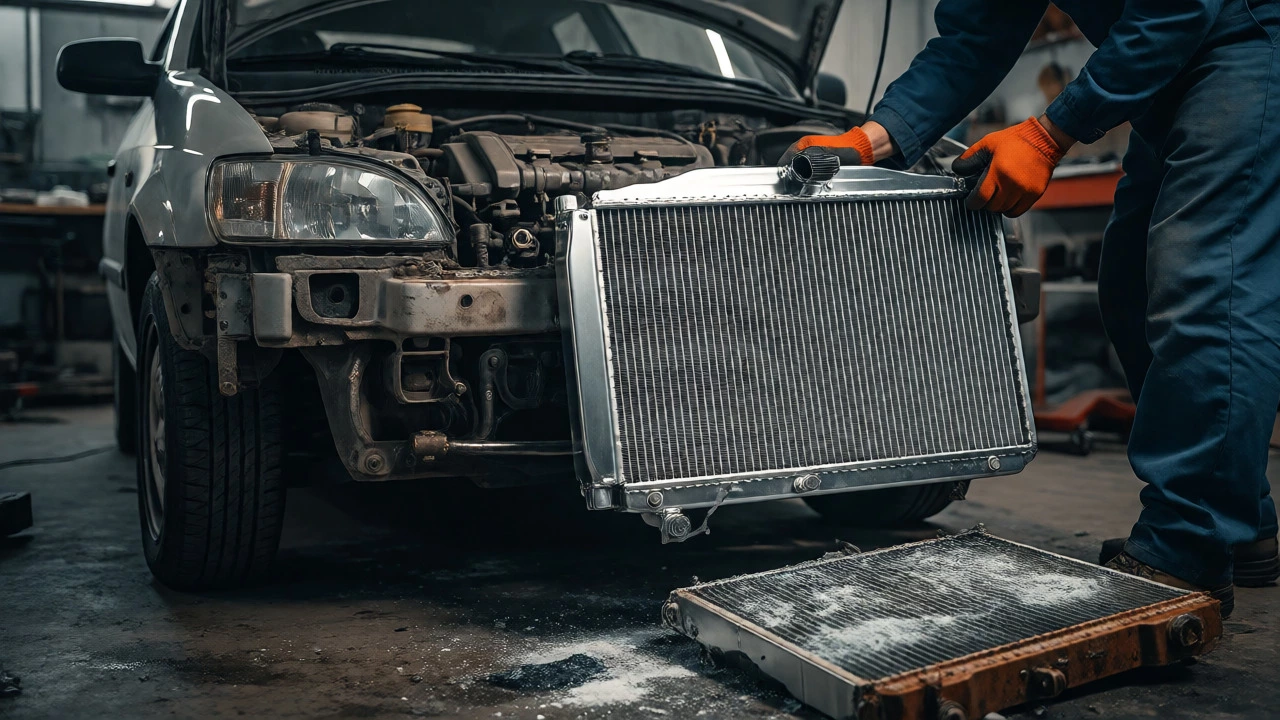
For most daily drivers-Volkswagens, Fords, Vauxhalls-replacement is almost always better. Modern radiators are mass-produced and relatively inexpensive. Labour is the biggest cost, so doing it once properly saves you from paying twice.
You should definitely replace the radiator if:
- The plastic tanks are cracked: Plastic fatigue is irreversible. Once it cracks, it will keep cracking.
- Internal blockages: If your heater blows cold despite the engine being hot, the internal passages are likely blocked with sludge. Cleaning this out is difficult and unreliable. A new unit ensures proper flow.
- Significant rust/corrosion: If the aluminium core looks pitted or white powder (oxidation) is visible everywhere, the structural integrity is compromised. Pressure testing will likely fail anyway.
- Age: If your car is over 10 years old and the radiator has never been changed, it’s nearing the end of its life. Preventative replacement during a timing belt service (which also involves draining coolant) saves labour costs.
The Hidden Risks of Ignoring Radiator Problems
People often delay radiator repairs because the car “seems fine.” It idles okay, maybe loses a bit of coolant every few weeks. But here’s the thing: engines operate at precise temperatures. If your cooling system is inefficient, the engine runs hotter than designed. Over time, this causes gaskets to blow, sensors to fail, and oil to degrade faster.
Worse, if a leak turns into a sudden rupture, you lose all coolant instantly. Without coolant, your engine overheats within minutes. Aluminum engines, which are common now, expand significantly when hot. If you drive an overheated aluminum engine, you risk warping the cylinder head or seizing the pistons. That’s a £2,000+ repair bill versus a £200 radiator replacement.
How to Decide: A Simple Decision Tree
Still unsure? Walk through this logic:
- Where is the leak? Hose/clamp? Tighten it. Core pinhole? Try stop-leak cautiously. Plastic tank crack? Replace.
- What is the car’s value? If the car is worth £1,000 and the repair is £300, think hard. If it’s worth £10,000, spend the £300.
- Can you afford the downtime? Repairs take time. Waiting for a specialist to rebuild a core takes days. A new part arrives overnight.
- Do you plan to keep the car? If selling soon, a new radiator adds resale value and peace of mind for the buyer. A patched-up radiator is a red flag during inspection.
Final Verdict: Don’t Gamble with Heat
Fixing a car radiator is worth it if the repair is minor, the car is a classic, or you’re extremely budget-constrained and willing to monitor levels constantly. However, for the vast majority of modern vehicles, replacing the radiator is the superior choice. It eliminates uncertainty, restores full cooling efficiency, and protects your engine from costly heat-related failures.
Remember, the cheapest option isn’t always the best value. Spending an extra £100 now to install a brand-new automotive radiator could save you thousands later by preventing engine damage. Check your hoses, check your coolant level regularly, and don’t ignore that rising temperature gauge. Your wallet-and your engine-will thank you.
How long does a radiator repair last?
It depends on the method. Stop-leak additives may last a few months to a year, often failing sooner under high pressure. External epoxy patches are temporary fixes lasting weeks to months. Professional rebuilding of the core can last several years, similar to a new unit, but this is rare for standard cars.
Is it cheaper to repair or replace a car radiator?
Initial repair costs are lower (£20-£100), but replacement offers better long-term value. A new radiator costs £140-£300 total including labour. Since repairs often fail and require repeat visits, replacement is usually cheaper over a 3-5 year ownership period.
Can I drive with a leaking radiator?
Only for very short distances if the leak is slow. You must top up coolant frequently and watch the temperature gauge closely. Driving with a significant leak risks immediate overheating and severe engine damage. Never ignore the warning light.
Does stop-leak really work?
Yes, for very small pinholes in the metal core. No, for large cracks or plastic tank failures. The downside is that it can clog narrow passages in the heater matrix or water pump, causing secondary issues. Use it as a last resort or emergency measure.
How much does it cost to replace a radiator in the UK?
On average, expect to pay between £150 and £350 for an independent garage. Main dealers may charge £400+. Parts alone range from £60 for basic aftermarket units to £250+ for OEM brands like Bosch or Valeo.