Radiator Replacement Cost Calculator
Estimate Your Radiator Replacement Cost
Estimated Cost Breakdown
Parts: £0
Labour: £0
Additional components: £0
Total Estimated Cost: £0
Replacing a car radiator doesn’t have to break the bank, but it’s not a cheap fix either. If your engine is overheating and the radiator is the culprit, you’re looking at anywhere from £250 to £800 in the UK - and that’s before any hidden surprises. The price swings wildly depending on your car model, where you get it done, and whether you need just the radiator or a full cooling system overhaul.
What’s Actually in the Cost?
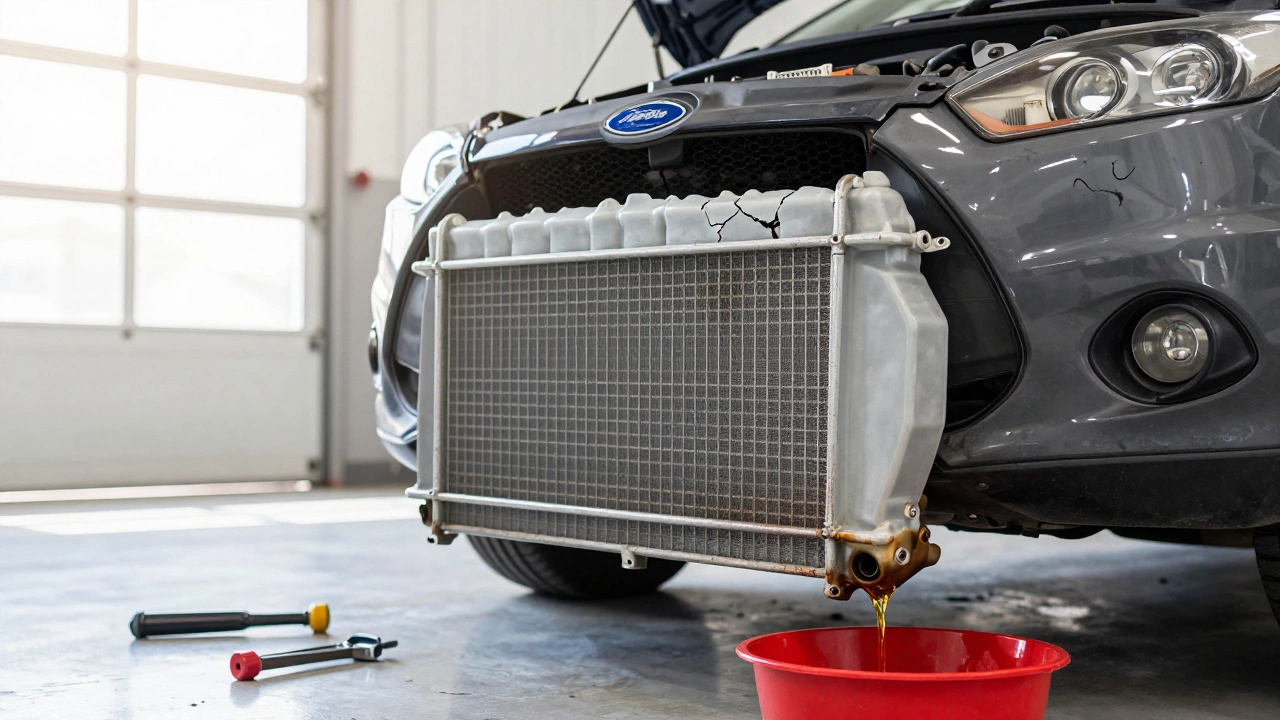
The total bill isn’t just for the radiator itself. You’re paying for parts, labour, and often a few extra things that should’ve been done at the same time. A basic radiator for a Ford Focus might cost £80 to £150. For a BMW X5 or a Toyota Land Cruiser? That same part can jump to £300 or more. Premium brands use more complex designs, and those parts don’t come cheap.
Labour is the real kicker. Most garages charge between £60 and £100 an hour. Replacing a radiator usually takes 2 to 4 hours. That’s £120 to £400 just for the time. Some cars make it easy - the radiator sits right up front, accessible from the grille. Others? You’ll need to remove the bumper, cooling fans, air conditioning lines, or even the engine mount. That adds hours - and pounds.
And here’s what most people forget: you almost always need new coolant, new hoses, and sometimes a new thermostat or water pump. If the radiator failed because of old, dirty coolant, you can’t just swap the part and call it done. You risk killing the new radiator in weeks. A full flush and refill adds £50 to £80. A new thermostat? Another £30 to £70. A water pump? That’s £150 to £300 on top.
Why Some Cars Cost More to Fix
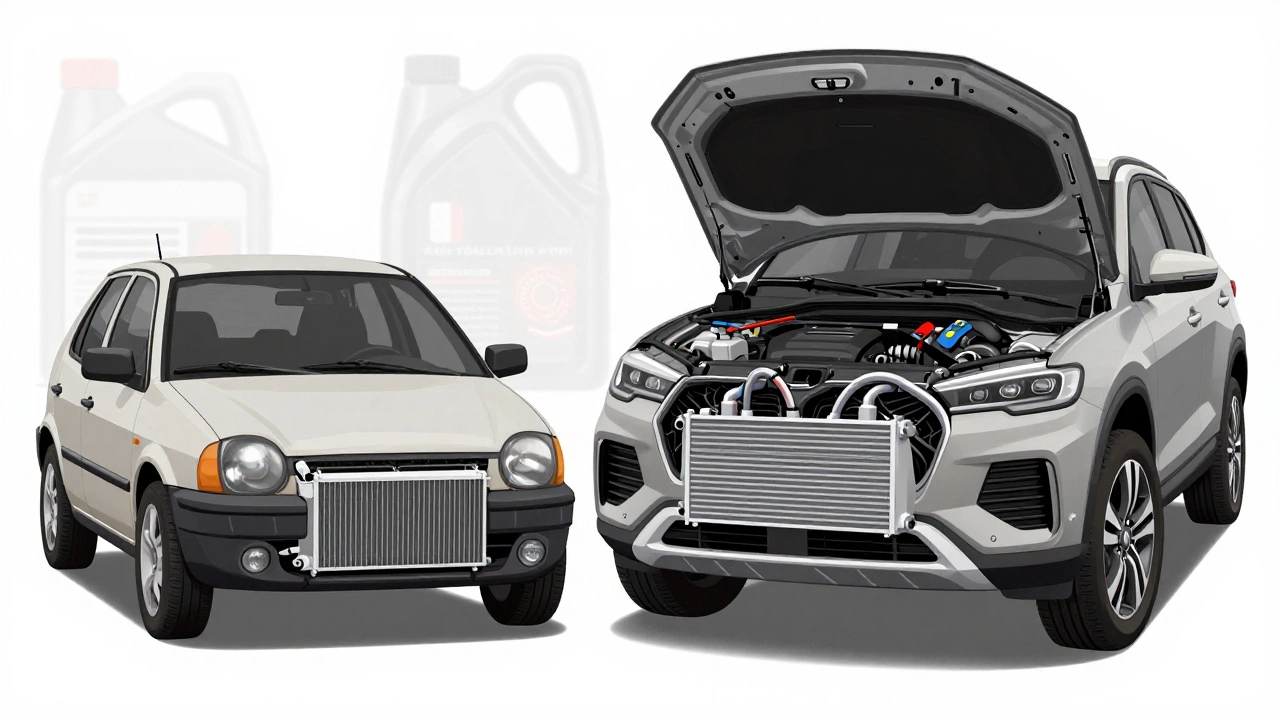
Not all radiators are created equal. A simple four-cylinder hatchback like a Volkswagen Polo? The radiator is usually a straightforward drop-in job. But a modern SUV with dual cooling systems - one for the engine, another for the transmission - is a different story. You might need two radiators, two fans, and two sets of sensors. That’s easily £600 to £900.
Electric cars don’t have traditional radiators, but they do have liquid-cooled battery packs. If one of those fails, you’re looking at £1,500 to £3,000. That’s not a radiator replacement - that’s a major battery system repair. Stick to petrol and diesel for now if you’re worried about cost.
Older cars are often cheaper to fix, but not always. A 1998 Honda Civic might have a cheap radiator, but if the mounting brackets are rusted or the coolant pipes are brittle, you’re spending extra on parts that aren’t even the radiator. Newer cars have plastic tanks fused to aluminium cores. If the plastic cracks, you can’t just patch it. You need a whole new unit.
DIY vs Professional: What Makes Sense?
Can you replace a radiator yourself? Yes - if you’ve got time, basic tools, and a bit of mechanical sense. You’ll need a jack, jack stands, a drain pan, wrenches, and a funnel. You’ll also need to know how to bleed the cooling system properly. If you don’t, you’ll end up with air bubbles that cause overheating - and then you’re back where you started.
Most people who try it end up calling a mechanic anyway. One guy in Salford tried to replace his Hyundai i30 radiator over a weekend. He got the old one out, but didn’t bleed the system right. Two days later, the engine overheated and warped the head. The repair bill jumped from £350 to £1,800. He didn’t save a penny.
For most drivers, professional installation is worth the extra cost. A good garage will check the hoses, clamps, thermostat, and water pump while they’re in there. They’ll use the right coolant mix. They’ll test the pressure cap. They’ll make sure the fan runs when it should. You’re paying for expertise - not just labour.
How to Save Money Without Getting Ripped Off
You don’t have to pay garage prices. Here’s how to cut costs without cutting corners:
- Buy the radiator yourself. Sites like Autodoc, Euro Car Parts, or Amazon UK sell OEM-equivalent radiators for 30-50% less than a garage’s markup. Just make sure the part number matches your car.
- Ask for a quote that includes everything: parts, labour, coolant, disposal. Some garages quote low for labour and then tack on extras later.
- Get two or three quotes. Independent garages in Manchester often charge £100 less than main dealerships for the same job.
- Don’t rush. If your car overheats once, you’ve got time. Don’t drive it. Pushing a hot engine will fry the head gasket - and that’s a £1,500+ repair.
- Check your warranty. Some extended warranties cover cooling system parts. Even if you bought the car used, check the paperwork.
Signs You Really Need a New Radiator
Not every leak or overheating issue means the radiator is dead. Here’s how to tell:
- Visible coolant leaks under the car, especially near the front
- Green, orange, or pink fluid on the ground (coolant colour varies)
- Engine temperature needle climbing into the red zone
- Milky brown sludge in the oil - that’s coolant mixing with oil, a sign of a cracked head or block
- Steam coming from under the hood while driving
If you see any of these, get it checked. A small leak now can turn into a seized engine in a week. And an engine replacement? That’s £2,000 to £5,000.
What Happens If You Don’t Replace It?
Ignoring a bad radiator is like ignoring a leaky roof in winter. At first, it’s just a drip. Then the ceiling collapses.
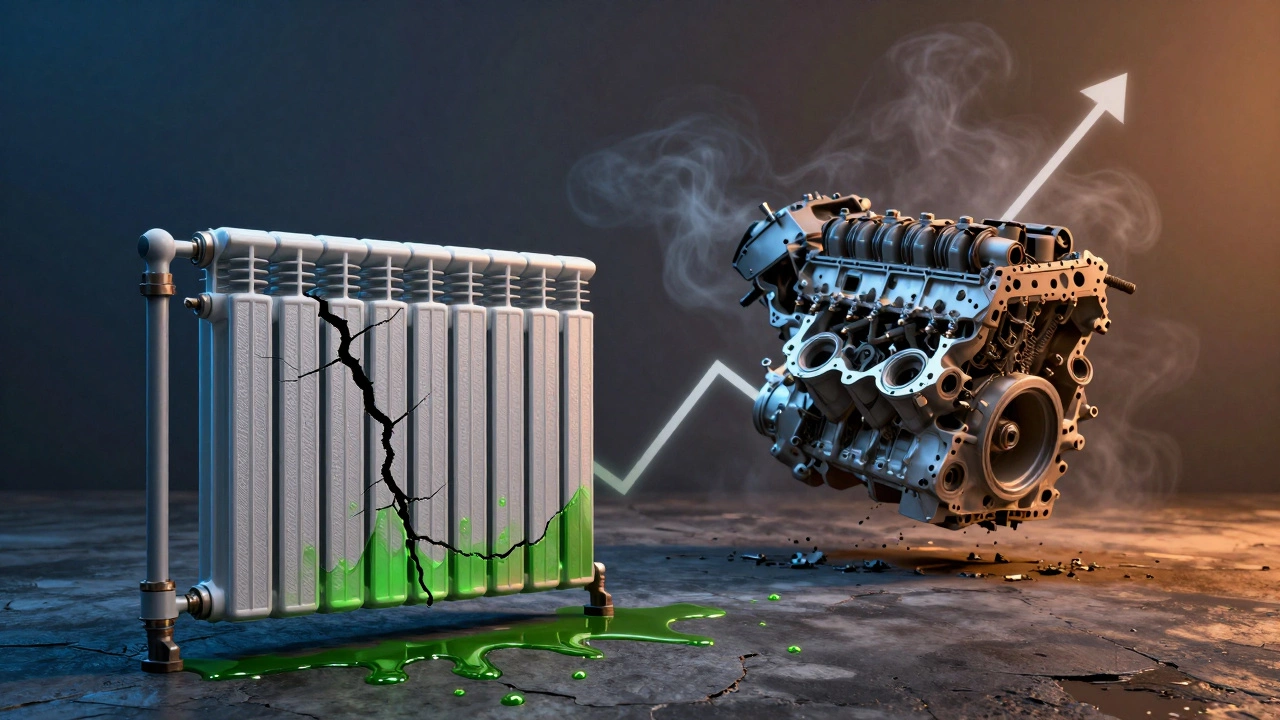
Overheating damages the engine. Metal expands. Pistons seize. Head gaskets blow. Cylinder heads warp. You’ll smell burning oil. You’ll hear knocking. Eventually, the engine won’t start at all. And once that happens, the cost jumps from “expensive” to “not worth fixing.”
A 2023 AA survey found that 62% of engine failures in the UK were linked to cooling system neglect. Most of those drivers had ignored warning signs for months. They thought a little coolant loss was normal. It’s not.
How Long Should a Radiator Last?
Most radiators last 8 to 12 years or 100,000 to 150,000 miles. But that’s only if you’ve kept the coolant fresh. Old coolant turns acidic. It eats away at metal and plastic from the inside. That’s why your 10-year-old car might have a failing radiator - not because it’s worn out, but because no one changed the fluid in five years.
Flush and replace the coolant every 2 to 3 years. Use the type your manual says. Don’t mix colours. Don’t use water alone. And if your radiator’s over 8 years old and you’ve never replaced the coolant, consider replacing the radiator now - before it fails on a cold morning in Manchester.
Final Thoughts
Replacing a radiator isn’t a luxury. It’s a necessary repair. The cost might sting, but it’s nothing compared to what happens if you wait. A £400 repair today saves you from a £3,000 engine rebuild tomorrow. And if you shop smart - buy the part yourself, get competitive quotes, and insist on a full system check - you can keep the cost under £500.
Don’t let a small leak turn into a big disaster. Your engine will thank you.
How long does it take to replace a car radiator?
Most radiator replacements take between 2 and 4 hours. Simple cars like a Ford Fiesta or Honda Civic can be done in 2 hours. Complex setups - like those with electric fans, air conditioning lines, or transmission coolers - can take 5 hours or more. Labour time depends on how accessible the radiator is and whether other parts need to be removed first.
Can a radiator be repaired instead of replaced?
Minor leaks in metal radiators can sometimes be patched with epoxy or solder, but this is rarely a lasting fix. Plastic tanks, which most modern radiators use, can’t be repaired. Even if you patch a small crack, the radiator is still under pressure and will likely fail again within weeks. Replacement is almost always the safer, more reliable option.
Is it worth replacing a radiator on an old car?
If the car runs well otherwise and has no major rust or engine issues, yes. A £400 radiator replacement can add another 50,000 miles of life to a 10-year-old car. But if the car has other expensive problems - worn suspension, failing transmission, or a bad engine - it might not make financial sense. Get a full inspection before spending on the radiator.
What coolant should I use after replacing the radiator?
Always use the coolant type specified in your car’s owner manual. Most modern cars use organic acid technology (OAT) coolant - often orange, red, or pink. Mixing types can cause sludge and blockages. Never use plain water. Even distilled water lacks the corrosion inhibitors your engine needs. A 50/50 mix of coolant and distilled water is standard.
Why does my car overheat after a radiator replacement?
Air trapped in the cooling system is the most common cause. If the system wasn’t properly bled after installation, air pockets prevent coolant from circulating. This leads to overheating. Other causes include a faulty thermostat, a loose hose clamp, or a bad radiator cap. Always have the system pressure-tested after any cooling system work.