Engine Oil Level Diagnostic Tool
Enter your vehicle's specifications and observed symptoms to determine if your engine oil is overfilled.
Observed Symptoms
You just finished your oil change. The new filter is on, the drain plug is tight, and you’ve poured in what you thought was the right amount of engine oil a lubricant designed to reduce friction and heat within internal combustion engines. But then that nagging doubt creeps in: did you accidentally pour in too much? It’s a common fear, and honestly, it’s not just paranoia. Overfilling an engine can cause serious issues, from blown seals to hydro-locking cylinders. But how do you actually know if you’ve crossed the line? It’s not about guessing; it’s about knowing exactly where to look and what those signs mean.
The Dipstick Is Your Best Friend (If You Use It Right)
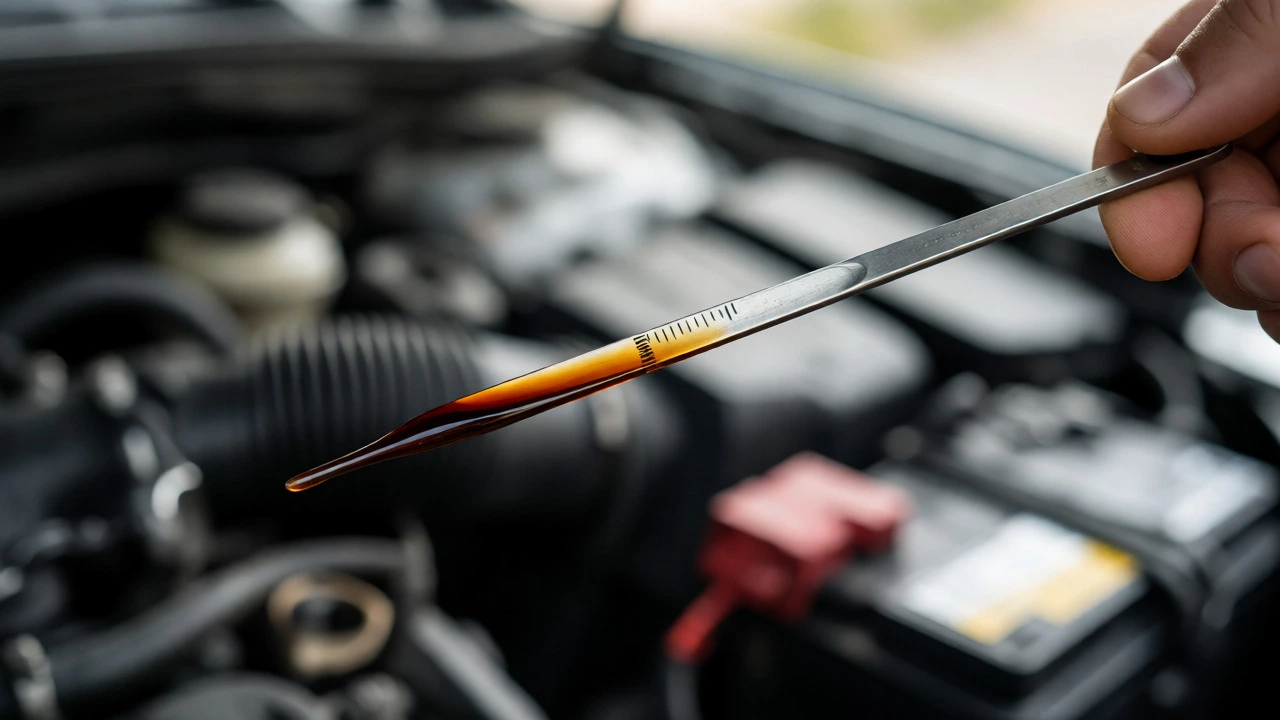
Most people check their oil, but few do it correctly enough to spot an overfill. The dipstick a metal rod with markings used to measure the fluid level in a reservoir is the primary tool for this job. Here’s the trick: you need to check it when the engine is cold or has been off for at least ten minutes. Why? Because hot oil expands and circulates throughout the engine block. If you pull the stick while the engine is running or just turned off, you’ll get a false high reading because oil hasn’t settled back into the oil pan the reservoir at the bottom of the engine that holds the oil supply.
Pull the dipstick out, wipe it clean with a lint-free cloth, reinsert it fully, and then pull it out again. Look at the end. Most sticks have two marks: "Min" and "Max," or sometimes holes or cross-hatched areas. If the oil level is above the top mark, you’re overfilled. Even being half a centimeter above the max line can cause problems in modern, tight-tolerance engines. Don’t rely on the electronic sensor in your dashboard; those are often calibrated to detect low levels, not high ones.
Physical Symptoms: What Your Car Tells You
If you missed the dipstick check or want to confirm your suspicion, your car will start throwing signals. These aren’t subtle hints; they’re usually pretty obvious once you know what to listen for.
- Rough Idling: If the crankshaft dips into the excess oil, it creates resistance. This causes the engine to shake or vibrate more than usual, especially when stopped at traffic lights.
- Oil Leaks: Excess pressure from the crankcase ventilation system a system that removes blow-by gases and fumes from the crankcase can force oil past seals. Check around the valve cover gasket and the rear main seal. Fresh oil spots under the car after driving are a red flag.
- White Smoke from Exhaust: This is a big one. If oil gets forced into the combustion chambers, it burns alongside the fuel. This produces thick, white smoke from the tailpipe that smells distinctively like burning oil, not just water vapor.
- Loss of Power: The engine works harder to push through the aerodynamic drag of the oil. You might notice the accelerator feels sluggish, and the revs don’t climb as quickly as they used to.

Why Overfilling Damages More Than Just Seals
It’s easy to think, "A bit extra oil won't hurt." But physics disagrees. When the crankshaft the rotating shaft that converts piston motion into rotational energy spins fast, it whips up the excess oil into foam. This process is called aeration. Foam doesn’t lubricate well. Instead of a smooth film protecting metal parts, you get air bubbles that collapse under pressure, leading to metal-on-metal contact. This accelerates wear on bearings and camshafts significantly.
Furthermore, the increased pressure inside the engine can overwhelm the PCV valve. This valve is supposed to vent gases, but if it’s clogged by oil mist, those gases have nowhere to go. They can force oil into the intake manifold, coating the throttle body and mass airflow sensor with grime. Cleaning these components later is a hassle you didn’t need.
| Symptom | Overfilled Indication | Normal Condition |
|---|---|---|
| Dipstick Level | Above Max Mark | Between Min and Max |
| Exhaust Smoke | Thick White/Blue Smoke | Invisible or slight water vapor |
| Engine Noise | Whining or Whistling (PCV strain) | Smooth Hum |
| Idle Quality | Vibrating/Rough | Steady |
| Oil Pressure Light | Might flicker or stay on | Off after startup |
What To Do If You Are Overfilled
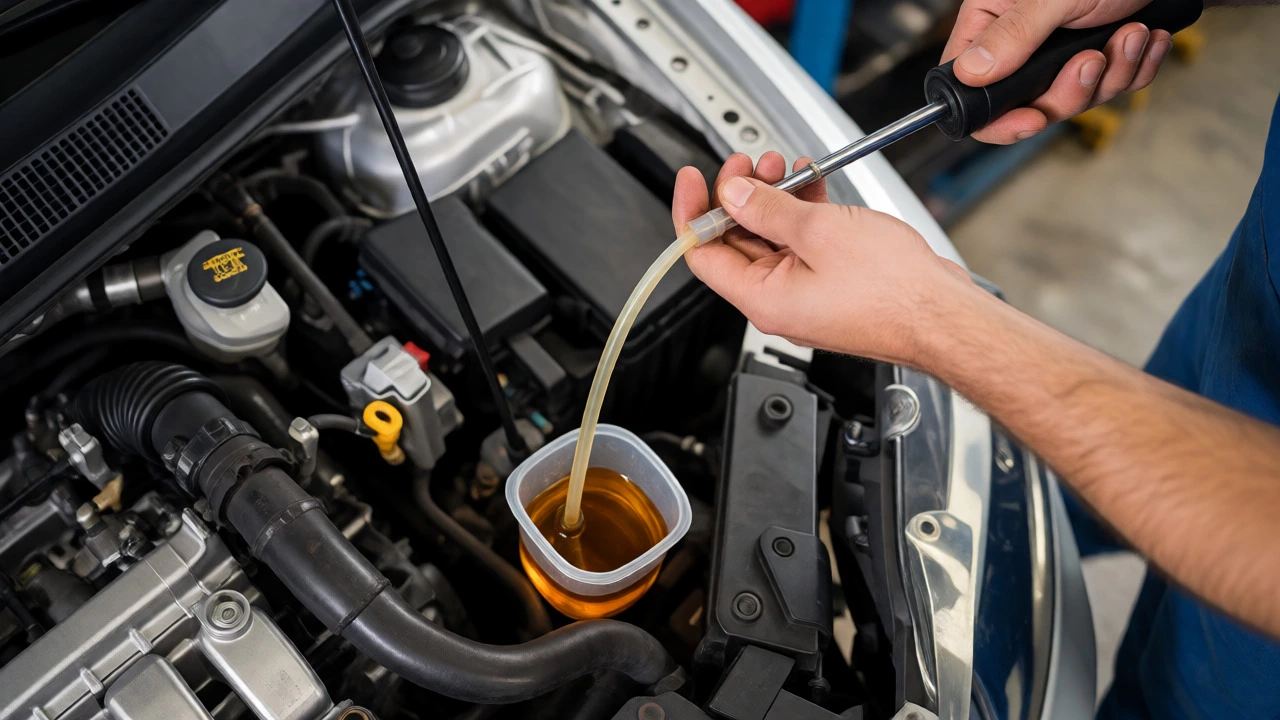
Don’t panic, but don’t ignore it either. Driving with a slightly overfilled engine for a week might be fine, but months of abuse will cost you. You need to remove the excess oil. You generally have two options, depending on your setup.
The first method is using a suction pump. Many auto shops sell cheap hand-operated pumps specifically for this purpose. You insert a thin tube down the dipstick hole until it hits the bottom, then pump the excess out. This is clean, quick, and requires no crawling under the car. It’s the preferred method for most DIYers in Manchester and elsewhere.
The second option is draining it from underneath. Locate the drain plug on the oil pan. Place a container underneath, loosen the plug slightly, and let a small amount drain out. Retighten it, wait five minutes, and check the dipstick again. Repeat until you’re at the correct level. Be careful not to lose the plug or strip the threads. If you’re unsure, a quick trip to a local garage costs little and ensures you don’t make a mess.
Preventing Future Overfills
How do you avoid this next time? First, always consult your owner’s manual for the exact capacity. For example, a typical Ford Focus might take 4.1 liters, while a BMW 3-series might need 6.5 liters. Never guess based on what your neighbor uses.
Second, use a measuring jug. Pour slowly. Stop when you’re about 0.5 liters below the recommended total, then check the dipstick. Add the rest gradually. Remember, oil expands when hot, so checking cold gives you the true static volume. Finally, keep a log. Write down the date, mileage, and brand of oil used. If you ever wonder if you added too much, comparing your current level to your last service record provides context.
Is it bad to drive with slightly overfilled oil?
Driving a short distance with oil slightly above the max mark is rarely catastrophic, but it is not ideal. It puts unnecessary stress on seals and can lead to leaks. However, if the level is significantly high (more than 1-2 cm above max), you should address it before long drives to prevent aeration and potential engine damage.
Can overfilled oil cause my check engine light to come on?
Yes, it can. Excess oil can foul spark plugs or trigger sensors related to the emissions system, such as the oxygen sensor, due to unburned oil entering the exhaust stream. It may also cause rough idling codes (P0300 series) because the engine struggles to maintain a steady RPM against the oil resistance.
How much oil is considered 'too much'?
Generally, anything above the 'Max' line on the dipstick is technically too much. However, mechanics often say that up to 10% over capacity might be tolerated temporarily without immediate failure. Beyond that, the risk of foaming and seal blowout increases exponentially. Always aim for the middle of the range.
Will the oil level drop on its own if I overfill it?
No, oil does not evaporate or burn off in significant quantities during normal operation unless there is already an underlying issue like worn piston rings. If you overfilled it, the level will remain high until you physically remove the excess via draining or pumping.
Does synthetic oil behave differently when overfilled?
Synthetic oils tend to resist foaming better than conventional mineral oils due to their additive packages. However, they are still subject to the same physical laws regarding crankshaft windage and pressure. While synthetics might tolerate slight overfilling marginally better, the mechanical risks to seals and the PCV system remain identical.