
Spark Plug Symptom Checker
Select the symptoms you are experiencing or inspect your old plugs to determine if replacement is necessary.
Diagnosis Pending
Select symptoms above to see if your spark plugs need replacing.
You’re cruising down the M60, and suddenly your car feels like it’s hiccupping. Or maybe you press the accelerator, but the response is sluggish, like the engine is holding its breath. It’s easy to blame the fuel or the battery, but nine times out of ten, the culprit is sitting quietly under your bonnet: the spark plugs. These small components are the heartbeat of your internal combustion engine, responsible for igniting the air-fuel mixture that powers your wheels.
Ignoring a failing spark plug can lead to bigger headaches-like damaged catalytic converters or wasted petrol. But how do you know when they’ve reached the end of their life? You don’t need a mechanic’s degree to spot the warning signs. From rough idling to poor fuel efficiency, here is exactly what to look for before you book a garage appointment.
The Engine Misfire: Your First Red Flag
A engine misfire is the most common symptom of worn-out spark plugs. Think of it as a skipped beat in your engine’s rhythm. When a spark plug fails to fire correctly, one or more cylinders don’t ignite the fuel properly. This results in unburnt fuel being pushed into the exhaust system, which can smell distinctly raw and harsh.
You’ll feel this as a jerking sensation while driving, especially during acceleration. If you’re stuck in traffic at a red light and the steering wheel vibrates excessively, that’s often a sign of misfiring at low RPMs. While occasional hiccups might be minor, persistent misfires can trigger your check engine light. Modern cars have sensors that detect these irregularities, so if that amber icon pops up, don’t ignore it. A diagnostic scan tool can pinpoint which cylinder is misfiring, pointing you directly to the faulty plug.
Dropping Fuel Economy: The Silent Cost
Have you noticed you’re visiting petrol stations more frequently than usual? Worn spark plugs reduce combustion efficiency. Instead of burning all the fuel in the cylinder, incomplete combustion leaves energy on the table. Over time, this inefficiency adds up significantly.
If your mileage drops by 10% or more without any change in your driving habits or vehicle load, inspect your plugs. For example, if you used to get 45 miles per gallon (mpg) and now you’re scraping by with 38 mpg, your ignition system is likely struggling. This isn’t just about saving money; it’s about environmental impact too. Unburnt hydrocarbons from inefficient combustion contribute to higher emissions, which could fail an MOT test in the UK.
Rough Idling and Difficulty Starting
Turn the key in the morning, and the engine cranks longer than usual before catching. Or perhaps it starts fine but settles into a shaky idle, sounding like it’s about to stall. Both scenarios point to weak sparks.
Rough idling occurs because the engine relies on consistent spark timing to maintain smooth operation at low speeds. When plugs are fouled with carbon or oil, the gap between electrodes widens or becomes obstructed, making it harder for the spark to jump across. This inconsistency causes the engine to shake or vibrate noticeably. If you find yourself topping up the coolant or checking the battery first, save your effort. Check the plugs-they’re cheaper and easier to replace than either of those systems.

Lack of Acceleration Power
Pressing the gas pedal should result in immediate thrust. If your car feels lethargic, like it’s dragging an invisible anchor, your spark plugs might not be firing with enough intensity. This lack of power is particularly noticeable when merging onto motorways or overtaking slower vehicles.
Healthy spark plugs create a strong, consistent arc that ensures complete fuel burn. Weak plugs produce faint sparks, leading to partial combustion. The result? Reduced torque and horsepower. You might compensate by pressing the accelerator harder, which only worsens fuel consumption. Before assuming your turbocharger has failed or your transmission is slipping, rule out the simple stuff. Inspecting the ignition coils and spark plugs takes minutes and costs pennies compared to major repairs.
Visual Inspection: What Do Bad Plugs Look Like?
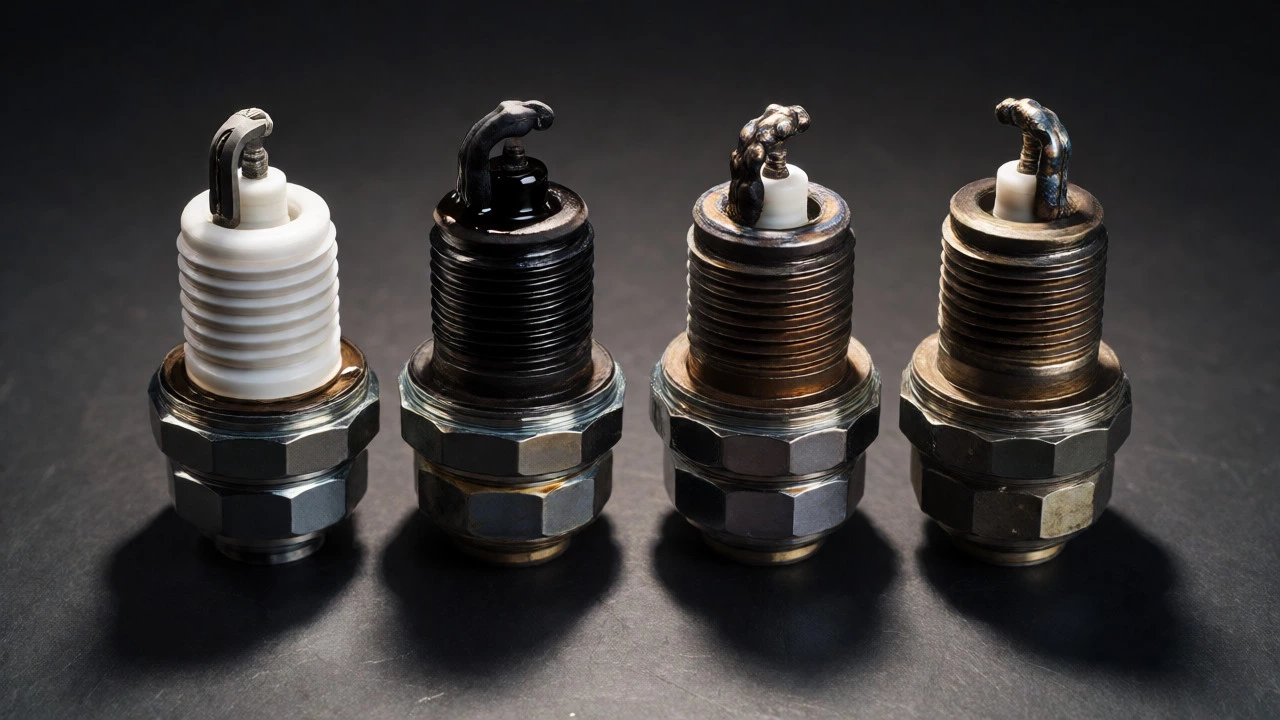
Sometimes, the symptoms aren’t obvious until you pull them out. Visual cues tell a clear story about your engine’s health. Here’s a quick guide to identifying trouble:
| Condition | Appearance | Possible Cause |
|---|---|---|
| Fouled with Carbon | Black, dry soot covering the electrode | Rich fuel mixture or short trips preventing self-cleaning |
| Fouled with Oil | Wet, black residue on tip | Worn piston rings or valve stem seals leaking oil |
| Erosion/Wear | Rounded center electrode, wide gap | Natural wear over time; needs replacement |
| Blistered/Melted | White deposits, melted metal | Engine overheating or incorrect heat range plug |
If you see heavy black buildup, try changing your driving habits first-take a long highway run to burn off deposits. But if the electrodes look rounded or eroded, no amount of cleaning will help. They need replacing.
When Should You Replace Them?
Manufacturer recommendations vary, but generally, copper spark plugs last around 30,000 miles, while platinum or iridium plugs can go up to 100,000 miles. However, “recommended” doesn’t always mean “mandatory.” If you experience any of the symptoms above, replace them regardless of mileage.
In Manchester, where stop-start city driving is common, plugs tend to foul faster due to lower operating temperatures. Short journeys prevent the engine from reaching optimal heat, leaving carbon deposits behind. If your daily commute involves lots of traffic jams, consider checking your plugs every 20,000 miles instead of waiting for the service manual interval.
DIY vs. Professional Replacement
Can you do it yourself? Absolutely. Spark plug replacement is one of the simplest DIY tasks. You’ll need a socket wrench, a spark plug socket (usually 5/8" or 13/16"), and a torque wrench if possible. Overtightening can crack the ceramic insulator, while undertightening leads to poor grounding and overheating.
However, some modern engines bury the plugs deep under intake manifolds, requiring significant disassembly. In those cases, paying a professional might be worth the labor cost. Always buy plugs specified by your manufacturer-using the wrong heat range can damage your engine.
Frequently Asked Questions
Can I drive with bad spark plugs?
Yes, but it’s risky. Driving with severely worn plugs can cause unburnt fuel to enter the exhaust system, potentially destroying your expensive catalytic converter. If you notice mild symptoms, you can drive to a repair shop, but avoid long trips or high-performance driving until fixed.
How much does it cost to replace spark plugs?
Parts typically range from £5 to £20 per plug, depending on material (copper vs. iridium). Labor costs vary by garage and engine complexity, usually adding £50-£150 total. Doing it yourself saves the labor fee entirely.
Do all spark plugs need replacing at once?
It’s highly recommended to replace all plugs simultaneously. Mixing new and old plugs can cause uneven engine performance and put extra strain on the ignition coils. Plus, if one plug has failed, others are likely close to failure too.
What happens if I use the wrong spark plug?
Using plugs with the wrong heat range can lead to pre-ignition (knocking) or fouling. Too hot, and they may melt; too cold, and they’ll accumulate carbon quickly. Always match the OEM specification listed in your owner’s manual.
How often should I check my spark plugs?
Check them during routine services, such as oil changes. Even if they don’t need replacing, visual inspection helps catch early signs of engine issues like oil leaks or rich fuel mixtures.