Suspension Symptom Checker
Select the symptoms you are experiencing with your vehicle to get a preliminary diagnosis.
Analysis Result
Why this conclusion?
You’re driving down a familiar road, maybe one with a few bumps you’ve always ignored. But today, something feels different. The steering wheel vibrates just a bit too much, or the car bounces like a toy after hitting a pothole. Your gut tells you something’s wrong with the suspension, but is it the shock absorbers or the coil springs? This is a common headache for drivers because both parts work together so closely that symptoms often overlap.
The truth is, while they share the job of keeping your tires on the ground and your cabin comfortable, shocks and springs fail in distinct ways. Knowing how to tell them apart saves you money. If you replace the wrong part, you’ll still have that annoying bounce, and you’ll be paying for labor twice. Let’s break down exactly what to look for, listen for, and feel when diagnosing these critical components.
Understanding the Team: How Shocks and Springs Work Together
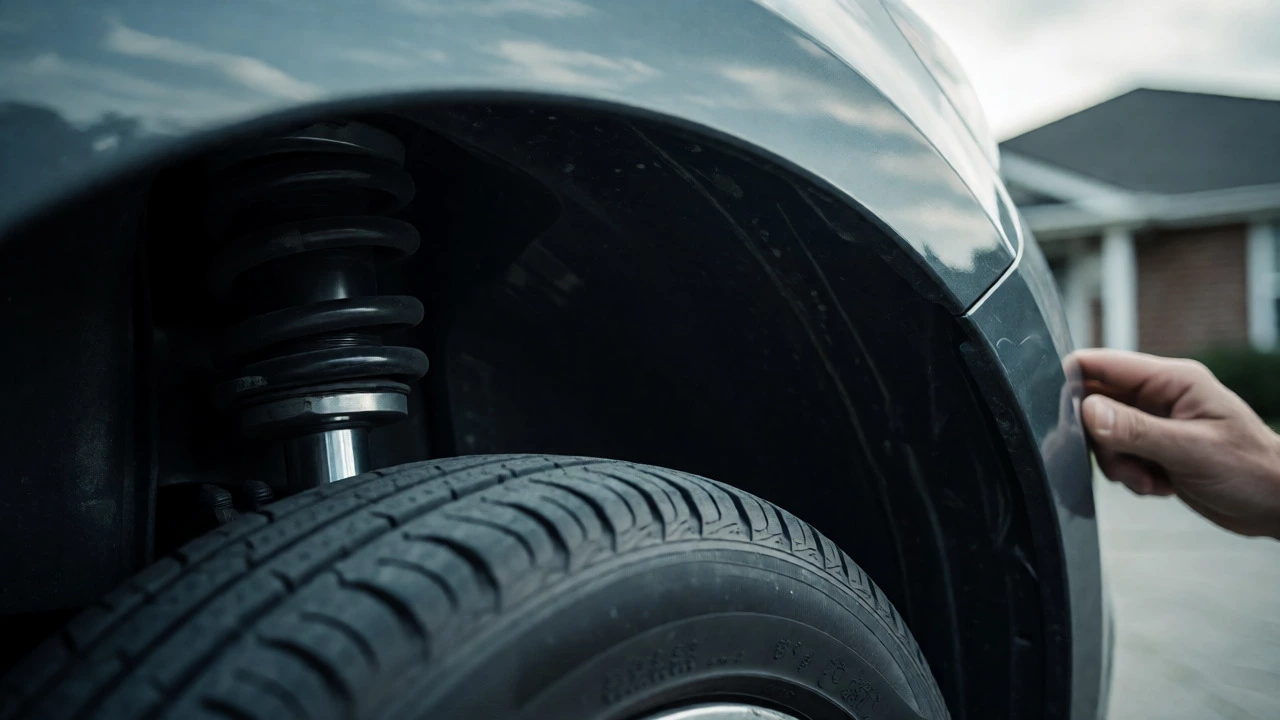
Before we start poking at your car, it helps to know who does what. Think of your suspension as a dance partner system. The springs are the muscle; they carry the weight of the car and absorb the initial impact from the road. When you hit a bump, the spring compresses to take up that energy.
The shock absorbers (or struts) are the control mechanism. Without them, the spring would keep bouncing up and down after every bump, like a Slinky. Shocks dampen that oscillation, turning the kinetic energy of the movement into heat inside the shock fluid. They don’t hold the car up; they stop it from wobbling.
This distinction matters because a broken spring usually changes your ride height or causes metal-on-metal clunks, while a bad shock changes how the car handles corners and brakes. If you understand this division of labor, diagnosing the problem becomes less about guessing and more about observation.
The Bounce Test: Diagnosing Shock Absorbers
The most famous home diagnostic is the "bounce test," but many people do it wrong. Here is the right way to do it. Park your car on a flat surface and press down firmly on each corner of the bumper until it bottoms out. Then, let go abruptly.
A healthy suspension will rebound once and settle immediately. If your car bounces two or three times before stopping, your shocks are likely worn out. However, this test isn’t perfect. It works best on older cars with obvious wear. On newer vehicles with stiff, modern damping, the difference between "good" and "okay" can be subtle.
If the bounce test is inconclusive, pay attention to how the car behaves while driving. Do you feel like you’re floating over speed bumps? Does the front end dive heavily when you brake hard? These are classic signs of fading shock performance. You might also notice uneven tire wear, specifically cupping-where small dips appear in the tread pattern. This happens because the tire isn’t staying flat against the road due to excessive vertical movement.
Spotting Spring Failure: Visual Cues and Height Changes
Springs rarely give you vague hints. When they fail, they tend to make their presence known physically. The most obvious sign is a change in ride height. If one corner of your car sits noticeably lower than the others, you probably have a broken coil spring. You can check this by measuring the distance from the center of the wheel hub to the bottom of the fender arch on all four wheels. If one side is significantly shorter, the spring has snapped or lost its tension.
Listen for noises, too. A broken spring often lets other suspension components move further than intended. This can cause the strut rod to bottom out or the control arm bushings to rub against the frame. You’ll hear a sharp metallic clunk or grind when going over bumps or during tight turns. Unlike the dull thud of a worn shock mount, spring noise is usually harsher and more mechanical.
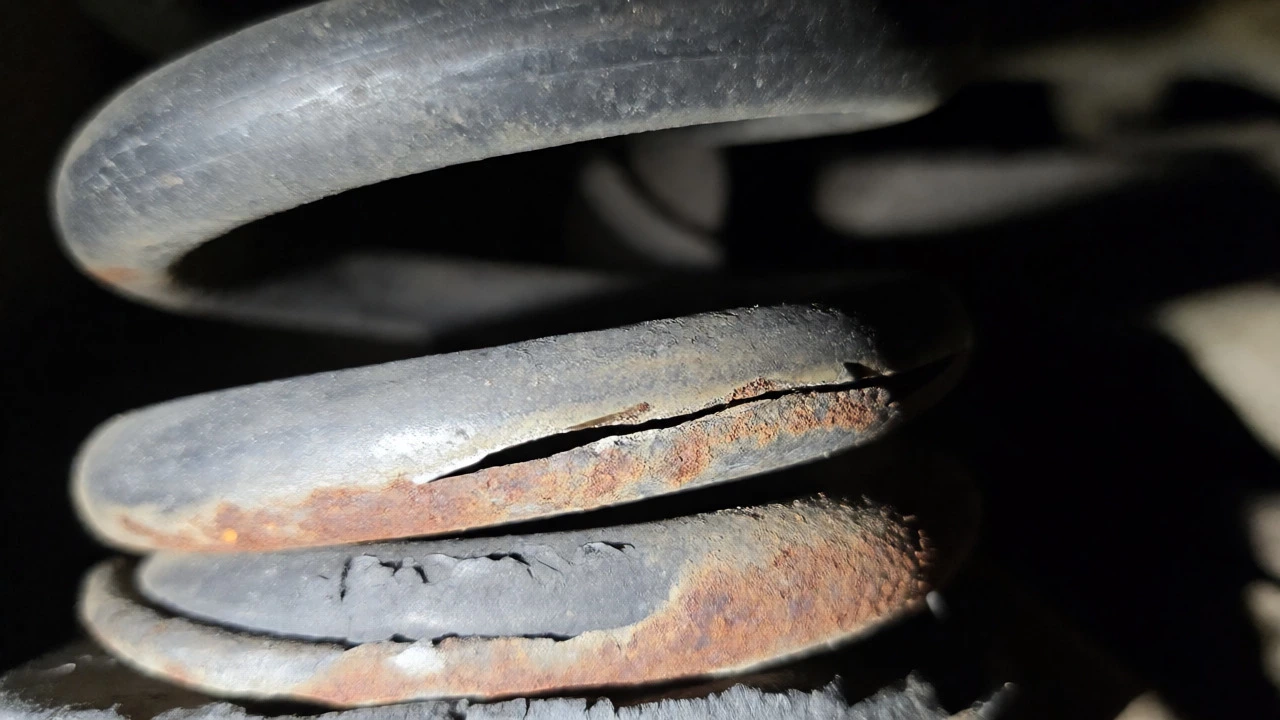
Corrosion is another enemy of springs, especially if you live in an area where roads are salted in winter. Rust eats away at the steel coils, creating weak points. Inspect the coils visually. Look for rust flakes, cracks, or missing pieces of the rubber isolators at the top and bottom of the spring. If the rubber is cracked, the spring can shift sideways, leading to premature failure.
Driving Symptoms: Handling and Comfort Differences
Your hands and ears are excellent diagnostic tools. While visual checks are important, the way the car drives tells the real story. Let’s separate the sensations.
| Symptom | Likely Culprit | Why It Happens |
|---|---|---|
| Excessive bouncing after bumps | Bad Shocks | Damping fluid leaks or valves wear out, failing to stop spring oscillation. |
| Car sits low on one side | Bad Springs | The steel coil has fractured or lost structural integrity. |
| Harsh, jarring ride | Both (often Springs) | No cushioning effect; impacts transfer directly to the chassis. |
| Steering feels loose or vague | Bad Shocks | Tires lose consistent contact with the road during turns. |
| Metallic clunking noise | Bad Springs | Broken coil allows components to hit the frame or strut body. |
| Cupped tire wear | Bad Shocks | Tire hops vertically instead of rolling smoothly. |
Notice the pattern? Shocks affect stability and control. Springs affect structure and height. If you feel unsafe taking corners because the car leans excessively, blame the shocks. If you scrape your undercarriage on driveways you used to clear easily, blame the springs.
Physical Inspection: What to Look For Under the Car
You don’t need a lift to do a decent inspection, though it helps. Get a flashlight and crouch near each wheel well. Start with the shocks. Look for oil leakage. Most shocks are hydraulic, and if the seal fails, dark oily residue will coat the shaft. A little film is normal lubrication, but heavy dripping means the unit is dead. Also, check the mounting points. If the rubber bushings are torn or missing, the shock will rattle against the subframe.
Next, inspect the springs. Run your hand along the coils (carefully, if the car is hot). Feel for breaks or sharp edges. Sometimes a spring doesn’t snap completely but develops a crack that opens under load. Check the ends of the spring where it seats in the perch. If the rubber pad is disintegrated, the metal-on-metal contact will accelerate wear on both the spring and the strut tower.
Don’t forget the dust boots. These rubber sleeves protect the shock piston from dirt and water. If they are shredded, grit gets into the shock, scoring the chrome rod and causing rapid seal failure. Replacing a shock without replacing a torn boot is a waste of time because the new shock will fail quickly.

When to Replace: Age, Mileage, and Safety
There is no fixed mileage for suspension replacement, but there are rules of thumb. Most factory shocks and struts last between 50,000 and 100,000 miles. After 100,000 miles, even if they aren’t leaking, the internal valves wear out, and damping efficiency drops by 30-40%. You might not notice it gradually, but your stopping distance increases significantly.
Springs typically last longer, often the life of the vehicle, unless corrosion or physical damage occurs. However, if you tow heavy loads or drive off-road regularly, springs can sag over time. Sagging springs reduce ground clearance and alter alignment angles, leading to uneven tire wear.
Should you replace them in pairs? Yes. Always replace shocks or struts in axle sets (both fronts or both rears). Replacing just one creates an imbalance in damping force, which can pull the car to one side under braking. Springs should generally be replaced in pairs as well, especially if the car is older, to ensure equal ride height and handling characteristics.
DIY or Professional Help?
Replacing shocks is often manageable for a competent DIYer with basic tools. Struts are more complex because they involve compressed springs, which are dangerous if handled incorrectly. You need a spring compressor tool, and even then, it requires caution. If you’ve never worked on suspension before, consider hiring a pro for struts. Labor costs vary, but safety is paramount here.
Springs themselves are rarely replaced individually unless broken. If you find a broken spring, you must replace it. Driving on a broken spring can damage the strut housing, the tire, and the fender liner. It’s a ticking time bomb for further expensive repairs.
Can I drive with bad shocks?
Yes, but it’s risky. Bad shocks increase braking distances and reduce traction, especially in wet conditions. You might feel less comfortable, and your tires will wear out faster. Avoid high speeds and aggressive driving until you get them replaced.
How long do coil springs last?
Coil springs can last the lifetime of the vehicle if not exposed to severe corrosion or extreme stress. However, they can sag slightly over 10+ years. Physical failure usually results from rust-induced cracking or fatigue from heavy towing.
Do bad shocks cause steering wheel vibration?
Not directly. Steering wheel vibration is usually caused by unbalanced tires, warped brake rotors, or bent rims. Bad shocks might cause a shudder over rough pavement, but constant vibration suggests a rotating assembly issue rather than suspension damping.
Is it worth repairing old shocks?
For standard passenger cars, no. Repair kits exist for some heavy-duty or luxury vehicles, but for most daily drivers, buying new units is cheaper and more reliable than attempting to rebuild old ones.
What sounds indicate a broken spring?
Look for loud metallic clunks or grinding noises when turning or hitting bumps. A broken spring may also cause the car to lean to one side, resulting in scraping sounds from the undercarriage or fender rubbing against the tire.