Engine Oil Top-Up Calculator
Enter your vehicle details and current oil status to get a safe recommendation for topping up.
You’re driving along, minding your own business, when that orange oil can icon pops up on the dashboard. Or maybe you checked the dipstick and saw the level hovering near the minimum mark. Panic sets in slightly, right? But here’s the good news: topping up engine oil is one of the simplest fixes you can do yourself. The real question isn’t just *if* you should add it, but exactly *how much* to pour in without causing a mess or damaging your engine.
There’s no single universal answer because engines vary wildly in size and capacity. However, there are solid rules of thumb that apply to almost every modern petrol or diesel vehicle. Let’s break down exactly how to gauge the gap and fill it correctly.
The Golden Rule: One Quart at a Time
If you’re staring at an empty bottle and wondering where to start, remember this: less is more. You can always add more oil, but you cannot easily remove excess oil without draining the whole system. For most standard passenger cars, the total oil capacity ranges between 4 and 6 quarts (roughly 3.8 to 5.7 litres). If your dipstick shows the level is halfway between the min and max marks, you likely need about 1 quart (or 1 litre).
Why not just dump in half a gallon? Because overfilling is dangerous. Too much oil increases pressure inside the crankcase. This can force oil past seals and gaskets, leading to leaks, or worse, cause the rotating crankshaft to whip through the oil pool. This creates air bubbles (aeration), which means your oil pump sucks in froth instead of lubricant. Result? Your bearings starve for oil while the gauge says everything is fine. It’s a silent killer.
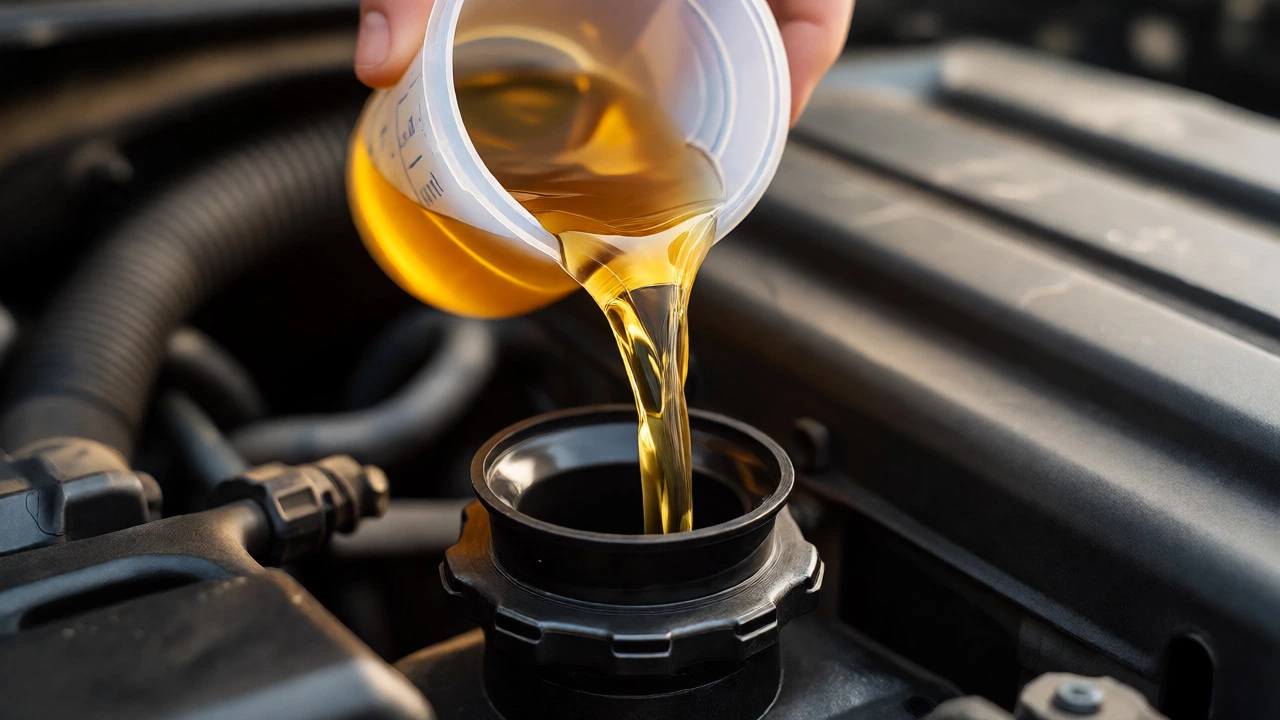
Motor oil is measured in volume, but your engine cares about pressure and film strength. Adding too much disrupts both. So, grab your measuring cup or use the markings on your oil container if available. Pour in small increments-about 0.5 quarts (500ml) at a time-and wait before checking again.
Reading the Dipstick Correctly
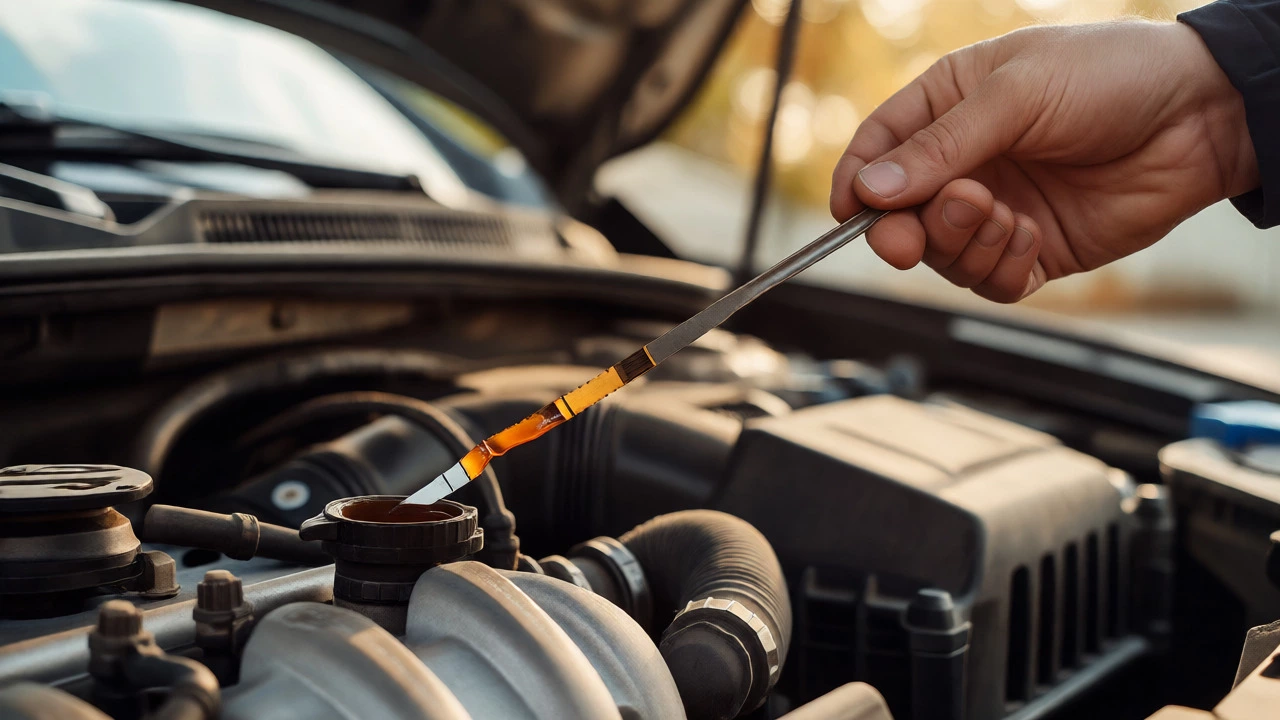
You can’t fix what you can’t measure accurately. Many people get their readings wrong because they check the oil incorrectly. Here is the proper method to ensure your "low" reading is actually low:
- Park on Level Ground: If you’re on a slope, gravity pulls the oil to one side of the sump. You’ll get a false low or high reading depending on the angle.
- Wait for Cool-Down: Turn off the engine and wait at least 5-10 minutes. This allows oil to drain back into the oil pan. If you check immediately after shutting off, the oil is still splashing around the top end, giving you a falsely low reading.
- Wipe and Re-insert: Pull the dipstick out, wipe it clean with a lint-free cloth or paper towel, insert it fully back into the tube, and then pull it out again to read.
- Look at Both Ends: Most dipsticks have two markers: "MIN" (Low) and "MAX" (Full). Some use dots or cross-hatched areas. The oil should be anywhere between these two points. Ideally, aim for the middle-to-upper range, but never above MAX.
If the oil is below the MIN mark, you definitely need to add some. If it’s right on the line, you might want to top up by a quarter-quart to be safe, especially if you plan on doing highway driving soon.
Matching the Right Oil Type
Before you pour anything, check what’s already in there. Mixing different types of oil isn’t usually catastrophic for short-term emergencies, but consistency matters for long-term health. Look at the cap under the bonnet or your owner’s manual. It will specify a grade like 5W-30, 0W-20, or 10W-40.
| Oil Grade | Viscosity Characteristics | Typical Application |
|---|---|---|
| 0W-20 | Very thin, flows easily in cold | Modern hybrids, small turbocharged engines |
| 5W-30 | Balanced, versatile | Most general-purpose petrol and light diesel cars |
| 5W-40 | Slightly thicker at operating temp | Older engines, high-performance vehicles |
| 10W-40 | Thicker, robust protection | High-mileage older cars, classic vehicles |
If you don’t know what’s in your engine, using the manufacturer-recommended grade printed on your oil filler cap is the safest bet. Do not mix synthetic and conventional oils unless necessary; while they are chemically compatible enough to work together, mixing them dilutes the performance benefits of the synthetic blend. In an emergency, any motor oil is better than no oil, so don’t let perfect be the enemy of good.
Step-by-Step: How to Top Up Safely
Once you’ve identified the gap and selected the correct oil, follow this routine to avoid spills and errors:
- Prepare the Area: Ensure the engine bay is clean around the oil filler cap. Dirt falling into the engine is a bigger headache than low oil.
- Open the Filler Cap: Unscrew the cap located on top of the valve cover. Keep it somewhere safe so it doesn’t roll away.
- Use a Funnel: This is non-negotiable. Spilling oil on hot exhaust components causes smoke and smells terrible. A simple plastic funnel costs pennies and saves hours of cleaning.
- Pour Slowly: Tilt the bottle gently. Don’t squeeze hard, as air needs to escape from the engine block. If you pour too fast, the oil will bubble up and spill out of the filler neck.
- Check Frequently: After adding 0.5 quarts, stop. Wait two minutes for the oil to settle. Check the dipstick again. Repeat until you reach the desired level.
- Replace Cap Securely: Screw the filler cap back on tightly. Wipe any drips from the engine surface.

Troubleshooting Common Mistakes
Even careful drivers make errors. Here are the most frequent issues when topping up oil and how to spot them early.
I added too much oil! What now? If the dipstick shows the level significantly above the MAX mark, do not drive far. Overfilled oil can blow out rear main seals or damage the catalytic converter if oil enters the combustion chamber via PCV valves. If you’re only slightly over (e.g., 0.25 quarts), it’s often tolerable for a short trip to a garage. If it’s way over, you may need to drain a little bit from the bottom plug or use an oil extractor pump through the dipstick tube-a tool many DIY mechanics keep handy.
The warning light stays on. Did you add enough? Sometimes, the oil pressure sensor triggers the light based on pressure, not just level. If you topped up but the light remains, check for other issues like a faulty sensor, a clogged oil filter, or actual mechanical wear. Also, ensure the oil has had time to circulate. Start the engine, let it idle for a minute, shut it off, wait five minutes, and check the dipstick again. If the level is correct but the light persists, consult a mechanic.
My oil looks black and gritty. Should I change it? Dark oil is normal for diesel engines and even petrol engines after a few thousand miles. However, if the oil feels gritty between your fingers or smells strongly of fuel, topping up won’t solve the underlying problem. Fuel dilution thins the oil, reducing its protective qualities. In this case, a full service is needed rather than just a top-up.
When to See a Professional
Topping up is a band-aid, not a cure. If you find yourself adding oil every 500-1,000 miles, you have a leak or consumption issue. Common culprits include worn piston rings, leaking valve stem seals, or external gasket failures. While you can keep the engine running with regular top-ups, ignoring chronic loss leads to expensive repairs down the road.
Also, if you notice blue smoke from the exhaust during acceleration, your engine is burning oil. This requires diagnostic attention. Conversely, if you see white smoke that smells sweet, it might be coolant mixing with oil, indicating a head gasket failure. That’s a serious job, not a DIY top-up situation.
Can I mix different brands of engine oil?
Yes, generally speaking, you can mix different brands of engine oil as long as they have the same viscosity grade (e.g., both 5W-30) and meet similar industry standards (like API SP or ACEA C3). They are designed to be compatible. However, for optimal performance, it is best to stick to one brand or type whenever possible to maintain consistent additive packages.
Is it bad to drive with low oil?
Driving with critically low oil is extremely risky. Oil reduces friction and cools engine components. Without enough oil, parts like camshafts, crankshafts, and pistons can overheat and seize within minutes, leading to complete engine failure. If the oil light is on, stop driving immediately and add oil. If the level is merely low but not critical, you can drive cautiously to a service station, but avoid high RPMs and heavy loads.
How long does it take for new oil to show on the dipstick?
It takes about 1 to 2 minutes for freshly poured oil to flow down through the engine galleries and collect in the oil pan. Always wait at least 5 minutes after adding oil before taking a final accurate reading. Checking immediately often results in a lower-than-actual reading because the oil hasn't settled yet.
What happens if I overfill my engine oil?
Overfilling causes increased internal pressure, which can force oil past seals and gaskets, causing leaks. More dangerously, the crankshaft can churn the excess oil into foam (aeration). Foam does not lubricate well, potentially starving engine bearings of oil. It can also damage the catalytic converter if oil is pushed into the exhaust system.
Should I check oil when the engine is hot or cold?
For the most accurate reading, check the oil when the engine is warm but has been turned off for at least 5 to 10 minutes. This allows the oil to drain back into the sump. Checking when the engine is stone cold is acceptable, but oil may be more viscous and slower to settle. Never check immediately after turning off the engine while it is still hot and running.