Clutch & Flywheel Replacement Decision Tool
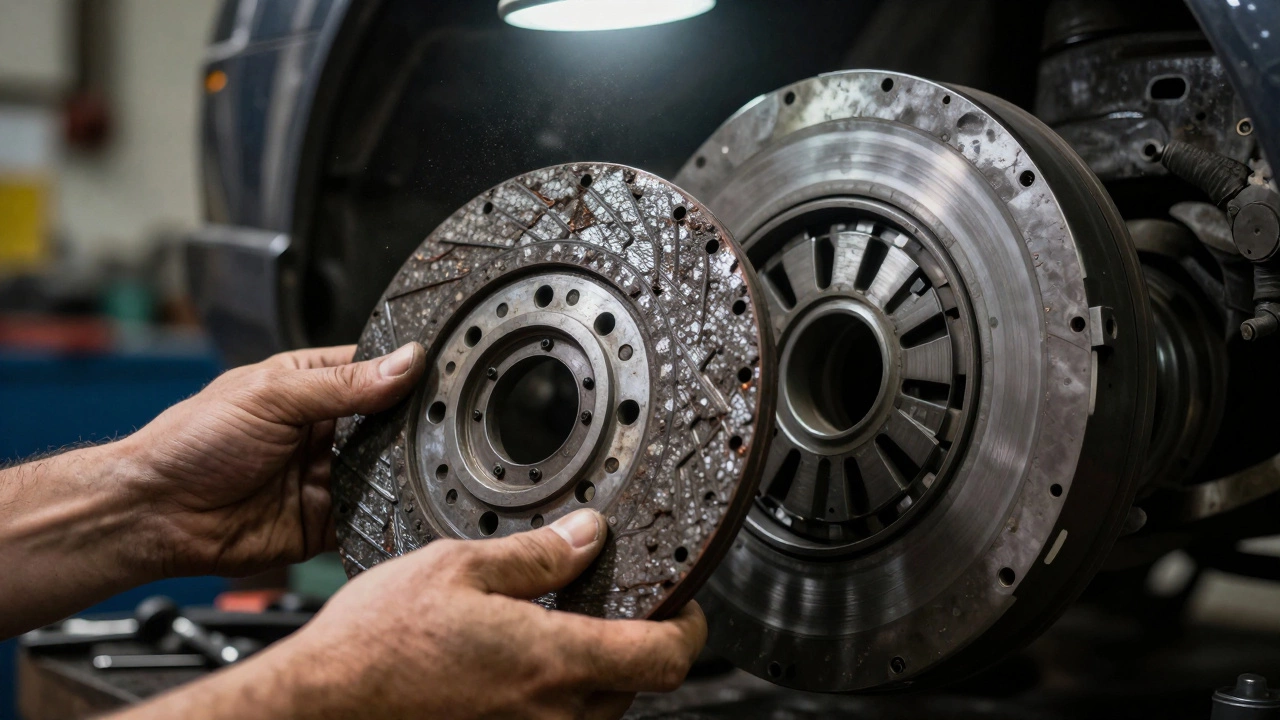
Imagine you have just spent three days replacing your clutch. You get back on the road, and within a few miles, that annoying rattle returns. It’s not the clutch failing; it is the flywheel. This is one of the most common mistakes mechanics and DIYers make. They swap the clutch disc and pressure plate but leave the old flywheel behind, assuming it is good enough because it still spins.
The short answer to whether you need a new flywheel when replacing the clutch is: almost certainly, yes. In modern cars, especially those built after 1990, skipping this step usually leads to immediate failure or premature wear. But why does this happen, and how do you know if your specific vehicle requires a full replacement rather than a simple resurface?
The Role of the Flywheel in Your Drivetrain
To understand why the flywheel matters, you need to look at what it actually does. The Flywheel is a heavy rotating disk connected to the engine crankshaft that stores rotational energy. Its job is to smooth out the power pulses from the engine cylinders, keeping the car running smoothly between ignition strokes. It also provides the friction surface for the clutch disc to engage with.
When you press the clutch pedal, the disc separates from the flywheel, cutting power to the gearbox. When you release the pedal, they reconnect. If the flywheel surface is warped, scored, or glazed, the clutch disc cannot grip evenly. This causes slipping, juddering during launch, and rapid wear of the new clutch components you just installed.
Dual Mass Flywheels: The Game Changer
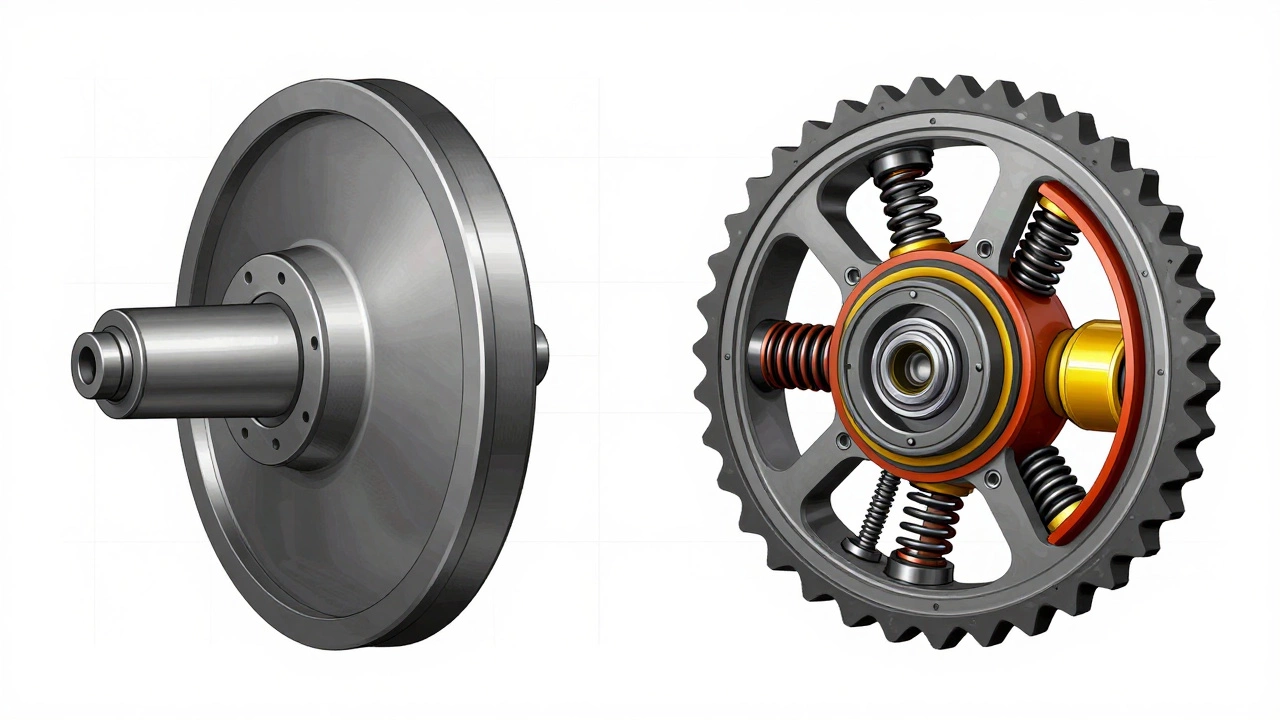
If your car was manufactured after roughly 1995, there is a very high chance it uses a Dual Mass Flywheel (DMF). A DMF consists of two separate masses connected by springs and dampers to absorb engine vibrations. Unlike older single-mass flywheels, which are solid steel blocks, a DMF has internal moving parts designed to isolate cabin noise and vibration.
Here is the critical rule: You cannot repair a Dual Mass Flywheel. Because the damping elements are sealed inside, you cannot machine or resurface them like a traditional brake rotor or old-style flywheel. Once the bearings wear out or the springs lose tension, the entire unit must be replaced. Trying to reuse a worn DMF is a recipe for disaster. The internal damage will transfer shock loads directly to your new clutch, often destroying it within a few hundred miles.
How to Identify If You Have a Dual Mass Flywheel
Not every car uses a DMF. Older vehicles, classic cars, and some performance models still use Single Mass Flywheels (SMF). Here is how you can tell the difference without taking anything apart:
- Listen for Rattle: A failing DMF often makes a distinct rattling or clunking noise when the engine is idling in neutral. The noise usually disappears when you rev the engine or press the clutch pedal.
- Check the Age: Most European cars (VW Group, BMW, Mercedes) and many American trucks switched to DMFs in the late 1990s and early 2000s. If your car is older than 20 years, check its specs. Many older British and Japanese cars retained SMFs longer.
- Visual Inspection: If you can see the flywheel through the wheel well or while the transmission is off, an SMF looks like a solid, thick metal disk. A DMF often looks slightly more complex, sometimes with visible bolts connecting two distinct plates, though many are covered by dust shields.
Single Mass Flywheels: Can You Resurface?
If you have an older vehicle with a Single Mass Flywheel, you have more options. These units do not have internal dampers. Therefore, if the surface is damaged, it can potentially be machined flat again. This process is called "resurfacing" or "skimming."
However, even with an SMF, replacement is often recommended over resurfacing for several reasons:
- Thickness Limits: Every time you machine a flywheel, you remove material. There is a minimum thickness limit. If the flywheel is already close to this limit, machining it further weakens the component, risking cracking under stress.
- Heat Cracks: Deep heat cracks cannot be removed by resurfacing. If the cracks go deeper than the machining cut, the flywheel remains unsafe.
- Cost Efficiency: Labor costs for machining can sometimes approach the price of a new aftermarket flywheel. Given that a new part comes with a warranty and guaranteed tolerance, buying new is often the smarter financial decision.
The Hidden Costs of Skipping the Flywheel
Some drivers try to save money by only replacing the clutch kit (disc, pressure plate, and release bearing) and leaving the old flywheel. This might seem like a bargain initially, but the long-term costs are steep. Consider the labor involved. To replace a clutch, the transmission must be removed. This is expensive labor, often costing hundreds of pounds or dollars depending on your location and vehicle type.
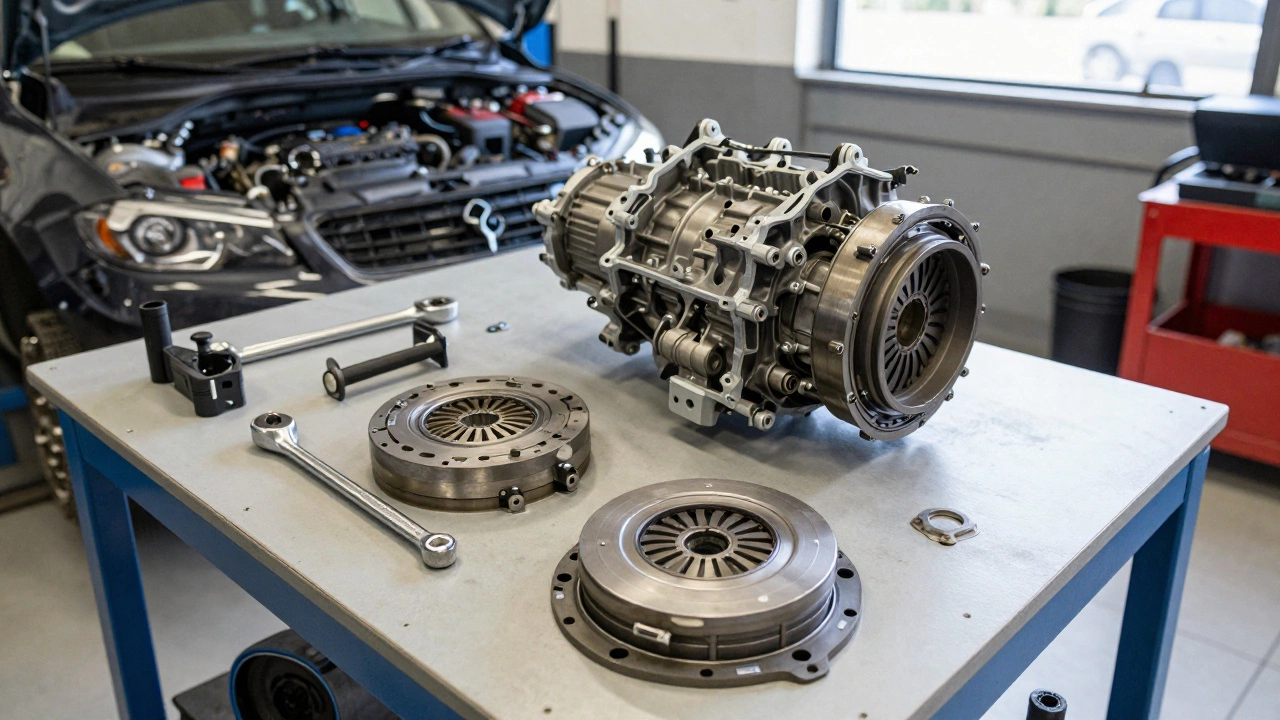
If you skip the flywheel now, and it fails six months later, you will have to pay for the same transmission removal labor again. Plus, you risk damaging the new clutch disc and pressure plate. Replacing all three components together-the clutch kit, the flywheel, and often the pilot bearing-is known as a "full clutch overhaul." It ensures that every part interacting with the drivetrain is in perfect condition.
| Strategy | Initial Cost | Risk Level | Labor Efficiency | Recommended For |
|---|---|---|---|---|
| Replace Clutch Only | Lowest | Very High | Poor (Likely rework) | Budget emergency only |
| Resurface SMF + New Clutch | Moderate | Medium | Good | Older vehicles with healthy SMF |
| New DMF + New Clutch Kit | Highest | Lowest | Best | Most modern vehicles (Post-1995) |
Signs Your Flywheel is Failing Before You Replace the Clutch
Sometimes, the flywheel shows symptoms before the clutch itself goes bad. Pay attention to these warning signs:
- Judder on Launch: If the car shakes violently when you gently release the clutch from a standstill, the flywheel surface may be warped or uneven.
- Excessive Vibration: While driving, you feel unusual vibrations through the seat or steering wheel, particularly at idle or low speeds.
- Backlash Noise: A metallic clunk when shifting gears or letting off the accelerator indicates worn dampers in a DMF.
- Blue Smoke: If you smell burning or see blue smoke from the exhaust when engaging the clutch, excessive friction due to a glazed flywheel could be the cause.
Pro Tips for a Successful Replacement
If you are planning to replace your clutch and flywheel, keep these practical tips in mind to ensure a smooth job:
Buy a Complete Kit: Most reputable manufacturers sell clutch kits that include the disc, pressure plate, and release bearing. Some even offer "overhaul kits" that include the flywheel and alignment tools. Using matched components ensures proper fitment and balance.
Check the Pilot Bearing: Located in the center of the flywheel, the pilot bearing supports the input shaft of the transmission. It is cheap and easy to replace. Always swap it out while you are in there. A worn pilot bearing can cause noise and damage the new clutch.
Clean the Surface: Before installing the new flywheel, clean the mating surface on the engine block thoroughly. Any oil or debris here can cause imbalance issues. Similarly, clean the new flywheel surface with brake cleaner before mounting the clutch disc.
Use Correct Torque Specs: Flywheel bolts require specific torque settings, often applied in a star pattern. Over-tightening can warp the flywheel; under-tightening can lead to catastrophic failure. Consult your vehicle’s service manual for exact figures.
Conclusion: Don't Cut Corners on Critical Components
Replacing a clutch is a significant investment in your vehicle's longevity. The flywheel is not an optional extra; it is a fundamental part of the engagement system. For any car with a Dual Mass Flywheel, replacement is mandatory. For Single Mass Flywheels, replacement is strongly advised over resurfacing to guarantee reliability and safety. By addressing the flywheel at the same time as the clutch, you save time, money, and frustration in the long run. Your drivetrain works as a team-treat all its parts with equal care.
Can I reuse my old flywheel if it looks okay?
If you have a Dual Mass Flywheel (DMF), absolutely not. DMFs contain internal dampers and bearings that wear out invisibly. Even if the surface looks fine, the internal structure is likely compromised, leading to premature clutch failure. For Single Mass Flywheels (SMF), you might resurface it, but replacement is generally safer and more cost-effective when considering labor costs.
How much does a new flywheel cost?
Prices vary significantly by vehicle make and model. Aftermarket flywheels typically range from £100 to £400 ($130-$500). OEM (Original Equipment Manufacturer) parts can be more expensive, sometimes exceeding £600 ($750). Dual Mass Flywheels are generally more costly than Single Mass Flywheels due to their complex construction.
What happens if I don't replace the flywheel?
Skipping the flywheel replacement often results in the new clutch wearing out prematurely. You may experience juddering, slipping, or excessive vibration. In severe cases, a failed DMF can send metal shards into the transmission, causing extensive damage that requires a full gearbox rebuild or replacement.
Do I need to replace the pilot bearing too?
Yes, it is highly recommended. The pilot bearing supports the transmission input shaft and wears out over time. Since it is located inside the flywheel hub, it is easily accessible during a clutch replacement. It is a inexpensive part that prevents future noise and potential damage to the new clutch assembly.
How do I know if my car has a dual mass flywheel?
Most cars manufactured after 1995, particularly European brands like Volkswagen, Audi, BMW, and Mercedes-Benz, use Dual Mass Flywheels. Symptoms include a rattling noise at idle that disappears when the clutch is pressed or the engine is revved. You can also consult your vehicle's owner manual or ask a mechanic to inspect the flywheel visually.