Fuel Pump Code Explorer
Common Symptoms
- Engine stalling at high speeds
- Loss of power when climbing hills
- Difficulty starting after sitting overnight
- Whining noise from fuel tank area
- Check Engine Light illuminated
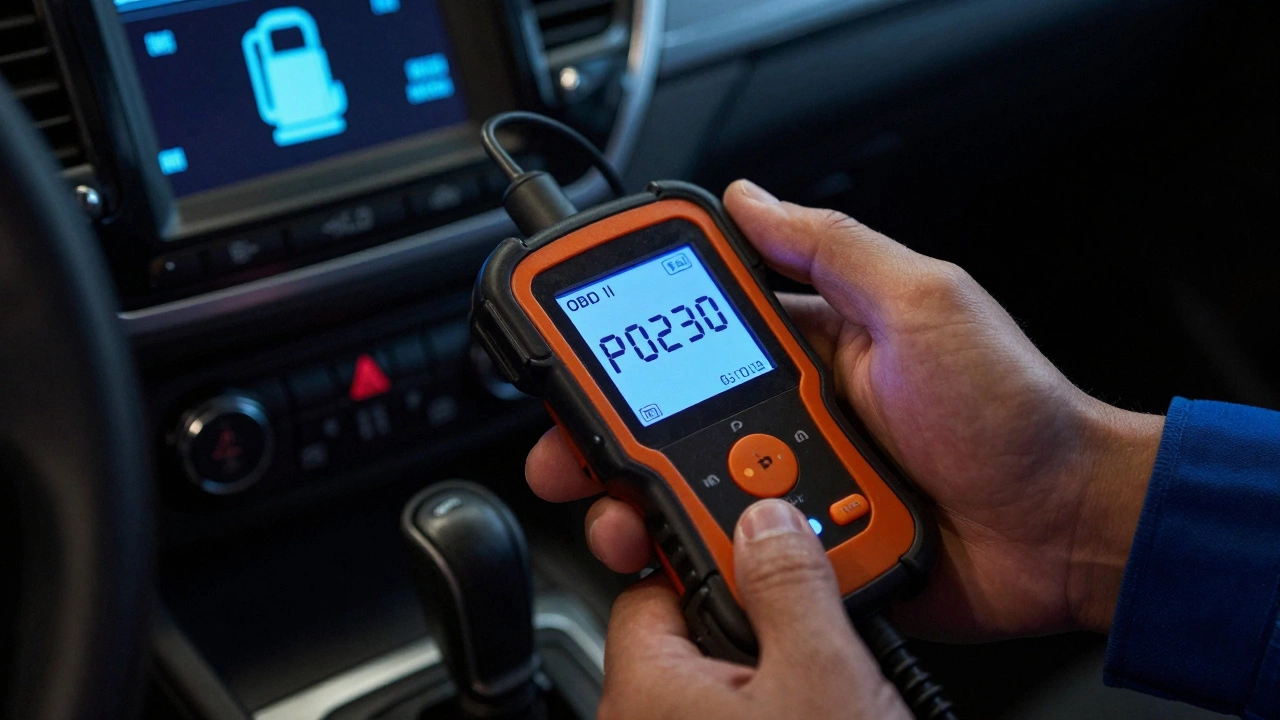
When your car sputters, stalls, or refuses to start-and you’ve ruled out the battery or spark plugs-the culprit might be a failing fuel pump. But what does the car actually tell you? Modern vehicles don’t just throw a warning light; they send a specific diagnostic trouble code (DTC) that mechanics and DIYers can read with an OBD-II scanner. Knowing the right code can save you time, money, and guesswork.
Most Common Fuel Pump Codes
The most frequent code tied to a bad fuel pump is P0230. This code means “Fuel Pump Primary Circuit Malfunction.” It’s triggered when the engine control module (ECM) doesn’t detect the expected electrical signal from the fuel pump circuit. Think of it like a light switch that’s broken-the power’s there, but the connection isn’t working.
Other codes you might see include:
- P0087 - Fuel Rail/System Pressure Too Low
- P0088 - Fuel Rail/System Pressure Too High
- P0231 - Fuel Pump Sensor Circuit High
- P0232 - Fuel Pump Sensor Circuit Low
- P0191 - Fuel Pressure Sensor “A” Circuit Range/Performance
Here’s the catch: none of these codes mean “your fuel pump is dead” for sure. They mean “something’s wrong with the fuel delivery system.” A clogged fuel filter, a bad fuel pressure regulator, or even a weak relay can trigger the same codes. That’s why you can’t just swap the pump based on the code alone.
How the System Detects a Problem
Your car’s computer constantly monitors fuel pressure and flow. It does this by reading data from the fuel pressure sensor (usually mounted on the fuel rail) and comparing it to what it expects based on engine load, throttle position, and RPM. If the pump can’t deliver enough pressure-say, under 40 psi when it should be at 60 psi-the ECM flags it.
For example, if you’re accelerating hard on the highway and the fuel pressure drops suddenly, the system logs P0087. If the pump is running but the pressure stays too low even at idle, it’s likely a weak pump or a blockage downstream. If the pump doesn’t turn on at all when you turn the key, P0230 appears.
What Happens When the Fuel Pump Fails
A failing fuel pump doesn’t always die suddenly. More often, it gets weaker over time. You might notice:
- The car struggles to start after sitting overnight
- Loss of power when climbing hills or towing
- Engine stalling at high speeds
- Random misfires that clear up after cooling down
- A faint whining noise from the rear of the car when the engine is running
These aren’t just annoyances-they’re warning signs the pump is struggling to keep up. If you’ve got a 2015 Honda Accord with 140,000 miles and it’s taking three tries to start in the morning, that’s not a coincidence. Fuel pumps in those models often fail around 120,000-160,000 miles.
How to Confirm It’s the Fuel Pump
Reading the code is step one. Step two is testing. Here’s how to narrow it down:
- Check the fuse and relay. A blown fuse or stuck relay can mimic a bad pump. Swap the fuel pump relay with another one (like the horn relay) to test.
- Listen for the pump. When you turn the key to “ON” (before starting), you should hear a 2-3 second hum from the fuel tank. No sound? That’s a red flag.
- Test fuel pressure. Rent or borrow a fuel pressure gauge from an auto parts store. Connect it to the fuel rail test port. With the engine running, pressure should stay steady within 5-10 psi of the manufacturer’s spec (usually between 45-65 psi for most gasoline cars).
- Check for clogs. Replace the fuel filter first if it’s never been changed. A dirty filter can starve the pump and cause the same symptoms.
- Use a scan tool. Look at live data. If the fuel pressure reading is stuck at zero or fluctuating wildly, the pump or sensor is the likely culprit.
One real-world example: A 2018 Ford Focus came in with P0230 and wouldn’t start. The owner thought the pump was dead. But after checking, the fuse was blown. Replacing it fixed the issue. No pump swap needed.
What Codes Won’t Tell You
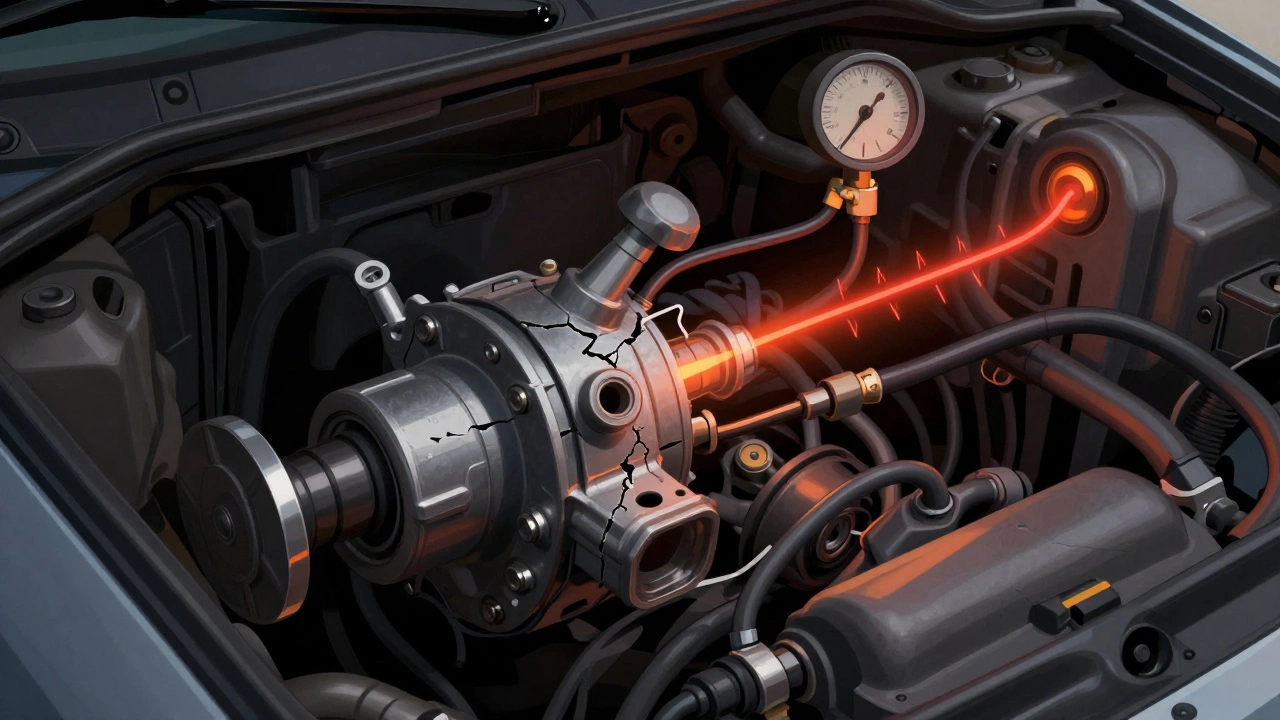
Here’s where people get tripped up: a bad fuel pump doesn’t always throw a code. Especially in older cars without fuel pressure sensors. If your 2009 Toyota Corolla has no fuel pressure but no DTCs, the problem is still real. The ECM doesn’t always detect a slow decline-it only notices when the system is completely out of range.
That’s why symptoms matter more than codes. If your car won’t start, you’ve got fuel in the tank, and the pump doesn’t hum when you turn the key, it’s time to dig deeper. No code? Still check the pump.
Can You Drive With a Bad Fuel Pump?
Technically, yes-but you shouldn’t. A failing pump can leave you stranded. Worse, if it’s dropping pressure under load, the engine runs lean. That means hotter combustion, which can damage valves, pistons, or even the catalytic converter. Repairing a melted cat costs more than replacing a fuel pump.
Also, if the pump is grinding or making noise, metal particles can circulate through the fuel system. Those particles can clog injectors or damage the new pump if you install one without flushing the lines.
How to Avoid Future Problems
Fuel pumps last longer if you treat them right:
- Never run the tank below 1/4 full. The fuel cools the pump. Running low = overheating.
- Use quality fuel. Cheap gas often has more contaminants that clog filters and strain the pump.
- Replace the fuel filter every 30,000-40,000 miles. Even if the manual says “lifetime,” it’s not. Most filters fail before then.
- Don’t ignore warning signs. A slight hesitation on startup? A slight loss of power? Don’t wait for the check engine light.
Most fuel pumps last 100,000 to 150,000 miles. But if you’re regularly driving with a near-empty tank or using low-quality fuel, you might see failure by 70,000 miles.
When to Replace It
Don’t wait for total failure. If you’ve got:
- A confirmed low fuel pressure reading
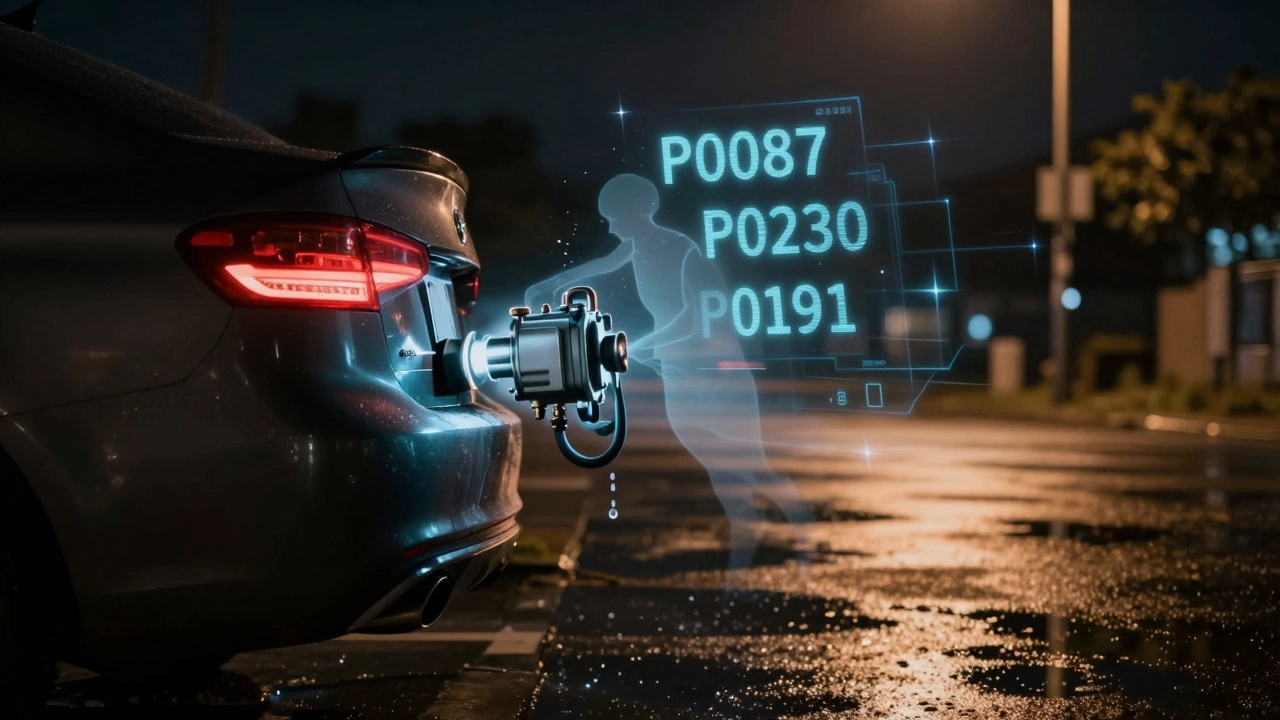
- Recurring codes like P0230 or P0087
- Physical signs of wear (noise, overheating)
- A vehicle over 10 years old or with over 100,000 miles
-it’s time to replace the pump. Consider upgrading to a high-output aftermarket pump if you’ve added performance mods. Stock pumps aren’t built for turbocharged engines or heavy towing.
| Code | Meaning | Most Likely Cause |
|---|---|---|
| P0230 | Fuel Pump Primary Circuit Malfunction | Faulty pump, bad relay, blown fuse, wiring issue |
| P0087 | Fuel Rail/System Pressure Too Low | Weak pump, clogged filter, leaking regulator |
| P0088 | Fuel Rail/System Pressure Too High | Stuck pressure regulator, faulty sensor |
| P0231 | Fuel Pump Sensor Circuit High | Faulty pressure sensor, wiring short |
| P0232 | Fuel Pump Sensor Circuit Low | Failing sensor, poor ground connection |
| P0191 | Fuel Pressure Sensor “A” Circuit Range/Performance | Bad sensor, inconsistent pump output |
Frequently Asked Questions
Can a bad fuel pump cause the car to stall while driving?
Yes. A failing fuel pump often can’t maintain pressure under high demand-like when you’re accelerating or climbing a hill. This causes the engine to run lean and stall. If it stalls, cools down, and starts again, that’s a classic sign the pump is overheating and losing pressure.
Do I need to replace the fuel filter when replacing the fuel pump?
Always. The fuel filter is cheap and easy to replace. If the pump failed because of debris, the filter likely caught it. But if you don’t replace the filter, the new pump will get clogged again. It’s standard practice to replace both at the same time.
Can a bad fuel pump trigger a check engine light without a code?
No. Modern cars always log a diagnostic code when a system fails. If the check engine light is on, there’s a code stored. If you don’t see one, your scanner might not be reading all systems. Try a more advanced OBD-II reader or visit a shop with a professional-grade scanner.
How much does it cost to replace a fuel pump?
Parts alone range from $150 to $500 depending on the car. Labor is $200 to $500 because the tank often has to be dropped. Total cost is usually $400-$900. Luxury or older models can cost more. Buying a quality OEM or aftermarket pump (like a Bosch or Denso) is worth it-cheap pumps fail faster.
Is it safe to drive if the fuel pump is making noise?
Not for long. A whining, grinding, or buzzing noise means the pump’s internal bearings or impeller are wearing out. Metal shavings can enter the fuel system and damage injectors or the new pump. Get it replaced within a few days to avoid more expensive repairs.
Next Steps
If you’re getting a fuel pump code and your car is acting up, start with the basics: check the fuse, listen for the pump, test the pressure. Don’t jump to replacing the pump until you’ve ruled out simpler fixes. If you’re unsure, take it to a mechanic with a live data scanner. A good shop can show you real-time fuel pressure readings while you drive-something no code can do.
And remember: a fuel pump isn’t something you fix-it’s something you replace. Once it’s failing, it won’t get better. Acting early saves you from being stranded on the side of the road-and from a much bigger repair bill later.